

Tiger Lantern Displays for Festivals and Commercial Venues
A tiger lantern display begins with a visual decision: what should the tiger do for the scene? It might form a prominent landmark, appear beside a smaller tiger, or become the focal point of a woodland display. That choice gives the design a clear direction before size, posture, colors and quantities are confirmed.
HOYECHI has produced animal lanterns including tigers, lions and elephants. Some customers bring an animal reference or a defined scene; others start with a site plan, a venue type and a broad theme. We develop the visual proposal around those inputs, then review the composition with the customer.
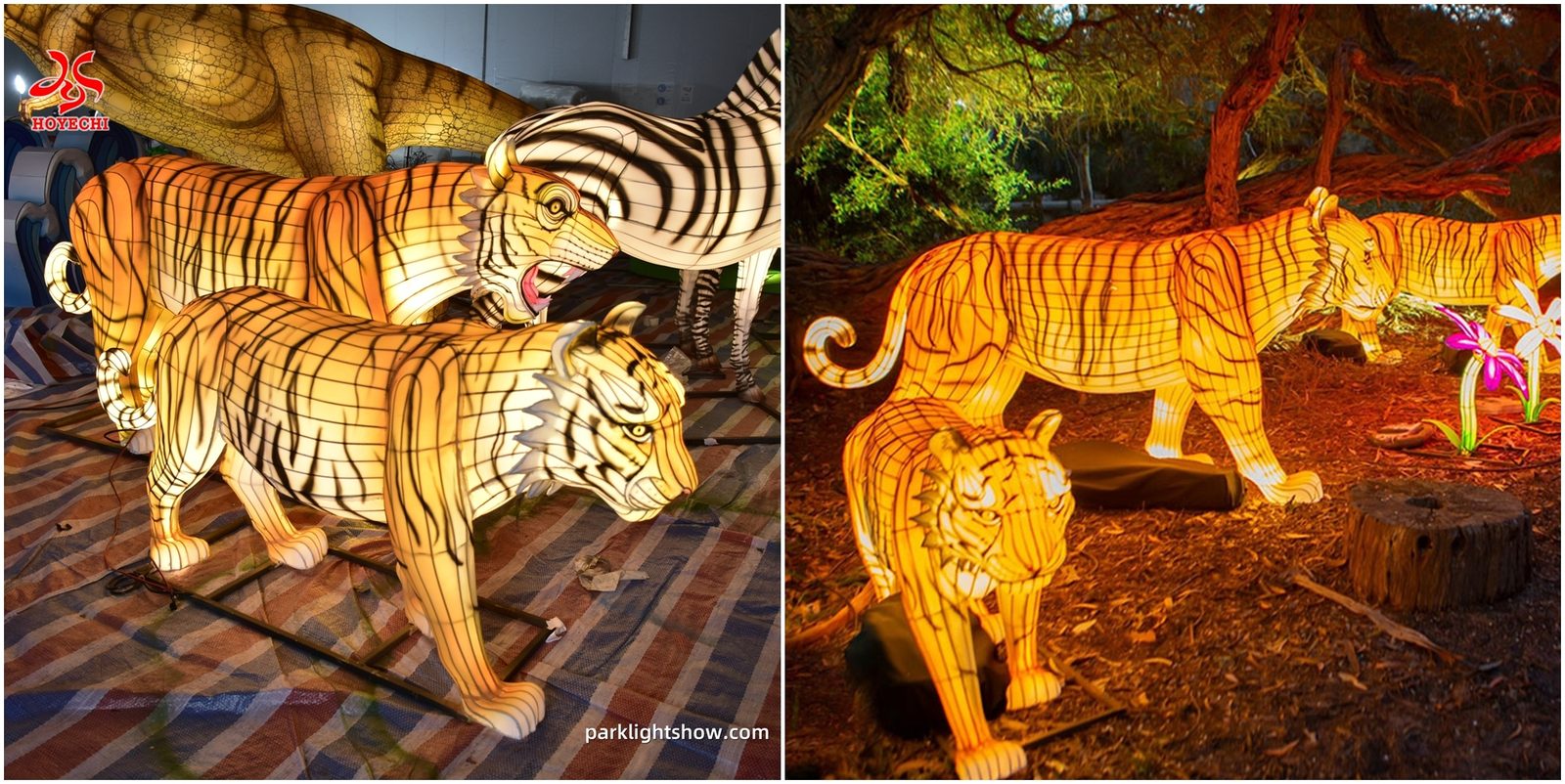
Give the Tiger a Clear Role
A single tiger can suit a display area that needs one recognizable focal point. Its head direction, back line and overall posture should be clear from the main approach. Smaller plants, rocks or supporting figures can frame the animal without crowding its outline.
For a larger area, a composition might include adult and young tigers or several figures in different positions. The important decisions are their relative sizes, facing directions and spacing. An adult figure can establish the main silhouette while a smaller tiger adds a second point of interest in the foreground.
A theatrical animal display can also combine different species. Treat that as a designed scene rather than a claim about how those animals live together in nature. For a broader theme, explore our jungle animal lantern display ideas.
Review the Head, Shoulders and Whole-body Silhouette
Orange coloring and dark stripes help identify a tiger, but its proportions matter just as much. The relationship between the head, shoulders, torso, legs and tail determines whether the figure looks powerful, relaxed, playful or alert.
A standing tiger gives the composition a settled focal point. A walking pose creates a sense of direction. Turning the head can connect the figure with the main viewing position or another animal. A lower body position suggests a more watchful character.
Review these choices from the expected viewing angle. A pose that looks effective in a close side view may hide the face when seen from the front. Ask to see the proposed figure within the scene, with its orientation clearly shown.
The mouth also changes the tone. An open mouth and visible teeth create a more dramatic expression. A closed or slightly open mouth may better suit a gentler visual theme. The choice belongs in the design review, alongside head direction and posture.
Make Stripes and Color Work Together After Dark
A tiger’s stripe pattern needs to remain readable across the face and body. Very fine or closely spaced lines can compete with the silhouette, especially when the background is also visually busy. Review stripe placement, base color and facial detail together.
Orange, white and dark stripes provide a familiar visual reference. A blue, purple or other artistic palette can support a fantasy or seasonal theme. Either approach needs enough separation between the face, chest, legs and background to keep the animal recognizable.
The surrounding colors belong in the same rendering. Bright flowers behind the face may compete with it; dense patterns behind the body can make the outline harder to read. Reviewing the whole scene helps the customer decide where the strongest contrast should appear.
Build the Setting Around the Tiger
Woodland plants, rock forms and foliage can connect a tiger lantern with its setting. Their positions should support the animal’s outline and create depth: lower forms in front, intermediate elements beside the body and taller features behind or to one side.
Keep practical access needs separate from decorative screening when developing the final arrangement. A visually appealing plant grouping still needs to work with the project’s installation and maintenance requirements.
Additional animals can introduce a story, but each figure needs a purpose. Before increasing the quantity, check whether the main tiger still reads clearly and whether the scene has a useful foreground, middle ground and background.
Our custom animal lanterns page provides broader species and display references for customers comparing several animal themes.
Decide Whether Movement Adds to the Design
A static tiger lets posture, expression and illumination carry the scene. Selected movement may be considered where it adds something specific to the character, such as a change in head position or another limited action.
The proposed action needs a separate project discussion. Display duration, movement range, component weight and maintenance arrangements all affect the choice. A short event and a long-term installation may call for different approaches.
Describe the intended effect before selecting a mechanism. Our guide to static vs. animated lantern displays explains the broader considerations.
What to Send for a Custom Tiger Lantern Proposal
Customers do not need a finished design to start the conversation. Useful initial information includes:
- A site plan or photographs of the display area.
- The venue type, broad theme and priority area.
- Available dimensions and the main viewing direction.
- An initial quantity, or whether a single figure or group is being considered.
- Any preferred posture, expression or color reference.
- The destination and target opening date.
- Known delivery or site restrictions.
- Which details are fixed and which are open to design suggestions.
HOYECHI can propose size, posture, color, quantity and composition based on these inputs. The rendering review is the point to check the tiger together with the surrounding elements, rather than approving each object in isolation.
Customers often understand their site in ways that a drawing alone cannot show. Their feedback may change how the figures are combined or where the main animal faces. Record the agreed revision so that the visual direction is clear before the project moves into production planning.
Connect the Approved Rendering With Production
The approved visual proposal provides a reference for the next discussions: fabrication scope, surface color, lighting, sections, assembly records, packing and site coordination. These details depend on the actual design and project requirements.
For the wider manufacturing sequence, see how giant animal lanterns are made. If the tiger is one part of a complete event, our lantern festival solutions page provides the starting point for discussing the wider display project.
Frequently Asked Questions
Do tiger lanterns have to use realistic colors?
No. Familiar orange, white and dark stripes offer immediate recognition, while an artistic palette can support a fantasy or festive theme. Review the chosen colors with the background and nearby figures.
Is one tiger or a group the better choice?
A single figure can provide a clear landmark. A group gives a larger area more opportunities for size relationships and a visual story. Choose according to the available space, main viewing angle and role of the display.
Can a tiger lantern include movement?
Selected movement can be discussed for the project. The action, display period and maintenance arrangements need to be reviewed before the design is confirmed.
Can we request a proposal without a finished concept?
Yes. A site plan, venue type, broad theme, approximate dimensions and opening date provide a useful starting point. HOYECHI can develop visual suggestions for customer review.
Discuss Your Tiger Lantern Display
Send HOYECHI your site plan or photographs, available space, theme, destination and opening date. Include any preferences for the tiger’s size, posture, colors and grouping, and indicate where you would like design suggestions.
Together, these inputs provide the basis for a visual proposal that can be reviewed before production details are agreed.
Post time: Sep-06-2025


