
Animatronic lanterns are not an automatic upgrade from static displays. For a commercial project, the better question is whether the movement has a clear visual purpose. A moving head, opening wing, expanding tail, or changing pose may turn a main figure into a memorable focal point. If the movement does not improve the theme, viewing sequence, or visual hierarchy, a well-designed static lantern may communicate the idea more clearly.
Buyers do not have to choose between an entirely static event and an entirely animated one. A practical concept may use one or two moving focal displays while the surrounding lanterns establish the environment through silhouette, color, scale, quantity, and composition. The movement then has a defined role instead of becoming visual noise.
According to HOYECHI’s production experience, different forms of motion have been incorporated into flower, peacock, dinosaur, fish, other animal, and figure lanterns. This experience shows that many themes can be considered for animation, but it does not mean that every original motion idea can move directly into production. The scale of the moving area, the relationship between size and weight, the intended operating period, and the available maintenance conditions still have to be reviewed for the individual project.
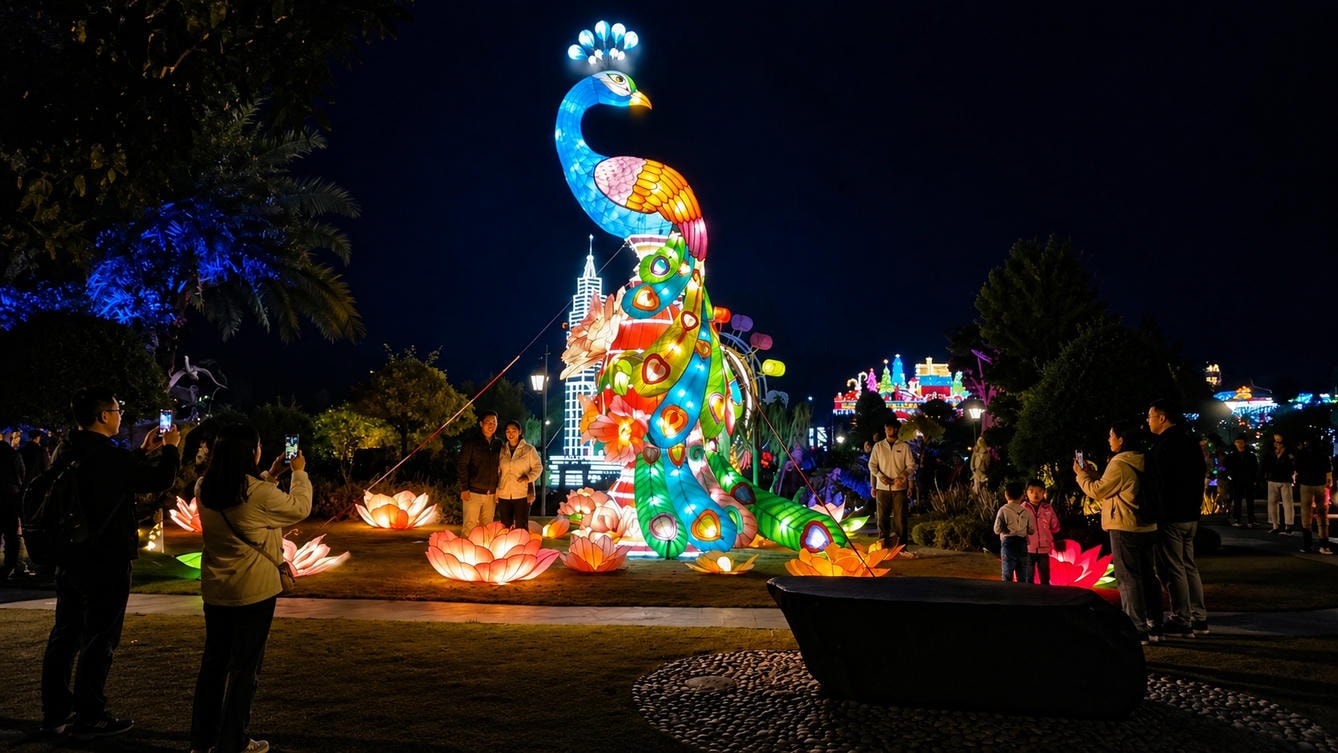
Static and Animated Lantern Displays at a Glance
| Comparison point | Static lantern display | Animatronic lantern display |
|---|---|---|
| Visual expression | Holds one approved pose and silhouette | Uses visible movement to express a character or scene action |
| Design focus | Outline, proportion, color, viewing direction, and supporting forms | Also requires the moving area, start and end positions, and visible sequence to be defined |
| Visual review | Concentrates on key viewing angles and the illuminated appearance | Should examine the starting position, intermediate movement, and finishing position |
| Role in the scene | Works well for landmarks, backgrounds, continuous groups, and large environments | Often works best as a limited focal feature or story point |
| Buyer input | Position, approximate size, quantity, color, pose, and grouping | Also identifies what should move, what the movement should express, and how it relates to the scene |
| Factory evidence | Visible form, lighting state, module identity, and packing references | Also benefits from a record that shows the complete movement and identifies the corresponding version |
| Site questions | Structure, electrical scope, foundations, installation, and local requirements remain project-specific | Adds questions about controls, operation, maintenance access, and responsibility boundaries |
This comparison is not a technical specification or a universal acceptance checklist. Structure, electrical systems, controls, foundations, wind, fire, public-space, and installation requirements must be confirmed for the actual site and agreed project scope by the responsible parties.
When Is an Animatronic Lantern Worth Considering?
1. The movement is an instantly recognizable part of the subject
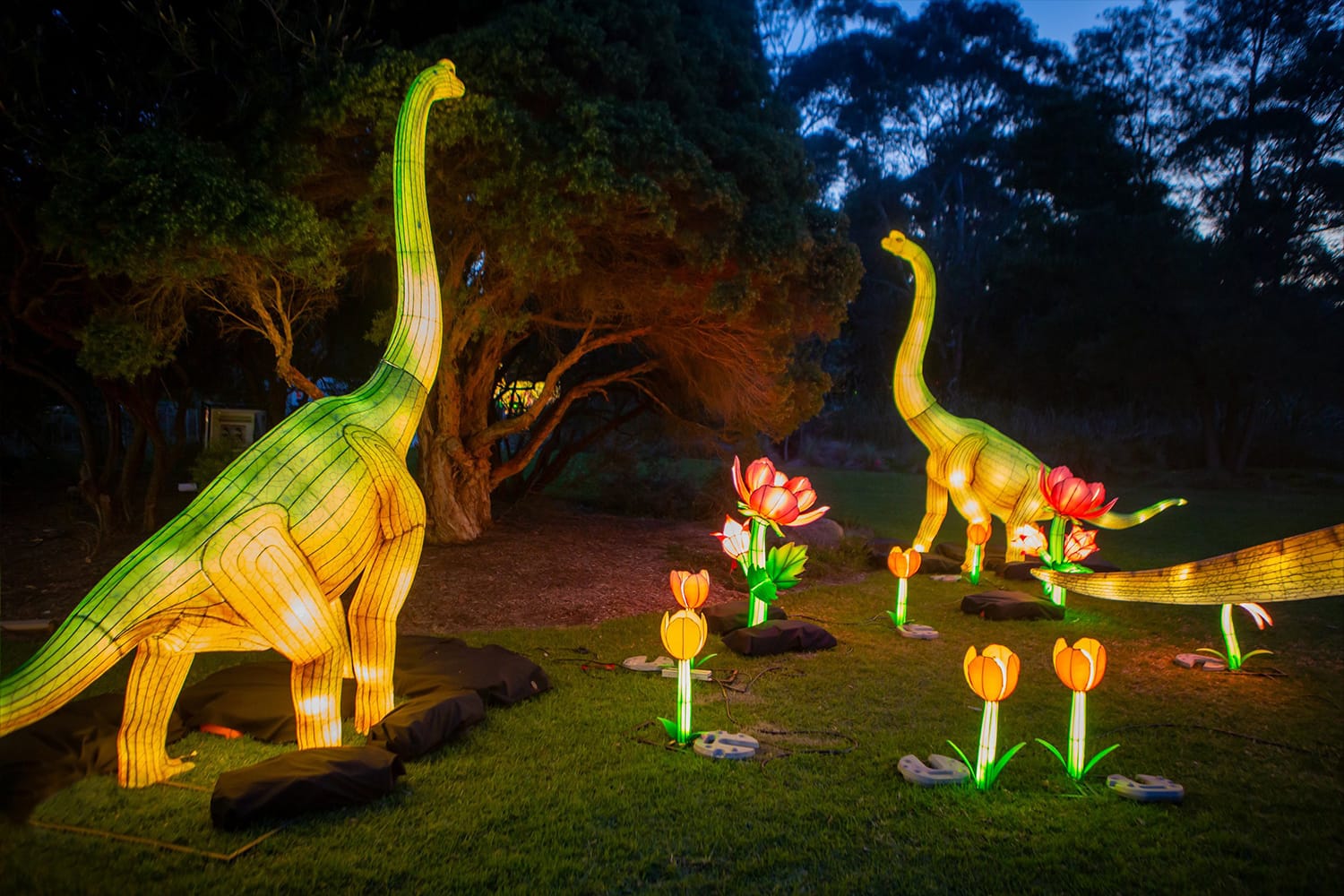
Some figures are strongly associated with a simple action: a bird opening its wings, a peacock opening its tail, a dinosaur turning its head, or a flower opening and closing. These actions can be understood without a long explanation.
Before adding movement, ask whether the figure still works when it is motionless. If it does, the animation is strengthening a successful visual design. If removing the movement leaves an unbalanced or unclear figure, the underlying silhouette and pose may need more work first.
2. The project needs one clear visual focal point
An entrance area, themed zone, or central photo background may need a feature that stands apart from the surrounding lantern groups. Movement can help establish that difference, but it should not compete with too many bright colors, complex forms, and other animated pieces at the same time.
One readable moving subject surrounded by a more stable environment often creates a clearer hierarchy than many figures moving at once. This is a composition approach, not a rule that every venue needs an animated landmark.
3. The movement adds a simple relationship to the scene
Animation does not have to be limited to a single isolated figure. A main animal might turn toward another form, a wing might move from closed to open, or a local change might direct attention toward the next scene.
The easier the motion is to describe in one sentence, the easier it is to review in the effect rendering. If the concept requires a long explanation before the movement makes sense, the theme, pose, or relationship between the figures may need to be simplified.
4. The main viewing direction is reasonably clear
Movement has to be visible. If visitors approach from a defined direction and naturally face the main display, the action is easier to read. If the lantern stands in a narrow passage or can be seen from several directions, review the sides, rear, and intermediate positions rather than approving only the most attractive frame.
This article does not prescribe route capacity or visitor dwell time. The buyer only needs to mark the expected viewing directions and viewing area in the project brief so the visible motion can be discussed during design review.
5. Operating and maintenance responsibilities are defined
An animated display introduces questions that a visual rendering cannot answer: who starts and stops it, who records an issue, who can reach the service area, and where the issue is handed off for review. The responsible people and scope should be identified before the movement is treated as final.
If these boundaries are not yet clear, a static display may be the more practical current choice. Another option is to keep the animated concept open until the site conditions and responsible parties are confirmed. The article does not replace advice from the relevant technical or safety professionals.
6. The buyer is prepared to review motion separately
An animated lantern should not be approved from one rendering that shows only its most dramatic position. The visual review should cover the beginning, intermediate, and ending states so the figure remains coherent throughout the visible sequence.
Visual approval and technical approval should remain separate. A buyer can approve what the movement is intended to express, while the mechanism, controls, and suitability for the site remain subject to project-specific technical review.
Why Does a Client’s Original Motion Idea Sometimes Need to Change?
An imaginative idea is a valuable starting point, but a large moving feature turns a line in a rendering into a physical component with real size, weight, operating range, and maintenance implications. A very large moving wing, for example, cannot be evaluated only by how dramatic it looks in the concept image.
HOYECHI’s project experience includes situations in which the client’s original animation concept needed to be revised because the proposed moving area would be more vulnerable to damage or unsuitable for the intended operating period. The goal is not to reject the idea. It is to preserve the visual effect while adjusting the moving area, range of motion, proportion, or number of animated pieces so the concept has a more practical path to production and use.
This article does not publish project-specific dimensions, weights, or failure probabilities, and it does not turn one unusually large example into a general rule. The actual structure, loads, mechanism, and safety requirements must be evaluated from the project information by the responsible technical parties.
When May a Static Lantern Be the Better Choice?
The scene depends on a large composition rather than one action
Flower gardens, forests, marine environments, animal groups, and cultural displays often create atmosphere through quantity, depth, color, and repeated forms. When the value comes from the complete image, static lanterns may allow more attention to be placed on the overall silhouette, supporting pieces, and themed environment.
The figure must remain complete from several directions
A carefully designed static pose can maintain a stable relationship when people approach from the front, side, and rear. Animation may still be possible, but the full movement needs to work from these views rather than only in one ideal position.
The movement does not add new information
If turning, swinging, or opening does not strengthen the subject or its relationship to the scene, the change may be movement for its own sake. Improving the pose, color distribution, and surrounding composition may produce a clearer result.
Operating and maintenance conditions are still unresolved
Animated forms require defined operating responsibility, issue records, access, and specialist handoff. When those conditions are not yet in place, keeping more elements static can reduce unresolved interfaces. Static lanterns still require project-specific installation, inspection, and maintenance planning; the two formats simply create different questions.
The event needs a continuous visual language
A sequence of static groups can use related silhouettes, colors, and supporting forms to build a consistent rhythm. If every group uses a different movement, the scenes may compete with one another. Reserving animation for a few key points can protect the hierarchy of the wider display.
The project will operate for a longer period with limited maintenance support
HOYECHI’s experience indicates that short-term and long-running displays may place different priorities on animation. A short-term display can still use moving lanterns when its operating and maintenance responsibilities are defined. A long-running project needs closer consideration of ongoing maintenance cost, access, service windows, and issue ownership. If these resources are limited, fewer animated pieces or more static forms may be more practical.
This is not a universal rule that short events should use animation and long events should avoid it. The decision remains dependent on the importance of the movement, operating frequency, project budget, available maintenance resources, and agreed scope.
Why Combine Animated Focal Pieces with a Static Environment?
A commercial lantern project may include a main subject, supporting figures, plants or decorative forms, ground-level connections, and a background. If every element has equal visual intensity, viewers have no clear starting point. An animated focal display can establish the first visual layer while static lanterns explain the theme and complete the environment.
For example, one principal animal may perform a readable movement while surrounding flowers, trees, small animals, or wave forms remain stable. If the main subject, supporting pieces, and background all move at the same time, the project may become more complex without becoming easier to understand.
There is no fixed ratio. The number of animated lanterns should follow the theme, site, viewing direction, budget priorities, and operating conditions. The useful test is whether every moving piece has a visual reason to move.
Define the Motion During the Effect-Rendering Stage
The visual brief for an animatronic lantern should answer:
- Which figure needs to move?
- Which part changes visibly?
- What should the starting and ending poses look like?
- From which direction will the movement normally be viewed?
- Is the animation the main expression or a supporting detail?
- Which surrounding figures remain static?
- Is the buyer mainly interested in a change of outline, pose, or scene relationship?
Reference videos can help communicate an expectation, but explain what you like in each reference. A buyer may prefer the tail movement from one example, the color relationship from another, and the overall posture from a third. That is more useful than asking a supplier to copy an existing work exactly.
If the site information is still incomplete, use the custom lantern festival design process to organize the plan, venue type, main viewing areas, theme, and target opening time before defining the animation.
What Factory Evidence Can a Buyer Request?
For an animated lantern display, the most useful evidence is traceable to the current design version. Within the agreed project scope, buyers can ask:
- Which figure, module, and design version does the photo or video show?
- Does the record show the starting position, intermediate movement, and ending position?
- Are the illuminated condition and motion condition recorded clearly?
- Which questions remain open, and who is responsible for the next review?
- Can module or packing references be matched to later documents and site handoff?
- Which observations are factory-stage evidence, and which still require confirmation at the actual venue?
These questions organize project information. They are not a testing procedure, acceptance standard, or performance guarantee. Inspection methods, pass/fail criteria, and release authority should follow the agreed technical and contract documents. For broader production context, see the Lantern Festival Manufacturer page.
How Do Site and Maintenance Conditions Affect the Choice?
Before approving animation, route several project interfaces to the responsible people: available location, electrical and control boundaries, operating responsibility, maintenance access, issue records, and the destination for technical review. The answers vary by venue and project scope, so a generic checklist cannot replace a site-specific review.
The buyer does not need to design the mechanism or electrical system. The buyer does need to make sure each question has an identified source, current status, and owner. An unresolved item should remain open rather than being treated as solved by the visual rendering.
Static lanterns also require project-specific structural, electrical, installation, and maintenance review. The difference is not that one format needs professional review and the other does not. Animation adds interfaces related to movement, controls, operation, and service access.
Information to Prepare Before Requesting a Quotation
| Information | Why it matters |
|---|---|
| Venue type and site plan | Establishes the display position, role, and main viewing direction |
| Site photographs or video | Shows the background, space, and visible surroundings |
| Theme and intended atmosphere | Guides realistic, decorative, cultural, fantasy, or other visual directions |
| List of principal figures | Separates focal pieces, supporting forms, and environmental elements |
| Proposed moving area | Clarifies whether the animation supports the theme |
| Motion references and liked details | Communicates the visible change without asking for direct copying |
| Approximate size and quantity | Supports early composition and project discussion |
| Target opening time | Gives design, production, transport, and installation discussions a shared schedule context |
| Budget range, if available | Helps prioritize the focal figure, animation, scale, visible detail, and supporting forms |
| Site operating and maintenance contact | Gives unresolved project questions a clear handoff destination |
The information does not have to be complete on day one. The important distinction is between what is confirmed, what is still being discussed, and what requires specialist review. An effect rendering should never be mistaken for complete technical approval.
Frequently Asked Questions
What are animatronic lanterns?
In this article, animatronic lanterns are commercial illuminated forms with visible mechanical movement, such as a local turn, opening, closing, or change of pose. The term is limited here to lantern-festival and commercial-display projects rather than film robotics, consumer decor, or Halloween props.
Are animated lantern displays always more engaging than static ones?
No. Movement has a clear purpose only when it strengthens the subject, character, or relationship within the scene. It cannot automatically correct an unclear silhouette, weak proportion, unsuitable color plan, or poorly organized composition.
Can an entire lantern festival use moving displays?
A concept alone cannot answer that question. A large number of moving pieces may weaken the visual hierarchy and add operating, control, maintenance, and responsibility interfaces. The appropriate number depends on the theme, budget, site, and project conditions.
When should the animation be approved?
The visual intention should be defined during the effect-rendering stage, including the moving area, start and end positions, and main viewing direction. The mechanism, controls, and suitability for the site remain subject to later project-specific review by the responsible parties.
How should a buyer review factory evidence for a moving lantern?
Ask for evidence that identifies the figure, module, and design version and shows the main visible states of the movement. Record open questions and the responsible reviewer. This article does not set a universal test method or pass/fail standard.
Do static lanterns require no maintenance?
Static lanterns still require project-specific inspection, installation, and maintenance arrangements. Animation adds questions related to movement, controls, operation, and service access; it does not create the only maintenance requirement.
Plan Animation as Part of the Complete Lantern Project
For one moving focal piece, begin with its role, purpose, and viewing direction. For a complete festival, relate that focal piece to the theme zones, static lantern groups, venue conditions, and wider project brief. Prepare the site plan, photographs, theme, target opening time, and motion references, then use HOYECHI’s Lantern Festival project page to organize the custom requirement.
Post time: Sep-04-2026


