

Let’s be honest—since it’s the end of the year anyway.
In winter, what a park fears most isn’t the cold.
It’s the emptiness. The kind of empty that feels like it presses on your chest.
Every year when fall turns into winter, a lot of theme park and scenic-area operators feel that little “uh-oh” in their stomach:
It gets dark earlier.
The wind gets sharper.
Trees go bare.
And visitors… seem to disappear, as if the temperature itself talked them out of coming.
So then the questions start piling up:
Do we cut the budget?
How do we schedule staff?
Do we still run events—or just ride it out?
That anxiety doesn’t need a long explanation. If you’ve run a park, you already know.
But let me ask the real question:
Does a winter park really have to “hibernate”?
No.
In many cities, autumn and winter are actually the easiest seasons for a light festival to go viral—because the night lasts longer, and people need their mood lifted more than ever.
So darkness isn’t the end.
It’s the stage.
Why Winter Is Perfect for a Light Show
People love finding something lively. They love “joining the fun.” They love having an excuse.
Think about it: in winter, people don’t want to stay outdoors for long—yet they’re more willing to go out if there’s a reason.
- They want to take kids to see something special.
- They want to meet friends, take photos, and post them.
- They want warmth, a little ritual, a little glow in the cold.
- They want to go somewhere that looks beautiful and feels alive—somewhere bright, crowded, and festive.
That’s why a light show isn’t just lighting.
It’s emotional spending.
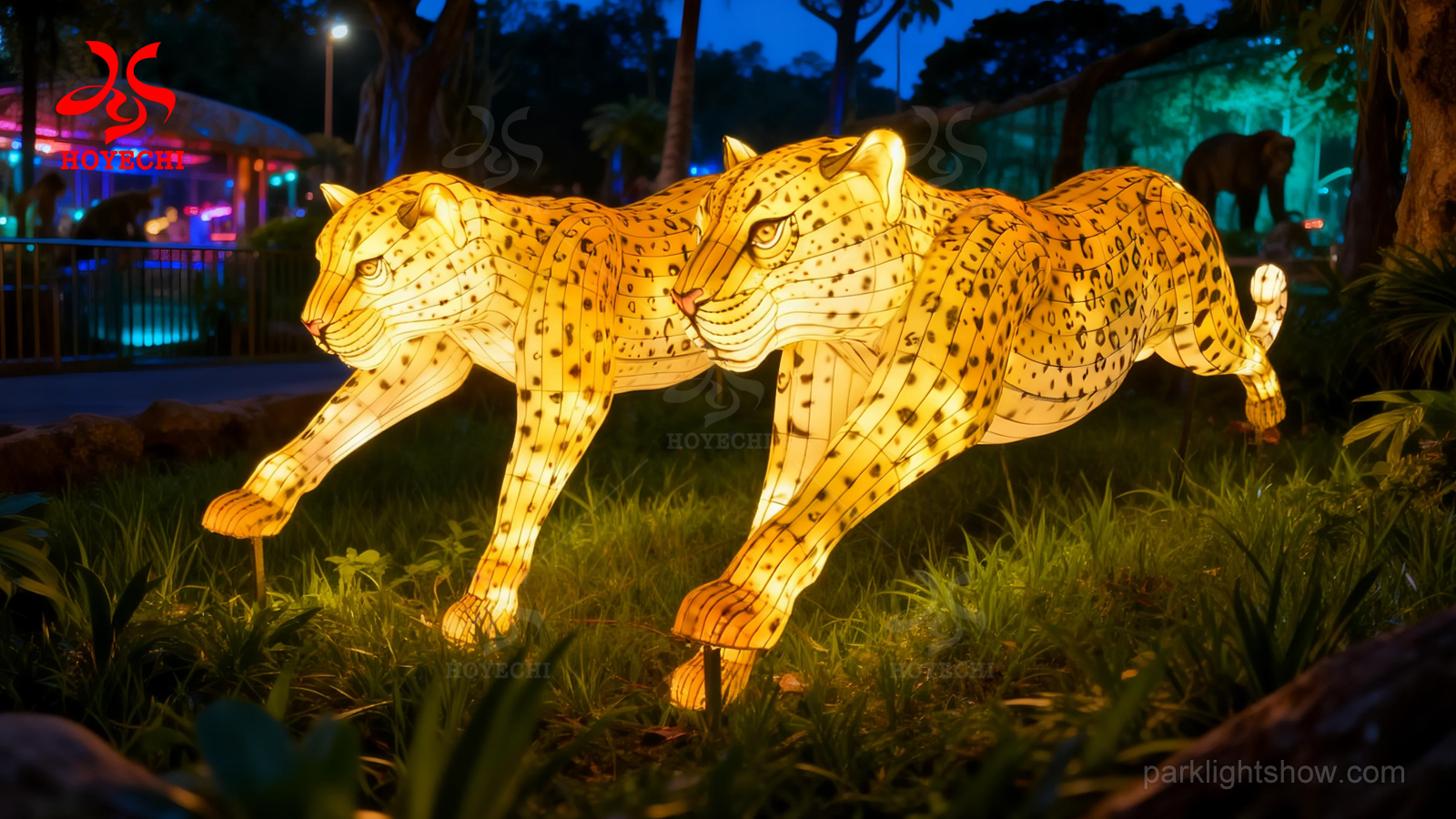
When the lights turn on, people show up.
1) Same “lights,” different result: Why we recommend themed lights—Chinese lantern installations
Honestly, a lot of lighting projects on the market look the same.
Not much novelty. Not much shock value.
String lights, hanging lights, tree wraps—sure, they feel “busy,” but they rarely deliver that wow moment.
Themed installations—especially Chinese lantern displays—are different. They come with built-in impact. That kind of visual punch that hits you first, before your brain even processes it.
(1) Because it’s not just “lights.” It has a life—and a story.
A light show isn’t finished when you place a few light groups in a park.
You’re building a parallel world.
A dreamlike fairytale kingdom.
A story where prehistoric dinosaurs come back to life.
Where a magical forest opens an entrance and invites you in.
Where an ocean kingdom glows in the night.
Where a cyber future city suddenly lands right in front of you.
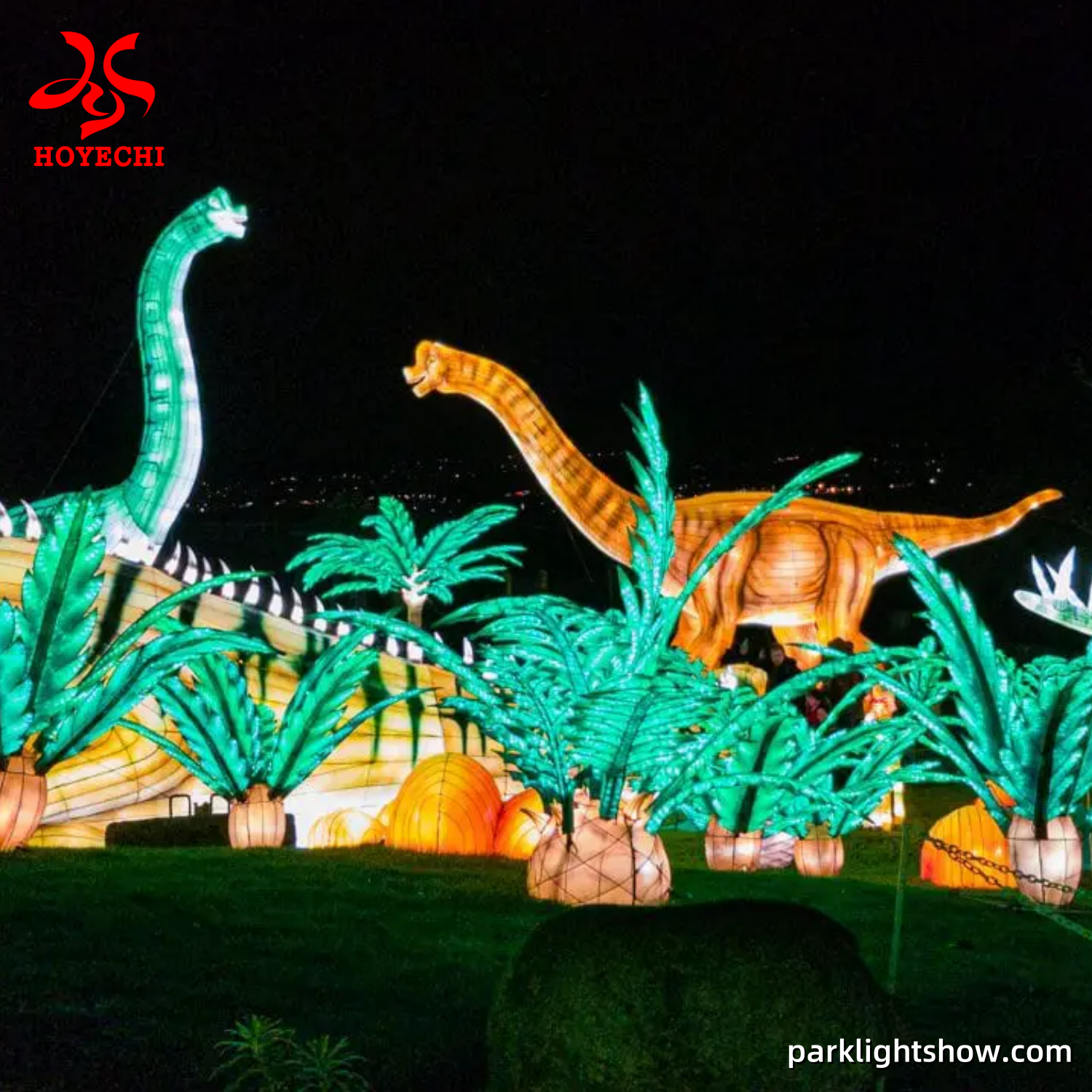
Visitors aren’t buying a ticket.
They’re buying a decision:
“Tonight, I’m going somewhere different.”
(2) It’s made for photos—and social media spreads it for you.
The power of self-media sharing is real. And it’s positive, viral, snowballing marketing.
Winter backgrounds can be dull—gray skies, bare trees, flat colors.
And funny enough, that “dull” makes themed Chinese lanterns look even more stunning.
You’ll see scenes like this:
A child runs up screaming, and parents lift their phones and shoot ten photos in a row.
Friends take group shots, post three times, and tag the location.
Someone films a short video, adds music, and the next day people are asking:
“Where is this?”
You don’t have to explain the market.
The market will explain it for you.
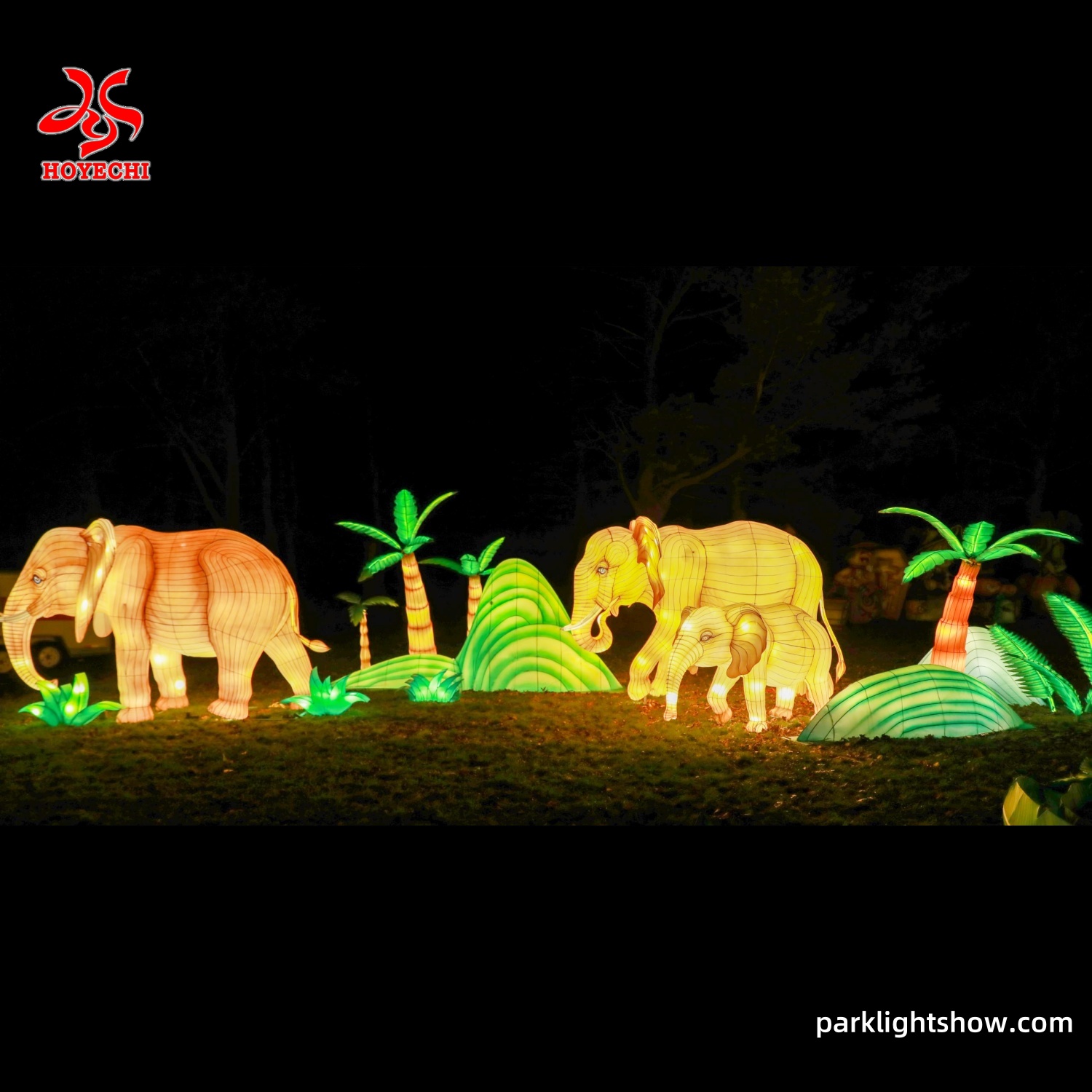
(3) It supports higher ticket value—and stronger on-site spending
A well-planned lantern festival feels far more valuable than a normal park stroll.
And that gives you confidence to do things like:
Price the night ticket separately
Extend operating hours
Drive hot drinks, glowing toys, cultural/creative merch, snack stalls
Even build membership cards, bundles, and holiday “night tour seasons”
In one sentence:
Daytime relies on scenery. Nighttime relies on lights.
2) Why many operators hesitate—two questions we hear all the time
“Is it too late to do this?”
“I can’t design—what if we mess it up?”
Those two lines are the most common hesitations we hear.
That’s why we built our service like a “run-with-you” system—rather than just dropping products off and walking away.
(1) Start with zero design cost: Free custom design (yes, truly free)
Many design companies charge a consultation fee before they draw anything.
We don’t do that—because we’re confident in real delivery.
You only need to provide two things:
A simple site plan + a few on-site photos (phone photos are fine)
A general direction (ocean theme, mythology theme, animal theme, trendy “national style” theme, etc.)
Then we provide:
l Free light show renderings
l Night-tour route planning suggestions (clear visitor flow matters—less chaos, better secondary spending)
l Scene-matching ideas (where to place the “viral” points, where the main visual should be, where interaction should happen)
To put it bluntly:
You can take the plan to report internally, evaluate, and make decisions—before you spend money.
That’s the kind of “safety” parks actually need.
Fast matters. In winter marketing, delay is the enemy.
Light show projects succeed or fail on one word: speed.
Winter campaigns are most afraid of dragging on:
Drag on, and the Christmas window is gone.
Drag on, and you miss the New Year crowd.
Drag on, and the budget gets reassigned to something else.
And then energy scatters, and the whole thing dies quietly.
So we focus on speed—and deliverable speed:
ü Modular structures: easier production, foldable transport, simpler installation
ü A mature supply chain: once the plan is confirmed, production moves fast
ü Overseas warehouses and service network: handle logistics and on-site issues more efficiently (need parts—send parts; need adjustments—adjust)
We know you don’t just want pretty renderings.
You want one thing:
Lights on—on time. Stable operation. The real scene matching the design.
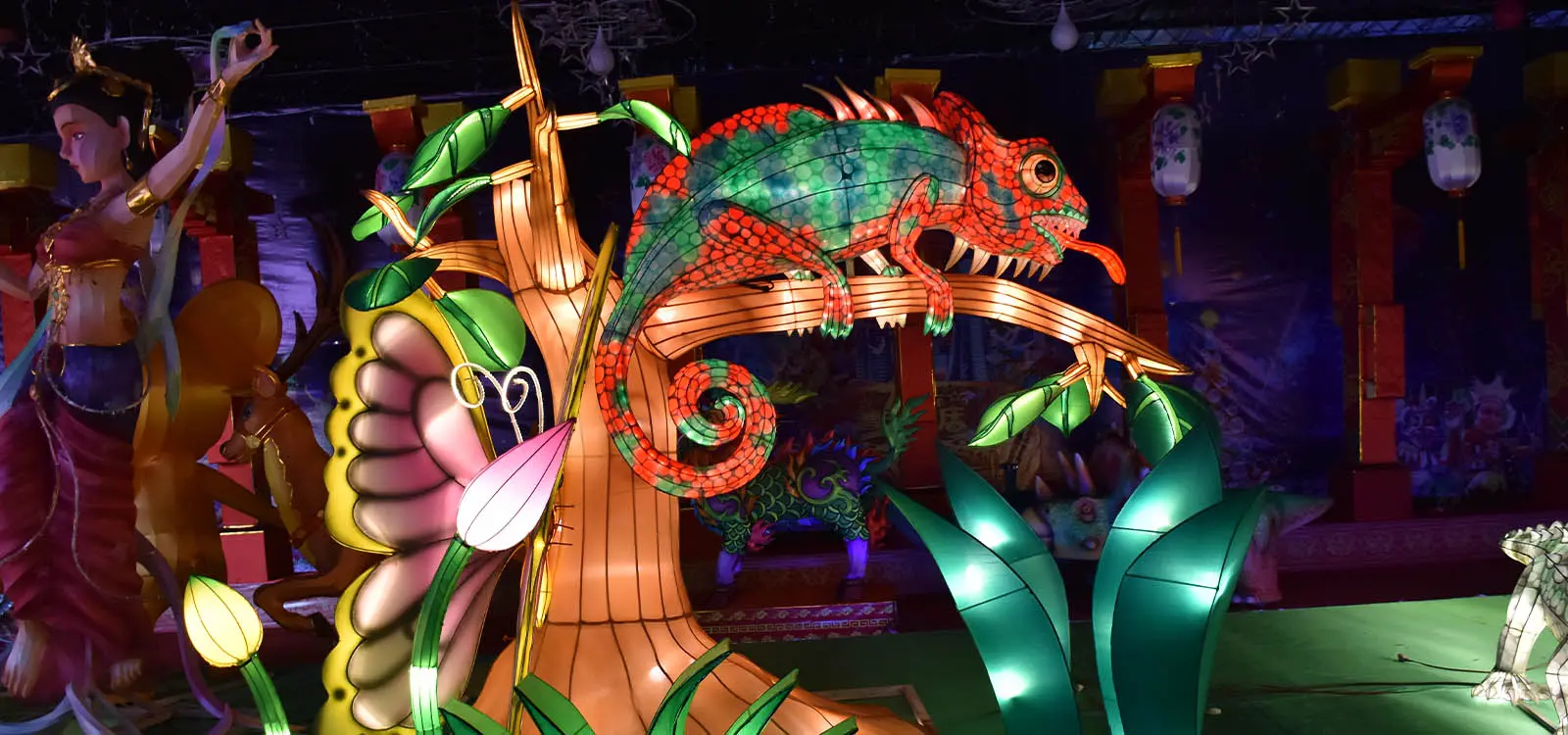
3) Picture this: What does it feel like when off-season becomes peak season?
Go ahead—imagine it. One day in December. It’s cold. You think the park will be quiet. But once the light show promo goes out, the “style” of the entrance changes completely:
- 5:30 PM: the parking lot starts lining up; the crowd grows; you need staff to manage order
- 7:00 PM: people gather in a half-circle around the main installation; kids chase the light, cheering
- 8:30 PM: snack stalls are so busy hands can’t keep up
- 9:00 PM: the gift shop says restocking can’t catch up
This isn’t fiction. It’s not a story.
This is what we’ve seen—again and again—in real light show projects.
And you’ll notice something important:
Your park is no longer only a daytime business. You now have a night-time profit engine.
Same park. Same land. Same facilities.
But your revenue structure changes—without rebuilding everything from scratch.
And right here, let me write it plainly:
Winter doesn’t feel so cold anymore—because your revenue starts burning hot.
Truth is, winter isn’t “no opportunity.” Opportunity exists in every season. Sometimes you just didn’t notice the light show. Or you didn’t believe it could be this powerful.
And one more thing: We don’t see ourselves as someone who “does a light show once.”We position ourselves as your partner—your light show project partner.
So let’s start with the free design.
Then move fast to real delivery.
Then back it up with ongoing operational support.
We’ll run this profit road with you until it truly works—because your park becoming profitable is the only foundation for long-term cooperation.
If you’re worried about winter crowds dropping, and you want to expand your park’s business:
Send us your site info.
We’ll draft a free light show proposal first.
See the effect—then decide whether to do it.
Because the most valuable step is never the decision.
It’s starting.
Post time: Dec-19-2025


