
A giant food sculpture turns a recognizable food, drink, dessert, or packaged product into a large visual feature for a commercial space. Planning should begin with the display purpose, one controlled reference, the intended setting, overall dimensions, viewing directions, quantity, and finish. These inputs help a buyer decide whether the project needs one hero piece, a repeated family, a grouped scene, or an oversized product replica—and let suppliers discuss the same scope.
The strongest concept is not always the biggest object. It is the one that remains recognizable from the intended viewing distance and fits the space in which it will be seen. A restaurant landmark, a bakery window feature, a mall display, and a trade-show product replica may all begin with “make it larger,” but they require different briefs.
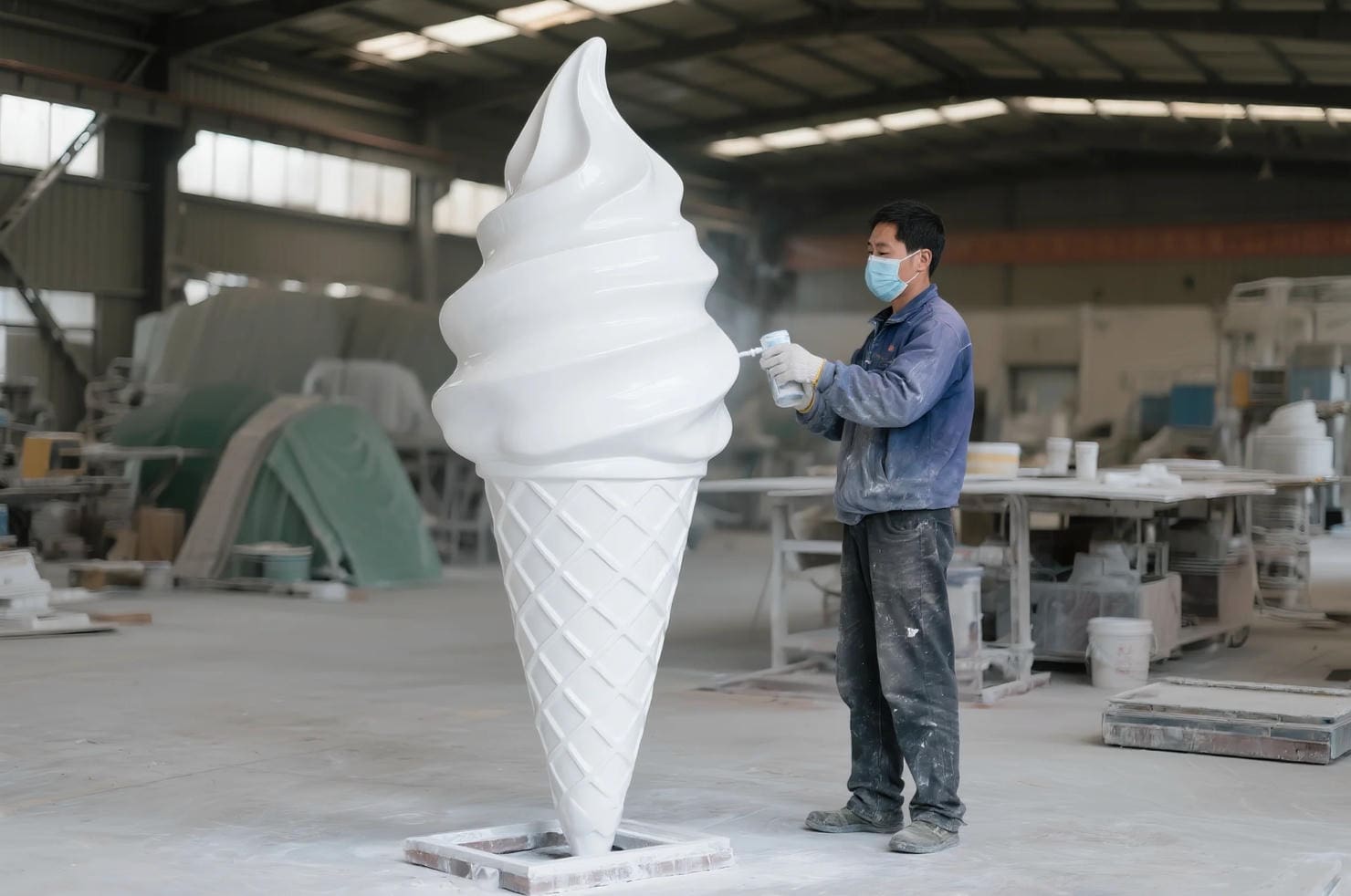
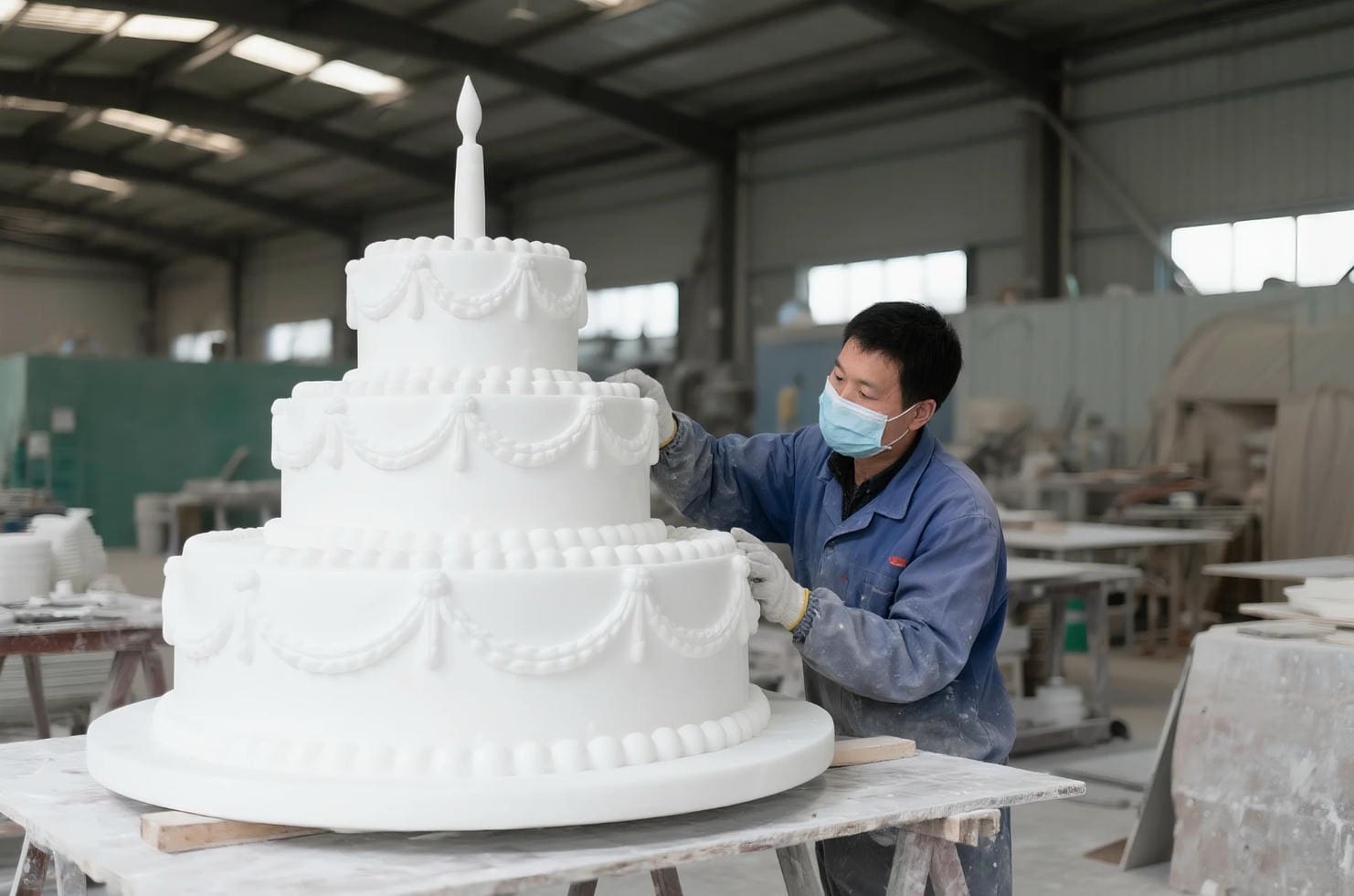
In ParkLightShow’s past fiberglass sculpture work, references have included donuts, cakes, and ice cream. The starting idea is simple: enlarge a small, familiar object until it becomes a prominent display form. Scale creates the immediate visual effect, but familiar proportions and recognizable details are what keep the enlarged sculpture readable.
Where a Giant Food Sculpture Fits a Commercial Display
Restaurant and café landmarks
An oversized burger, cup, fruit, ice-cream cone, or signature dish can act as a visual marker near an entrance, counter, waiting area, or themed zone. The subject should be connected to what the business wants visitors to recognize, rather than selected only because it looks dramatic.
Many clients do not begin with a finished sculpture concept. They may only say that a commercial plaza needs a display and explain what kind of business will use the space. That business category can become the design starting point. For an ice-cream business, for example, the visual direction may grow from an ice-cream element rather than from an unrelated decorative object.
Before choosing the form, define where people first see it and which angle carries the strongest silhouette. A sculpture that is read mainly from the front may need a different composition from one placed in the middle of an open area.
Bakery and dessert displays
Cakes, pastries, candy, drinks, and ice cream allow either realistic or deliberately stylized treatment. The right direction depends on the brand language and viewing context. A realistic cake may rely on layers, toppings, and surface cues; a playful dessert may use simplified proportions and stronger color blocks.
The buyer should identify which details create recognition. Reproducing every small texture can add complexity without improving the view from several meters away.
An ice-cream reference does not have to become only one cone-shaped sculpture. Depending on the approved concept, it can be developed as a standalone feature, a group of related forms, or a small ice-cream-themed hut. These are possible design directions, not a fixed formula for every venue.
Food-brand and packaged-product replicas
A package-shaped display has a different job from a generic food sculpture. The outline, color zones, front-facing proportions, and major graphic areas may be central to recognition. The supplier needs a controlled reference showing which version of the package or product is current.
This article does not determine rights to reproduce brands, packaging, or protected designs. The buyer should resolve those questions through its own appropriate review before approving the visual reference.
Shopping malls, exhibitions, and seasonal events
A food sculpture may be used as a centerpiece, part of a themed group, or one element within a temporary commercial display. The useful starting question is what role the piece plays: orientation marker, decorative scene, campaign feature, product reference, or photo background.
That role helps define scale, grouping, viewing sides, and the amount of visible detail. It does not guarantee visitor traffic, social sharing, sales, or any other commercial result.

Design for Recognition Before Adding Scale
Protect the silhouette
When a familiar food is enlarged, the outline often carries recognition before surface details become visible. A cone, cup, bottle, fruit, cake slice, or burger has a characteristic proportion. Stretching one dimension without reviewing the whole form can make the object look less familiar even when the color is correct.
Ask which features must be understood at first glance. The answer may be the shape of the container, the relationship between layers, a distinctive topping, or the angle of a product label area. Those features should remain clear in the approved visual reference.
Set the intended viewing directions
Not every sculpture needs the same level of detail on every side. A wall-adjacent piece, an entrance feature, and a freestanding centerpiece have different viewing patterns. Record the main viewing directions before the form is finalized.
This is a visual-planning question, not a structural instruction. Base, anchoring, public-area, lifting, and installation decisions depend on the project and should be reviewed by the responsible qualified parties.
Choose realistic or stylized treatment deliberately
Realistic treatment depends on convincing proportions, color relationships, and selected surface cues. Stylized treatment may simplify the form, exaggerate one recognizable feature, or use a brand-led palette. Neither direction is automatically better.
A useful brief names the intended style and includes references that support it. Mixing a realistic shape, cartoon color, and unrelated surface treatment without explaining the priority can lead different reviewers to expect different outcomes.
Choose the Display Format Before Requesting a Quote
One hero sculpture
A single large object can concentrate the visual idea in one form. The brief should explain the strongest viewing side, the surrounding space, the approximate footprint, and whether any supporting elements are part of the same quotation.
A grouped food scene
A group may combine different foods, supporting objects, bases, or decorative forms. Each unique form should receive its own name or number. “Five pieces” is not enough if all five require different shapes, sizes, and finishes.
The composition should also be treated as part of the design. Moving one piece can change the relationship between heights, colors, and viewing gaps even when the individual sculptures remain unchanged.
Repeated identical forms
Several truly identical pieces may share one approved form and, where the production method allows, one mold-development basis. That can distribute part of the development work across the quantity. A different posture, silhouette, or major proportion should be treated as a separate form until the supplier confirms otherwise.
For a fuller explanation of repetition, mold reuse, size, and finish as quote variables, see what changes a custom fiberglass sculpture quote.
An oversized product replica
A product replica should not be described only by height. Width, depth, orientation, visible sides, and the relationship between cap, label, package, or product components may all affect the approved visual form. Identify which features are essential and which may be simplified at the intended viewing distance.
What to Put in a Giant Food Sculpture Brief
| Brief item | What to provide | Why it matters |
|---|---|---|
| Subject | Food, drink, dessert, package, or product reference | Establishes what must be recognizable |
| Commercial setting | Restaurant, mall, exhibition, event, or branded space | Defines the viewing context without assuming a universal solution |
| Controlled reference | One current drawing, photograph, rendering, or product view | Prevents different teams from approving different versions |
| Overall dimensions | Approximate height, width, and depth | Describes the full scale better than height alone |
| Quantity and versions | Number of unique forms and repeated units | Separates one-off development from identical repetition |
| Main viewing directions | Front, two-sided, freestanding, or other stated viewing pattern | Helps prioritize silhouette and visible detail |
| Finish direction | Realistic, stylized, glossy-looking, matte-looking, textured, or another visual reference | Makes appearance expectations easier to compare |
| Destination context | Country or region, indoor/outdoor setting, and known access questions | Identifies issues that need separate packing, site, or specialist review |
The brief does not need to solve every production question. Its purpose is to make the current idea traceable. Give every reference a version or date, record who approves it, and keep open questions separate from confirmed requirements.
Move From Idea to an Approved Visual Reference
The project should progress from a clear brief to an approved visual direction before more committed production work begins. Buyers should review the subject, overall form, proportions, main viewing sides, color zones, visible details, quantity, and grouping while they are still discussing the reference.
If the concept changes, identify what changed. Replacing a topping, adjusting a color, changing the number of repeated pieces, and redesigning the full silhouette are not the same revision. A simple change log helps the buyer and supplier discuss the current version instead of relying on memory.
The later factory sequence belongs to a separate question. ParkLightShow’s guide to how fiberglass sculptures are made explains the general path from approved form through mold-based production, finishing, review, packing, and handoff.
What Factory Photos Can and Cannot Confirm
Real photographs can show visible form, color development, grouped pieces, surface appearance, production progress, and packing context. They are most useful when they can be matched to a named item and the approved reference.
Photographs do not automatically prove hidden materials, internal structure, testing, weather performance, safety, certification, compliance, installation readiness, or lifespan. Those questions need the appropriate documents, agreed scope, and qualified review where applicable.
For a food or package replica, evidence should focus on recognition. Useful views may include the overall silhouette, the main viewing face, important color zones, a side view where depth matters, and a grouped view when several pieces form one scene.
Compare Scope Before Comparing Price
Two quotations may describe different projects even when both use the same headline subject. One may assume a single front-facing sculpture; another may include a fully visible freestanding form. One may quote repeated identical units; another may treat every item as unique. Finish detail, packing, destination, and unresolved site questions can also differ.
Before comparing totals, align these points:
- the same approved reference and version;
- the same overall dimensions;
- the same number of unique and repeated forms;
- the same visible sides and finish direction;
- the same included supporting pieces or bases;
- the same packing and handoff boundary;
- the same exclusions and unresolved questions.
This does not create a universal price formula. It helps expose why two numbers may not represent the same deliverable.
Frequently Asked Questions
What is a giant food sculpture?
It is an oversized three-dimensional representation of a food, drink, dessert, package, or related product used as a commercial display feature. The exact material, form, finish, sections, and installation arrangement depend on the approved project rather than one universal specification.
What information is needed before requesting a quote?
Provide the subject or product reference, intended commercial setting, approximate height, width and depth, quantity, number of unique forms, main viewing directions, finish direction, and destination context. Mark which details are confirmed and which remain open.
Should a giant food sculpture look realistic or stylized?
Either can work when the choice supports the intended visual language. A realistic direction usually prioritizes recognizable proportions and selected surface cues. A stylized direction may simplify or exaggerate features. The buyer should approve references that make the intended balance clear.
Can several sculptures use the same form?
They may share one form when dimensions, silhouette, posture, and major features remain identical and the production method permits reuse. Color variations may be a separate finishing question. Any change to the basic form should be reviewed before assuming the same mold basis applies.
Can one design work in both indoor and outdoor settings?
Do not assume that changing the location leaves the scope unchanged. The setting may affect finish expectations, sections, base or interface questions, handling, installation, and required review. Define the actual destination and let the responsible parties confirm the project-specific requirements.
How should buyers compare two supplier proposals?
First confirm that both proposals use the same design version, dimensions, quantities, unique forms, viewing sides, finish reference, packing boundary, destination assumptions, and exclusions. If those inputs differ, the headline totals are not directly comparable.
Prepare One Controlled Brief
Start with one current reference, the commercial setting, approximate height, width and depth, quantity, main viewing directions, and finish direction. Then review ParkLightShow’s custom fiberglass sculpture projects and use that controlled brief for the next supplier discussion.
Post time: Sep-02-2026


