

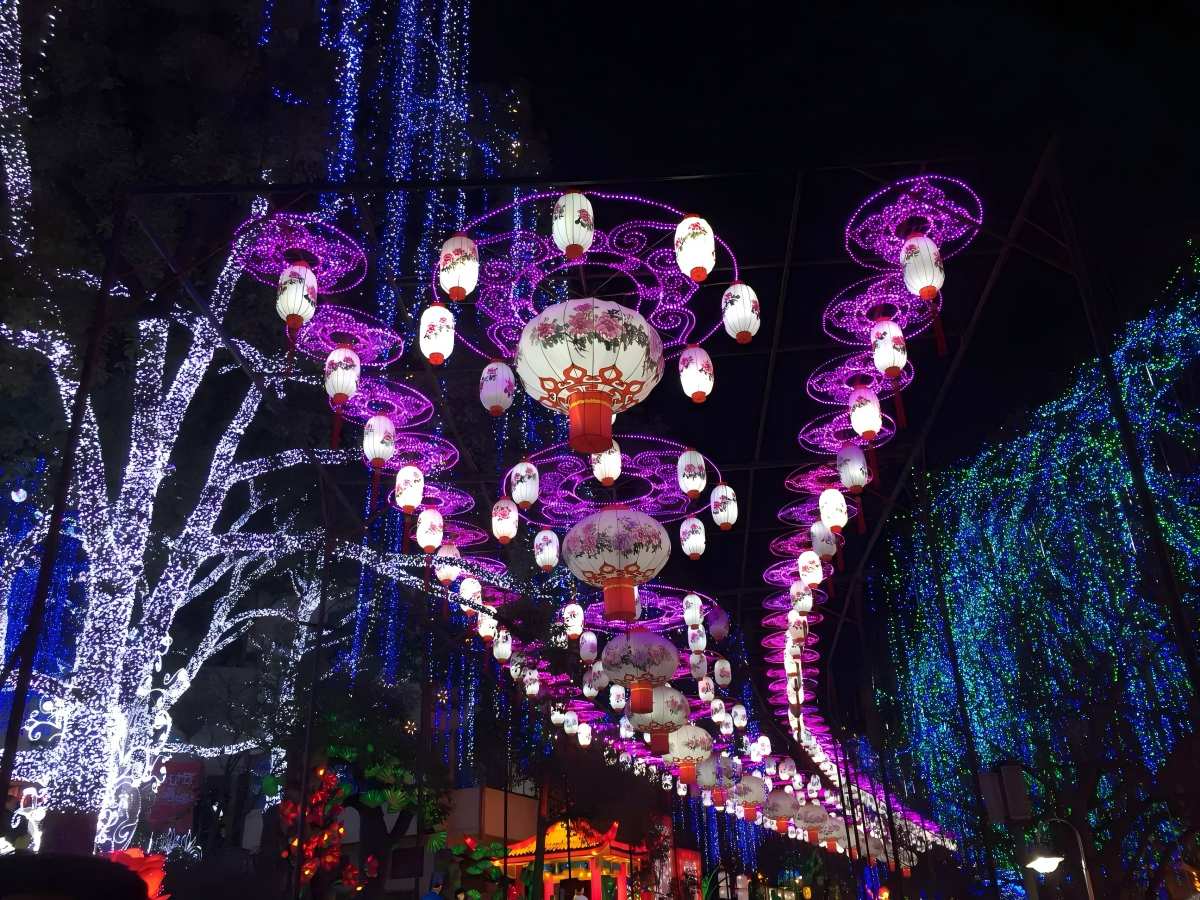
Lanterns are used during Chinese New Year because they turn wishes for celebration, reunion, good fortune and a bright new beginning into something people can see and share. Red lanterns may appear at homes, streets, temples, shopping districts and public venues before New Year’s Day and remain on display throughout the Spring Festival season. On the fifteenth day of the first lunar month, lantern viewing becomes the focus of the Lantern Festival, which traditionally closes the holiday period.
For this reason, a lantern in Chinese New Year is more than a red decoration. It can mark the arrival of the holiday, communicate an auspicious message, connect a community through a shared nighttime atmosphere and carry cultural stories through its colors, shapes and patterns.
Chinese New Year and the Lantern Festival: What Is the Difference?
Chinese New Year refers to the beginning of the Chinese lunar year and the broader Spring Festival season. The Lantern Festival is a specific celebration held on the fifteenth day of the first lunar month, during the first full moon of the new year.
The two are closely connected, but they are not interchangeable:
- Chinese New Year begins the new-year celebration.
- The Spring Festival season continues for several days.
- Lanterns can be displayed before and during this wider holiday period.
- The Lantern Festival is the major lantern-viewing celebration that traditionally brings the season to a close.
Readers who want to explore the fifteenth-day celebration in more detail can read What Is the Lantern Festival in China?
Why Are Lanterns Used in Chinese New Year?
1. Light Welcomes a New Beginning
Chinese New Year marks the transition from the old year to the new. Lighting a lantern makes that change visible: an ordinary doorway, street or square becomes a festive space after dark. Light is widely associated with warmth, hope and the wish for a brighter year ahead.
2. Red Communicates Celebration and Good Wishes
Red is the color most strongly associated with Chinese New Year. In festive settings, it commonly expresses happiness, vitality, good fortune and an auspicious beginning. Gold details are often added to suggest prosperity and richness.
Lanterns may also feature the character fu (福), flowers, fish, fruit, zodiac animals, dragons, phoenixes or traditional decorative patterns. These elements do not all carry exactly the same meaning, but each can contribute a recognizable New Year message.
3. Lanterns Reinforce Reunion and Shared Celebration
Chinese New Year is closely connected with family reunion. Round lantern forms can reinforce ideas of completeness, harmony and togetherness. When lanterns are hung in rows across streets or gathered around a public square, the celebration expands from individual homes into a shared community experience.
4. Lanterns Carry Stories and Cultural Identity
A lantern can communicate through both light and imagery. A zodiac animal identifies the year’s theme. Dragons, phoenixes and qilin can introduce traditional stories and auspicious symbols. Flowers, local architecture and regional craft styles can connect a display with a particular place.
This visual storytelling is one reason lantern art can be understood by children, families and international visitors even when they do not share the same first language.
What Do the Colors, Shapes and Patterns Mean?
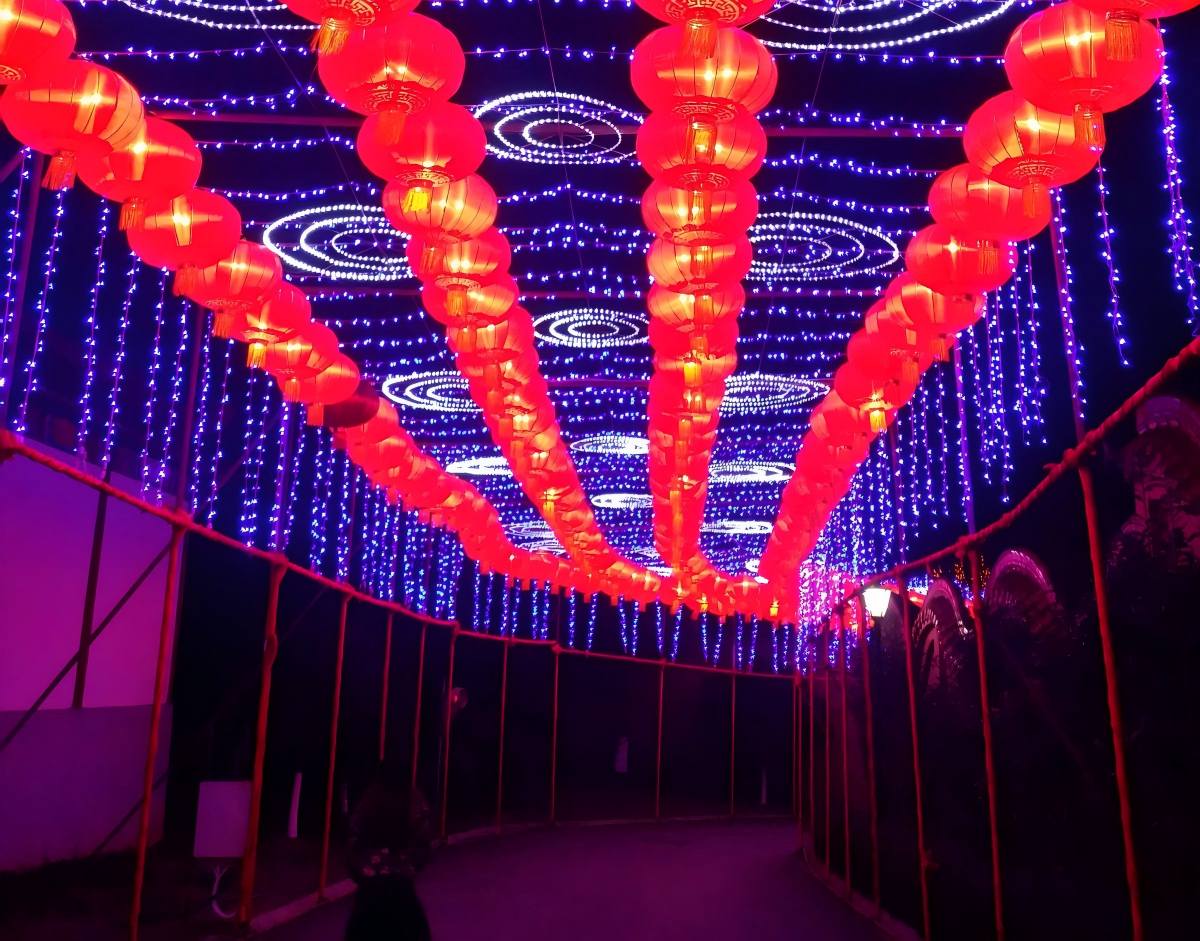
The meaning of a Chinese New Year lantern usually comes from a combination of color, form, written characters and decorative imagery. The following interpretations are common cultural associations rather than fixed rules for every region or every design.
| Lantern Element | Common Association |
|---|---|
| Red | Celebration, good fortune, vitality and festive blessings |
| Gold | Prosperity, abundance and honor |
| Round form | Completeness, harmony and family reunion |
| Fu (福) and other auspicious characters | A direct written wish for happiness or good fortune |
| Fish, flowers and fruit | Abundance, growth, vitality or seasonal blessings, depending on the motif |
| Zodiac animals | The identity and theme of the new lunar year |
| Dragons, phoenixes and qilin | Auspicious power, harmony, prosperity or traditional storytelling |
When planning a culturally themed event, organizers should select symbols according to the event’s purpose, audience and cultural context. Combining many traditional motifs without a clear story can make a display less meaningful rather than more authentic.
Common Types of Chinese New Year Lanterns
Round Red Hanging Lanterns
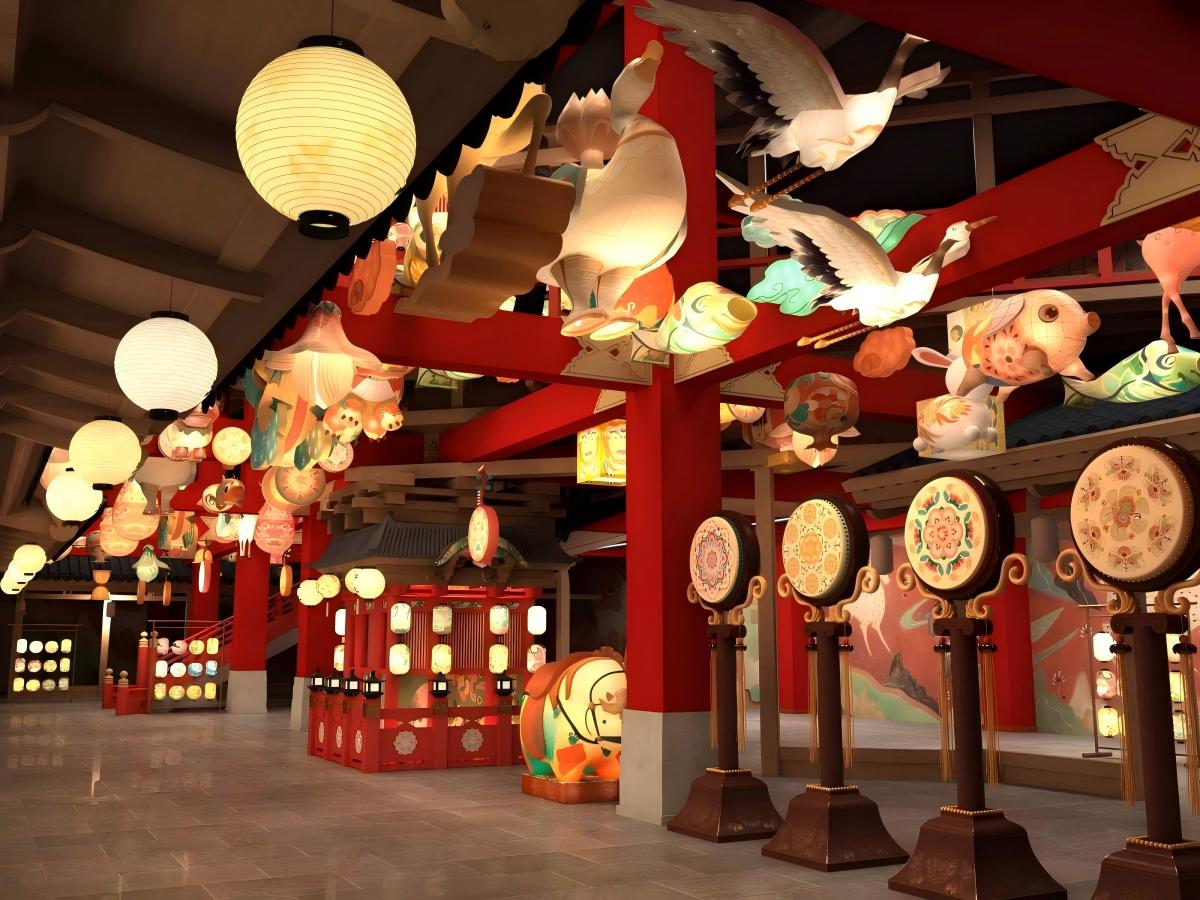
Round red lanterns are among the most recognizable decorations of the season. They are commonly used at entrances, beneath rooflines, across streets and around shops or public buildings. Repetition creates a strong visual rhythm and quickly establishes a unified New Year atmosphere.
Palace Lanterns and Handcrafted Lanterns
Palace-style lanterns often have structured frames, decorative borders and painted panels. Regional traditions also include lanterns made through bamboo weaving, paper craft, fabric work and other local methods. These forms show that “Chinese lantern” does not refer to one single design.
Zodiac and Auspicious-Themed Lanterns
The year’s zodiac animal can become the central theme of a New Year display. Flowers, fish, dragons, phoenixes, lucky characters and traditional patterns can then support the main story without competing with it.
Lantern-Riddle Displays
During the Lantern Festival, riddles may be written on slips of paper and displayed beside lanterns for visitors to solve. This turns lantern viewing into a participatory cultural activity. Lantern riddles are particularly associated with the Lantern Festival and should not be presented as an activity required on every day of Chinese New Year.
Large Artistic Lantern Installations
Modern parks, cities and cultural events often develop traditional lantern language into large animals, figures, flowers, architecture, tunnels and themed scenes. These installations retain the idea of shaping stories with light, but their scale, structure, materials and public-use requirements are very different from those of household paper lanterns.
For a broader overview of traditional forms and modern festival installations, see Chinese Lanterns: Meaning, Types and Festival Displays.
When Are Chinese New Year Lanterns Displayed?
Exact dates vary by family, community, city and event schedule, but a common sequence is:
- Before Chinese New Year: homes, shops, streets and venues begin installing lanterns and other decorations.
- New Year’s Eve and the first days of the new year: lanterns appear alongside couplets, paper cuttings and other festive elements.
- During the Spring Festival season: public decorations, temple fairs and community celebrations continue.
- On the fifteenth day: lantern viewing and related activities reach their traditional high point during the Lantern Festival.
- After the Lantern Festival: some displays are removed, while commercial or public events may remain open according to their announced operating dates.
It is therefore inaccurate to say that lanterns appear only on the Lantern Festival. They can be part of the wider Chinese New Year season, while the fifteenth-day festival remains the most concentrated celebration of lantern viewing.
From Household Lanterns to Modern Public Lantern Festivals
Traditional New Year lanterns are often associated with homes, streets, temples and community celebrations. As craft methods, lighting systems and event production developed, lantern art also expanded into city squares, parks, zoos, scenic areas, resorts and commercial destinations.
A modern public event may use lanterns to create a complete visitor journey:
- A recognizable entrance landmark welcomes visitors.
- Lantern-lined paths connect the main zones and guide visitor flow.
- A zodiac animal, dragon or other signature installation creates a visual focal point.
- Photo areas encourage family interaction and social sharing.
- Lantern riddles, performances, food and cultural programs add participation.
- Local architecture, wildlife or city stories give the event a distinct identity.
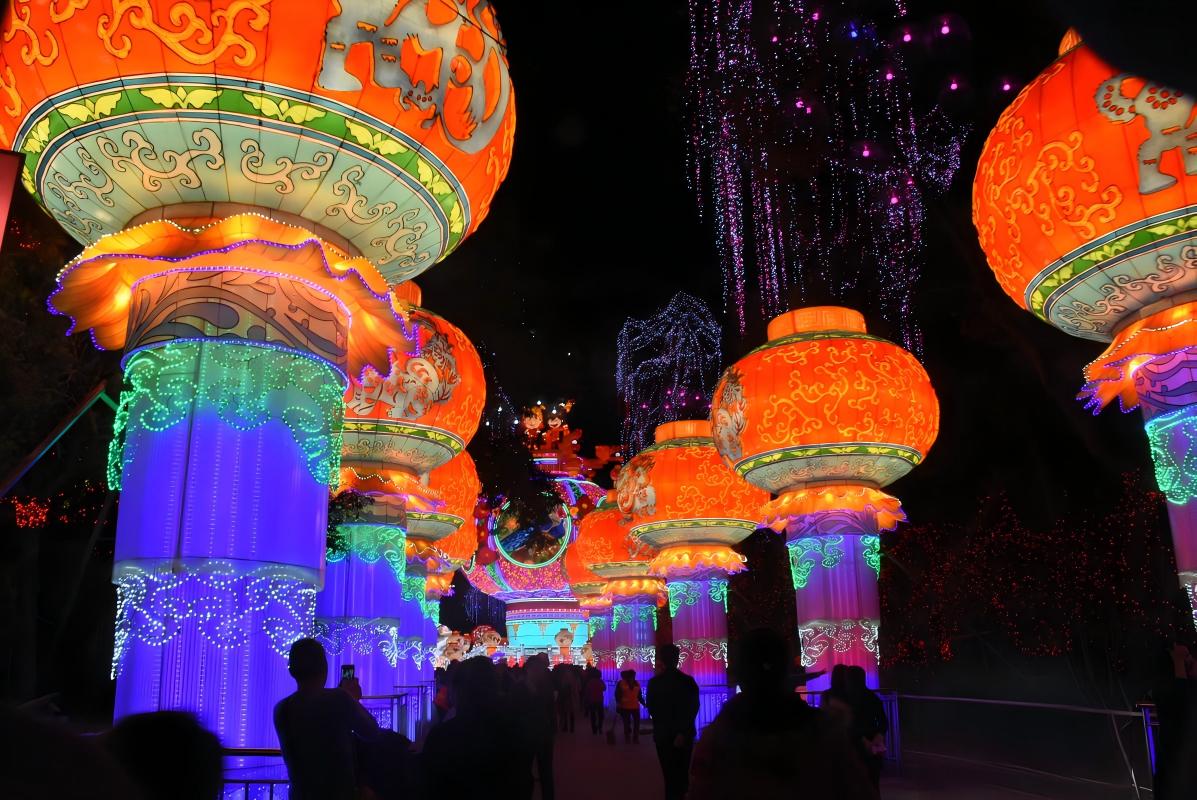
This evolution is not simply a matter of enlarging a paper lantern. A public outdoor installation must also address site conditions, structural stability, electrical safety, weather exposure, installation access, visitor distance, maintenance, storage and transportation.
Household Lanterns vs. Commercial Public Lantern Displays
| Comparison | Household or Indoor Lantern | Commercial Public Lantern Display |
|---|---|---|
| Primary purpose | Home decoration and festive atmosphere | Public events, visitor experience and nighttime attraction |
| Typical scale | Small and lightweight | Large, themed and sometimes walk-through |
| Environment | Indoor, sheltered entrance or short-term display | Parks, streets, plazas and outdoor public venues |
| Design priorities | Color, pattern and hanging effect | Theme, visitor route, structure, installation and maintenance |
| Typical construction | Paper, fabric, bamboo or lightweight frames | Engineered metal frames, outdoor lighting and weather-resistant decorative materials |
| Project objective | Celebrate the holiday at home | Attract visitors, extend evening activity and support a public or commercial event |
For large outdoor projects, see Chinese New Year lantern displays for parks, cities and commercial venues.
How Can an International Venue Present the Tradition Responsibly?
An international Chinese New Year event does not become more authentic simply by using as many Chinese symbols as possible. A stronger approach is to choose a clear cultural theme, explain it accurately and adapt the visitor experience to the host venue.
A project can retain recognizable elements such as red lanterns, the zodiac, reunion and New Year blessings while also incorporating the host city’s architecture, local animals, plants, history or venue identity. This helps the event achieve three goals:
- Give visitors an understandable introduction to Chinese New Year culture.
- Create images and experiences that belong to the host venue rather than a generic display.
- Develop a seasonal event that can return with a refreshed zodiac or theme in future years.
How HOYECHI Supports Public Chinese New Year Lantern Projects
HOYECHI is a manufacturer and project solution provider for custom lantern festivals, park light shows, Chinese lantern festival displays and outdoor night tourism attractions. For parks, cities, scenic areas, resorts, zoos and commercial venues, the team can support concept development, themed route planning, custom production, factory pre-installation, modular packing, international delivery and remote or on-site installation assistance.
The practical process begins with the venue rather than a catalog of individual decorations. Site dimensions, visitor route, operating dates, cultural theme, local climate, installation conditions, budget and plans for future reuse all influence the recommended project scope.
This article explains the cultural meaning of lanterns in Chinese New Year. For project planning and commercial delivery, continue with:
- Chinese Lantern Festival Display Solutions
- Light Show Planning for Parks and Outdoor Venues
- Contact HOYECHI
Frequently Asked Questions
Are lanterns used only during the Lantern Festival?
No. Lanterns can be installed before Chinese New Year and remain part of the wider Spring Festival season. The Lantern Festival on the fifteenth day is the traditional high point for lantern viewing and related activities.
Why are Chinese New Year lanterns usually red?
Red is widely associated with happiness, good fortune, vitality and celebration in Chinese festive culture. Other colors may be used in modern designs, but red remains the clearest visual signal of Chinese New Year.
Are Chinese New Year and Lunar New Year exactly the same?
Chinese New Year specifically refers to the new-year tradition in Chinese culture. Lunar New Year is a broader term that may also refer to distinct celebrations in Korea, Vietnam and other cultures. Event organizers should choose the name that accurately reflects the traditions being presented.
Are sky lanterns the same as red Chinese New Year lanterns?
No. Red New Year lanterns are normally hung or fixed in place, while sky lanterns rise into the air. Sky lanterns may be restricted because of fire, aviation and environmental risks, so public organizers must follow local regulations.
Can a Chinese New Year lantern event use the zodiac?
Yes. The year’s zodiac animal provides a clear annual theme. Public venues can replace the main zodiac scene each year while reusing suitable entrances, floral elements, hanging lanterns and supporting installations.
Can a park or city outside China host a Chinese New Year lantern event?
Yes. The event should respect and explain the cultural source, then adapt the route, storytelling and supporting activities to the local audience and venue. Local landmarks or natural themes can be included without obscuring the meaning of Chinese New Year.
Conclusion
Lanterns became an enduring part of Chinese New Year not simply because they illuminate the night, but because they give visible form to wishes for reunion, celebration, good fortune and a hopeful beginning.
From a red lantern at a family doorway to the lantern viewing of the fifteenth day and today’s large public festivals, the scale and construction have changed while the central idea remains: light brings people together to welcome a new year.
Planning a Public Chinese New Year Lantern Event?
Send HOYECHI your venue type, site plan, proposed dates, approximate visitor route and project goals. The team can help you evaluate a culturally appropriate theme and a practical project scope.
Post time: Jan-13-2026


