
A phoenix lantern display is more than a large bird with colorful feathers. Its design needs a readable silhouette: a clear head and neck, wings that suit the composition, and a tail that feels connected to the body. Flowers and other decorative elements can complete the scene without hiding those features.
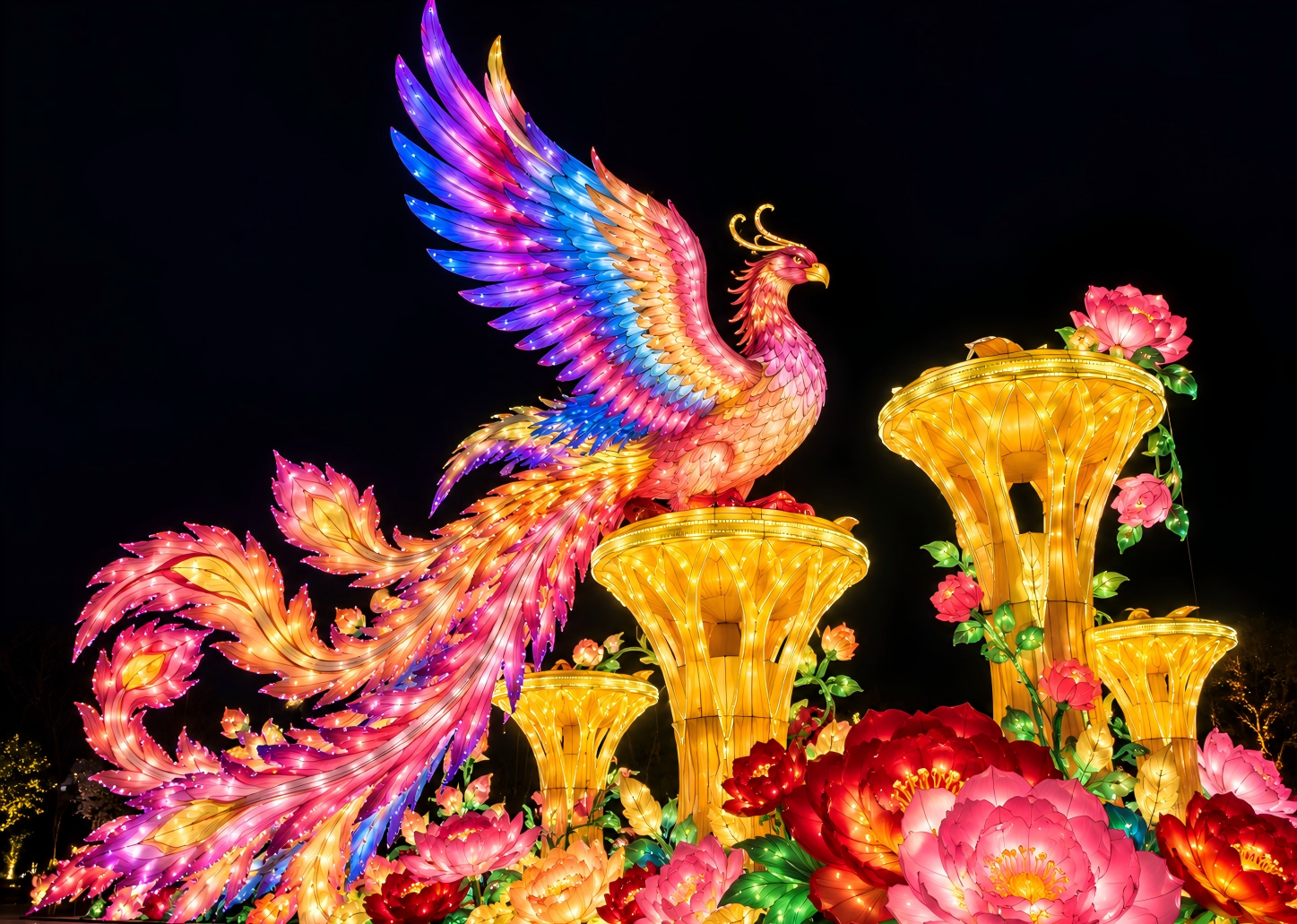
For a commercial display, begin with the whole composition rather than choosing a height alone. A tall phoenix with a narrow profile and a wide, outstretched phoenix can ask very different things of the available display area.
Start with a shared visual reference
“Phoenix” can suggest different images to different customers. Agree on the intended reference before discussing the details: the head shape, neck curve, wing outline and treatment of the tail. References should guide an original design, rather than imply that a recognizable film or game character can be copied without permission.
A stylized design and a more elaborate feathered design can both be considered. The important question is whether the approved drawing communicates one consistent character. Mixing a delicate head, heavy wings and an unrelated tail can make the figure feel assembled from separate ideas.
Review the full outline, not only the height
Ask for the proposed overall width and depth as well as height. Pay particular attention to the wing tips and the farthest point of the tail. These define the composition beyond the central body.
Consider the view shown in the drawing. A broad wing arrangement may read clearly from the front, while a curved neck and sweeping tail may be more visible from an angle. Review the design against a photo or drawing of the intended setting, rather than against a blank background only.
The main visual check is straightforward: can you distinguish the head, wings and tail from the intended viewing direction? A beautiful side-view drawing does not automatically describe the effect from the front. This is a composition review, not a structural or installation assessment.
Give the feathers a clear color hierarchy
Using more colors is not the same as creating more detail. One approach is to establish a main body color, a related wing palette and selected accents along the tail. This gives the eye a way to follow the figure.
Review adjacent colors together. If every feather uses an equally strong contrast, the larger wing shape may become less clear. Ask to see the proposed nighttime appearance alongside the color drawing; a rendering communicates design intent, not proof of the finished lighting effect.
Let flowers support the phoenix
Flower lanterns can frame the base, echo a curve in the tail or connect the figure to the surrounding display. They do not need to repeat the same height or size.
In the composition, keep the head and important wing details visible. A dense foreground of large flowers can hide the feature that made the phoenix attractive in the first place. Compare the scene with and without the supporting elements to see what each addition contributes.
There is no fixed requirement to use one particular flower. Choose the floral shapes and colors as part of the overall theme. The brief should also distinguish the phoenix itself from the supporting pieces, so everyone understands what is included in the proposed set.
Separate an open-wing pose from moving wings
A phoenix can suggest flight through a static pose. An open-wing drawing does not mean the wings will physically move.
If movement is requested, describe it separately and ask for a project-specific feasibility review before treating it as part of the agreed design. Do not infer mechanical capability from a still image. Our guide to static and animated lantern displays discusses this distinction in more detail.
What to include in a design enquiry
Share the available display area, site photos or plan, preferred reference image, intended viewing direction and event date. If known, include the desired dimensions, number of figures, supporting elements and budget range.
Mark what you like about a reference: the wing position, tail curve or color palette. This is more useful than asking for an identical scene when your setting is different. For a broader project, introduce the phoenix as one proposed feature within your lantern festival display enquiry to HOYECHI.
Common questions
Does a phoenix need to be paired with a dragon?
Not as a design requirement. The composition can focus on a single phoenix, or include other elements where they serve the chosen theme. Confirm the intended story before adding another major figure.
Can a phoenix have spread wings without animation?
Yes, spread wings can be a static visual pose. Physical movement is a separate requirement and should not be assumed from the artwork.
Is height enough to request a comparable proposal?
No. Include the width, tail extent, quantity and supporting pieces, or ask the designer to propose them. Otherwise, proposals may describe quite different compositions.
Post time: Sep-11-2026


