
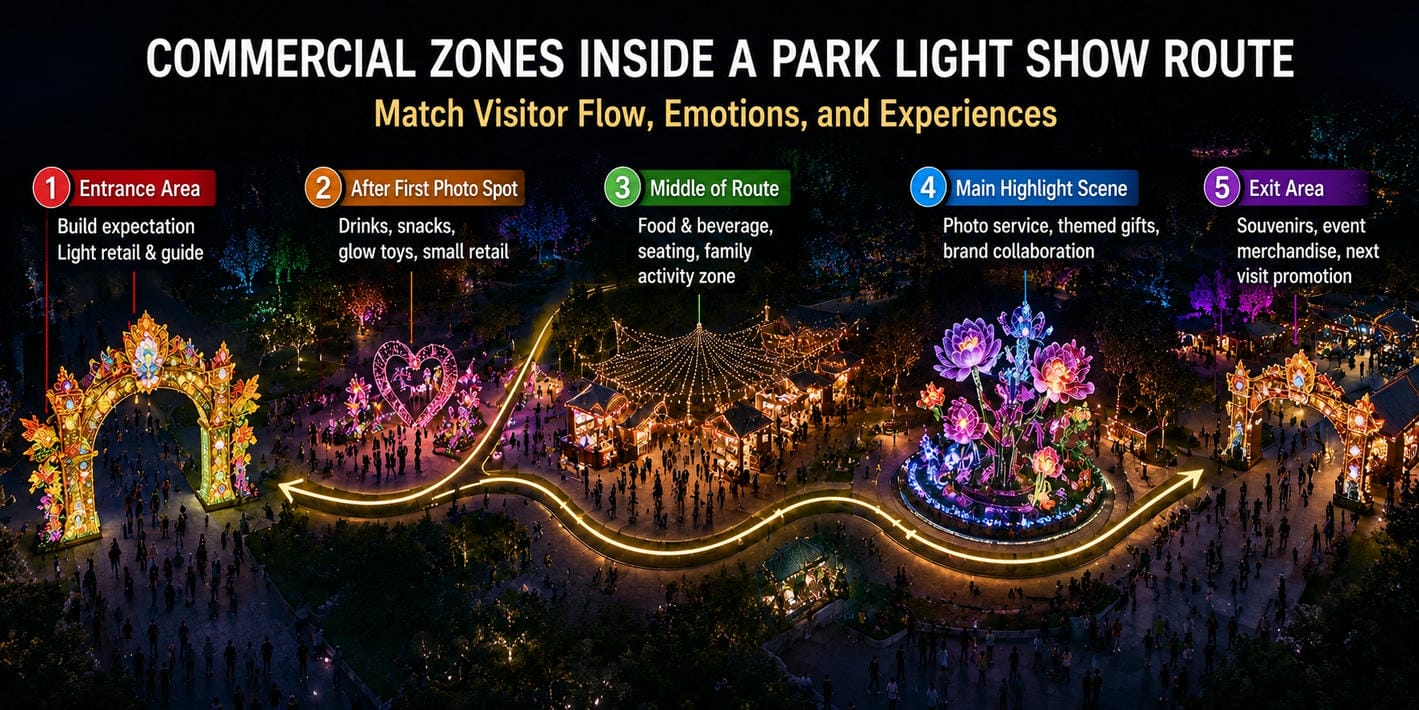
 A successful park light show is not only about beautiful lights. It is about how visitors move, where they stop, what they feel, and when they naturally want to buy something, rest for a while, take a photo, or bring home a souvenir.
Many parks and scenic areas treat commercial zones as something separate from the light show: the lights attract visitors, food stalls sell snacks, and retail booths try to add extra income. But in a truly well-designed park light show, commercial zones are not interruptions. They are part of the visitor journey.
Visitors do not spend money simply because a booth exists. They spend because the timing feels right. They have just taken a beautiful photo. Their children want to stay and play. The weather is cool, and a warm drink feels perfect. The family needs a place to sit down. Before leaving, they want to take home a small memory from the night.
The Real Purpose of Commercial Zone Design
A good commercial zone does not force visitors to buy. It gives them a comfortable reason to stop, stay, interact, and naturally extend their nighttime experience.
01 Commercial Zones Should Follow Visitor Emotions, Not Empty Space
One of the biggest mistakes in light show route planning is placing commercial booths wherever there is extra space. This may be convenient for setup, but it rarely creates the best visitor experience or the strongest revenue performance.
A park light show is like an evening journey. At the entrance, visitors are excited and curious. At the first photo spot, they begin to relax. In the middle of the route, they may feel ready to rest. Near the main highlight, their emotions are at the highest point. Before leaving, they begin to think about souvenirs, memories, and whether the event was worth sharing.
The best commercial zones are placed around these emotional moments. They appear when visitors are already slowing down, not when they are still rushing forward.
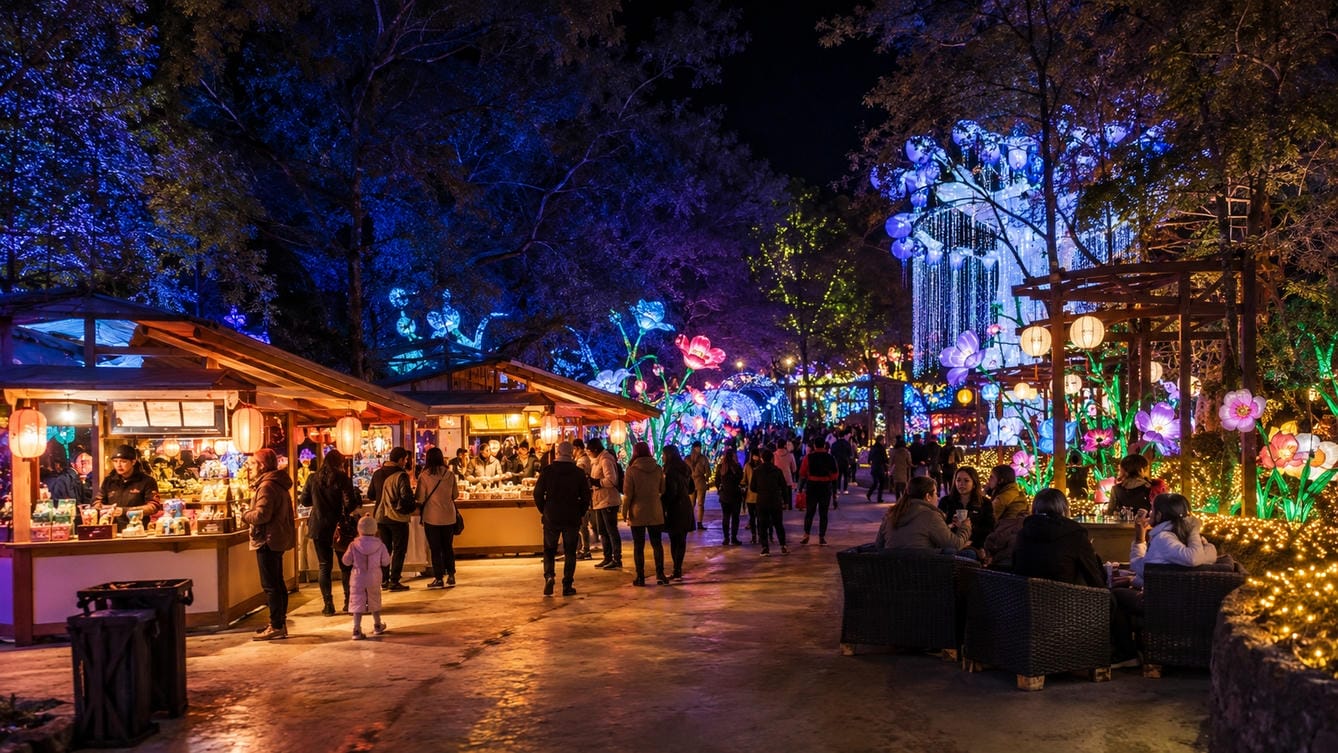
02 Do Not Sell Too Hard at the Entrance
The entrance is one of the most important parts of a light show route, but it is not always the best place to push sales. Visitors who just arrived are usually in exploration mode. They want to see what is inside, take their first photo, and feel the atmosphere of the event.
If the entrance is too crowded with booths, signs, and sales messages, it can weaken the sense of arrival. Instead of feeling like they have entered a magical nighttime attraction, visitors may feel like they have entered a market before the experience begins.
What the Entrance Should Do
Create expectation, deliver the first photo moment, guide visitors into the route, and make the ticket feel worthwhile.
What to Avoid
Too many sales booths, blocked entry flow, confusing signage, and commercial elements that overpower the light show atmosphere.
A better entrance strategy is to use a strong illuminated gateway, flower arch, themed sign, or welcome scene. Light retail can still exist nearby, but it should support the atmosphere instead of taking over the experience.
03 Place Drinks and Snacks After the First Photo Moment
After visitors take their first good photos, their mood changes. They stop rushing. They begin to feel that the event is worth exploring. This is a strong moment for light food, warm drinks, glow toys, and small retail items.
This placement works because visitors are already stopping. The commercial zone does not need to pull them away from the route; it simply gives them a natural next step.
Design Tip
Put small food and drink options near the first major photo area, but slightly to the side of the main viewing angle. This keeps the photo spot clear while still making the commercial area easy to find.
04 Use the Middle of the Route for Stay-Based Revenue
The middle of the route is one of the most valuable areas in a night tourism light show. By this point, visitors have already entered the experience, taken photos, walked for a while, and started to slow down. Families may need rest. Children may want something to play with. Adults may be ready for food or drinks.
This is where a commercial zone can become more than a selling point. It can become a warm resting island inside the light show.
Food & Beverage
Hot drinks, snacks, seasonal food, and local treats give visitors a reason to sit and stay longer.
Family Activities
Small games, glow crafts, and children’s activities can extend family dwell time naturally.
Rest Area
Comfortable seating, soft lighting, and clean pathways make the commercial area feel welcoming.
Mini Market
A themed night market can become part of the attraction instead of feeling like a separate sales zone.
This part of the route should be designed carefully through professional light show planning, because it connects visitor comfort, route flow, and commercial conversion.
05 Turn Main Photo Spots into High-Value Commercial Moments
Every strong light show should have one or two signature photo scenes. These may be giant lantern sculptures, illuminated flower tunnels, glowing animal displays, moon-shaped installations, Christmas trees, or immersive walk-through structures.
These locations are not only visual highlights. They are also high-value commercial moments. Visitors stay longer here, take more photos, and feel more emotionally connected to the experience.
The key is to keep the commercial add-on natural. Visitors should feel that the service helps them preserve the experience, not that it interrupts the moment.
06 Put Family Commercial Zones Near Interaction, Not Far Away
Family visitors are often the most valuable audience for park light shows. When children are excited, parents slow down. When families slow down, food, retail, toys, photos, and small activities all have a better chance to convert.
For this reason, family-oriented commercial zones should be placed near interactive scenes, not hidden in a corner far away from the main route.
Good Locations for Family Commercial Zones
- Near animal lantern displays
- Beside interactive light floors or small games
- Close to children’s photo spots
- Next to glow toy or craft areas
- Near seating areas where parents can rest
This design makes commercial activity feel like part of the family experience. Children are not being sold to; they are being invited to play. Parents are not being pushed to buy; they are given a convenient way to make the evening easier and more memorable.
07 Make the Commercial Zone Look Like Part of the Light Show
A commercial zone should never feel like a temporary market dropped into a beautiful lantern festival. If visitors walk from a dreamy light tunnel into an area with harsh white lighting, messy cables, plain tents, and random signage, the mood breaks immediately.
Commercial zones need design too. They should match the color, theme, lighting temperature, and atmosphere of the light show.
When commercial areas are visually integrated, they help extend the atmosphere instead of breaking it.
08 Protect the Visitor Route: Revenue Should Never Block the Experience
Commercial zones are valuable, but they should never damage the basic visitor experience. If queues block the path, if booths cover the main view, or if food smells interfere with photo areas, visitors may feel uncomfortable.
The most profitable layout is usually not the most crowded layout. It is the layout where people can move smoothly, stop comfortably, and buy naturally.
Commercial Zone Rule
Do not block the view. Do not block the path. Do not break the atmosphere. A commercial zone should feel like a pleasant stop, not an obstacle.
Commercial Zone Placement Summary
How HOYECHI Helps Parks Plan Better Commercial Routes
HOYECHI does more than provide decorative lighting products. For park and scenic area projects, we help clients think about the full route: where visitors enter, where they take photos, where they slow down, where families stay, and where commercial value can happen naturally.
During the early planning stage, we can provide suggestions for entrance scenes, route structure, photo spots, interactive zones, rest areas, and commercial placement. The goal is not to fill the park with more products, but to help the light show become a more complete and profitable nighttime experience.
Route Planning
We help organize visitor flow so the route feels natural, safe, and commercially practical.
Photo Spot Strategy
We recommend scenic points that encourage visitors to stop, take photos, and share the event.
Family Experience
We help design areas that attract children and keep families engaged longer.
Commercial Integration
We help commercial zones support the visitor experience instead of interrupting it.
FAQ: Commercial Zone Design for Park Light Shows
Where should commercial zones be placed in a park light show?
The best locations are usually after major photo spots, in the middle of the route, near family interaction areas, and close to the exit. These are places where visitors naturally slow down and feel more willing to spend.
Should commercial booths be placed at the entrance?
A few light commercial elements can be placed near the entrance, but the entrance should not feel overly sales-driven. Its main purpose is to create expectation and guide visitors into the event.
How can commercial zones avoid damaging the light show atmosphere?
Use themed booth design, soft lighting, clean signage, clear queues, safe cable management, and layouts that do not block major photo angles or visitor paths.
What commercial items work well in a park light show?
Warm drinks, snacks, glow toys, souvenirs, instant photos, family activities, themed gifts, and brand activations can all work well when placed in the right part of the route.
Can HOYECHI help plan commercial zones inside a light show route?
Yes. HOYECHI can provide early-stage route and scene suggestions to help parks connect lighting design, visitor flow, photo spots, family interaction, and commercial zones into one complete night tourism experience.
Design Commercial Zones That Feel Like Part of the Experience
The best commercial zones inside a park light show do not feel like sales points. They feel like comfortable places to stop, rest, play, take photos, and bring home memories.
If your park, scenic area, resort, farm, or outdoor venue is planning a light show, HOYECHI can help you think beyond decoration and build a route that supports both visitor experience and commercial value.
Contact HOYECHI to start planning a park light show route with better visitor flow and commercial potential.
Post time: May-31-2026


