

A panda lantern display starts with a familiar, appealing character. It does not always need an exaggerated expression or elaborate decoration. Recognizable black-and-white markings and a well-composed setting can communicate the theme clearly. Nor does the setting have to be a zoo: panda-themed lanterns can be considered for parks, commercial venues, and other lantern display spaces.
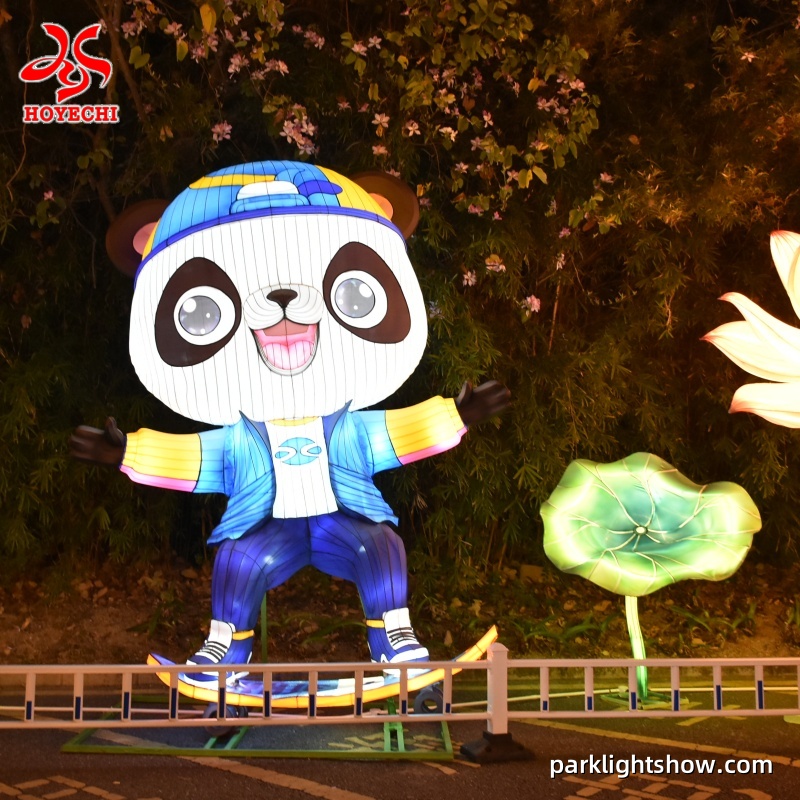
Before deciding how many pandas to include, choose the kind of scene you want to create. Should it suggest pandas in a natural bamboo setting, or a more imaginative cartoon world? Either direction can work, but the figures and scenery should share a consistent visual style.
Choose Between a Realistic and a Cartoon Approach
In our panda lantern work, realistic designs have been more common than cartoon designs. Here, “realistic” means retaining the proportions, markings, and poses that make a panda recognizable—not reproducing every anatomical detail.
For this approach, review the overall silhouette before focusing on decoration. The ears, eye patches, body, and limbs should look as though they belong to the same design. Adding a dramatically stylized head to an otherwise natural-looking body can make the result feel inconsistent.
A cartoon panda offers more creative freedom. Proportions, poses, colors, and surrounding elements can become bolder. The design question changes from “How closely does this resemble an animal?” to “What character and setting are we creating?” Even in a colorful, imaginative scene, the panda should remain easy to identify as the central theme.
Use Bamboo, Decorative Rocks, and Trees to Frame the Pandas
We often combine panda lanterns with bamboo, decorative rocks, and trees. These elements give the figures a setting rather than leaving them as isolated objects in an open space.
There is no need to repeat the same arrangement in every project. Start with the pandas’ positions, then consider the height and density of the bamboo and the placement of trees and rock features in front of or behind the figures. Supporting scenery should frame the pandas, not conceal their faces or poses.
For example, if visitors approach along one side of a path, review the concept from that direction. Does bamboo hide a face? Does a rock feature obscure the body outline? A composition that looks complete from the front may read differently from the actual approach.
These are visual composition checks. They do not replace project-specific review of structural requirements, installation conditions, or visitor access.
A Richer Scene Does Not Always Require More Pandas
Adding figures is one option, but it is not the only way to give a display variety. Differences in pose, relative position, and the layers of supporting scenery can also help create a complete composition.
If the design includes several pandas, first decide how they relate to one another. Are they separate focal points, or parts of one shared scene? Then consider their dimensions and spacing within the available area, rather than choosing a quantity first and fitting everything around it later.
For a compact space, one clearly presented panda with carefully selected scenery may be worth considering. A larger area may offer room for additional figures and layers. Neither arrangement is a standard package: the choice should follow the site and the intended composition.
Cartoon Panda Themes Can Go Beyond Bamboo
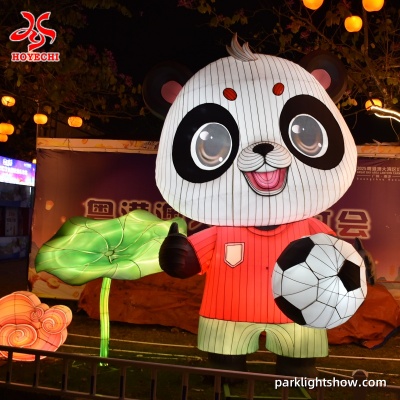
A realistic composition often uses natural scenery to establish its setting. A cartoon concept can explore a wider range of themes and does not have to remain within a bamboo landscape.
If the aim is a playful, fantastical, or contemporary display, make that intention clear in the brief. Instead of simply requesting something “more eye-catching,” explain whether you prefer strong color contrasts, exaggerated proportions, or unexpected combinations of scenery and characters.
Keep one clear organizing idea. Establish the panda character first, then select elements that support it. Not every feature needs to compete for attention. References can help communicate a direction, but specific film, game, or branded characters require separate permission checks before use.
Review the Whole Display in Its Intended Setting
A standalone drawing helps explain a figure’s appearance. A scene visualization helps assess how the complete arrangement relates to its location. Review the panda, its supporting scenery, and the surrounding space together—not just the figure’s height.
Three questions make the comparison more useful:
- Where will people primarily view the display from?
- Do the figures and scenery follow a consistent realistic or cartoon style?
- Which figures and supporting elements are included in the proposed arrangement?
Discuss the illuminated appearance alongside the physical form. For a realistic black-and-white panda, check whether the facial features and body markings remain distinct when lit. For a cartoon design, consider whether the color palette still keeps attention on the panda. The visual intention shown in a rendering must then be reconciled with the specific production proposal.
What to Share When Discussing a Panda Lantern Display
Start with site photos or a plan, the venue’s purpose, the proposed display area, and the event dates. Explain whether you prefer a realistic or cartoon direction. If you have reference images, identify what appeals to you: the proportions, the bamboo setting, or the color palette. This is more useful than asking for a complete arrangement to be copied without considering differences between locations.
Dimensions, quantities, and combinations do not all have to be settled at the first conversation. You can begin with your goals and constraints, then clarify those choices during design discussions.
Share your venue brief and preferred panda style with the HOYECHI team to begin discussing the composition. The aim is not to include every possible element, but to bring the figures, scenery, and setting together into one clear theme.
For a broader project, explore our lantern festival page. You can also view the existing panda theme lights product page.
Post time: Feb-01-2026


