

A large lotus lantern should be considered in daylight as well as after dark. Its petals, central seedpod and painted color remain visible before the lights come on. For a commercial venue, the design question is therefore not simply how the flower glows, but how the finished display looks throughout the hours visitors can see it.
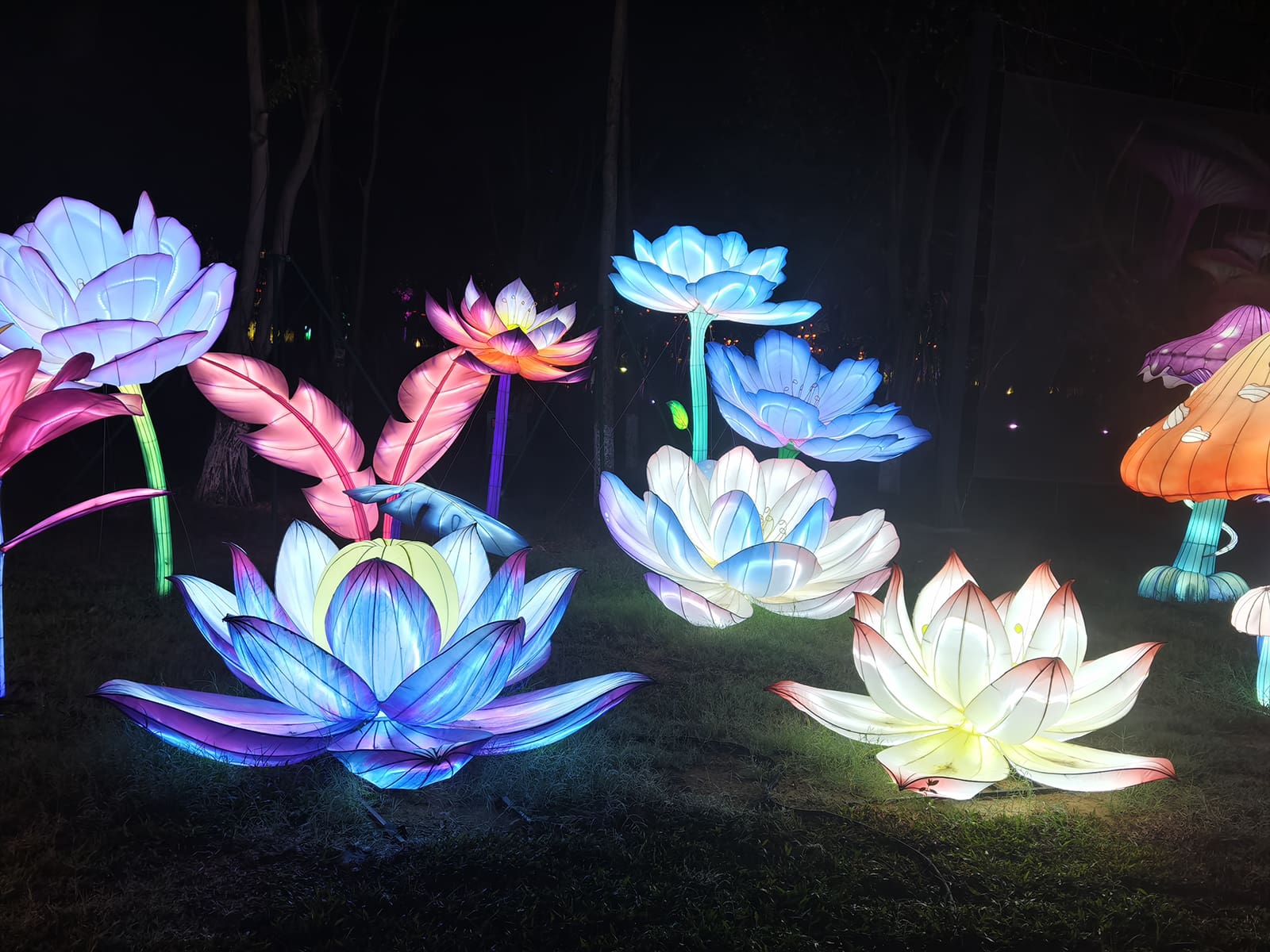
In HOYECHI’s lotus lantern work, large flowers are usually shown in full bloom, with multiple layers of petals surrounding a central seedpod. Smaller flowers, partly open forms and buds often accompany them. Together, these elements offer more variety than a group made entirely from the same fully open flower.
Start With the Open Flower’s Complete Shape
For a large lotus, review the relationship between the outer petals, inner layers and seedpod. A drawing should show more than the flower’s widest outline: it should communicate how open the bloom is and how its center appears from the intended viewing direction.
Consider a visitor looking across a lawn rather than down at a design drawing. Will the flower’s center remain visible, or will the near-side petals dominate the view? Request a view from the intended visitor approach before deciding that an overhead reference captures the whole design.
More petals are not automatically a better brief. Decide whether the desired character is a broad, open bloom or a denser, more layered flower. The goal is a recognizable overall form, not a petal count considered in isolation.
Combine Large Blooms With Smaller Flowers and Buds
Our lotus scenes often combine a large open flower with smaller flowers, buds and leaves. Some also include water lilies or frogs. These are possible companions, not a fixed package that every venue must use.
The larger bloom can establish the main subject, while smaller forms introduce different stages of opening. Leaves connect the flowers into a botanical scene. If frogs or other supporting figures are included, decide whether they are secondary details or another featured subject.
Review the complete group rather than approving each object separately. A leaf that looks attractive on its own may obscure a flower when placed in front of it. Ask the drawing to distinguish the principal bloom, supporting flowers and additional scenery so the scope is clear.
Judge the Finished Appearance, Not Just the Framework
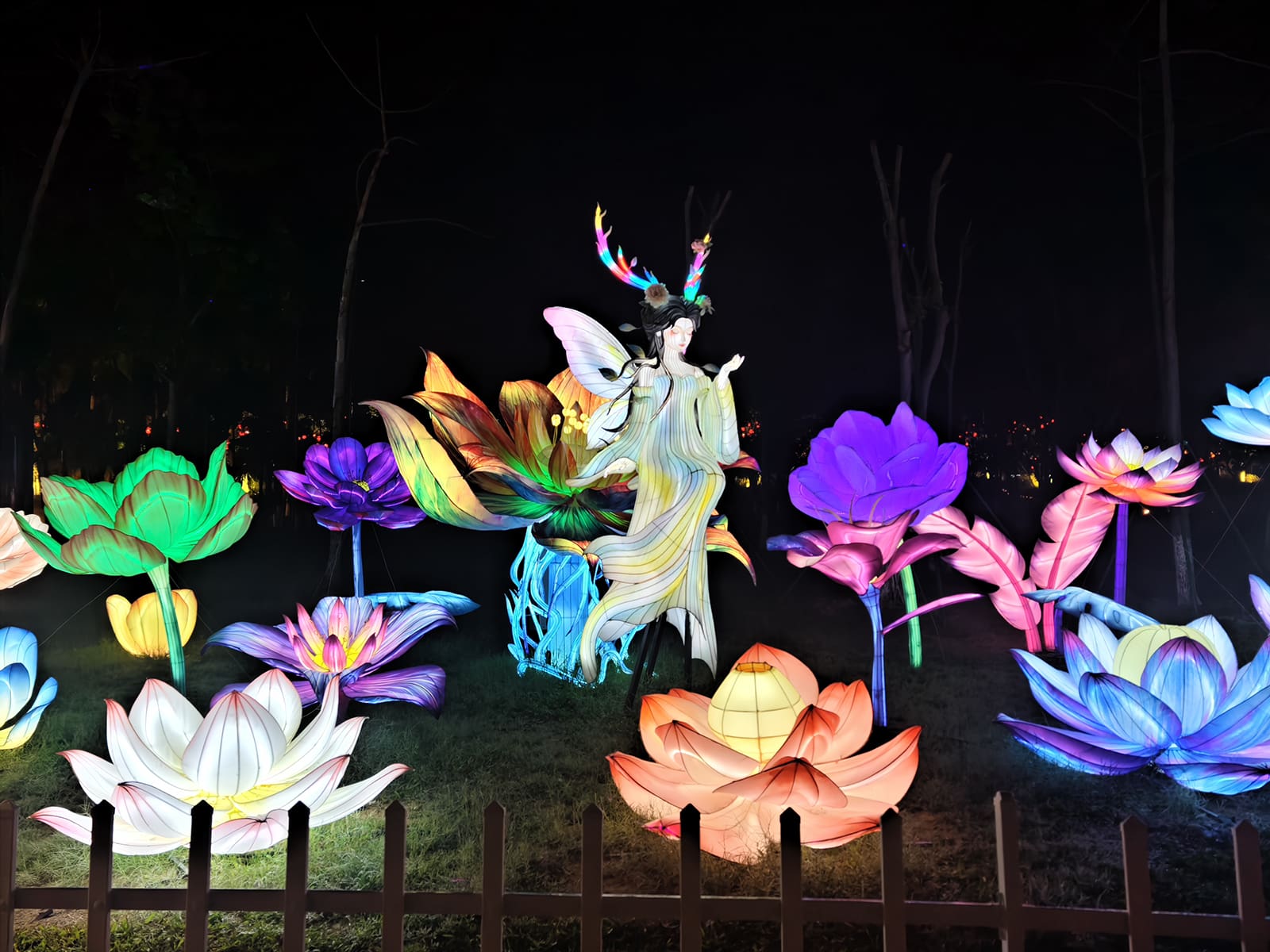
In our experience, customers are most concerned with what the finished lotus will look like. The framework matters to the makers, but a framework photograph alone does not communicate the completed flower’s surface, color or illuminated appearance.
For the visual review, focus on the petal outline, the relationship between layers, the seedpod and the overall combination. These are the features the visitor will see. A useful discussion describes the intended result rather than asking the customer to evaluate specialist construction details.
This does not make the structure unimportant. It separates visual approval from technical review: a pleasing finished shape does not, by itself, verify the support or installation arrangements.
Use Gradient Color as Part of the Physical Finish
We generally spray-paint lotus lanterns with gradient color. This approach is used with both fixed-color light sources and RGB color-changing lighting. The painted gradient is part of the flower’s visible surface; it is not merely a lighting effect added after dark.
For the design brief, identify the intended color transitions across the petals instead of specifying only a single color name. Review the inner and outer petals together so the finish belongs to one complete bloom.
RGB lighting and gradient painting answer different questions. Painting establishes the daytime surface appearance, while the selected lighting affects the illuminated view. Do not assume that choosing color-changing lights removes the need to consider the finish, or that every lighting setting will show the painted colors in the same way.
Review the Lotus in Daylight and When Illuminated
Daytime appearance is an important part of our lotus design approach. The intention is for the flower to remain an attractive scenic element before illumination, rather than relying entirely on darkness to complete the effect.
For a venue that welcomes daytime visitors, request both unlit and illuminated references where available. Use the daytime view to discuss the painted gradients and the relationship between flowers and leaves. Use the nighttime view to discuss how the petals, center and surrounding scenery appear with the proposed lighting.
If RGB effects are part of the proposal, a short video can communicate the intended changes more clearly than one still image. Confirm the desired effect separately from the flower’s physical shape and painted finish.
Prepare a Brief for the Whole Lotus Group
Share the proposed location, available area, main viewing direction and event dates. Indicate whether the scene should center on one large open flower or a group, and identify any smaller blooms, buds, leaves, water lilies or frogs you would like considered. If the exact quantities are undecided, mark them as open design choices.
Also state whether visitors will see the installation during daylight, after dark or both. Include a preferred color reference and clarify whether fixed illumination or color-changing effects are wanted.
A lotus theme does not establish suitability for placement in water. Distinguish a land-based scene from a waterside or in-water proposal; the latter requires its own project-specific assessment.
Common Questions
Must every lotus lantern be fully open?
No. In our work, large lotus lanterns are usually fully open, while smaller forms often include buds and partly open flowers. A custom composition can combine these forms.
Does RGB lighting replace gradient painting?
No. We generally use gradient spray painting with either fixed or RGB lighting. The painted surface also contributes to how the lotus looks during the day.
Are leaves, water lilies and frogs always included?
No. They are possible elements of a lotus scene. Confirm which items belong in the proposed group rather than assuming that everything in a reference image is included.
Explore the Flower & Botanical Lanterns collection for related display forms. If the lotus is one part of a larger lantern festival, share the site context and preferred combination with the HOYECHI team so the discussion starts with the complete scene.
Post time: Sep-24-2025


