

Designing the Head, Body Curves and Complete Scene
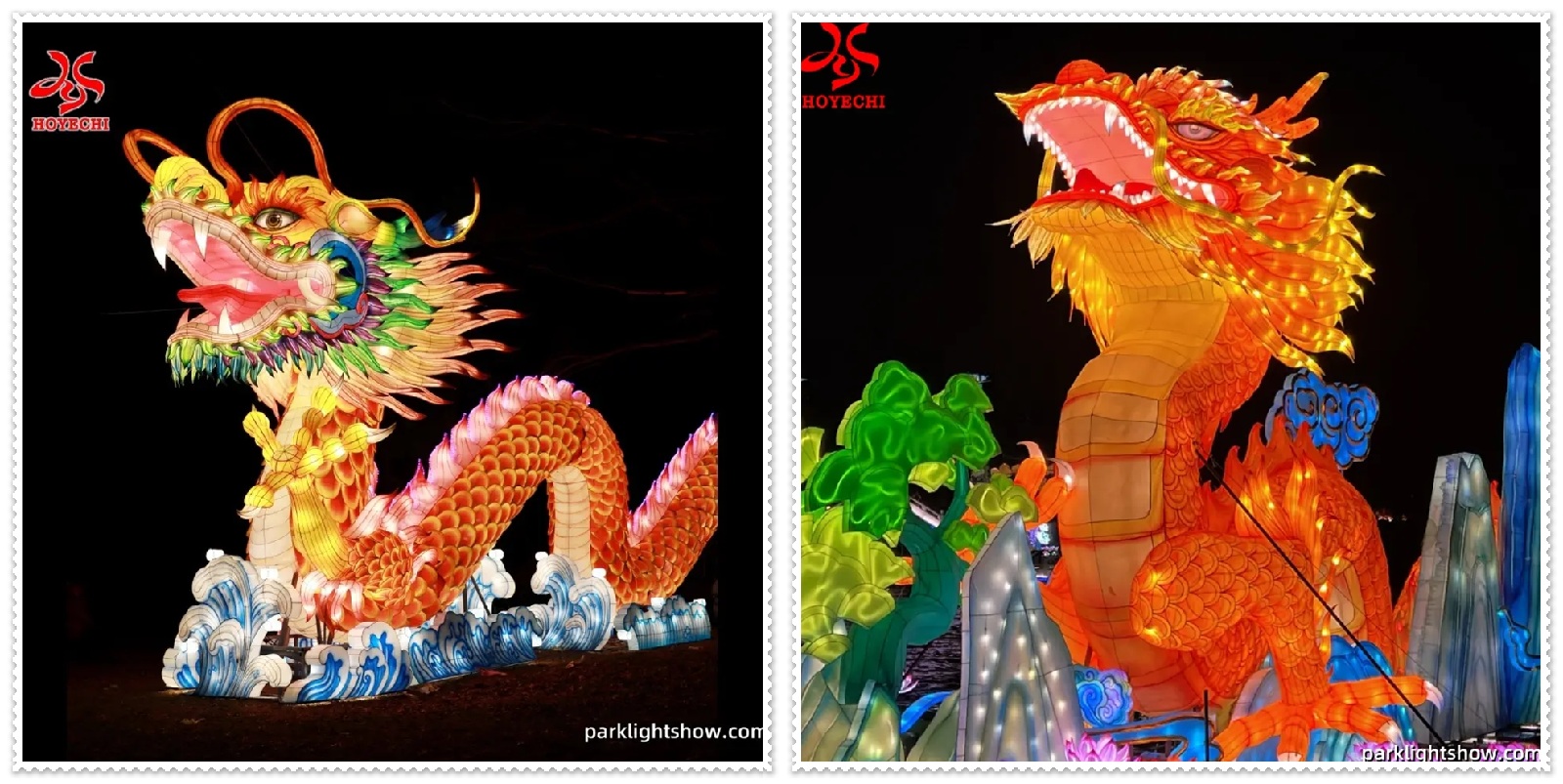
A giant Chinese dragon lantern needs more than a length measurement. An extended body, a coiled pose and a raised head can produce very different compositions and footprints. When comparing designs, place the head, body, tail and supporting scenery within the actual site: where will visitors approach, what will they see first, and can they follow the shape of the whole dragon?
Choose the Viewing Positions Before Judging the Pose
Mark the main approach direction and intended viewing positions on the site plan. A dragon seen along a path and a centerpiece viewed from several sides should not be judged from the same single front-facing rendering.
For a predominantly side-on view, compare the rise and fall of the body and the relationship between the head and tail. If visitors approach the head first, check whether it remains distinct and whether the body disappears behind it. For a display with several important viewpoints, request those views rather than choosing only the most impressive rendering.
This is a visual review. The display area, circulation space and installation conditions still need separate assessment; a rendering cannot resolve them on its own.
Make the Head Read Clearly Within the Whole Dragon
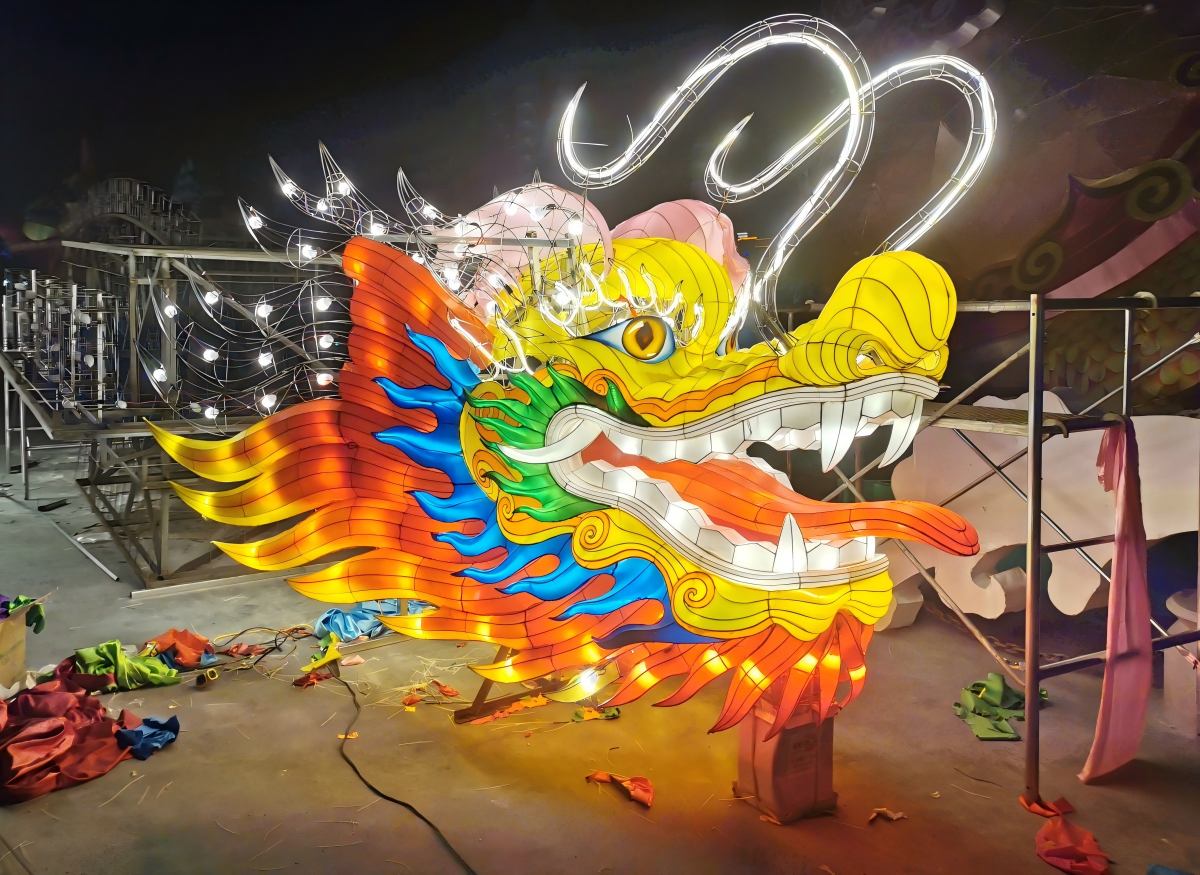
A reference image should establish a shared visual direction. Should the dragon look commanding, graceful or friendly and cartoon-like? The eyes, mouth, horns, whiskers and neck should work together to express that choice.
First reduce the rendering until you can see the complete composition. Can you still identify the head? Then enlarge it to review the details. If the close-up looks clear but the full view hides the head behind the body, clouds or other elements, reconsider the pose and placement of the scenery.
Not every detail needs equal emphasis. Give the head, body and tail a clear visual hierarchy so viewers can follow the complete form.
Match the Quoted Length to the Site Plan
Clarify what a proposed length measures: the distance along the curved body, or the horizontal span from head to tail. Do not assume these are the same.
The design should also identify the overall width, highest point and projecting features such as horns, claws and the tail. A coiled dragon particularly needs a plan view of its footprint; a side view alone does not show the space it occupies.
Compare proposals on the same site plan using the same dimensioning convention. One design may concentrate the body into tighter curves, while another spreads it across a longer horizontal span. Establish a consistent basis for measurement before deciding which composition suits the venue.
Use Clouds, Waves and Flowers to Support the Main Form
Supporting scenery can connect parts of the composition or help express the theme. Before adding an element, decide what it contributes.
Low wave forms, for example, can echo the direction of the body, while flowers can create a foreground layer. These are design choices, not a required combination for every dragon lantern.
Compare versions with and without the scenery. Is the head obscured? Are the body curves still distinct? Does the tail disappear among other forms? If additional pieces make the dragon harder to read, reducing or repositioning them may be more useful than adding further detail.
Keep the dragon and its supporting scenery separate in the scope list. Identify which clouds, waves, flowers and other decorations shown in the rendering are included in the proposed work. A shared image does not necessarily mean both sides have the same understanding of the complete set.
Confirm Form, Color and Movement Separately
Review the silhouette first, then compare the main body color, accent colors and surrounding scenery. Discuss the daytime finish and illuminated appearance separately; a glowing rendering cannot show every aspect of the finished display.
“Looking as though it is swimming” might describe the curves of a static body, changing light effects or mechanical movement. Specify these separately. A raised head or coiled pose in a picture does not mean the finished lantern will move. If movement is requested, the particular action and project conditions need their own discussion.
Identify the Approved Design Version Before Production
A practical visual review checklist can include:
- The site plan and main viewing directions.
- The selected head design, body curves and tail position.
- The measurement convention, overall span, width and highest point.
- References for daytime colors and illuminated appearance.
- The quantities and included scope of the dragon and supporting scenery.
- The design version, confirmed decisions and remaining open items.
If the head direction or body curves change, update the complete composition rather than replacing only a close-up. A local change can affect overlaps and the footprint, so return to the full design for the final review.
You do not need to decide every detail before starting a discussion. Site photographs or a plan, the intended theme, main viewing positions and event timing make the brief more specific. Include any available budget direction, dimensions or reference images as well.
For the scope of a complete custom display, explore our dragon lanterns. For a full event, consider the dragon centerpiece within the wider theme and layout of your lantern festival.
Post time: Sep-19-2025


