
Should guests park and explore the attraction on foot? Should they remain inside their vehicles and follow a dedicated illuminated road? Or should the project combine a drive-through route with a walk-through festival village?
The right format affects almost every part of the project, including visitor capacity, ticket structure, secondary spending, route design, staffing, parking, electrical distribution, installation, safety planning, and long-term reuse.
For parks, zoos, scenic areas, farms, resorts, municipalities, and commercial venues, the best model is not determined by popularity alone. It should be selected according to the physical conditions of the site and the commercial goals of the attraction.
Quick Answer
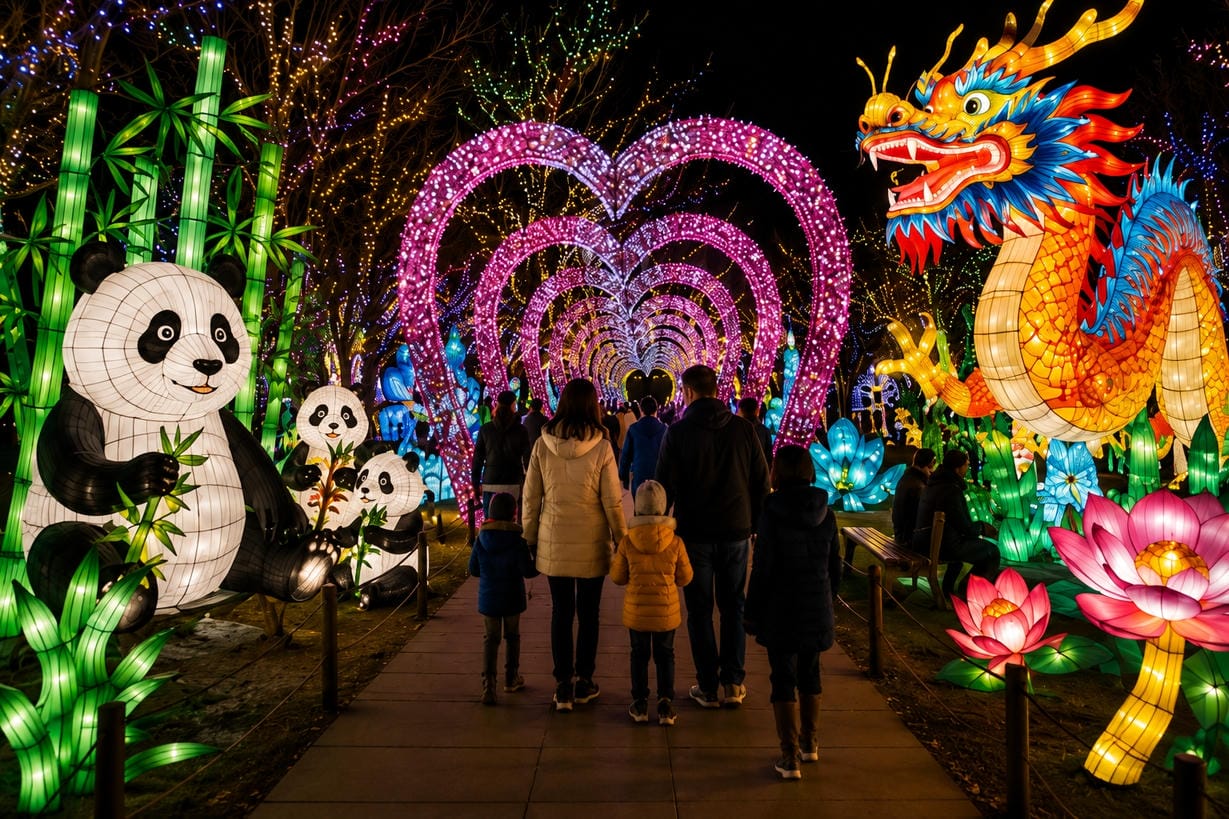
A walk-through Festival of Lights is generally best for venues that want visitors to stay longer, take photographs, explore themed areas, purchase food and merchandise, and experience a detailed visual story.
A drive-through light show is often better for large rural venues, farms, cold-weather locations, and sites with existing internal roads but limited pedestrian infrastructure.
A hybrid Festival of Lights combines vehicle convenience with a walk-through commercial or entertainment zone. It can be a strong option for venues that have enough land, parking, and operational capacity to support both experiences.
The final decision should be made before detailed display production begins.
Why the Visitor Format Must Be Decided First
A lantern designed for close pedestrian viewing is different from a light display designed to be seen from a moving vehicle.
Walk-through visitors may stop within a few meters of an installation. They can observe surface details, enter tunnels, interact with illuminated scenes, read story panels, and take photographs from different angles.
Drive-through visitors normally see displays from farther away and for a shorter period. The visual scenes must therefore be larger, clearer, more strongly silhouetted, and positioned according to the direction of traffic.
Choosing the operating format early helps the project team determine:
- Appropriate display size and viewing distance
- Route length and scene density
- Electrical and cable layouts
- Entrance and ticketing systems
- Parking and vehicle queuing requirements
- Pedestrian or traffic safety measures
- Food, retail, and sponsorship locations
- Installation access and emergency routes
- Staffing and crowd-management requirements
- How the displays can be stored and reused
Without this decision, a venue may purchase attractive displays that do not work effectively within its actual visitor route. A complete light show planning process should therefore begin with site conditions, visitor movement, and commercial objectives.
What Is a Walk-Through Festival of Lights?
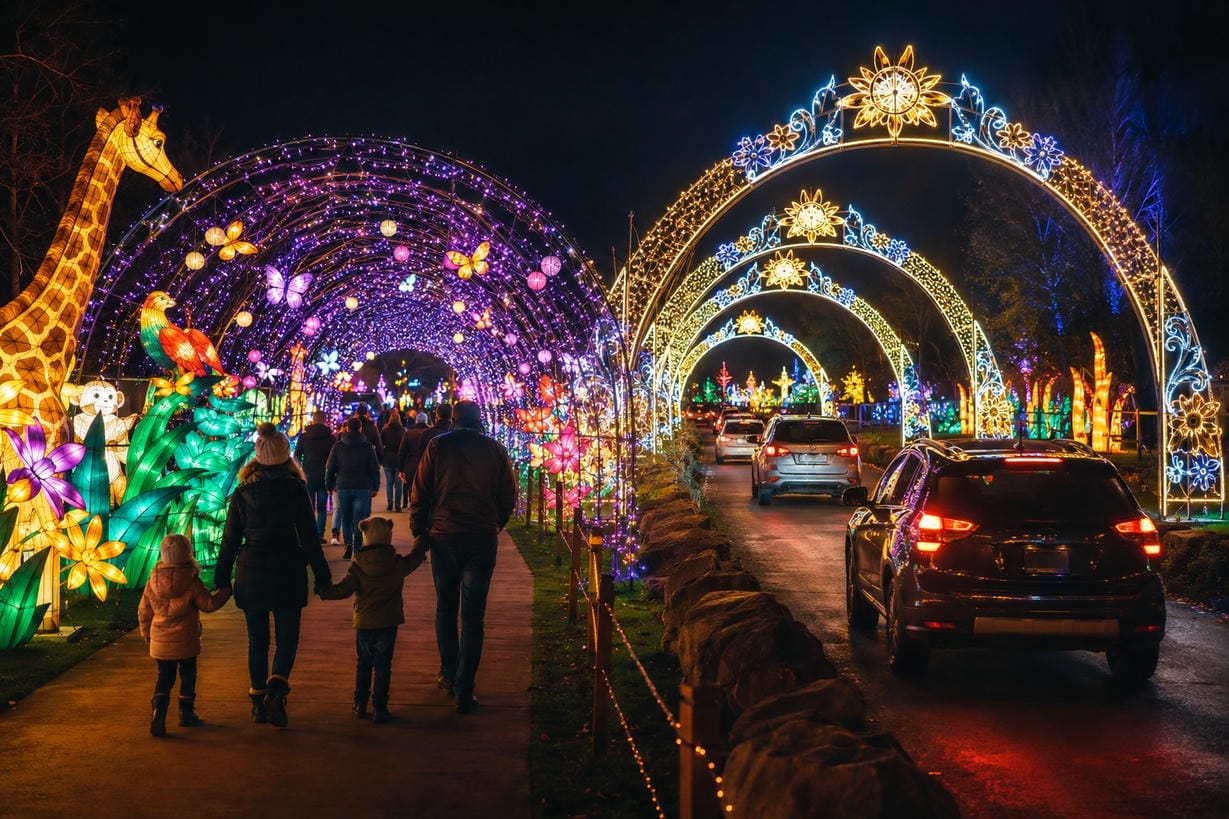
A walk-through Festival of Lights is a ticketed or open-access nighttime attraction in which visitors leave their vehicles and explore illuminated scenes on foot.
The route may include custom lantern sculptures, light tunnels, themed gardens, interactive displays, performance spaces, photo installations, food areas, souvenir shops, and landmark attractions.
This model is particularly suitable for:
- Public and private parks
- Zoos and wildlife attractions
- Botanical gardens
- Scenic areas
- Amusement parks
- Resorts
- Commercial districts
- Municipal plazas
- Cultural destinations
- Family entertainment venues
Advantages of a Walk-Through Format
Longer and Deeper Visitor Experiences
Visitors can move at their own pace, stop at signature scenes, enter illuminated structures, and spend more time interacting with the environment.
This makes the model suitable for themed storytelling, cultural lantern displays, animal installations, dinosaur routes, fantasy worlds, botanical light gardens, and seasonal attractions.
More Opportunities for Secondary Spending
Because visitors remain within the event area, operators can integrate:
- Food and beverage stalls
- Holiday markets
- Souvenir shops
- Photo services
- Children’s activities
- Craft demonstrations
- Sponsored installations
- Performance stages
- Premium experience zones
These facilities should be planned as part of the route rather than added randomly after installation.
Stronger Photo and Social-Sharing Potential
Walk-through projects allow visitors to stand beside, beneath, or inside illuminated displays. Large entrance arches, tunnels, giant lantern landmarks, interactive wings, animal scenes, and themed backgrounds can become intentional photo locations.
Better Use of Detailed Custom Lanterns
Chinese lantern festival displays, character lanterns, animal sculptures, botanical scenes, cultural landmarks, and hand-finished installations are especially effective when visitors can view them closely.
Operational Requirements
A walk-through project normally needs:
- Adequate visitor parking or nearby transportation
- Safe pedestrian entrances and exits
- Accessible walking surfaces
- Queue-management areas
- Restrooms and rest zones
- Emergency access
- Crowd-control barriers where necessary
- Clear directional signage
- Staff at major intersections and interactive areas
- Weather and surface-drainage planning
- Lighting that supports visibility without weakening the visual atmosphere
Venues should also examine how the route performs during peak arrival periods, not only during average attendance.
What Is a Drive-Through Light Show?
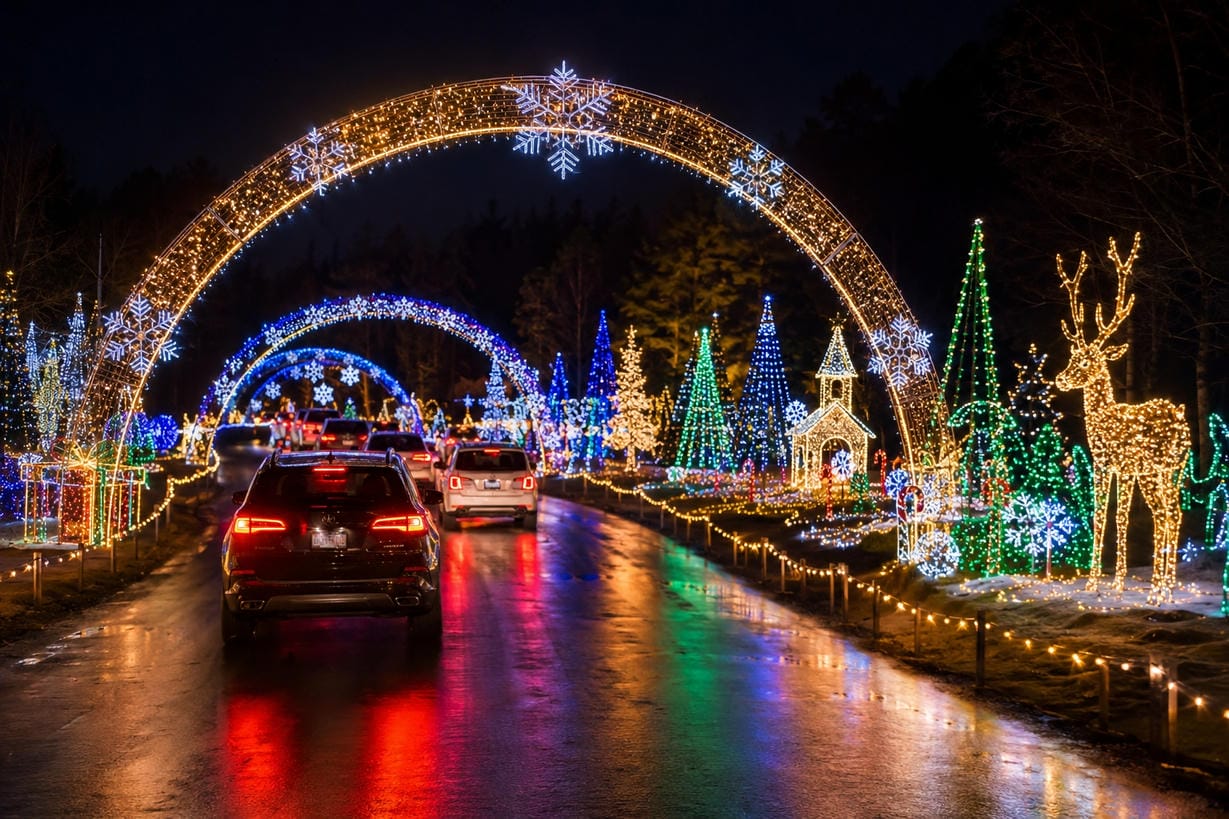
A drive-through light show allows visitors to remain inside their vehicles while following a predetermined illuminated route.
Tickets are commonly sold by vehicle or by scheduled entry period. Visitors move through a sequence of roadside installations, overhead arches, animated light scenes, synchronized lighting, illuminated landscapes, and large visual landmarks.
This model can be suitable for:
- Farms and ranches
- Rural tourism venues
- Large fairgrounds
- Motorsport or exhibition grounds
- Drive-in attractions
- Resorts with internal roads
- Cold or rainy destinations
- Large properties with limited pedestrian infrastructure
- Seasonal Christmas and winter attractions
Advantages of a Drive-Through Format
Protection from Weather
Visitors remain inside their vehicles, making the experience easier to operate in cold, windy, or rainy conditions.
This can be especially valuable for winter destinations where families may prefer a comfortable vehicle-based attraction.
Convenience for Families
Young children, older visitors, and guests with limited mobility can experience the event without walking a long route.
Use of Existing Roads and Large Properties
A venue with established roads may be able to transform underused land into a seasonal night attraction without building a complete pedestrian event area.
Controlled Direction of Movement
All vehicles normally travel in the same direction, allowing designers to control the sequence in which scenes are viewed.
This can support a clear beginning, development, climax, and finale when traffic flow is carefully planned.
Operational Requirements
Drive-through projects require more than placing displays beside a road. Operators should evaluate:
- Road width and turning radius
- Entrance queuing capacity
- Vehicle spacing
- Road surface quality
- Traffic speed
- Emergency pull-off areas
- Breakdown procedures
- Fire and emergency access
- Height clearance under arches
- Visibility around curves
- Safe cable crossings
- Protection of electrical equipment
- Traffic-control staff
- Exit access to public roads
- Potential congestion outside the venue
A beautiful route can still create a poor visitor experience if vehicles spend too long waiting at the entrance or repeatedly stop because of bottlenecks.
What Is a Hybrid Festival of Lights?
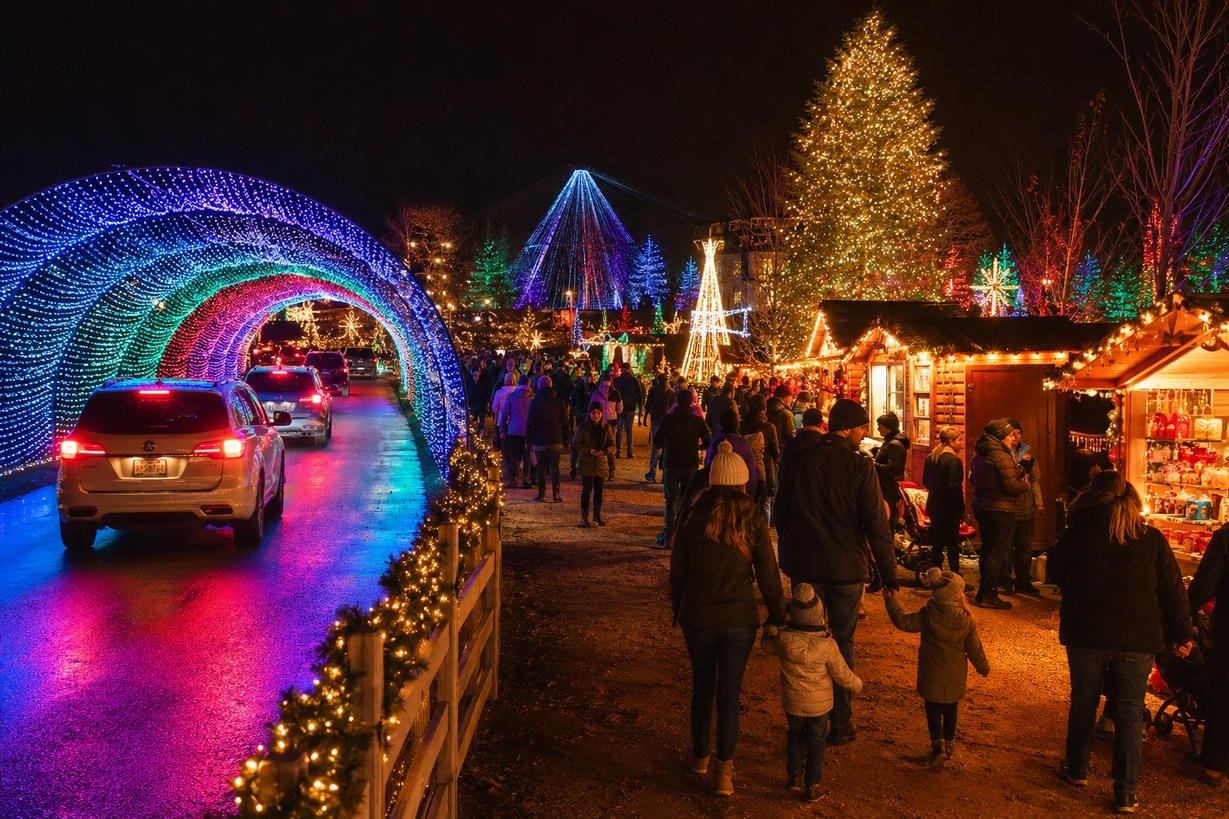
A hybrid Festival of Lights combines a drive-through route with one or more walk-through areas.
Visitors may first travel through a large illuminated landscape and then park near a festival village. Alternatively, the walk-through area may be positioned at the beginning or middle of the experience.
The pedestrian zone can include:
- A landmark Christmas tree or giant lantern
- Food and beverage stalls
- Holiday market booths
- Interactive installations
- Children’s attractions
- Performances
- Souvenir retail
- Santa or character experiences
- Photo locations
- Restrooms and visitor services
Why Venues Choose a Hybrid Model
The hybrid format preserves the comfort and weather protection of a drive-through experience while creating opportunities for longer visits and additional spending.
It is particularly relevant for farms, resorts, rural attractions, and large event venues that already have roads and parking areas.
However, it is also the most operationally complex model. The venue must manage both traffic and pedestrians while ensuring that the two movement systems do not conflict.
Walk-Through vs. Drive-Through Festival of Lights Comparison
| Decision Factor | Walk-Through Model | Drive-Through Model | Hybrid Model |
|---|---|---|---|
| Visitor movement | On foot | Inside vehicles | Vehicles plus pedestrian zone |
| Common ticket structure | Per person or family package | Per vehicle or timed vehicle slot | Vehicle admission plus optional add-ons |
| Best venue types | Parks, zoos, gardens, resorts, scenic areas | Farms, rural venues, fairgrounds, large properties | Farms, resorts, fairgrounds, destination attractions |
| Visitor interaction | High | Limited | Medium to high |
| Detailed lantern viewing | Excellent | Requires larger and clearer displays | Supports both formats |
| Food and retail potential | Strong | Limited unless an extra stop is added | Strong in the walk-through zone |
| Weather protection | Lower | Higher | Mixed |
| Parking requirements | High | Queuing and staging are critical | Requires both parking and vehicle management |
| Staffing focus | Pedestrian flow and guest services | Traffic control and route monitoring | Both traffic and pedestrian operations |
| Route design | Dense scenes and photo stops | Large-scale roadside sequences | Two connected experience systems |
| Project complexity | Moderate to high | Moderate to high | Highest |
| Suitable reuse strategy | Modular themed zones | Modular roadside scenes | Flexible reuse across both formats |
Which Model Is Better for Different Venues?
ParkLightShow develops light show solutions for multiple venue types. The following recommendations provide a starting point, but the final format should be based on an individual site assessment.
Parks
Most urban and destination parks are better suited to walk-through experiences because they already have pedestrian paths, landscaped areas, plazas, and spaces for food or entertainment.
A lantern festival for parks can extend operating hours, introduce seasonal ticketing, and activate sections that receive limited use after dark.
A drive-through model may be possible only when the park has suitable internal roads and can separate vehicles from pedestrians.
Zoos
Walk-through formats are generally more compatible with zoo visitor behavior.
Animal lanterns, dinosaur installations, ocean scenes, insect themes, conservation storytelling, and educational displays can be positioned along existing walking routes.
Special attention must be given to animal-sensitive zones, sound levels, light direction, emergency access, and the separation of event visitors from restricted areas.
Farms and Rural Attractions
Farms may support any of the three formats.
A drive-through model can make use of long roads and open land. A walk-through model may be more suitable when the farm already operates markets, food facilities, family activities, or seasonal festivals.
A hybrid model can connect the illuminated route with a Christmas market, food court, children’s area, or photo village. Explore more considerations in our farm Christmas light show solutions.
Botanical Gardens
Botanical gardens are usually strongest as walk-through attractions.
Their plants, water features, pathways, and landscaped zones can become part of the visual narrative. Custom botanical lanterns, illuminated flowers, insects, butterflies, birds, and immersive tunnels can complement the existing environment.
Resorts
Resorts can use a walk-through or hybrid format to increase evening activity for both staying guests and external visitors.
The project can connect accommodation, dining, event lawns, gardens, and entertainment areas. The operating model should avoid disrupting guest access, service roads, and normal resort functions.
Scenic Areas
Scenic areas require a site-specific decision.
A walk-through route may work well around plazas, valleys, waterfront areas, heritage streets, or existing trails. Large or mountainous properties may need shuttle transport, multiple entrance zones, or a combination of illuminated routes.
Municipalities and Commercial Districts
Public plazas and commercial areas usually benefit from pedestrian projects that support foot traffic, retail activity, seasonal events, and public photography.
The design must consider public access, security, road closures, business entrances, and the difference between free public displays and controlled ticketed zones.
Ten Questions to Ask Before Choosing the Format
1. Does the Venue Already Have a Safe Pedestrian Route?
Existing paths can reduce preparation work, but they should still be evaluated for width, accessibility, surface condition, drainage, and emergency access.
2. Are the Internal Roads Suitable for Continuous Visitor Traffic?
A road used by staff or maintenance vehicles is not automatically suitable for a public drive-through attraction.
3. How Much Parking and Queuing Space Is Available?
Walk-through attractions need visitor parking. Drive-through attractions need vehicle staging before entry. Hybrid events require both.
4. Is the Main Goal Ticket Revenue or a Broader Visitor Economy?
A venue focused on admission volume may choose differently from a venue that also wants food, retail, sponsorship, accommodation, or destination spending.
5. What Experience Does the Target Audience Expect?
Families with small children, tourist groups, local residents, couples, school groups, and resort guests may have different expectations.
6. How Important Is Weather Protection?
Climate does not automatically determine the format, but it affects operating dates, route surfaces, shelter, visitor comfort, and cancellation risk.
7. How Long Should the Experience Last?
The target visit duration influences route length, scene density, rest areas, commercial facilities, and ticket pricing.
8. Can Vehicles and Pedestrians Be Safely Separated?
This is particularly important for hybrid projects and venues that must maintain normal operations during the event.
9. Will the Displays Be Reused in Future Seasons?
Modular structures and flexible themed zones can allow a venue to change the route, replace selected scenes, or adapt the project for another operating model.
10. What Infrastructure Is Already Available?
The assessment should include power supply, roads, parking, storage, loading access, fencing, ticket facilities, drainage, restrooms, and emergency systems.
Design Differences Between Walk-Through and Drive-Through Displays
Walk-Through Design Priorities
Displays for pedestrian viewing should consider:
- Close-range craftsmanship
- Visitor-scale photo composition
- Multiple viewing angles
- Interactive or walk-through structures
- Safe clearances
- Accessible paths
- Detailed storytelling
- Rest and commercial zones
- Controlled lighting near visitor faces
- Barriers around electrical or structural components
A walk-through route should alternate between visually intensive scenes and quieter transition areas. Placing every large attraction together can reduce anticipation and make later sections feel weaker.
Drive-Through Design Priorities
Displays for vehicle viewing should consider:
- Greater scale
- Strong silhouettes
- Clear roadside orientation
- Longer viewing distances
- Scene visibility through windscreens
- Safe distance from the traffic lane
- Overhead clearance
- Sequential visual rhythm
- Reduced visual obstruction around corners
- Weather-resistant anchoring and electrical protection
Small, highly detailed decorations may be lost when viewed from a moving vehicle. Larger landmark scenes, animated lighting, arches, illuminated trees, and long-form roadside compositions are generally more effective.
Hybrid Design Priorities
A hybrid event requires a visual transition between the vehicle route and the pedestrian area.
The parking or arrival point should not feel like the end of the experience. It should introduce a new visual climax, commercial village, landmark display, or interactive zone.
Wayfinding, lighting, barriers, and staff positioning must make the change from vehicles to pedestrians intuitive and safe.
How the Format Affects Project Economics
No operating model guarantees profitability. Revenue depends on local demand, ticket pricing, event duration, marketing, weather, capacity, operating costs, and the quality of the visitor experience.
However, each model creates a different commercial structure. A practical light show business plan should compare expected net operating results rather than ticket price alone.
Walk-Through Revenue Opportunities
A walk-through event can combine:
- Admission tickets
- Food and beverage sales
- Souvenir retail
- Premium photo experiences
- Children’s activities
- Sponsorship
- Holiday markets
- Performances
- VIP entry periods
- Private or corporate events
Drive-Through Revenue Opportunities
A drive-through event may use:
- Per-vehicle tickets
- Timed entry upgrades
- Priority lanes
- Audio or synchronized media
- Premium vehicle packages
- Preordered food or merchandise
- A paid or free market area at the exit
Hybrid Revenue Opportunities
A hybrid attraction can combine vehicle admission with pedestrian spending. This may create a broader commercial structure, but it also increases staffing, infrastructure, and management requirements.
What HOYECHI Can Provide
HOYECHI is a manufacturer and project solution provider for custom lantern festivals, park light shows, Chinese lantern festival displays, and outdoor night tourism light displays.
Through ParkLightShow, HOYECHI can support walk-through, drive-through, and hybrid outdoor light festival projects with:
- Venue and route evaluation
- Theme and visitor-experience planning
- Custom lantern and illuminated display design
- Entrance arches, tunnels, landmarks, animals, dinosaurs, plants, and cultural scenes
- Modular steel or aluminum structure options
- Outdoor materials and IP65-oriented project solutions
- Pure copper electrical wiring and industrial outdoor waterproof lighting components
- Pre-installation assembly and electrical testing
- Modular packaging for international transportation
- Installation drawings and video guidance
- Remote technical support
- Engineer installation support when required
- Maintenance and seasonal reuse planning
The goal is not simply to supply decorative lights. The project must work as a complete attraction that visitors can enter, understand, photograph, enjoy, and recommend.
Learn more about HOYECHI’s production, pre-installation testing, and project delivery process.
Recommended Project Process
Step 1: Venue Assessment
The venue provides a site map, road or path dimensions, photographs, videos, power information, visitor targets, event dates, and expected operating model.
Step 2: Format Recommendation
The project team evaluates whether a walk-through, drive-through, or hybrid format is most suitable.
Step 3: Route and Theme Planning
The route is divided into entrances, themed sections, landmark scenes, transition areas, interactive zones, commercial areas, and exits.
Step 4: Display Design and Budget Alignment
Custom displays are designed according to viewing distance, route conditions, climate, installation requirements, and available budget.
Step 5: Production and Pre-Installation Testing
Structural components, lighting systems, electrical connections, and modular assemblies are checked before shipment.
Step 6: Delivery and Installation
The project is packed according to installation sequence and supported with labels, drawings, videos, remote assistance, or on-site engineering services.
Step 7: Operation and Future Reuse
After the first season, selected displays can be repositioned, combined with new themes, or reused as part of a refreshed route.
Related ParkLightShow Resources
- Festival of Lights Solutions — core solution page for parks, zoos, scenic areas, resorts, and outdoor venues.
- Light Show Solutions — project options for different venue types and commercial objectives.
- Lantern Festival for Parks — visitor-route, ticketing, and nighttime-attraction solutions for park operators.
- Farm Christmas Light Show Solutions — walk-through, drive-through, and hybrid models for farms and rural attractions.
- Light Show Planning — planning support for theme, layout, visitor flow, infrastructure, and installation.
- Light Show Business Plan — ticket revenue, venue cooperation, and operating-model considerations.
- Production and Installation Support — custom manufacturing, testing, packaging, delivery, and installation assistance.
Frequently Asked Questions
Is a Walk-Through Festival of Lights Cheaper Than a Drive-Through Event?
Not necessarily. Cost depends on route length, number and scale of displays, site preparation, power distribution, installation conditions, visitor facilities, and operational requirements.
A shorter but highly detailed walk-through project may cost more than a simple drive-through route. The correct comparison requires a venue plan and project scope.
Which Model Can Generate More Revenue?
Walk-through projects usually provide more opportunities for food, retail, photography, activities, and visitor interaction.
Drive-through projects may be more convenient in difficult weather and may suit venues with large roads but limited pedestrian facilities.
A hybrid model can combine both revenue structures, although it also requires more complex operations.
Can a Zoo Operate a Drive-Through Light Show?
It depends on the zoo layout. A safari-style property with suitable roads may support a drive-through section, but many zoos are better suited to pedestrian lantern routes.
Animal welfare, lighting direction, sound, road access, and restricted zones must be reviewed carefully.
Can a Farm Operate a Walk-Through Festival of Lights?
Yes. Farms with parking, safe paths, visitor facilities, food service, holiday markets, or family activities can develop walk-through attractions.
The best format depends on the existing infrastructure and operating goals.
Can a Venue Combine Drive-Through and Walk-Through Experiences?
Yes. A hybrid project can include a vehicle route followed by a pedestrian festival village, market, photo zone, or entertainment area.
Vehicle and pedestrian routes must be clearly separated.
How Early Should a Venue Begin Planning?
Planning should begin several months before the intended opening date. Large custom projects, complex international delivery, or major site preparation may require a longer schedule.
Early planning provides more time for route design, production, testing, transportation, installation, marketing, and staff preparation.
Can the Displays Be Reused?
Yes. Modular displays can often be dismantled, stored, repositioned, combined with new scenes, or used in a revised route during future seasons.
Reuse planning should begin during the design stage rather than after the first event.
What Information Should a Venue Send When Requesting a Proposal?
Useful information includes:
- Venue type and location
- Site map
- Photographs and videos
- Available roads and pedestrian paths
- Route dimensions
- Parking capacity
- Power conditions
- Event dates
- Expected visitor capacity
- Preferred theme
- Estimated budget
- Walk-through, drive-through, or hybrid preference
- Installation support requirements
Start Planning the Right Festival of Lights Format
The most successful format is the one that matches the venue—not the one that simply looks most popular elsewhere.
A park may benefit from a detailed pedestrian lantern route. A farm may perform better with a vehicle-based experience. A resort or destination attraction may achieve the strongest result by combining both.
Share your venue map, project goals, expected event dates, and preferred operating model with HOYECHI ParkLightShow.
Our team can help evaluate the site, recommend a suitable visitor format, develop the theme and route, manufacture custom displays, arrange global delivery, and support installation.
Request a Festival of Lights Project Evaluation
Send us your venue layout, project dates, visitor goals, and approximate budget to receive a preliminary project recommendation.
Post time: Jul-16-2026


