
Ocean animal lantern displays combine illuminated whales, fish, jellyfish, turtles, coral, seagrass, and other marine forms into a coordinated commercial scene. A buyer can use one large animal as a landmark, repeat smaller forms as a school, frame a transition with coral, or build a complete underwater story. The right format depends on the display’s visual job—not simply on which animal looks most impressive in a product photograph.
In this guide, “ocean animal lanterns” means large illuminated sculptures for parks, festivals, resorts, zoos, and public event spaces. It does not mean floating paper lanterns released on water, marine navigation lights, aquarium fixtures, or underwater architectural lighting.
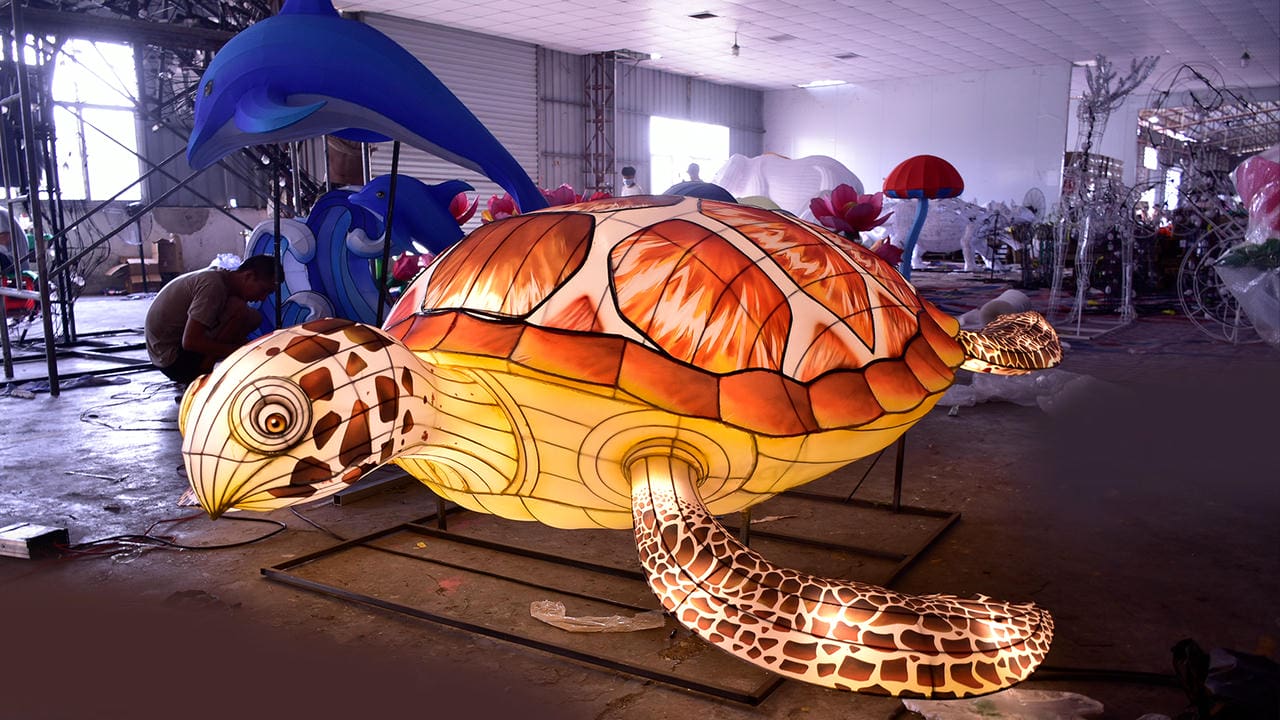
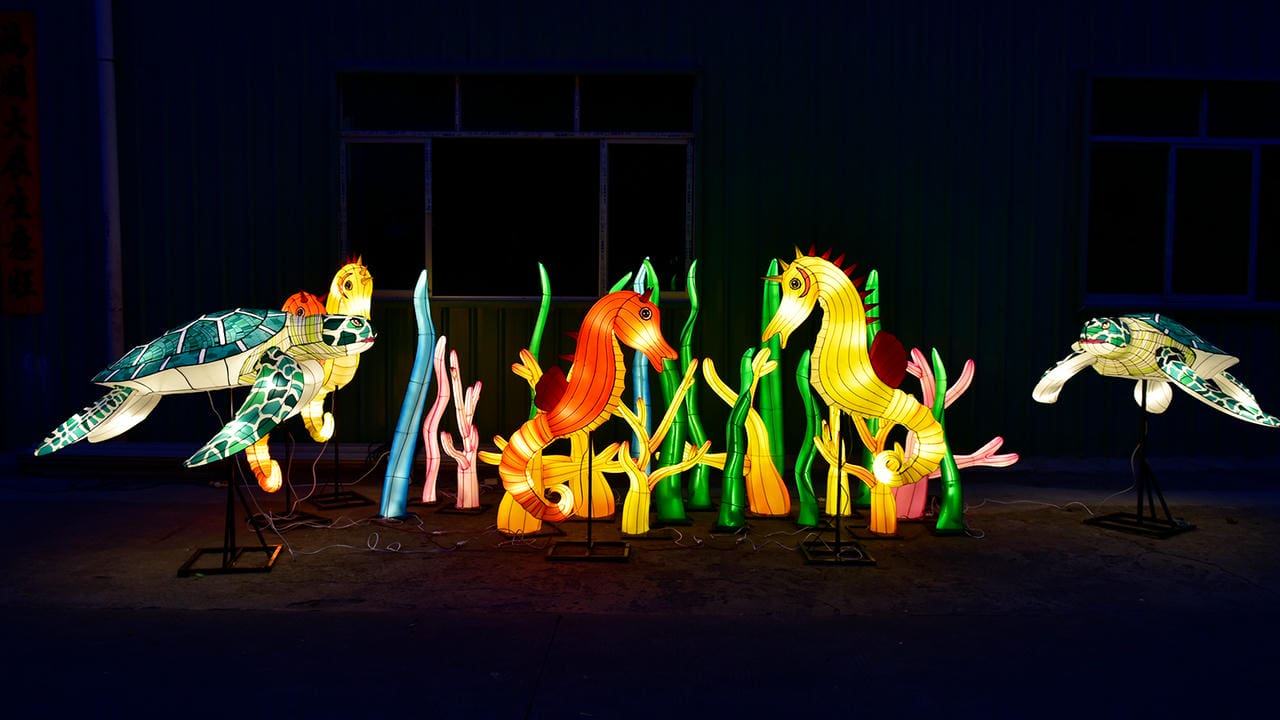
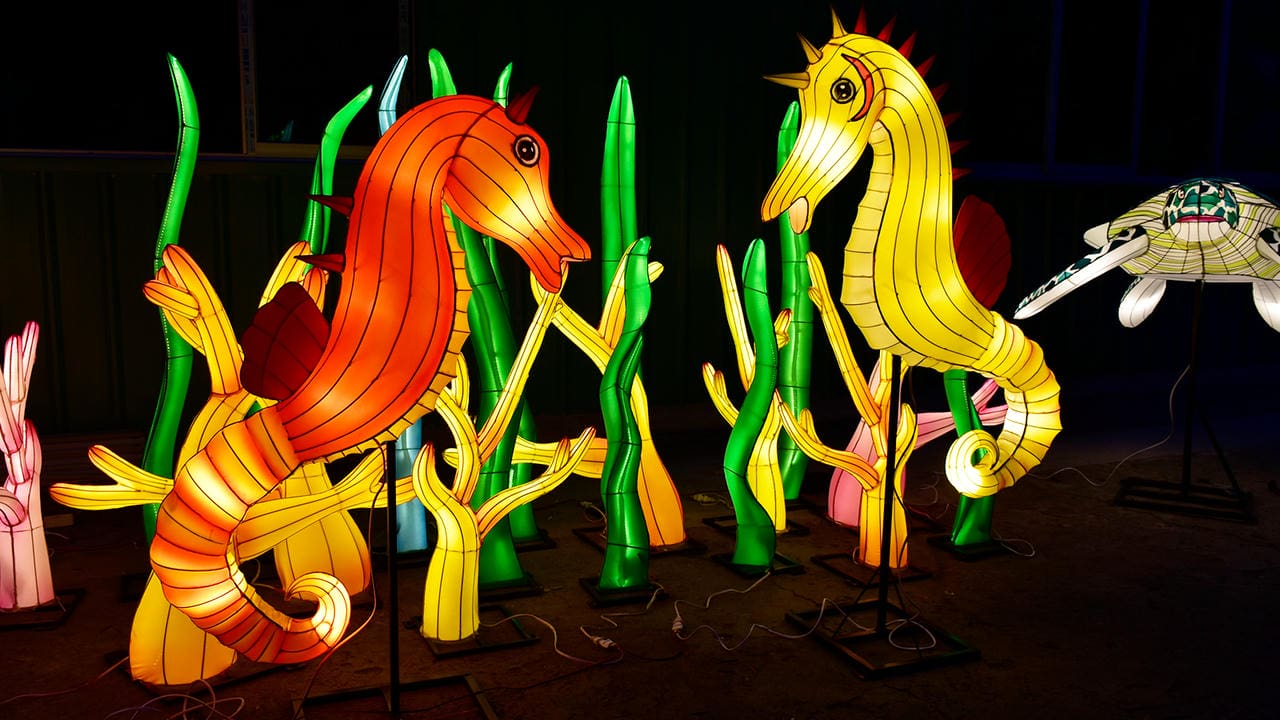
The five photographs below are real photographs supplied by the ParkLightShow owner for this guide. They document illuminated ocean-animal lantern forms in an indoor work setting. Customer, country, venue, year, and exact project stage are not disclosed.
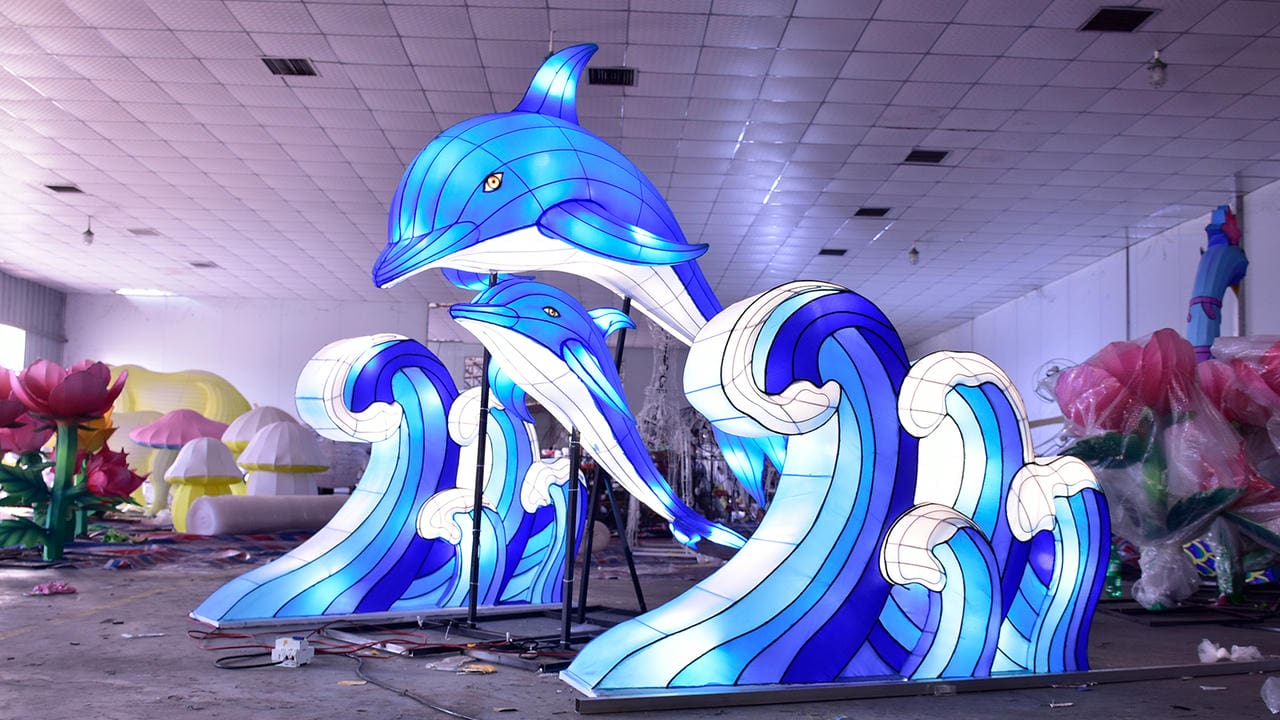
Official ParkLightShow by HOYECHI video showing sea-turtle detailing and illuminated turtle, seahorse, coral, and seagrass lantern forms.
Compare Five Ocean Animal Lantern Display Formats
The first buyer decision is whether the scene needs one dominant subject, an overhead atmosphere, a transition, a natural-looking animal group, or a complete story chapter. That choice affects which references, colors, quantities, and supporting forms belong in the supplier brief.
| Display format | Best visual role | Typical composition | Buyer should define first |
|---|---|---|---|
| Giant whale or fish landmark | Main visual anchor | One dominant animal with waves, bubbles, coral, or smaller fish | Primary viewing direction and desired prominence |
| Jellyfish canopy or cluster | Overhead atmosphere or visual rhythm | Repeated jellyfish forms at varied apparent heights | Coverage area, palette, and relationship to the space below |
| Coral-reef entrance or transition | Introduce or connect themed zones | Coral, shells, seagrass, fish, and a framed opening | What appears before and after the transition |
| Turtle, fish, and seagrass group | Habitat-style scene | Several recognizable animals with layered marine plants | Priority species, group hierarchy, and scene boundary |
| Fantasy underwater story | Complete themed chapter | Animals, coral, shells, ruins, treasure, or original characters | Story premise, focal subject, and rights boundaries |
1. Make a Whale or Large Fish the Visual Landmark
A whale, manta ray, shark, or oversized fish can give an ocean zone one immediately recognizable subject. This format is useful when a project needs a central image for an open lawn, entrance area, plaza, or major photo composition. The animal should be briefed as the primary visual anchor rather than ordered as an isolated decoration.
Start with the expected viewing direction. A whale shown mainly from the side needs a different composition from one intended to be viewed from several directions. State whether the body should read as a calm horizontal form, a rising movement, or part of a larger wave composition. Reference images should identify the desired silhouette and character without being treated as final production drawings.
Supporting elements matter because they establish scale and context. A few smaller fish, bubbles, coral forms, or marine plants can help the main animal read as part of an ocean scene. However, one landmark does not automatically fill a long route or broad venue. If the brief expects both a centerpiece and a complete themed area, those are two separate visual jobs and should be described accordingly.
2. Use Jellyfish to Create an Overhead Atmosphere
Jellyfish lanterns can create repetition, color, and an apparent floating movement. Unlike a single whale landmark, a jellyfish group usually works through rhythm: repeated forms, varied positions, and a controlled palette create the overall effect.
The buyer should define what the group is expected to do. It might frame a photo scene, form a visual ceiling, support a transition, or provide a background behind a larger animal. A supplier brief should show the available zone and the important sightlines, while all suspension, structural, access, electrical, and local installation decisions remain outside this visual guide and require project-specific review by responsible qualified parties.
Color is particularly important in repeated groups. One limited palette can make the jellyfish read as a coordinated family. A broader palette can support a more playful festival character. Neither direction is universally correct; the choice should relate to the adjacent scenes and the intended story.
3. Build a Coral-Reef Entrance or Transition
Coral, shells, sea plants, small fish, and framed openings can introduce an ocean chapter without competing with its main landmark. This format works best when the display needs to announce a change of theme or connect two areas visually.
Describe what appears immediately before and after the transition. If the next scene contains a large blue whale, the entrance might introduce matching blue tones and smaller fish. If the next scene is a colorful fantasy reef, the transition can use a wider palette and more imaginative coral forms. This information helps the entrance act as part of a sequence instead of a separate product placed without context.
An inspiration image of an underwater arch does not determine the required dimensions, access, structure, or installation method. The buyer should supply the proposed location, current site photographs, intended opening context, and responsible review contacts. Technical and local decisions must be handled separately.
4. Combine Turtles, Fish, and Seagrass as One Habitat Scene
A habitat-style group uses several recognizable marine animals rather than one dominant object. A turtle can provide the primary subject, a school of fish can establish movement, and seagrass or coral can connect the pieces visually. This format is useful when the buyer wants a scene that can be explored in layers rather than understood from only one object.
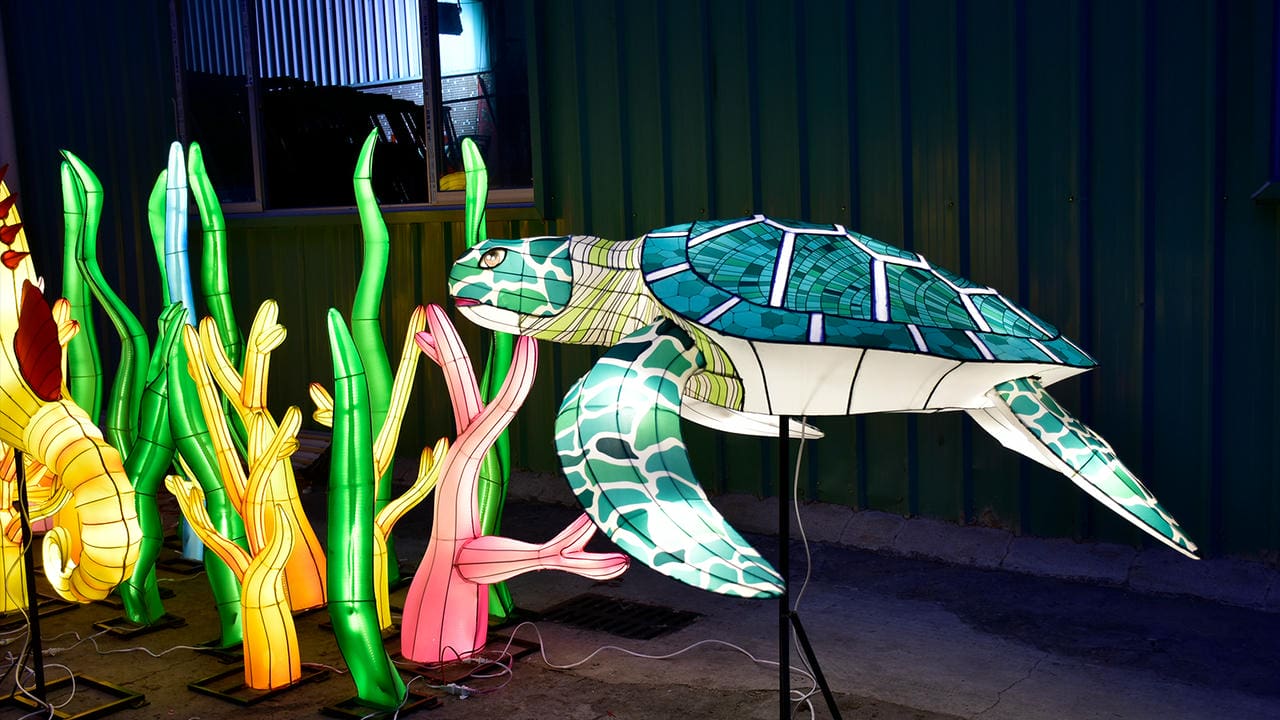
Choose a hierarchy before choosing a long species list. Identify the principal animal, the secondary group, and the environmental forms. Without hierarchy, every animal may compete for attention and the scene can look like a collection of unrelated products.
The brief should also distinguish scientific reference from creative interpretation. Some projects may want recognizable natural proportions and colors; others may prefer bright festival colors and simplified forms. State which visual direction is required, but avoid presenting a general article as biological, engineering, or compliance guidance.
5. Create a Complete Fantasy Underwater Story
An underwater theme can move beyond a natural habitat by adding ruins, treasure, shells, fantasy plants, or original characters. This format is appropriate when the display needs a complete narrative chapter rather than a realistic marine scene.
Start with one sentence that defines the story. For example: “A whale leads a school of luminous fish through a fantasy coral garden.” That sentence establishes a primary subject, supporting movement, and setting. It is more useful to a visual proposal than a shopping list containing a whale, ten fish, several shells, and a coral arch with no stated relationship.
Original concepts and protected characters must be separated. A general mermaid, sea guardian, or fantasy explorer can describe a creative direction, while a recognizable branded character may require permission and specialist review. Do not assume that a reference image grants reproduction rights.
Turn an Ocean Theme into a Clear Supplier Brief
A strong ocean lantern brief connects the buyer’s idea with the function of the proposed display area. It does not need to answer every technical question at the first step, but it should give the supplier enough visual context to avoid unrelated concepts.
Define the Scene’s Visual Job
Label the proposed display as a landmark, transition, overhead group, habitat scene, photo composition, or complete story chapter. One project may contain several jobs, but each should be stated separately.
Select the Primary Species and Supporting Forms
Identify the main animal first. Then list only the fish, jellyfish, turtles, coral, shells, or plants that support it. This keeps the concept focused and makes quantity discussions more meaningful.
Provide Visual References with Clear Notes
Mark what each image is meant to communicate: silhouette, color, expression, movement, texture, or group relationship. A reference should guide discussion, not silently become an approved drawing.
Show the Proposed Area and Viewing Directions
Provide current photographs, a simple marked plan, and the most important views. State whether the scene is seen from one side, approached through an opening, or viewed as a broad composition. Leave all structural, electrical, access, and local-review decisions to the responsible project parties.
Describe Color, Quantity, and Combination Together
Color, quantity, and composition affect each other. A single blue whale with a few supporting fish is a different visual direction from a dense multicolor reef. Use practical descriptions such as “one landmark with two supporting groups” or “a repeated jellyfish cluster across the marked zone” before requesting exact product details.
Record What Is Confirmed and What Remains Open
Separate approved references from open choices. Record which animal, palette, scene role, and group relationship are confirmed, then list the items still awaiting buyer or specialist review. This helps later proposals respond to the same brief.
Questions to Ask When Comparing Ocean Lantern Proposals
Compare proposals against one visual brief rather than counting products alone. Useful questions include:
- Which animal is the primary visual anchor?
- Which forms support the anchor, and what role does each group play?
- How does the concept respond to the supplied photographs and viewing directions?
- Which species, colors, quantities, and group relationships are confirmed?
- Which references are inspiration, and which have been approved for the concept?
- What visual evidence will be available before packing?
- Which technical, site, installation, and local-review questions remain with other responsible parties?
These questions improve comparability without turning an ideas article into a universal specification, inspection checklist, or engineering guide.
Ocean Animal Lantern Display FAQ
What is an ocean animal lantern display?
It is a coordinated commercial display built around illuminated marine-animal sculptures such as whales, fish, jellyfish, turtles, and rays, usually supported by coral, shells, seagrass, or fantasy elements. It is different from floating paper lantern events, aquarium lighting, and marine navigation equipment.
Which animals can be combined in one ocean lantern scene?
Many combinations are possible, but the scene should have hierarchy. Choose one primary animal or idea, then use a smaller number of supporting species and environmental forms. A whale with fish and coral, or a turtle with seagrass and jellyfish, is easier to coordinate than an unrestricted species list.
Should a project use one giant animal or a complete group?
Use one giant animal when the priority is a strong landmark or campaign image. Use a group when the area needs visual continuity, multiple layers, or a complete story. Some projects combine both: one dominant whale or fish supported by smaller animal groups and marine plants.
Can ocean animal lanterns be installed in water?
Do not assume that an ocean theme requires in-water installation. The same visual idea can be arranged on land, beside a water feature, or within a marked event zone. Any in-water, structural, electrical, access, or local installation decision requires project-specific review by responsible qualified parties.
What should a buyer send before requesting an ocean lantern concept?
Send the scene’s visual job, current site photographs, the marked display area, viewing directions, preferred species, color references, quantity or scale direction, adjacent theme information, destination, and target opening period. Clearly label assumptions and open questions.
Where can buyers explore the wider animal lantern product family?
Use the Animal Lanterns page to review the broader commercial animal-lantern category. The ocean ideas in this guide should become one coordinated section of a larger brief, not a replacement for product and project-specific discussion.
Choose the Scene Role Before Choosing Individual Animals
An effective ocean lantern concept begins with a visual job. Decide whether the project needs a whale landmark, a jellyfish atmosphere, a coral transition, a habitat group, or a complete underwater story. Then organize species, colors, quantities, references, and viewing directions around that role. When the brief is ready, continue to Animal Lanterns to review the broader product family and discuss a project-specific direction.
Post time: Aug-27-2026


