
Carrying lanterns gives people a way to take part in Mid-Autumn celebrations after dark, while public displays make lantern viewing part of the festival. Moon appreciation, children’s processions, and local stories help explain these activities in different places. Singapore, Vietnam, and Hong Kong offer three examples of how lanterns become part of the celebration, through both personal participation and public events.
Carrying and viewing involve different experiences. A carried lantern moves with its participant; a display is something people gather to see. Both belong within Mid-Autumn lantern traditions, but the reasons attached to them become clearer in their local setting.
Regional Traditions and the Stories Around Them
Singapore: Lantern-Carrying and Moon Appreciation
The Singapore Chinese Cultural Centre lists carrying lanterns and moon gazing among local Mid-Autumn activities. It connects lantern-carrying with the use of light during nighttime moon worship, placing the custom within an evening centered on the moon.
That connection helps explain why lanterns appear alongside moon appreciation. It does not mean every person carrying a lantern today is taking part in worship: the center’s account describes the custom’s background as well as activities associated with the celebration.
Vietnam: Children’s Processions and the Story of Cuội
Vietnam’s national tourism authority describes Tết Trung Thu with a strong focus on children, including lantern processions. Here, children participate by carrying lights together, making the lantern part of an activity rather than simply a decoration to look at.
The authority also recounts the moon legend of Cuội. In this story, the procession lights help him find his way back to Earth. The tale gives children’s lanterns a connection to the moon through the idea of lighting a path home. It is a local legendary explanation, rather than a historical account of when all Mid-Autumn lantern customs began.
Hong Kong: A Modern Public Lantern Celebration
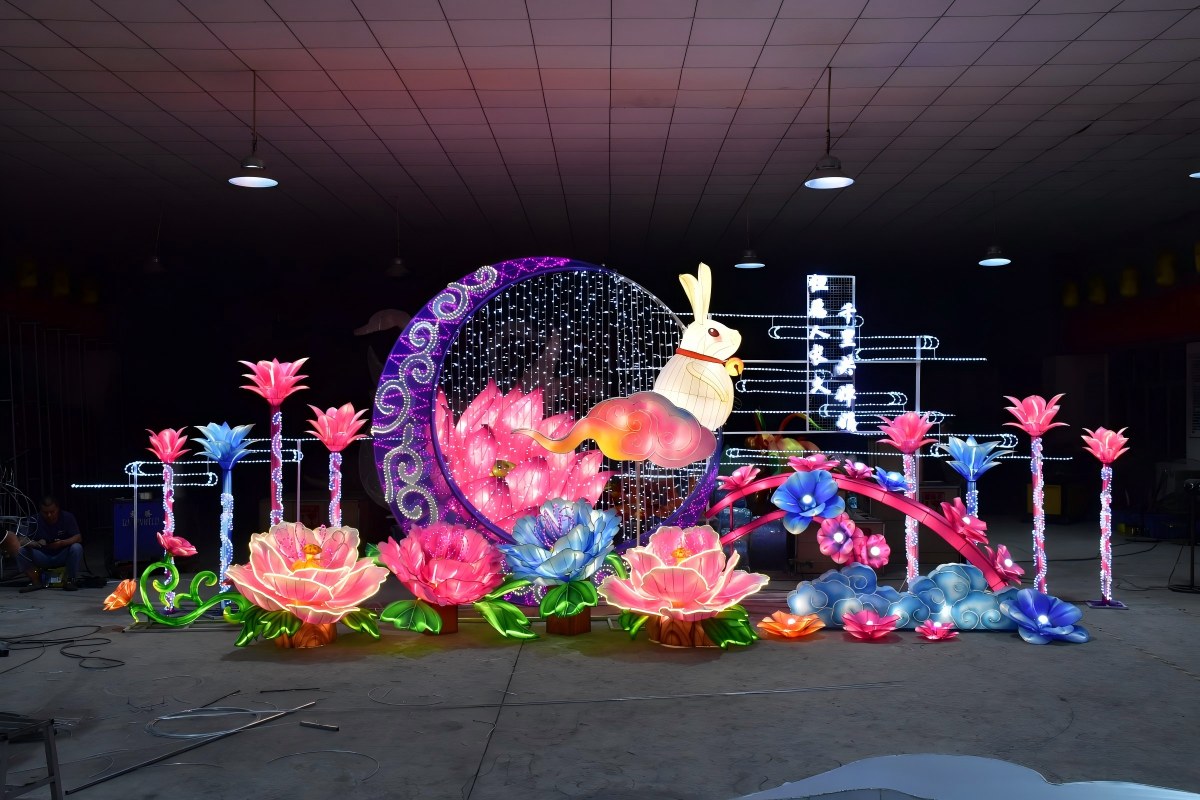
In a September 17, 2026 announcement, Hong Kong’s Leisure and Cultural Services Department described a Mid-Autumn lantern carnival at Victoria Park. The announced program combined lantern displays with performances, making public lantern viewing one part of a broader festive evening.
This example brings the focus to people gathering around a display. Visitors could look at the lanterns as part of the announced program without the activity being a lantern-carrying procession. It illustrates the viewing side of Mid-Autumn celebrations in a specific modern event.
Taken together, these examples connect lanterns with nighttime participation, moon stories, and public celebration. The local setting gives each activity its particular meaning; one origin story need not stand for them all.
Is Mid-Autumn the Same as the Lantern Festival?
No. Mid-Autumn falls on the fifteenth day of the eighth lunar month, while the Lantern Festival in China falls on the fifteenth day of the first lunar month. Lanterns appear in both celebrations, but the shared object does not make them the same festival.
In our client conversations, we have encountered confusion between Mid-Autumn and the Lantern Festival, as well as questions about why Mid-Autumn includes lanterns. Our explanation is simple: lanterns are a way to celebrate, not something reserved for a single festival.
For the display-planning side, explore our Mid-Autumn festival lantern page.
Post time: Oct-11-2026


