
Commercial Halloween lantern displays work best as coordinated scenes, not as a random collection of pumpkins, ghosts, and monsters. A strong concept normally combines one visual landmark with supporting characters, illuminated plants, transitions, and photo-friendly details. The right direction depends on the venue, the intended mood, the available space, and whether the display should feel playful, mysterious, or frightening. This guide focuses on custom lantern scenes for commercial projects—not home decorations.
For many commercial lantern projects, Halloween is better treated as a temporary seasonal zone or supporting theme than as the concept for an entire large event. It can add a child-friendly fantasy chapter, a mysterious autumn scene, or a stronger fright-oriented feature when the venue has a clear reason to use it. Smaller home-decoration products are outside the scope of this guide.
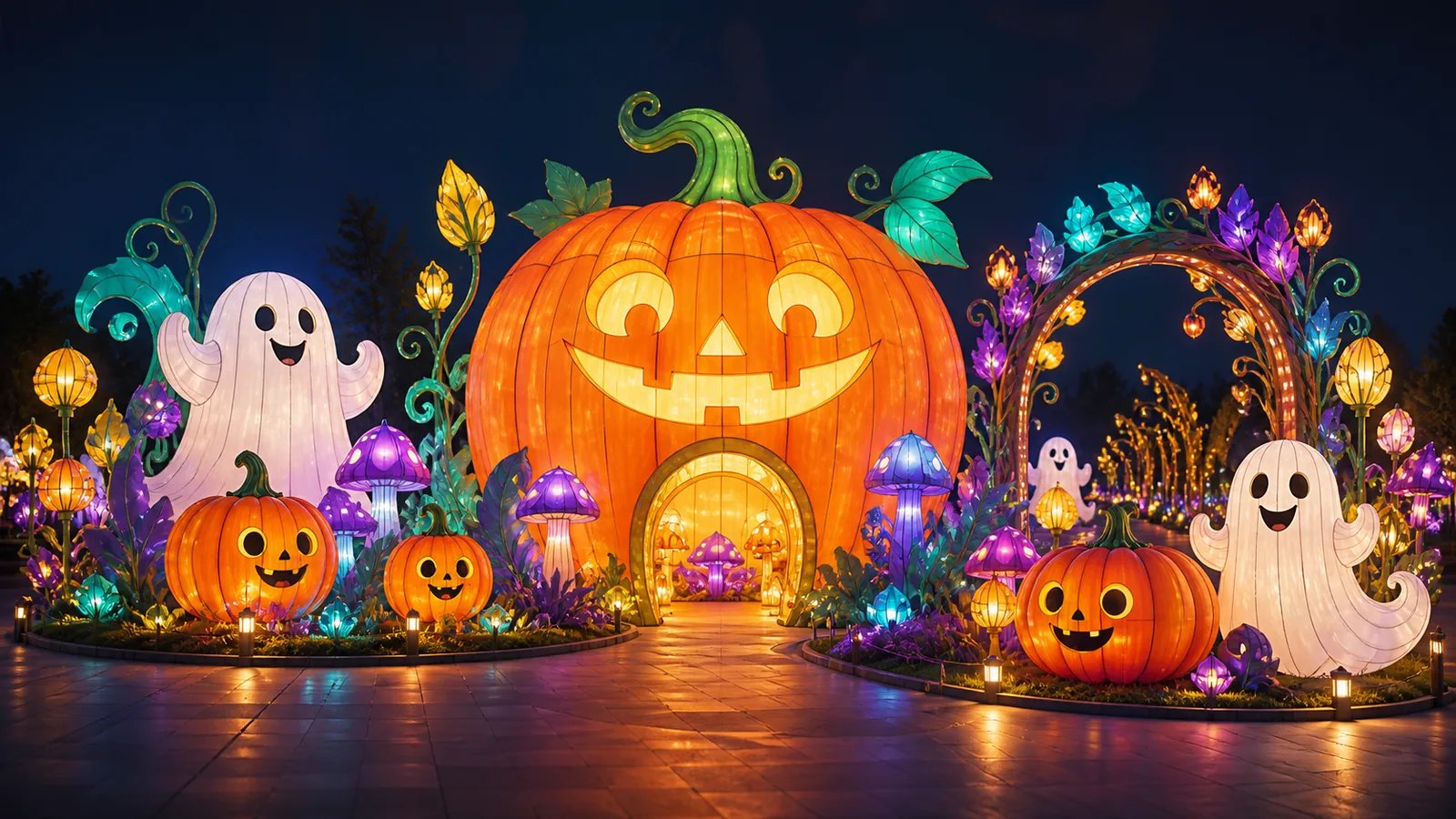
Five Halloween Lantern Display Directions for Commercial Projects
The five directions below can stand alone or become chapters within a larger seasonal display. The goal is not to use every Halloween symbol. It is to choose a clear visual language and give each element a job.
1. A Giant Pumpkin Entrance or Landmark
A large pumpkin is one of the clearest Halloween symbols. It can introduce the theme at an entrance, anchor an open plaza, frame a photo area, or become the central object in a smaller display.
Scale matters in relation to the space. A single landmark needs enough visual weight to be recognized from the main approach, while smaller pumpkins can form a supporting group at its base. Faces, stems, color gradients, surrounding vines, and companion figures can change the mood from cheerful to mysterious without changing the core theme.
Before discussing a custom concept, the buyer should identify the landmark’s role. Is it an entrance marker, a background for photographs, a freestanding centerpiece, or one part of a longer route? That decision affects the composition more than simply asking for “a big pumpkin.”
2. A Haunted Forest with Glowing Plants and Mushrooms
A forest direction creates atmosphere through layers. Illuminated mushrooms, unusual flowers, twisted branches, glowing leaves, insects, eyes, and fantasy plants can make ordinary ground feel like a different world after dark.
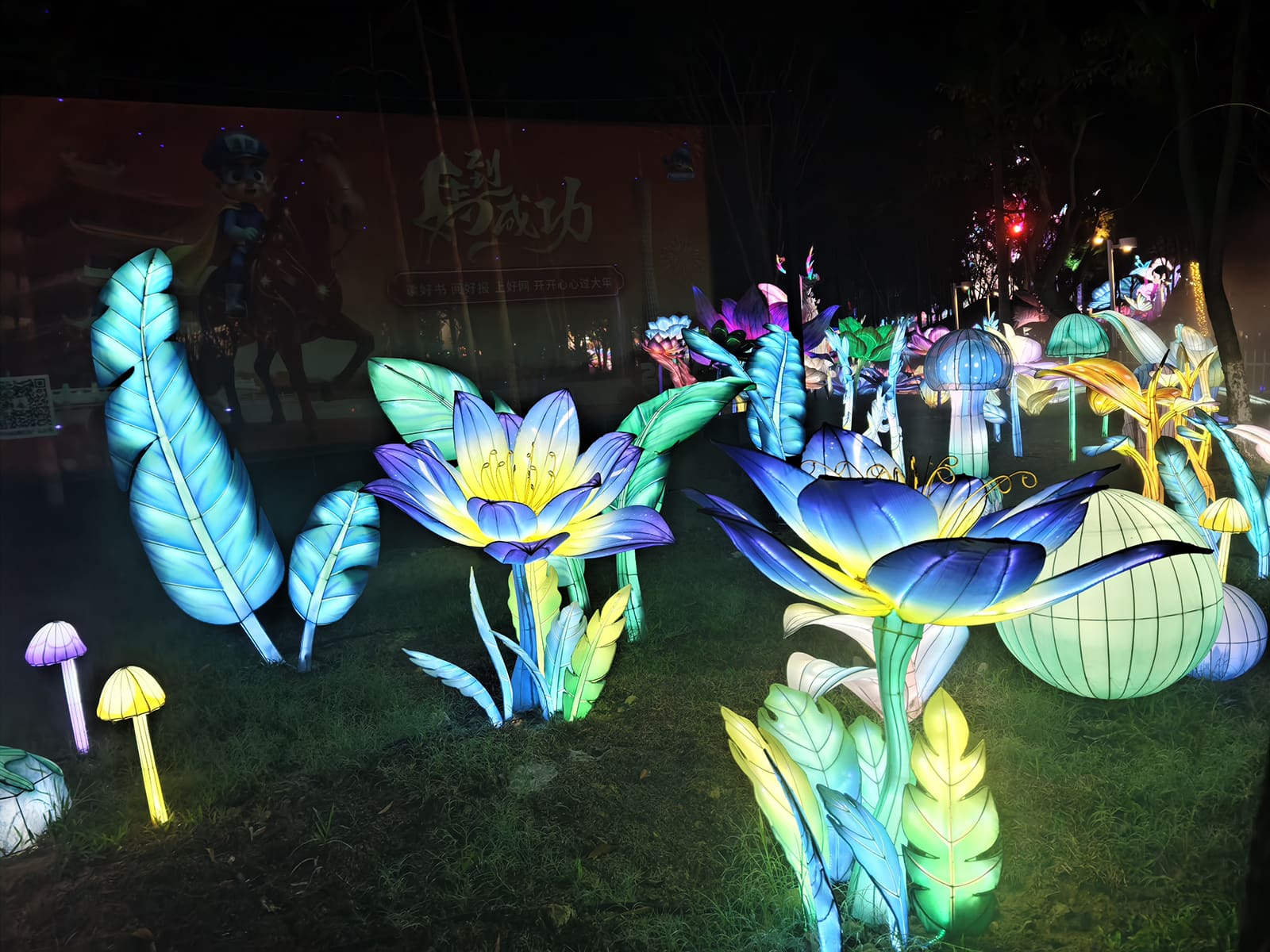
This direction is useful when the venue already has trees, planting, an indoor exhibition area, or a transitional space between larger scenes. It can also support another theme. A pumpkin landmark can sit at the forest entrance, while spiders, bats, original creatures, or dinosaur forms appear deeper within the composition.
The most important choice is the visual mood. Acid green, violet, cold blue, orange, and deep red can feel more mysterious, while warmer colors and rounded shapes can create a gentler family setting. Buyers do not need to prescribe every object, but they should provide references that show the desired emotional direction.
3. A Creature Gallery with Spiders, Bats, Ghosts, and Fantasy Figures
Creatures add character and variety. Spiders can stretch across a scene, bats can create repeated overhead silhouettes, and ghosts can work as small supporting figures or larger floating forms. Original fantasy characters can give the display its own identity instead of making it look like a generic collection of seasonal props.
The strongest creature scenes use a hierarchy. One figure leads the view, a secondary group explains the setting, and smaller elements fill the foreground or background. If every creature has the same size and visual importance, the result can feel crowded rather than dramatic.
Commercial buyers should also avoid requesting direct copies of recognizable movie, game, or cartoon characters unless they control the relevant rights. References can communicate mood, posture, color, or level of detail, but the final concept should remain original.
4. Walk-Through Arches, Gates, and Short Tunnels
A walk-through feature changes the display from something people look at into something they physically enter. Pumpkin arches, monster-mouth gateways, spiderweb canopies, crooked-house facades, and short illuminated tunnels can mark the transition into a Halloween zone.
These structures work in plazas, event grounds, hotel lawns, commercial streets, indoor exhibition halls, and attractions. Their visual role should be decided before their decorative details. A gate may introduce the entire event, connect two scenes, frame a photograph, or mark the entrance to a stronger-fright area.
The article does not set universal dimensions, clearances, anchoring, electrical arrangements, or safety requirements. Those depend on the actual site and must be reviewed by the venue and qualified local specialists. At the concept stage, the buyer should simply identify the intended use, available location, viewing direction, and whether people are expected to pass through the structure.
5. A Family-Friendly Fantasy Village and Photo Scene
Not every Halloween project needs to be frightening. Rounded pumpkins, friendly ghosts, smiling creatures, candy-inspired forms, small houses, colorful plants, and playful characters can create a seasonal setting for family events, shopping centers, resorts, community festivals, and indoor activations.
This direction often works best as a connected group rather than one isolated object. A small village can include a main house, a character pair, a foreground prop, and a photo frame, all using the same palette and drawing style. Repeating a few shapes or colors helps separate the display from unrelated decorations nearby.
The buyer should define how playful or mysterious the scene should feel. “Family-friendly” is not a complete design instruction. Reference images, preferred colors, character expressions, and the intended setting give the designer a much clearer starting point.
| Display direction | Main visual role | Suitable commercial settings | Buyer decisions to define |
|---|---|---|---|
| Giant pumpkin landmark | Entrance icon or centerpiece | Plazas, event entrances, malls, hotels, parks | Landmark role, viewing direction, mood, supporting group |
| Haunted glowing forest | Atmosphere and transition | Gardens, indoor halls, paths, themed zones | Color palette, fantasy level, existing landscape context |
| Creature gallery | Character and story | Festivals, commercial events, exhibitions, attractions | Lead figure, supporting figures, originality, fear level |
| Walk-through feature | Spatial transition and immersion | Entrances, streets, halls, event grounds | Intended use, location, passage expectation, visual theme |
| Fantasy village | Family photo setting | Malls, resorts, public events, family festivals | Character style, palette, number of elements, photo role |
How to Choose the Right Halloween Mood
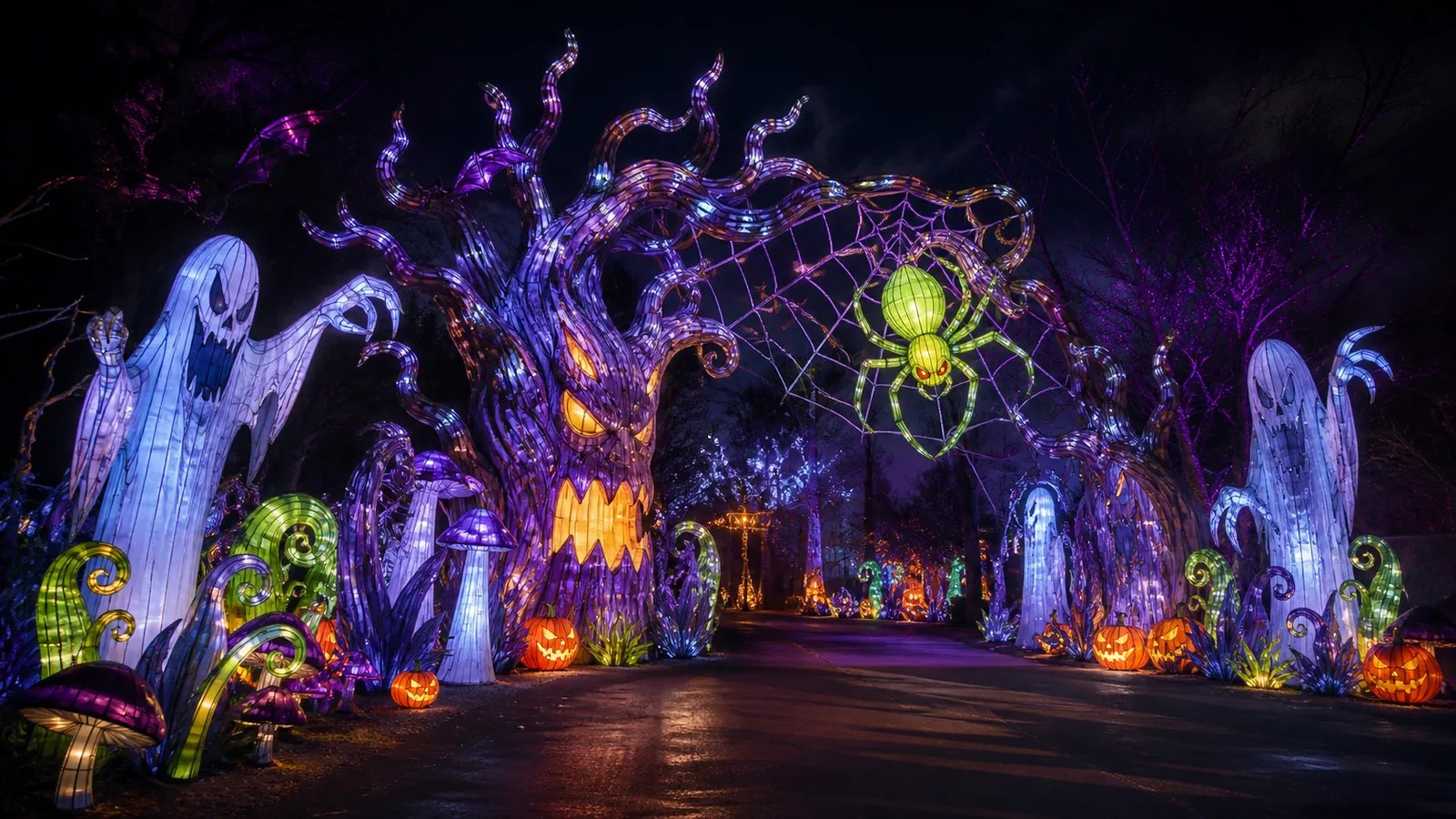
The same objects can produce very different experiences. A pumpkin with rounded eyes and warm orange light feels playful. A taller, asymmetrical form with sharper features and deep shadows feels more unsettling. A forest can look magical with bright mushrooms and flowers, or ominous with darker plants, eyes, webs, and narrow color contrasts.
Start by selecting one of three broad directions:
- Family-friendly: clear shapes, expressive characters, brighter colors, and easy-to-read photo scenes.
- Mysterious fantasy: unusual plants, original creatures, layered colors, and a sense of discovery without relying on graphic horror.
- Stronger fright: more dramatic silhouettes, darker palettes, distorted forms, and clearly separated scare-focused scenes.
A project can combine more than one direction, but the boundaries should be intentional. A family photo zone and a stronger-fright scene can coexist if visitors understand that they are different parts of the event. Mixing both styles inside every composition usually weakens the visual story.
Audience and operating decisions remain with the venue. The lantern concept should respond to an approved event direction; it should not decide age suitability, crowd procedures, emergency planning, or visitor policy.
Where Halloween Fits in a Larger Lantern Project
Halloween does not need to define an entire lantern festival. For many venues, it is more useful as a temporary seasonal layer: a pumpkin entrance, a family fantasy zone, a mysterious forest, or a focused fright-oriented feature added to a broader event.
This supporting role is especially practical when a commercial venue already has an autumn program or when a larger attraction wants one clearly separated Halloween chapter. A major scenic destination may choose a larger themed zone, but the idea should still be judged against the venue, audience, available space, and approved event plan. The theme should not be presented as a universal solution for every park or large public event.
This page therefore focuses on design choices and buyer inputs rather than presenting a large Halloween project case study.
Turn the Idea into a Useful Custom-Lantern Brief
A buyer does not need to submit a technical specification before the first design discussion. A short, accurate visual brief is more useful than a long list of disconnected products.
When a commercial buyer shares a Halloween idea and the intended setting, ParkLightShow can draw on its design resources and supplier network to develop an original visual direction and discuss suitable size relationships, colors, quantities, and scene combinations. The concept can be family-friendly, mysterious, or more fright-oriented, depending on the approved brief. This does not set a fixed design turnaround, production schedule, or project result.
Explain the venue use
State whether the display is for an entrance, open plaza, indoor atrium, hotel lawn, public event, commercial street, temporary exhibition, or a zone within a complete commercial lantern festival project. The same pumpkin or creature group may need a different composition depending on how the space is used.
Share the visual direction
Provide reference images for atmosphere, shape language, color, and level of detail. Separate “what we like” from “what must be copied.” References should guide an original design rather than reproduce protected characters or another supplier’s work.
Define size relationships, not only one number
Explain which object should be the landmark, which elements should support it, and which details belong in the foreground. If approximate dimensions are known, include them as project inputs subject to site and technical review. The relationship between the main and supporting elements is often more important to the visual result than the size of one item alone.
Confirm color, quantity, and combination
List preferred colors, unwanted colors, the approximate number of groups, and whether repeated elements should create rhythm across the display. A useful custom lantern display design discussion connects these choices instead of treating each product as an independent purchase.
Separate the landmark from supporting elements
Identify the image that should represent the project in photographs or promotion. Then choose the smaller figures, plants, arches, and foreground details that help the main object make sense. This prevents the budget and visual attention from being spread equally across too many pieces.
Record the practical project facts
Include the intended display location, destination, preferred opening window, indoor or outdoor context, existing site photos, and any known access restrictions. These facts help the relevant project teams identify questions that require later review. They do not create a universal delivery promise or replace local engineering, electrical, fire, accessibility, or event approvals.
Common Mistakes to Avoid
Collecting symbols without a visual hierarchy
Pumpkins, ghosts, spiders, bats, monsters, mushrooms, and castles can all belong to Halloween, but placing all of them at equal scale does not create a strong scene. Choose one main story and let the remaining elements support it.
Copying a familiar entertainment character
Recognizable characters may feel like an easy shortcut, but they can introduce rights issues and make the project dependent on someone else’s visual identity. Original creatures and environments can still communicate mystery, humor, fantasy, or fright.
Choosing products before defining their role
A buyer may like a pumpkin, an arch, and a group of ghosts separately. The better question is how they work together: which one attracts attention, which one frames the scene, and which one fills the transition.
Ignoring the available space and viewing direction
A design viewed from one frontal position is different from a freestanding landmark seen from several sides. Site photographs and the intended viewing direction should be part of the brief before the composition is approved.
Mixing fear levels without a clear boundary
A playful family scene can lose its appeal if graphic or aggressive elements appear without warning. A stronger Halloween concept can also feel weak if every character is softened. Decide where each visual tone belongs.
Halloween Lantern Display FAQ
What are Halloween lantern displays?
Halloween lantern displays are illuminated, shaped scenes made around seasonal subjects such as pumpkins, ghosts, spiders, bats, fantasy creatures, haunted forests, arches, and walk-through structures. In commercial projects, the elements are normally organized into a visual composition rather than used as isolated home decorations.
Can Halloween lanterns be used outside theme parks?
Yes. The commercial setting can include event grounds, shopping centers, public plazas, hotels, resorts, streets, indoor exhibitions, cultural festivals, and other venues where a custom illuminated scene fits the approved project brief. The site still determines the technical and operational review required.
Which Halloween lantern scene works best as an entrance landmark?
A giant pumpkin, themed gateway, monster-mouth arch, haunted-house facade, or another large original figure can establish the event identity. The best choice depends on the approach view, available space, desired mood, and how the entrance connects to the scenes behind it.
Can a display mix family-friendly and spooky scenes?
It can, but the two directions should have clear visual boundaries. A project may begin with friendly pumpkins and fantasy characters, then move into a darker forest or stronger-fright zone. The venue remains responsible for audience, access, communication, and operating decisions.
What information should a buyer send before requesting a custom concept?
Useful inputs include the venue use, display location, site photos, reference images, preferred mood, approximate size relationships, colors, number of groups, main landmark, supporting elements, destination, and desired opening window. Technical requirements should be confirmed separately for the actual site.
Are Halloween lantern displays the same as ordinary Halloween lighting?
No. Ordinary Halloween lighting may use strings, projections, architectural color, or small retail decorations. Custom lantern displays are shaped illuminated objects and grouped scenes developed around a theme. A project may combine both, but they are different buying and design categories.
Build the Halloween Theme Around a Clear Visual Brief
Start with the scene’s purpose, the desired mood, the main landmark, and the supporting elements. Share the venue use, references, colors, quantity, and composition priorities before discussing individual products. ParkLightShow can use its design resources and supplier network to discuss an original visual direction and suitable scene combinations. For a broader seasonal project, review the ParkLightShow lantern festival solution and treat the Halloween zone as one supporting chapter within a coherent commercial lantern plan.
Post time: Aug-29-2026


