
A giraffe lantern is more than a tall animal figure. Its long neck, head position, body proportions, and spotted pattern work together to make the silhouette recognizable. Specifying height alone can leave important differences between proposals unresolved: an upright pose emphasizes vertical space, while a lowered or extended neck changes the horizontal area the display needs.
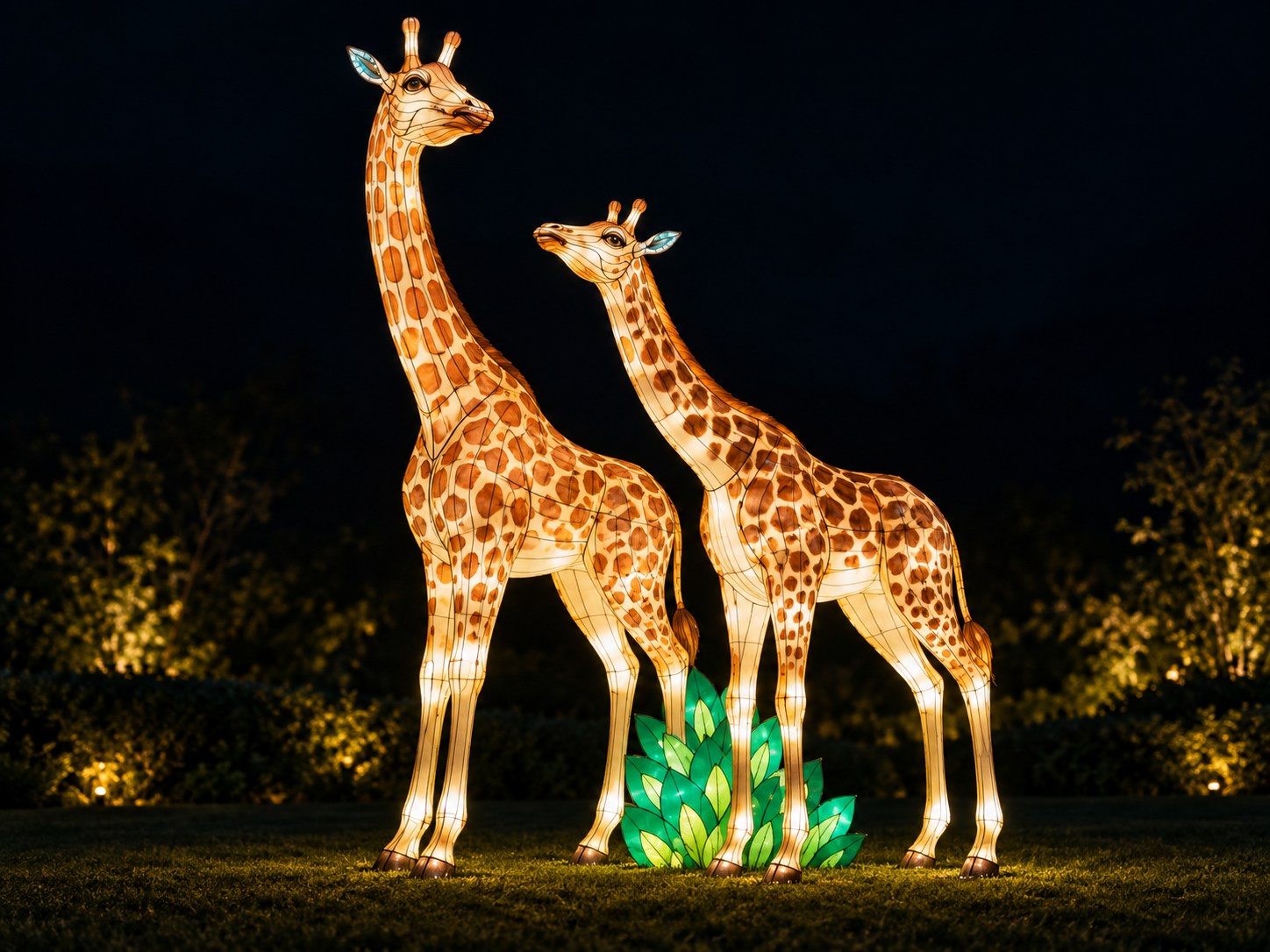
Start with the pose and setting, then compare dimensions and quantities. The aim is to present a complete animal scene—not a long neck disappearing into the background.
In our giraffe lantern work, we have made a variety of poses, with grouped displays more common than individual figures. Our usual production sizes exceed 3 meters. This describes our past work, not a fixed specification or the measured size of every lantern pictured here. Dimensions still need to be confirmed for the chosen pose and venue.
Clarify What the Dimensions Include
When comparing designs, establish whether the stated height refers to the lantern itself or includes a base and scenic platform. Ask for the overall width and depth as well, including any part of the head or neck extending beyond the body.
An upright pose and a lowered-head pose do not create the same composition. Each changes the relationship between the giraffe, nearby trees, other figures, and the viewing area. If the design places the animal near foliage, show both together in the concept so their relationship can be assessed.
A full-figure drawing helps with proportions. A scene view from the intended visitor approach helps show whether those proportions will read clearly in the setting. Both are useful; neither substitutes for the other.
Review the Spots as Part of the Whole Figure
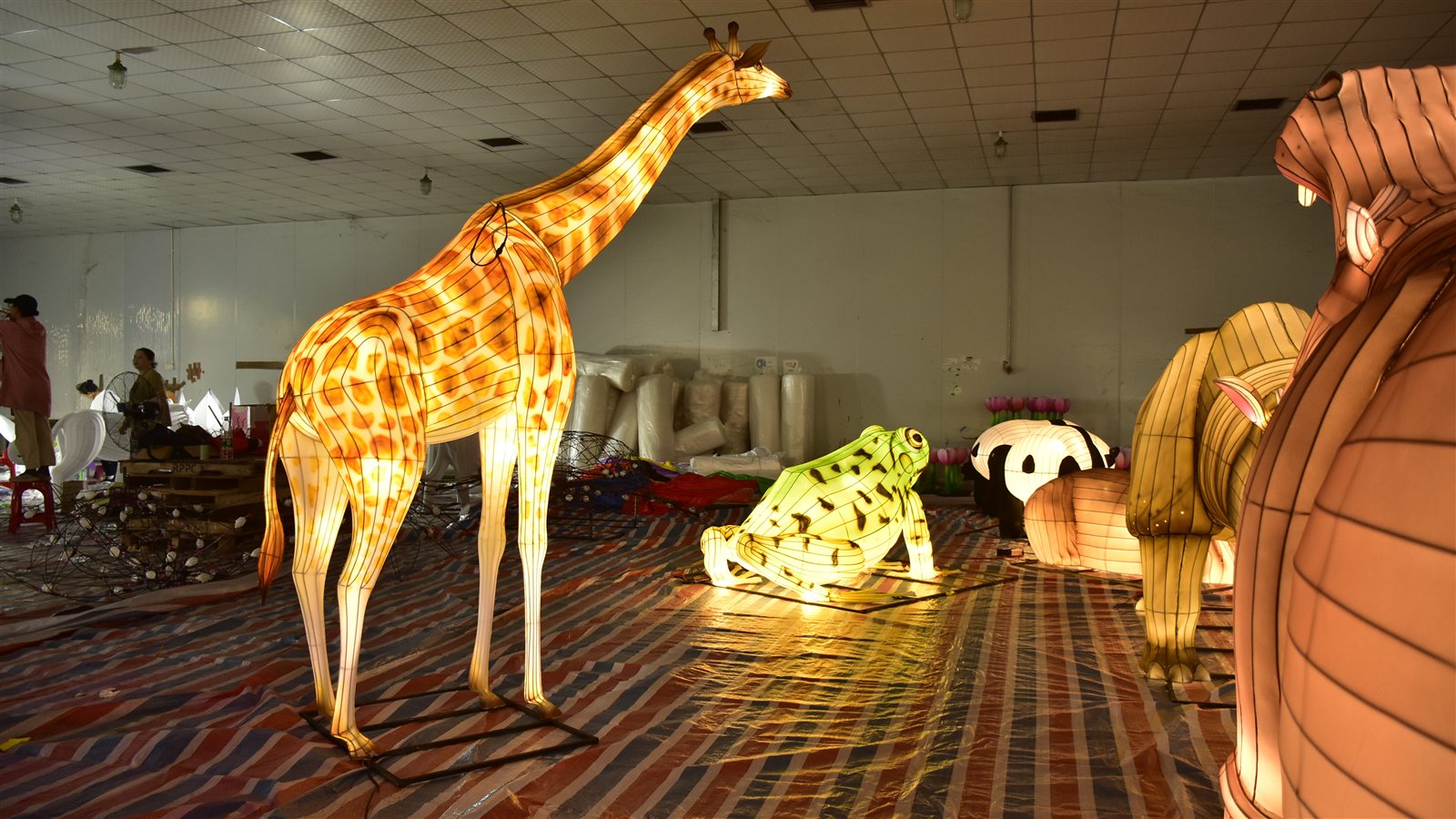
The spotted pattern is an important part of a giraffe’s appearance. When choosing references, identify whether you prefer the size, shape, spacing, or color contrast of the patches rather than simply requesting a yellow finish.
Review both a close view and the complete scene. The close view supports discussion of detail; the wider view shows whether the pattern remains coherent across the neck, body, and legs.
Discuss the illuminated appearance separately from the daytime color reference. Ask to compare the intended palette with an illuminated reference and check whether the patches remain distinct from the background color. The final appearance must be confirmed against the specific project’s production and review records.
Keep Each Head and Neck Readable in a Group
For a group of giraffe lanterns, the decision is not just how many larger and smaller figures to include. Their orientation, depth within the scene, and the spaces between their necks also matter.
Review the group from the main viewing direction. Do two necks appear to overlap into one? Does a foreground head hide another face? Compare positions and orientations in the concept rather than leaving visual obstructions to be resolved after the figures are in place.
The figures do not have to stand in a straight line. They can be organized around a shared scene, provided their relationship is clear. A smaller group can also use supporting scenery to establish its setting without continually adding more animals to fill the available area.
Give Trees and Plant Scenery a Clear Role
Tree canopies, branches, and low-growing plant forms are possible supporting elements. Decide what each contributes: a background, a connection between figures, or a visual relationship with a particular pose.
A tree trunk directly behind a long neck, or dense foliage around a face, can make the silhouette harder to distinguish. Compare the animals alone with the proposed complete scene. Each added element should help communicate the theme.
A realistic direction can draw on a natural setting. An artistic or cartoon direction can explore freer colors and plant shapes. In either case, keep the animals and scenery stylistically consistent rather than assembling unrelated references into one display.
Connect the Visual Concept to Site Conditions
Height deserves particular attention in a giraffe lantern proposal, but a rendering cannot establish structural suitability, installation requirements, or maintenance access. The project team should review site clearance, access conditions, surrounding trees, and the relationship between the display area and visitors.
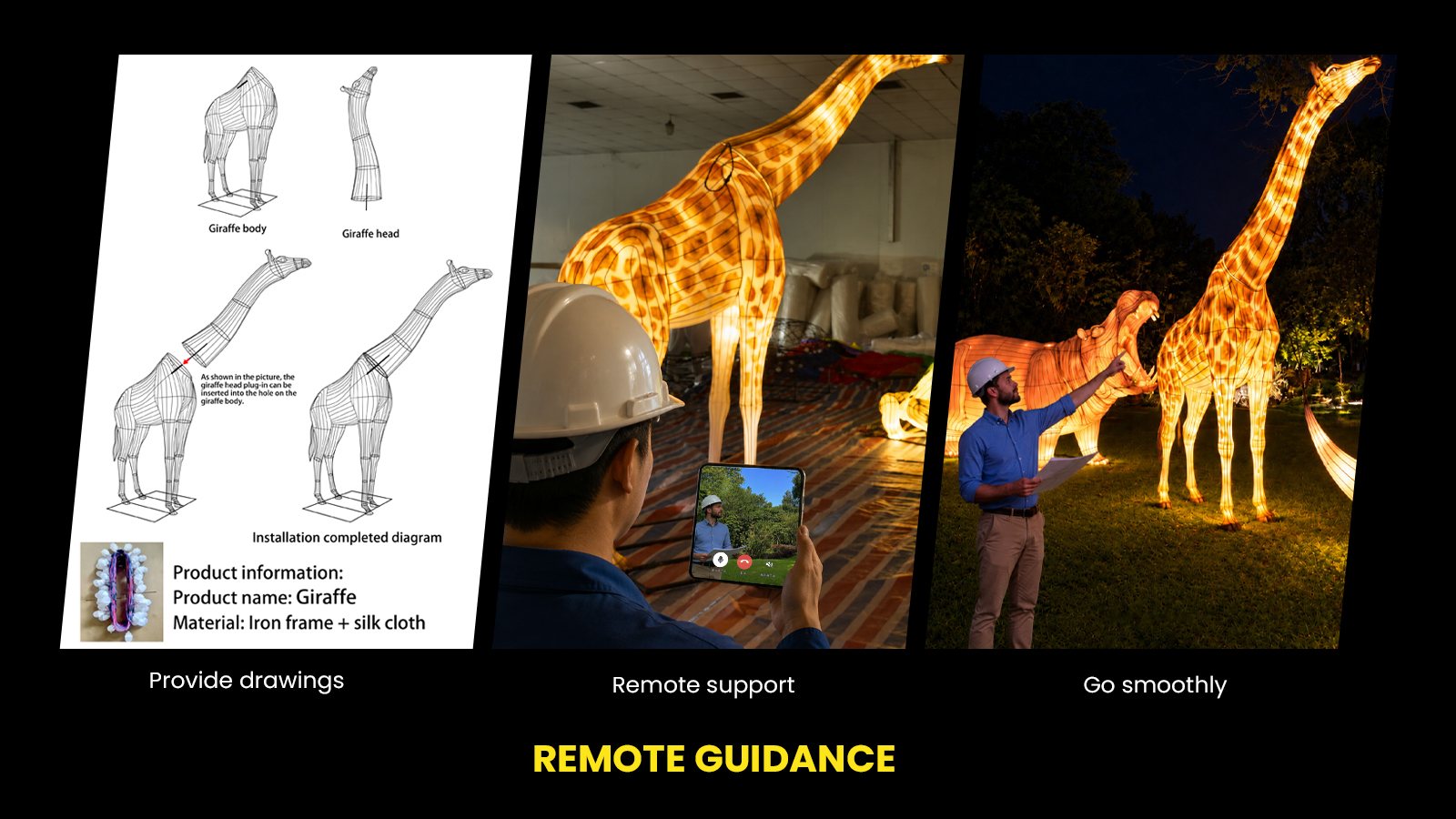
Where a proposal requires transport in sections and assembly on site, ask how the finished appearance, section arrangement, and assembly information correspond. A drawing from another project is not evidence that the same connection method applies to yours.
Keep visual approval separate from implementation review. Agreement on a pose and color palette does not mean structural, installation, or local requirements have been resolved.
Prepare a Useful Giraffe Lantern Brief
Share site photos or a plan, the display area, the main viewing direction, and event dates. Add preferred poses, pattern references, and whether you want several figures together.
You do not need to settle every detail before discussing a concept. Instead, distinguish fixed constraints from open choices. For example, the display area may be fixed while the number and poses of the giraffes remain flexible.
A useful proposal should make the complete footprint, the relationship between figures, and the role of the scenery clear. It should also distinguish agreed visual decisions from implementation questions that still need review. This makes comparison more meaningful than choosing between a single height measurement and an attractive image.
Explore other animal lantern displays, or consider how a giraffe scene fits into a complete lantern festival project.
Share your venue brief and preferred giraffe poses with the HOYECHI team to discuss the next design steps.
Post time: Sep-15-2026


