
Giant hanging lanterns are project-built illuminated display elements arranged overhead, between landscape features, or within a large open volume. For a festival or commercial venue, the design task is not simply to enlarge a retail lantern. It is to create a visible composition with a clear theme, color system, viewing direction and relationship to the space below. Every suspension, structural, electrical, fire and permit decision must then be confirmed by venue-appointed qualified specialists.
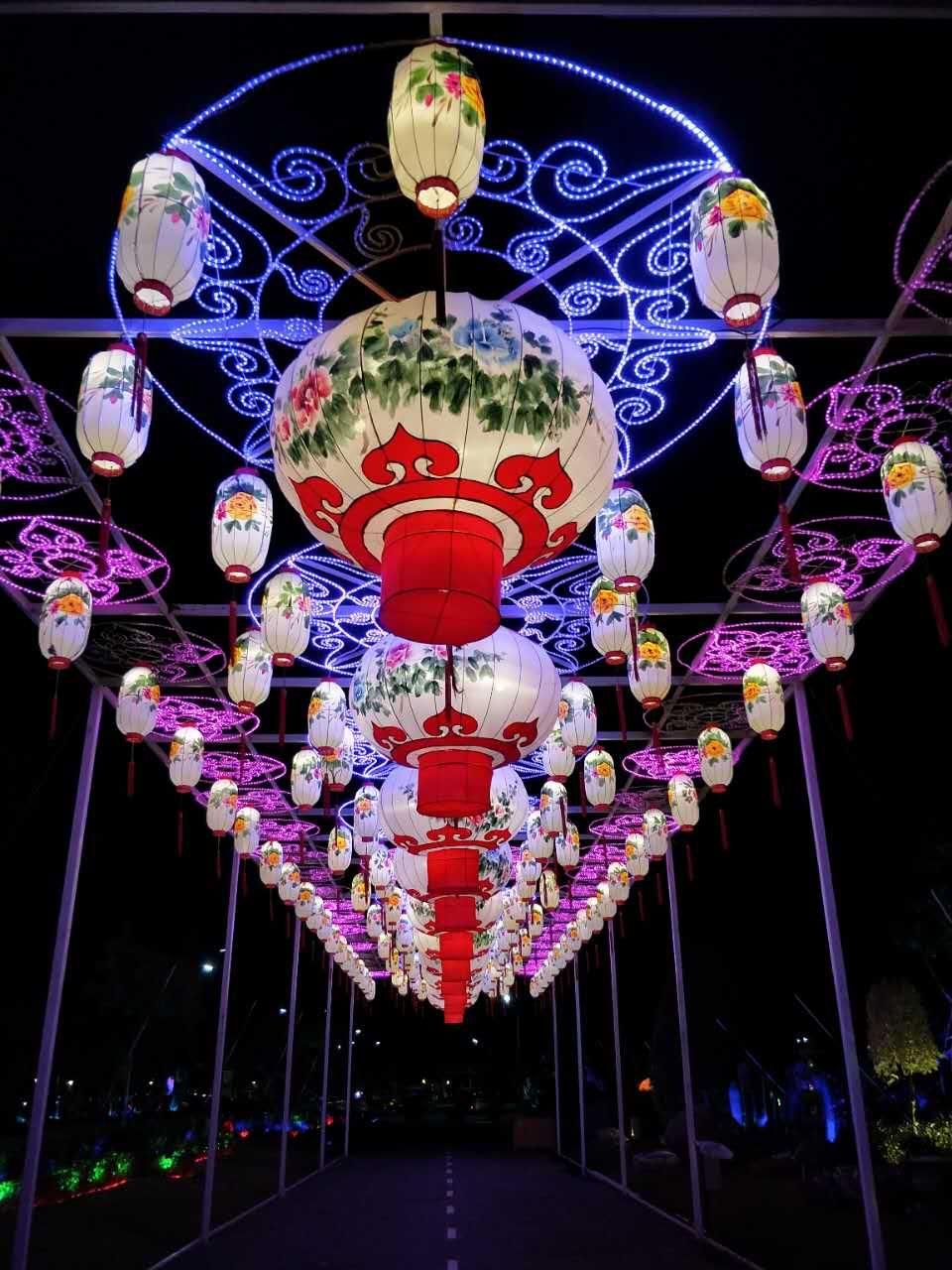
What Counts as a Giant Hanging Lantern Display?
A commercial hanging lantern display is planned as part of a larger visitor-facing scene. Individual lanterns may repeat as a canopy, gather around a central feature, frame an entrance, or connect with illuminated elements at ground level. The effect depends on how the group is read from a distance and how it changes as people move through or beside it.
This is different from buying small paper lanterns for a home, wedding or temporary party. A project brief needs to describe the complete display: where it will be seen, what role it has in the event, which areas it should visually connect, and what information the venue must confirm before a supplier develops the concept further.
The broader lantern festival decorations family may include arches, animals, flowers, scenic groups and suspended elements. A hanging display is one composition format within that larger system, not a substitute for the complete event plan.
First-Party Project Context: New Jersey
ParkLightShow has supplied giant hanging lanterns for a real project in New Jersey, United States. In that project, the hanging lanterns belonged to a wider nighttime environment rather than being treated as isolated retail decorations. This experience is useful as first-party context, but it does not transfer the site’s suspension method or technical decisions to another venue.
For a conventional project inquiry, the buyer normally begins with a site plan, the intended use of the space, the venue type, a preferred theme or reference, and the main viewing areas. ParkLightShow can use those inputs to develop an effect drawing and discuss the visible design direction, including shape, color, quantity and how the lantern groups relate to one another. The effect drawing remains a creative reference; every technical site decision stays with the responsible venue parties and qualified specialists.
Five Ways to Compose Giant Hanging Lanterns
1. Overhead Corridor or Canopy
An overhead corridor uses repeated lanterns to create a visual ceiling above a street, walkway or transition zone. Repetition gives the route a clear identity, while controlled changes in color or form can mark different sections.
The buyer brief should identify the start and end of the intended visual sequence, the main viewing direction, nearby façades or trees, and whether the corridor is a destination or a connection between larger scenes. The brief should describe the desired experience without prescribing attachment points, suspension methods or spacing. Those decisions depend on verified site conditions and qualified technical review.
2. Tree-Cluster Display
Lanterns grouped around trees can create a layered festival scene because the illuminated forms appear at different heights and among natural branches. This format can work as a visual accent in a park, plaza or commercial district, but it should not be treated as permission to attach items to any tree.
ParkLightShow already has a separate tree-hanging traditional lantern arrangement page. That product page remains the owner of the exact tree-display example. For a new project, the venue and its qualified specialists must determine whether a proposed area, tree or independent support system can be used and what restrictions apply.
3. Atrium or Open-Volume Cluster
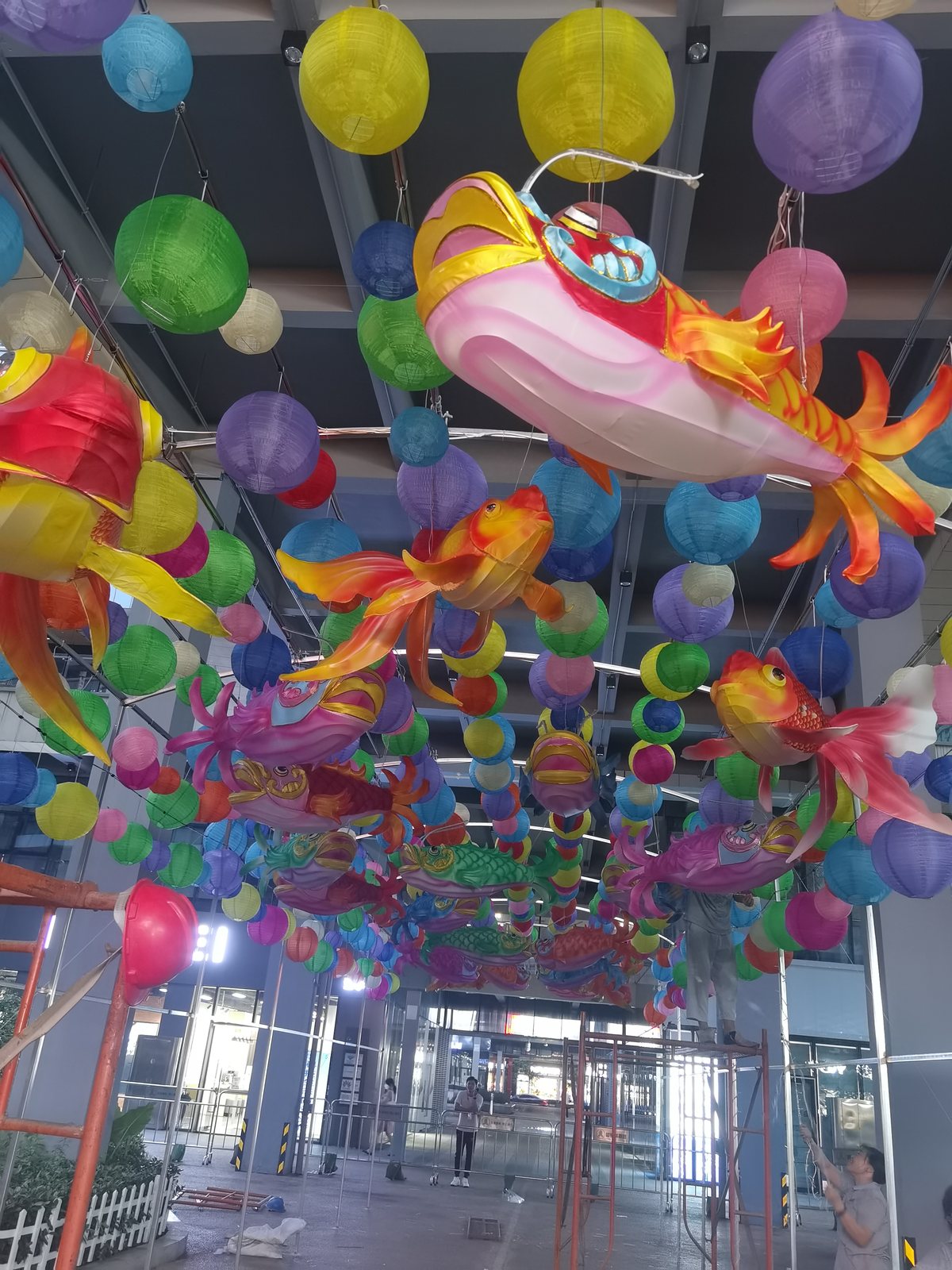
An atrium or covered commercial space offers a different viewing condition. People may see the display from several levels, from below, and from a distance across the same interior volume. A cluster can therefore use a strong central shape, a color gradient or several coordinated groups instead of a flat row.
The buyer should provide photographs from the main viewpoints and explain which entrances, balconies or circulation areas matter most. The design brief can then identify the intended visual hierarchy. It must not assume that an existing ceiling or structure is suitable for suspension; that question belongs to the property and its appointed professionals.
4. Mixed Hanging-and-Ground Scene
A suspended display often becomes more convincing when it connects with illuminated flowers, waves, clouds, animals or other scenic elements below. The overhead layer establishes atmosphere, while the ground layer gives the scene a focal point and a visible base.
This format is useful when a venue wants a complete themed environment rather than a decorative ceiling. The brief should separate the elements that lead the eye, the primary photo or viewing area, and the supporting details. It should also show which ground elements belong to the lantern supplier’s scope and which site items remain with the venue or another contractor.
5. Suspended Centerpiece or Threshold Feature
A single large feature can mark an arrival, a central court or a transition between themed areas. It may be framed by smaller lanterns, repeated motifs or ground elements, but the main form should remain visually dominant.
This approach places more emphasis on silhouette and viewing distance than on quantity. Buyers should clarify whether the feature is intended to be read from one direction, from several sides, or from upper and lower levels. The concept can explore form and color, while the venue retains responsibility for confirming the available space and all technical constraints.
How to Prepare a Useful Visual Design Brief
Define the Site Function Before Choosing Shapes
Start with what the area does. Is it an entrance, a commercial street, a central court, a route between scenes, or a place where visitors pause? The same lantern group can feel like a gateway, a ceiling, a background or a centerpiece depending on its relationship to movement and surrounding features.
Provide a plan or marked image showing the proposed display area and the important viewpoints. Do not use the article to decide whether the space is technically suitable. Record that as an open question for the venue team and qualified local specialists.
Lock the Theme and Color Relationship
The theme should connect the hanging layer with the event rather than rely on generic decoration. Cultural motifs, botanical forms, festival colors or abstract patterns can each work, but the display needs a coherent visual rule.
A practical brief identifies the main color family, acceptable supporting colors and any colors or symbols to avoid. It also states whether repeated lanterns should look consistent or whether the sequence should gradually change. Reference images can communicate atmosphere, but they should not be treated as final production drawings.
Describe Hierarchy Instead of Guessing Quantity
Quantity alone does not define impact. A display may use many repeated lanterns, several coordinated groups, or one dominant suspended form. The brief should rank the elements as primary, secondary and supporting so the designer understands what must be noticed first.
Do not copy a quantity, size or interval from another project. The useful question is whether the proposed composition reads clearly within this venue’s confirmed space. Final dimensions, quantities and arrangement should follow an approved concept and the boundaries established by the responsible parties.
Separate Visual Intent from Technical Approval
The creative brief can identify an intended hanging zone, sightline and composition. It cannot approve the support structure, attachment method, load, clearance, power arrangement, fire treatment, access method or local permit.
Maintain a short open-item list beside the concept. Each technical question should have an owner, evidence source and review status. This keeps an attractive rendering from being mistaken for a construction or compliance decision.
Coordinate the Space Below
Record what happens beneath and around the display: visitor circulation, existing planting, furniture, retail fronts, event stages, ground lanterns or photo areas. These inputs help prevent the hanging layer from becoming visually disconnected.
They are planning inputs, not technical conclusions. The venue and relevant specialists still determine circulation, access, operations and safety requirements.
From Concept to a Reviewable Production Package
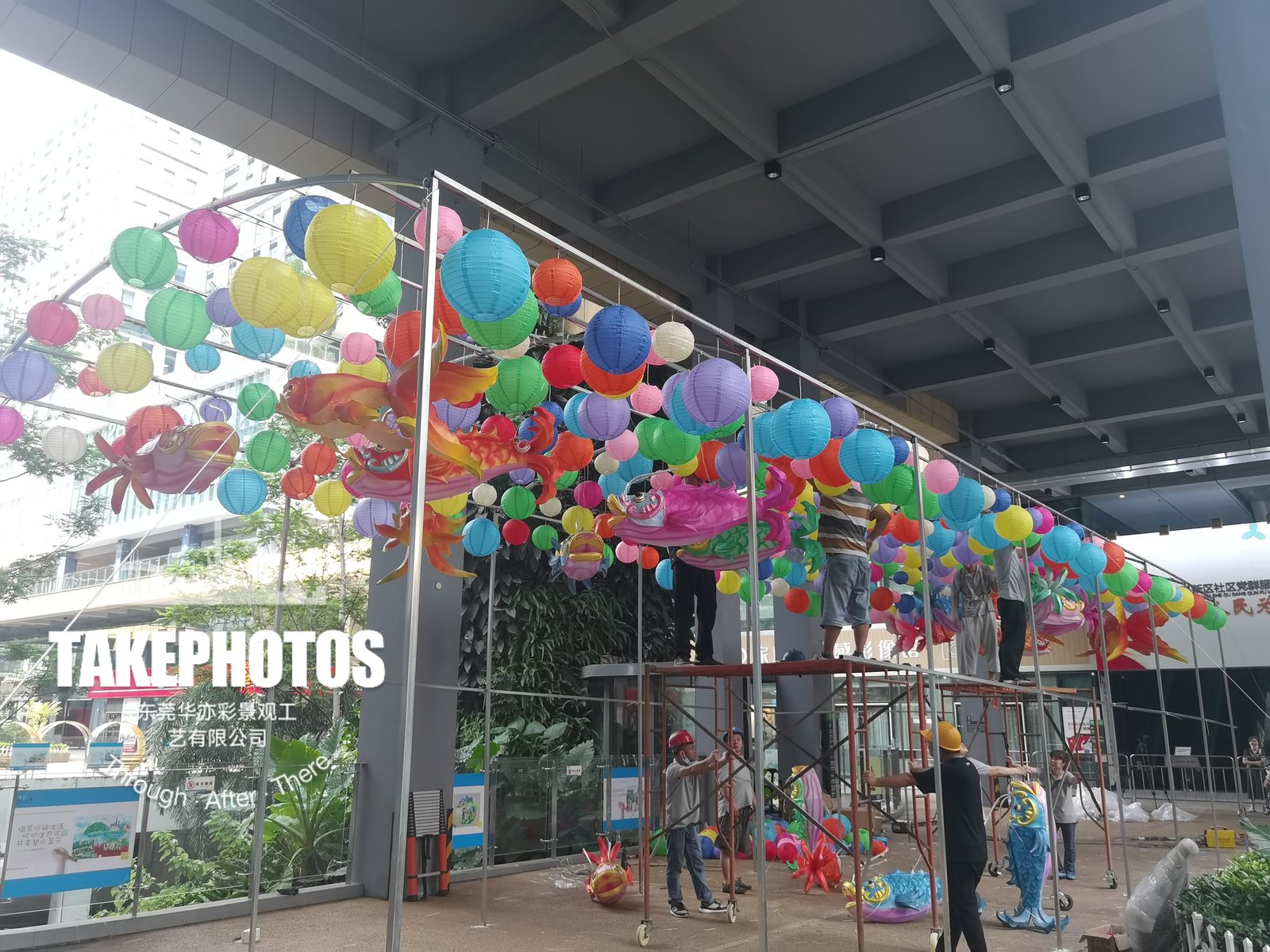
A clear review path reduces the risk of approving one idea and receiving evidence for another. The exact project process varies, but the information can be organized into four neutral stages.
- Concept reference: an effect rendering or visual direction showing the composition, theme, color relationships and major viewpoints.
- Element schedule: a simple identifier for each visible group or repeated element, linked to the approved reference.
- Review evidence: dated images or records showing the relevant item, its identifier and its current status. Evidence should be described accurately and should not be presented as testing or certification unless that scope is separately verified.
- Packing and handoff reference: a record connecting visible elements and identifiers to packing or receiving information, with unresolved questions clearly assigned.
This structure helps the buyer follow the same visual idea through review without turning a design article into a technical acceptance standard.
Buyer Review Table
| Review question | Useful project input | Keep separate |
|---|---|---|
| What should the display do? | Entrance, route, court, ceiling, focal point or transition | Revenue or attendance promises |
| Where is it viewed? | Marked plan, photographs and priority viewpoints | Unverified attachment or load assumptions |
| What should it look like? | Theme, motifs, color family and reference images | Copied designs or unsupported cultural claims |
| How is the group organized? | Primary, secondary and supporting elements | Universal quantity, size or spacing rules |
| What connects to the display? | Ground lanterns, planting, façades and nearby event features | Traffic, crowd or accessibility decisions |
| What remains unresolved? | Named question owner, evidence source and review status | Structural, rigging, electrical, fire or permit conclusions |
Where This Format Fits—and When to Pause
Giant hanging lantern displays can support cultural festivals, commercial streets, malls, atriums, park events and public celebrations when the visual concept matches the space and the project has the necessary site review. They are especially useful where an overhead or vertical layer can connect separate ground-level scenes.
Pause the concept if the proposed suspension area is unconfirmed, if the venue cannot identify the responsible technical reviewers, or if the design depends on assumptions about an existing tree, ceiling, façade or support. A visually successful concept begins with clear creative inputs, but it proceeds only after the relevant parties confirm the site-specific requirements.
Frequently Asked Questions
Are giant hanging lanterns the same as large paper lanterns?
No. In this guide, the term means a project-built illuminated display planned as part of a festival or commercial environment. Retail paper lanterns, wedding decorations and household pendant lights have different buyers, construction, use conditions and supplier expectations.
Can hanging lanterns be combined with ground displays?
Yes, as a visual composition. Suspended lanterns can establish an overhead atmosphere while flowers, animals, waves, arches or other illuminated forms create a focal scene below. The buyer brief should identify which elements belong together and who owns each part of the scope.
What information should a buyer provide first?
Start with the venue type, intended area, site plan or marked photographs, important viewpoints, event theme, preferred colors, reference images and the role of the display. Also list every unresolved site or suspension question and the party responsible for confirming it.
Can the lantern supplier decide where the display will be suspended?
The creative concept may show an intended hanging zone, but it does not approve that location. The venue and its qualified structural, rigging, electrical, fire, code and other relevant professionals must confirm the site conditions, responsibilities and permitted solution.
Can lanterns be suspended from trees or existing buildings?
Only after the responsible venue parties and qualified specialists confirm that the specific location and proposed method are acceptable. An image or previous project is not proof that another tree, ceiling, façade or structure can be used in the same way.
What is the best next step for a commercial project?
Prepare a short visual brief with the site function, theme, viewpoints, color direction, display hierarchy and open technical questions. Then use the custom Chinese lanterns page to continue the project discussion without treating the early concept as technical approval.
Post time: Aug-30-2026


