
Flower lantern display ideas work best when each group has a clear visual role. A park or festival can use one giant flower as a landmark, repeat smaller flowers as a field, frame a transition with a floral arch, build a lotus scene beside water, or combine flowers with fantasy characters. Choose the format before discussing individual products so the supplier receives a coherent brief rather than an unrelated shopping list.
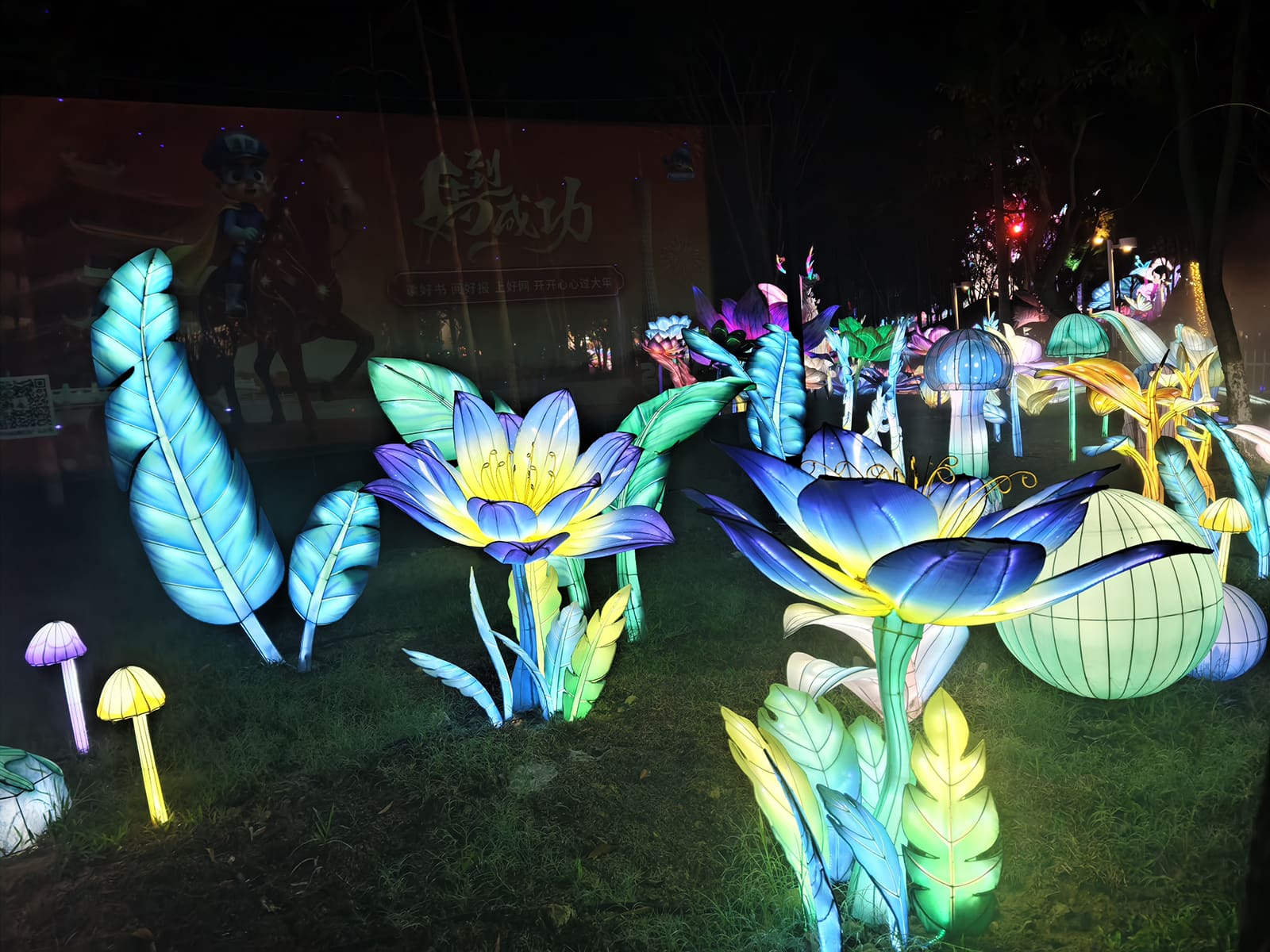
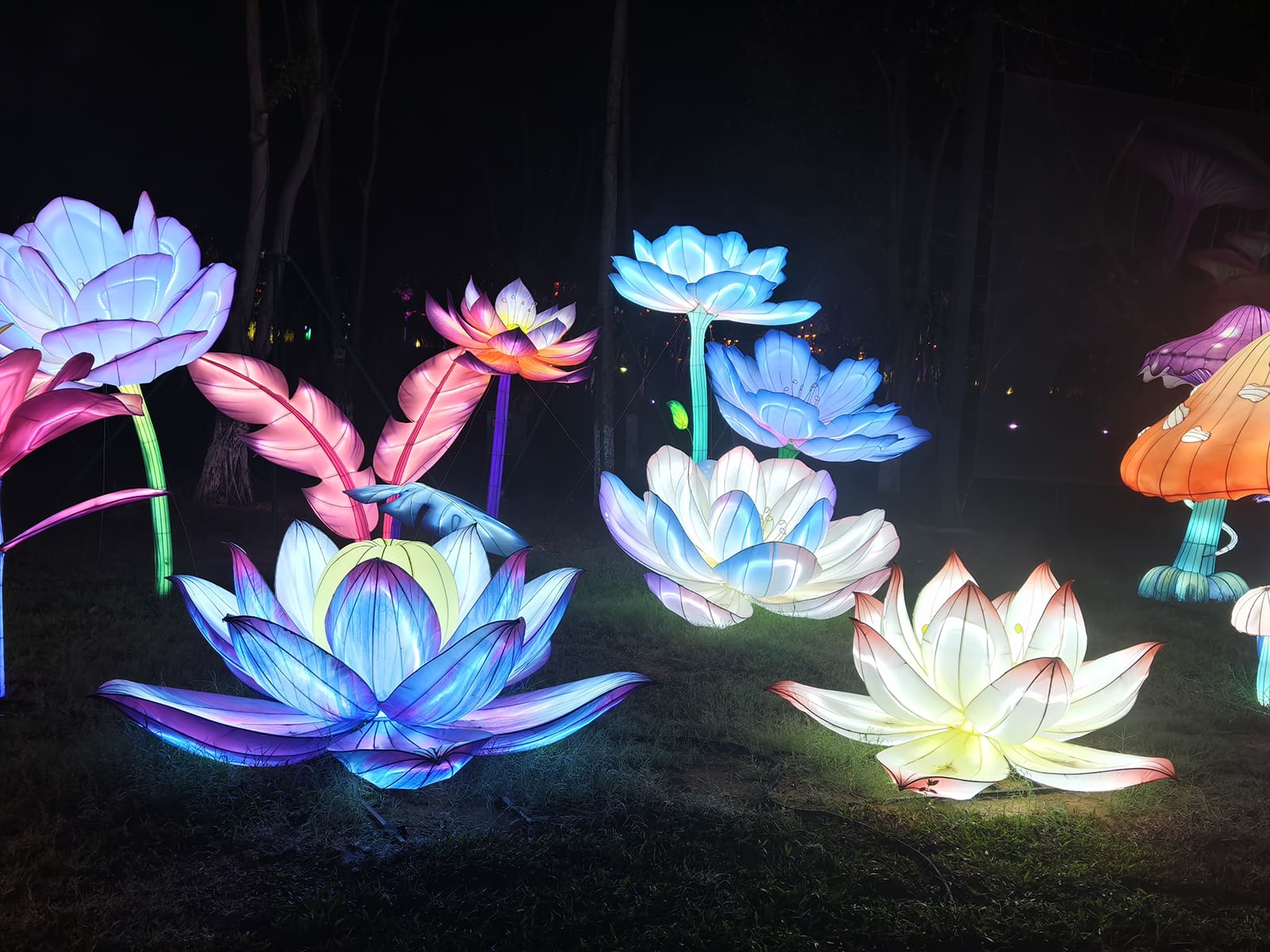
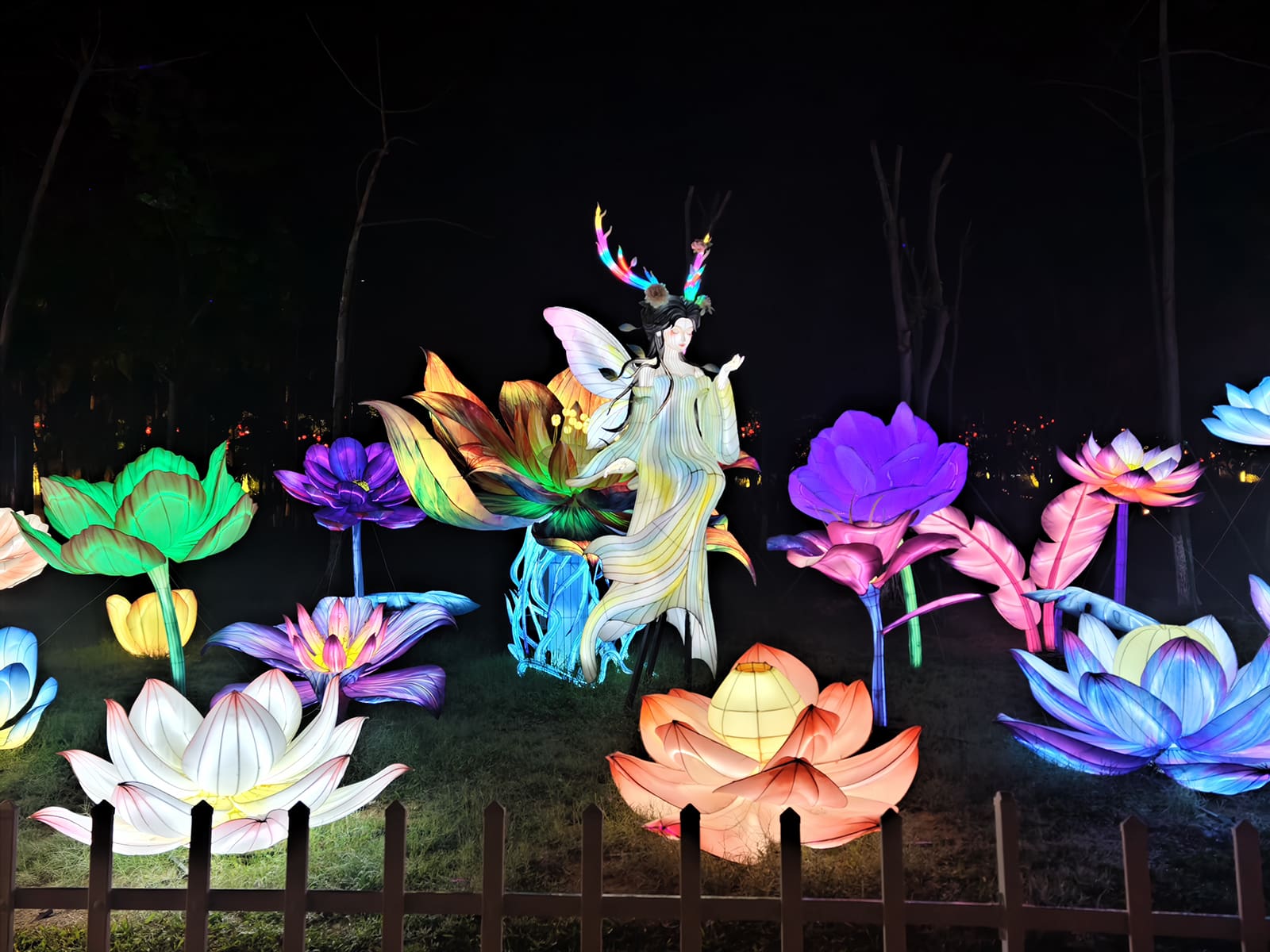
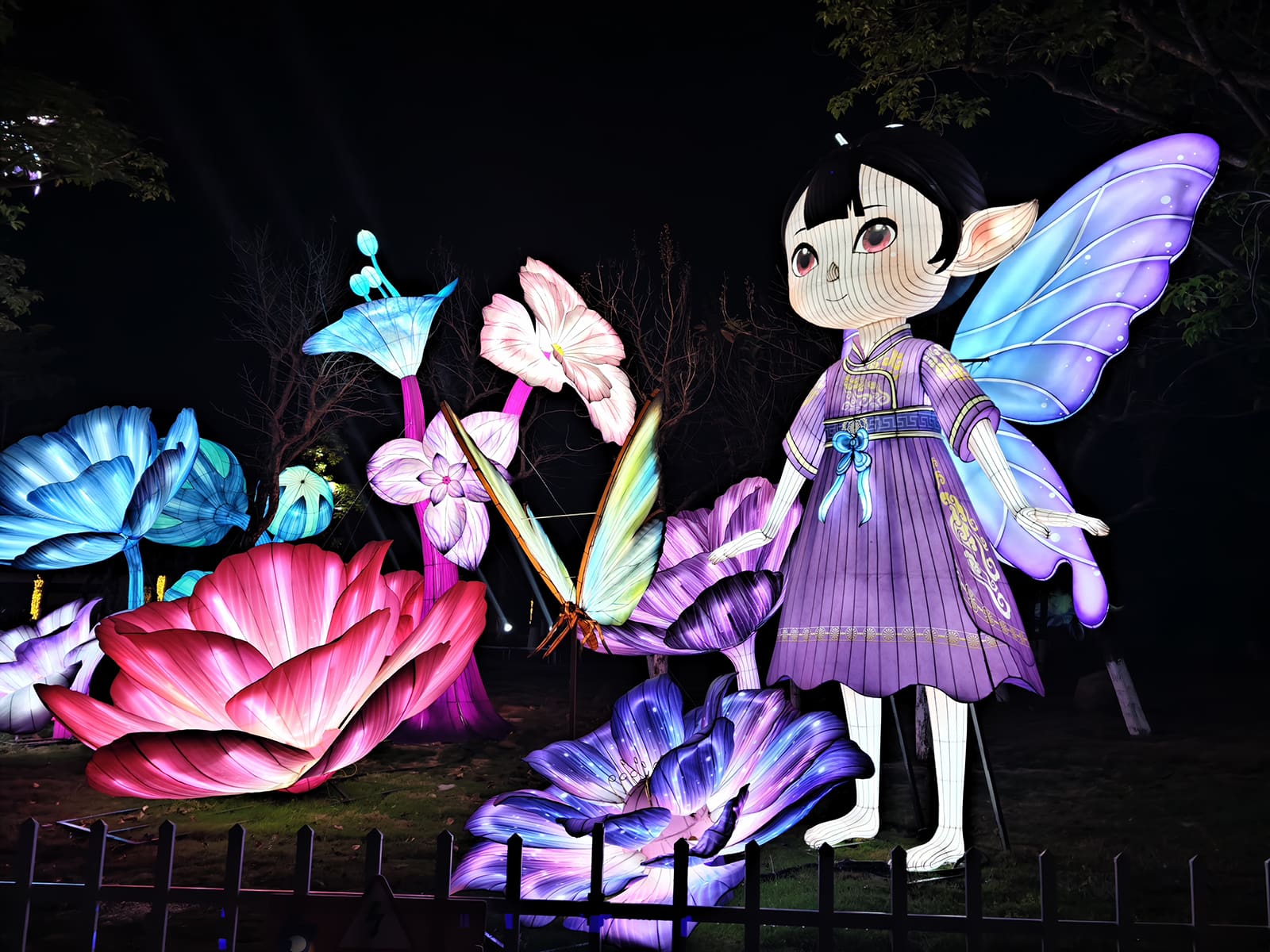
The four photographs in this guide come from different completed ParkLightShow projects. They are shown as examples of previous work, while the customer, country, venue type and project date remain private.
Official ParkLightShow by HOYECHI video showing illuminated floral, fish, gateway and fantasy lantern scenes in outdoor nighttime settings.
Compare Five Commercial Flower Lantern Display Formats
The same flower lantern can play very different roles depending on its scale, repetition and surrounding scene. The first decision is therefore not “Which flower looks best?” but “What should this display do within the event?”
| Display format | Best visual role | Typical composition | Buyer should define first |
|---|---|---|---|
| Giant flower landmark | Main photo subject or visual anchor | One dominant flower with supporting leaves or smaller elements | Viewing direction and intended prominence |
| Layered flower field | Fill a lawn or create a garden atmosphere | Repeated flowers in varied heights, colors and density | Area shape, palette and desired visual rhythm |
| Floral arch or transition | Mark an entrance or connect two zones | Flowers arranged around an arch, tunnel or framed opening | Opening context and relationship to adjacent scenes |
| Lotus or water-edge scene | Relate the display to a pond, lake edge or reflective setting | Lotus forms, leaves and supporting botanical elements | Exact placement context and approved site boundary |
| Fantasy flower garden | Build a recognizable story chapter | Flowers combined with mushrooms, fairies or original characters | Story reference, character rights and focal hierarchy |
1. Use a Giant Flower as a Landmark
A single oversized flower can become the visual center of a zone. This format suits a buyer who needs one recognizable subject for an entrance lawn, open plaza, garden junction or campaign image. The flower should be briefed as a landmark, not merely ordered as “one large decoration.”
Start with the intended viewing direction. A display seen from one arrival path may need a different composition from one placed in an open area where visitors approach from several sides. The brief should also state whether the flower stands alone or needs smaller leaves, insects, name elements or supporting plants to complete the scene.
For a composition led by butterflies, dragonflies or bees, explore our insect lantern display ideas.
This format concentrates attention in one place. It does not automatically fill a long route or large lawn, so buyers should avoid expecting one centerpiece to perform the job of an entire themed zone.
2. Build a Layered Flower Field
A flower field uses repetition rather than one dominant object. Groups can vary in apparent height, spacing, color and form so the scene reads as a planted landscape instead of rows of identical items. This is useful when a lawn, slope or broad garden bed needs visual continuity.
The buyer brief should include the approximate area shape, the main viewpoints and the desired color relationship. A restrained palette can create one strong identity; a wider palette can feel more festive. Neither choice is universally better—the correct direction depends on the event theme and the scenes beside it.
Repeated groups also need a clear edge. State whether the display should stop at a path, follow a curve, surround an existing feature or create a background for another landmark. Those decisions help a supplier prepare a more coherent visual proposal.
3. Frame an Entrance or Transition with Flowers
Floral arches and framed openings can announce a new chapter without becoming the main finale. They work at entrances, between themed zones or before a photo area. Their value comes from framing movement and changing the visual atmosphere at a specific point.
Describe what appears before and after the transition. If the previous zone is visually dense, a lighter floral frame may provide contrast. If the next zone is a fantasy garden, the arch can introduce matching colors or repeated flower forms. The brief should focus on visual continuity, while all structural, access and local installation decisions remain with qualified project parties.
4. Relate Lotus Lanterns to a Water-Edge Setting
Lotus and broad-leaf forms can support a scene beside a pond, lake edge or reflective landscape. The useful design question is not simply whether the lantern resembles a lotus. It is how the illuminated forms relate to the visible water, shoreline, planting and background.
The buyer should identify the approved display zone and provide current site photographs from the expected viewing positions. A concept shown beside water does not automatically mean the display can float or be installed in water. Placement, access and all technical decisions require project-specific review by the responsible parties.
5. Create a Fantasy Flower Garden
Flowers can become more than botanical decoration when they support an original story. Mushrooms, winged figures, imaginative plants and unusual proportions can turn a flower zone into a fantasy chapter. This format is suitable when the event needs a distinctive family-oriented visual theme rather than a realistic garden interpretation.
The story should still have hierarchy. Select one primary figure or visual idea, then use flowers and smaller forms to support it. If every object competes for attention, the scene can lose its identity. Buyers should also distinguish original characters from licensed intellectual property and obtain appropriate specialist advice for any protected brand or character use.
Turn a Visual Idea into a Clear Supplier Brief
Reference images alone are not a complete brief. Two buyers may send the same flower photograph but expect completely different results: one may need a single photo landmark, while the other needs a repeated field across a broad lawn. Add the following six inputs before requesting a proposal.
In actual ParkLightShow custom-project discussions, the process begins with the client’s idea. ParkLightShow reviews that idea against the site’s intended function and the buyer’s stated requirements, then develops a coordinated display direction. Size, color, quantity and scene combination are considered together because changing one choice can change the balance of the whole proposal.
State the Display’s Job
Label the display as a landmark, background, transition, route connector, photo scene or supporting group. This single decision helps prevent mismatched proposals.
Provide References Without Treating Them as Final Drawings
Collect flower species, petal shapes, color references and visual styles that communicate the direction. Identify which features are essential and which are only inspiration.
Define the Visual Hierarchy
Name the principal subject and the supporting elements. For a fantasy garden, that might be one winged figure, a group of lotus flowers and smaller mushroom forms. For a flower field, the hierarchy may come from height and color rather than a character.
Show the Site Context
Provide recent photographs, a simple plan and the intended viewing direction. Mark the proposed area without asking the content article or supplier image to determine structural, electrical or local compliance decisions.
Give a Quantity and Scale Direction
Use practical language such as “one landmark plus supporting groups” or “a repeated field across this marked lawn.” Exact dimensions can be developed later, but the supplier needs enough context to understand the visual ambition.
Identify Delivery and Review Context
Share the destination country, target opening period and the people responsible for venue decisions, local technical review and receiving the display. This does not replace a detailed project plan; it prevents the visual proposal from being separated from the real delivery context.
Questions to Ask When Comparing Flower Lantern Proposals
Comparable proposals should respond to the same brief. Ask each supplier to show how the concept addresses the display role, not only how many objects are included.
- Which element is the visual anchor, and which elements support it?
- How does the proposed group respond to the marked site photographs and viewing direction?
- Which colors, flower forms and scene references are confirmed, and which remain open?
- What visual evidence will be available before packing?
- How will individual groups be identified in the packing and receiving information?
- Which site, technical and installation decisions remain with the venue or qualified local parties?
These questions make creative proposals easier to compare without turning a visual guide into a universal specification or acceptance checklist.
Flower Lantern Display FAQ
Are flower lanterns only suitable for botanical gardens?
No. Commercial flower lanterns can appear in parks, resorts, festival grounds, city events and themed attractions. The useful question is whether the flower group has a defined role in the wider display, such as a landmark, transition, garden scene or supporting photo area.
Should a project choose one giant flower or many smaller flowers?
Choose according to the visual job. One giant flower can create a recognizable focal point, while repeated smaller forms can establish a landscape across a wider area. Some concepts combine both: a dominant landmark supported by a lower, denser flower field.
Can a flower lantern display include fairies or fantasy characters?
Yes, as a concept category. Flowers, mushrooms and original fantasy figures can form one story scene when the composition has a clear primary subject. Licensed characters require appropriate rights and specialist review; a general design reference does not grant permission to reproduce protected intellectual property.
What should buyers send before requesting a custom flower lantern concept?
Send the intended display role, recent site photographs, the proposed zone, viewing direction, theme references, preferred palette, approximate quantity or scale direction, destination and target opening period. Mark uncertain information clearly rather than presenting assumptions as confirmed facts.
Can lotus lanterns be placed on water?
Do not assume this from an inspiration image. A lotus-themed scene can be designed beside water or within a garden setting, but any in-water placement requires project-specific technical, access and local review by the responsible qualified parties.
Where can buyers view the ParkLightShow flower product category?
Use the Flower & Botanical Lanterns category to review the current product family. For a wider mix of gates, animals, landmarks, cultural scenes and floral groups, see Lantern Festival Decorations.
Choose the Display Role Before Choosing the Products
The strongest flower lantern brief begins with purpose. Decide whether the project needs a landmark, a layered field, a transition, a water-edge scene or a fantasy garden. Then collect references and site context around that role. When you are ready to review physical display directions, continue to Flower & Botanical Lanterns and prepare one consistent brief for supplier discussion.
Post time: Aug-26-2026


