
Dinosaur exhibits are not one format. For visitor-attraction buyers, the first distinction is the representation medium: fossils or specimens, casts or static models, animatronics, illuminated lantern sculptures, digital or immersive media, or a hybrid. A separate decision is the program model—permanent, temporary or seasonal, traveling or leased, or event-limited. Each branch needs evidence and specialist confirmation of its own.
This is a neutral category comparison, not a catalog and not a recommendation of one format. Its purpose is to help buyers identify which branch requires specialist evaluation next without treating the categories as interchangeable.
What Counts as a Dinosaur Exhibit Format?
A format family describes the primary medium through which dinosaurs are represented and encountered. The central element might be an actual specimen, a reproduction, a moving figure, an illuminated sculpture, digital media, or a combination of several media.
Format family does not determine how long the exhibition runs, how it is obtained, or whether it travels. Those questions belong to the program model. Keeping the two decisions separate prevents terms such as “temporary,” “traveling,” or “seasonal” from being mistaken for representation media.
An exhibition can also be hybrid. Physical objects, modeled figures, moving displays, and digital interpretation may appear together, but the presence of several media does not make them one technical category. Each included branch still needs its own evidence owner and specialist confirmation.
The Main Dinosaur Exhibit Format Families
The six families below are defined at the same decision level. They describe what is central to the visitor encounter, not how a project should be designed, built, installed, or operated.
Fossil or Specimen-Led Exhibits
Fossil or specimen-led exhibits place actual objects at the center of the presentation. Institutional dinosaur halls may also display casts or reproductions, so the category name should not be used loosely: an actual specimen and a reproduced object are not the same kind of evidence.
The visitor encounter is primarily object-centered, with interpretation organized around the displayed material. Museums, collections professionals, paleontological advisers, and the relevant documentation must establish what an object is and how it may be described. This category label does not confirm authenticity, provenance, scientific accuracy, conservation requirements, or educational outcomes.
Cast, Replica, or Static Model Displays
Cast, replica, or static model displays use reproduced or non-moving representations rather than making an actual specimen the defining medium. A cast may reproduce the form of source material, while other replicas or scenic models may serve a broader interpretive or themed role. The precise status of an object must come from its documentation.
Visitors encounter a stationary representation that can be viewed within a larger exhibition narrative. Museum, exhibit, model, and appropriate scientific specialists must confirm the relevant claims. The family name alone says nothing about materials, fabrication method, scale, durability, scientific accuracy, or who can provide the display.
Animatronic Dinosaur Exhibits
Animatronic dinosaur exhibits use moving figures as a defining representation medium. The movement distinguishes the family from fossil, cast, replica, or other static-model displays, even when several types appear within the same exhibition.
At decision level, the visitor encounter can be described simply as observing a moving representation. Detailed questions about mechanisms, controls, sound, power, structure, programming, maintenance, operation, and safety belong to qualified animatronic specialists and the relevant venue professionals. Recognizing animatronics as a format family does not establish any supplier's scope or support a claim about realism, reliability, visitor response, or suitability.
Dinosaur Lantern and Light-Sculpture Displays
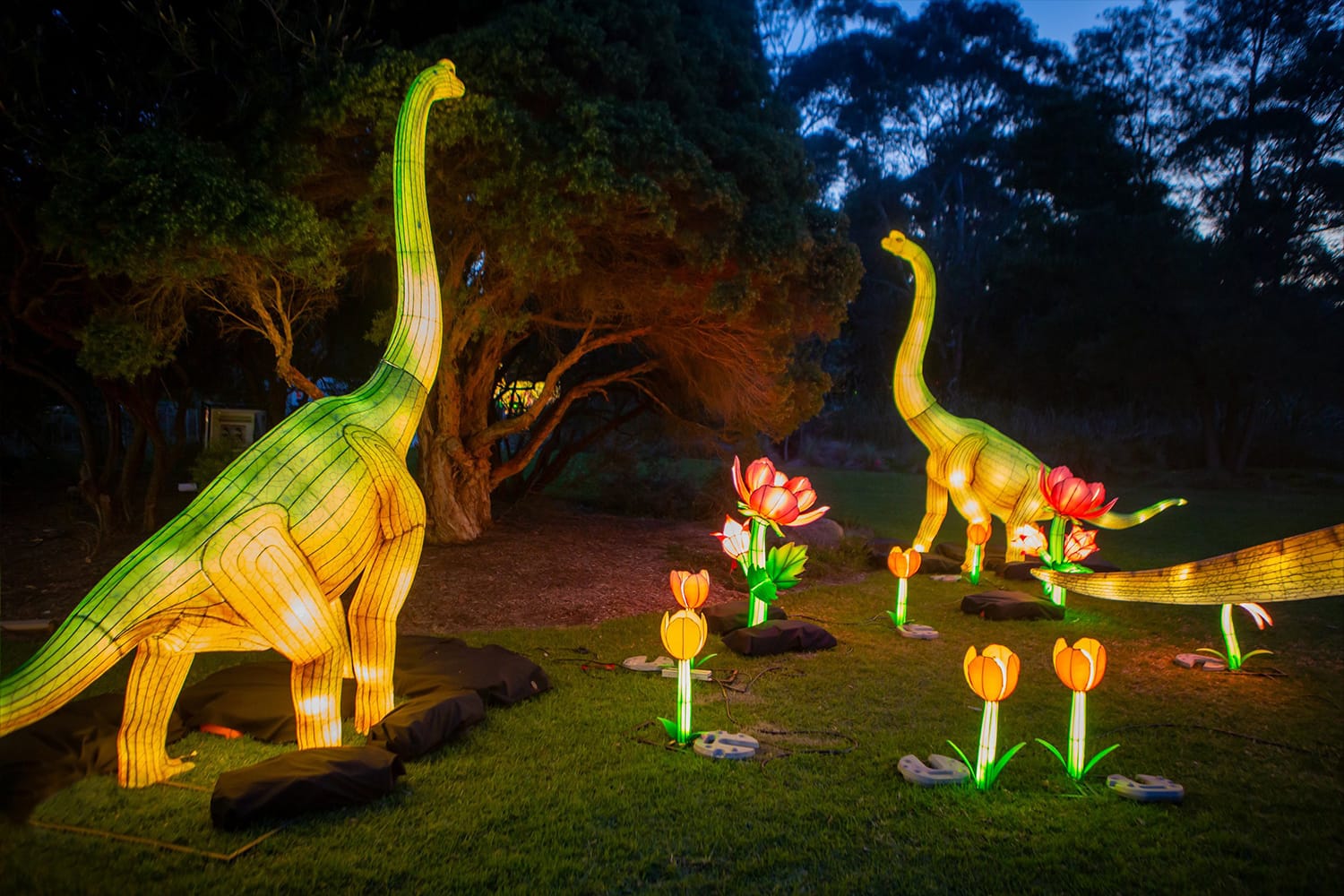
Dinosaur lantern and light-sculpture displays use illuminated sculptural representations as the defining medium. Their visitor encounter centers on viewing an illuminated visual scene, which distinguishes the family from specimen-led displays, non-illuminated static models, moving animatronics, and digital-first experiences.
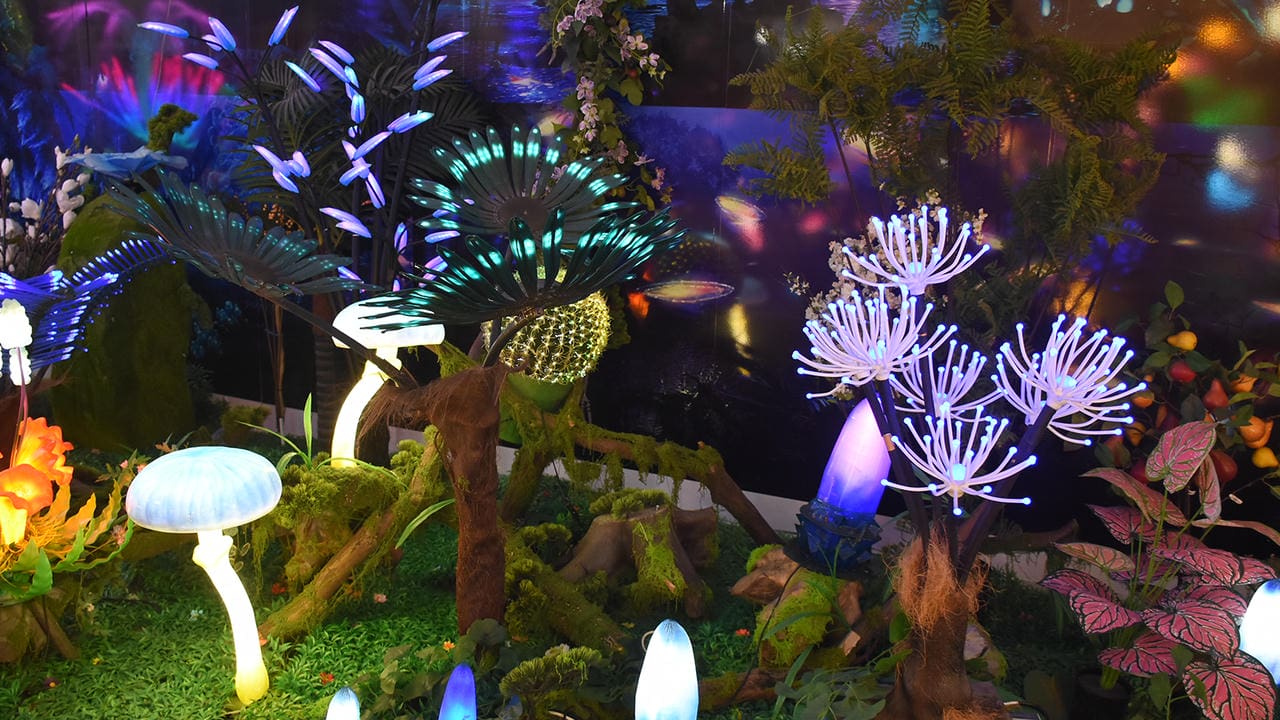
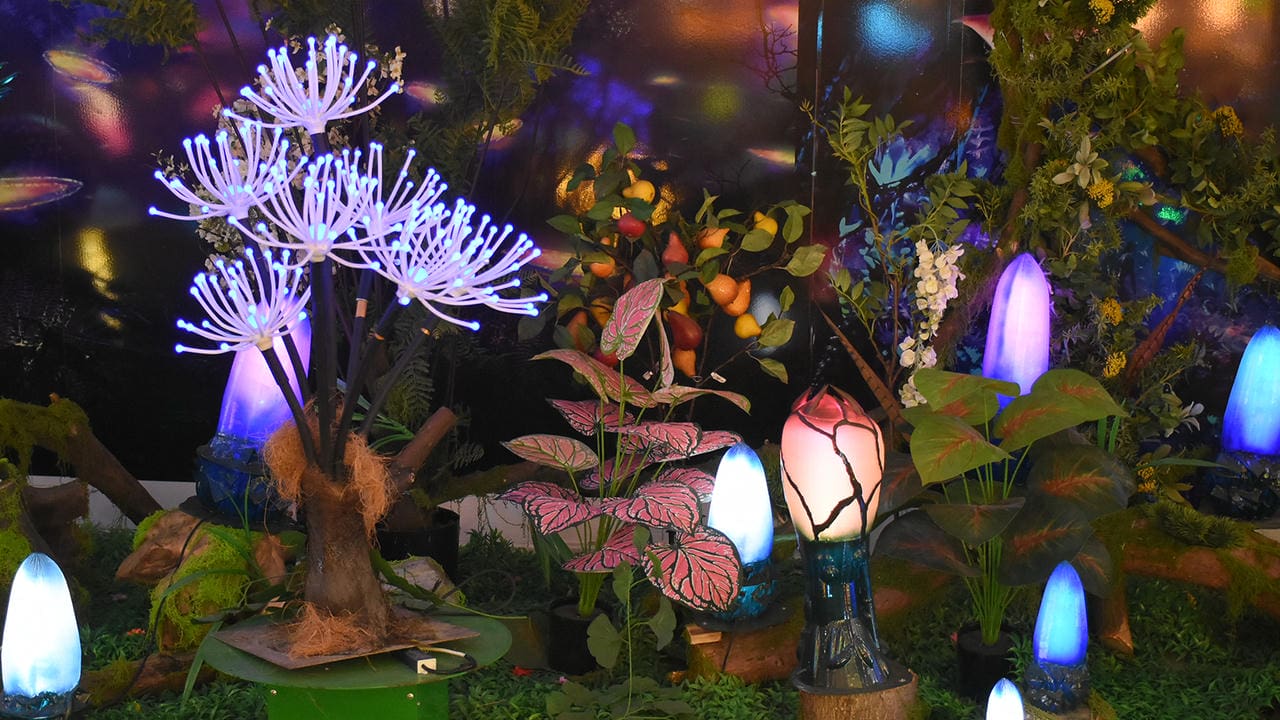
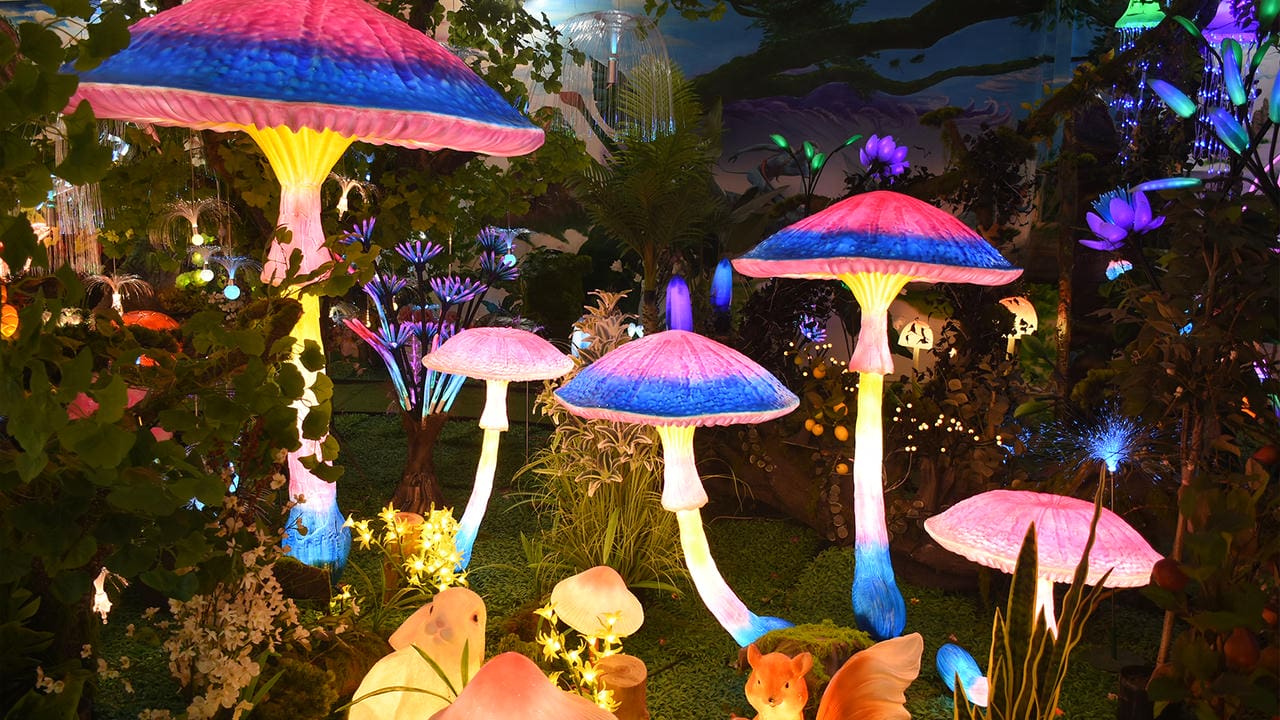
Within the lantern branch, a recognizable dinosaur silhouette can become the visual anchor. To create a prehistoric sense of mystery, the figure can be placed within a layered environment of forest forms, conifer-like trees, oversized prehistoric plants, and illuminated botanical elements rather than standing alone. Seasonal color and atmosphere may shift toward family celebrations, Christmas, or Halloween, but the composition should remain original and must not reproduce recognizable film characters, branded scenes, or other protected visual assets.
This concise definition does not establish materials, construction, outdoor suitability, route design, operating method, or commercial performance. Those details are outside this comparison and require branch-specific evidence. Lantern displays are one format family, not the default answer for every dinosaur exhibition and not proof that the other families are offered by the same provider.
Digital and Immersive Dinosaur Experiences
Digital and immersive dinosaur experiences make digital media central to the visitor encounter. Depending on the documented project, the medium may involve screen-based interpretation, augmented reality, projection-led content, or another digital layer. Digital media can also be added to physical objects rather than replacing them.
This category is descriptive, not a system recommendation. Software, hardware, projection, sensors, content production, interaction design, integration, accessibility implementation, and operations all require qualified digital or immersive-experience specialists. The label does not imply that every digital experience uses the same technology or that a lighting-display provider supplies digital systems.
Hybrid Dinosaur Exhibitions
Hybrid dinosaur exhibitions combine two or more representation-media families. A documented exhibition may, for example, bring together animatronic figures, fossil replicas, interactive displays, and immersive media. The defining feature is the combination, not a prescribed mix.
The visitor encounter may therefore include object viewing, movement, physical representations, and digital participation. Each branch retains its own evidence and specialist owner, and no single party should be assumed to cover the entire mix. Calling an exhibition hybrid does not establish compatibility, coordination, technical scope, or a turnkey delivery model.
Format Family and Program Model Are Different Decisions
Representation medium answers, “What kind of dinosaur representation is central?” Program model answers, “How is the exhibition positioned within the venue's program?” The same format family can appear under different program models, and one program model can contain several media families.
- Permanent describes an exhibition intended as an ongoing part of a venue's program. It does not identify the representation medium.
- Temporary or seasonal describes a limited program period or season. It does not imply a standard duration, delivery method, or technical approach.
- Traveling or leased describes a program made available across locations or through a lease or rental arrangement. It is a delivery or access model, not a fossil, animatronic, lantern, or digital format.
- Event-limited describes an exhibition associated with a defined event window. It does not determine what media the exhibition contains.
These labels can overlap in ordinary use. Their commercial, logistical, contractual, and operational meaning must be confirmed for the specific program; this article does not define those terms for a transaction.
A Horizontal Comparison Framework for Dinosaur Exhibits
The table below compares the six representation-media families on identical, non-scored dimensions. It is a category map, not a feasibility, procurement, or supplier-selection tool.
| Format family | Definition-level distinction | Visitor encounter | Interpretive role | Evidence or specialist owner | ParkLightShow boundary |
|---|---|---|---|---|---|
| Fossil or specimen-led | Actual fossil or specimen objects are central and must be distinguished from reproductions. | Object-centered viewing and interpretation. | Institution-led interpretation; no authenticity or education claim follows from the label. | Museum, collections, paleontology, and source-documentation professionals. | No fossil, museum, collections, or scientific capability is implied. |
| Cast, replica, or static model | Reproductions or non-moving modeled representations are central. | Viewing stationary representations. | Interpretive or themed role depends on documented context. | Museum, exhibit, model, and appropriate scientific specialists. | No replica, model, fabrication, or scientific-accuracy capability is implied. |
| Animatronic | Moving dinosaur figures are the defining medium. | Observation of movement. | Themed or interpretive role is project-specific. | Qualified animatronic specialists and relevant venue professionals. | No design, manufacture, control, sound, installation, maintenance, or safety capability is implied. |
| Lantern or light sculpture | Illuminated sculptural dinosaur representations are central. | Viewing an illuminated visual scene. | Festival or themed interpretation is project-specific. | Lantern-display evidence owner; branch-specific detail belongs to its protected page. | One concise branch only; no protected-page detail or broader format claim is imported. |
| Digital or immersive | Digital, augmented-reality, projection-led, screen, or other media experiences are central. | Digital interaction or immersive viewing where documented. | Digital interpretation is project-specific. | Qualified digital or immersive-experience team and relevant content advisers. | No digital, projection, AR/VR, system, integration, or accessibility capability is implied. |
| Hybrid | Two or more representation-media families are combined. | A mixed encounter based on the included media. | Interpretation and coordination depend on each branch. | Every relevant specialist must confirm its own scope. | No multi-format or turnkey exhibit capability is implied. |
The useful comparison is categorical: what medium is central, how visitors encounter it, what kind of interpretation it may support, and who owns the evidence. The table does not identify a winner and cannot determine format-specific feasibility.
Evidence and Specialist Confirmation
Each format family needs evidence from the people and records appropriate to that branch. At this screening stage:
- Fossil, specimen, cast, and replica claims belong to the relevant museum, collections, paleontological, exhibit, and documentation owners.
- Animatronic feasibility belongs to qualified animatronic specialists and the applicable venue professionals.
- Digital or immersive feasibility belongs to qualified digital or immersive-experience teams.
- A hybrid exhibition requires confirmation across every family it includes; no single unsupported owner should be assumed.
- Lantern-specific detail belongs to the protected lantern-display information owner.
- Venue- and project-specific feasibility remains outside this article.
This is professional deferral, not a due-diligence checklist, a responsibility matrix, or a recommendation of named providers.
Cross-Format Questions
What are the main dinosaur exhibit format families for visitor attractions?
The main representation-media families in this comparison are fossil or specimen-led exhibits; cast, replica, or static-model displays; animatronic exhibits; dinosaur lantern or light-sculpture displays; digital or immersive experiences; and hybrids. Permanent, temporary or seasonal, traveling or leased, and event-limited are program models rather than additional representation-media families.
Is a traveling dinosaur exhibition a format or a program model?
Traveling or leased is a program model. It describes how an exhibition is made available or presented across locations, not what represents the dinosaurs. A traveling exhibition may use fossils, casts, static models, animatronics, digital media, or a hybrid. Contract, logistics, installation, and operating terms remain specific to the program and are outside this comparison.
How is an animatronic exhibit different from a fossil, specimen, or cast display?
An animatronic exhibit uses moving figures as a defining medium. A fossil or specimen-led exhibit centers actual objects, while a cast display centers a reproduction. Those category distinctions do not resolve mechanics, safety, authenticity, provenance, or scientific accuracy; the appropriate animatronic, museum, collections, and paleontological specialists must confirm those matters.
Can one dinosaur exhibition combine physical, animatronic, and digital media?
Yes. Documented hybrid exhibitions show that physical representations, animatronics, interactive displays, and immersive media can appear within one program. The exact combination is project-specific. Each included family retains its own evidence owner, and the presence of several media does not establish that one provider supplies or coordinates every branch.
How is a dinosaur lantern display different from an animatronic display?
A dinosaur lantern display uses illuminated sculptural representation as its defining medium, while an animatronic display uses moving figures. This distinction is descriptive only. It does not compare materials, effects, technical systems, suitability, safety, or performance, and it does not make either family a universal choice for visitor attractions.
Who should confirm the evidence for each dinosaur exhibit format?
Museum, collections, paleontological, and exhibit professionals should confirm fossil, specimen, cast, and replica claims. Qualified animatronic specialists should confirm animatronic matters, while digital teams should confirm digital or immersive media. Hybrid programs need confirmation across every included branch. Lantern-specific information belongs to the protected lantern-display owner.
Next Step
Use the comparison to identify which format family needs specialist evaluation next. If your chosen branch is an illuminated dinosaur lantern display, review ParkLightShow's Dinosaur Lantern Festival Displays page for lantern-specific information.
Post time: Aug-24-2026


