

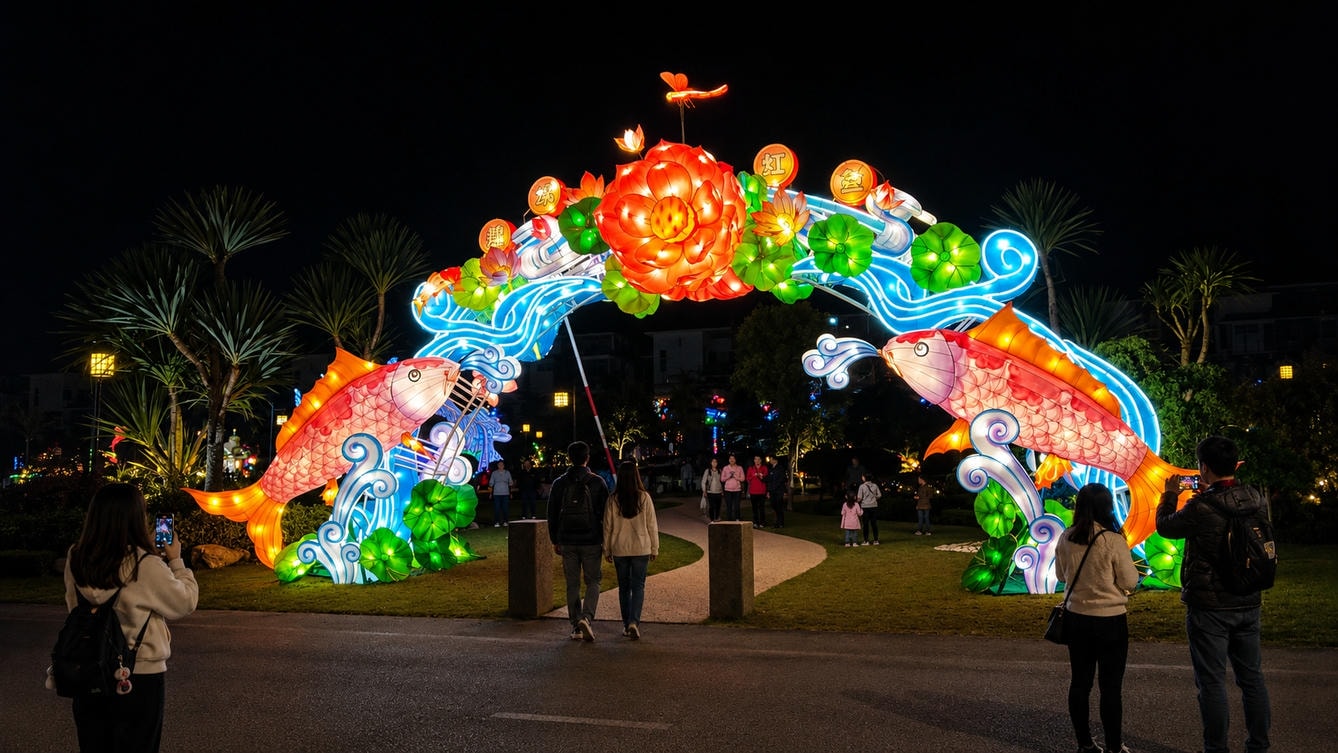
 A light festival is a nighttime outdoor event that uses illuminated displays, themed light sculptures, decorative routes, interactive photo spots, and visitor-friendly lighting scenes to create a memorable attraction. It can be designed for parks, zoos, botanical gardens, farms, scenic areas, resorts, commercial complexes, city plazas, and other outdoor venues.
Key Takeaways
- A light festival is not only decoration; it is a planned nighttime visitor experience.
- It can help parks and outdoor venues attract visitors after dark.
- Light festivals can support ticket revenue, food and retail sales, parking income, sponsorship, and destination branding.
- Successful light festivals need theme design, route planning, outdoor-safe products, installation support, and commercial thinking.
- For parks, farms, zoos, scenic areas, and resorts, a light festival can become a repeatable night tourism project.
What Makes a Light Festival Different from Ordinary Holiday Lights?
Many venues use holiday lights during Christmas, New Year, or local festivals. These decorations can make a space look festive, but they do not always create a reason for visitors to buy tickets, stay longer, or return every year.
A light festival is different because it is designed as a complete attraction. Visitors do not only come to see lights. They come to walk through a themed route, take photos, spend time with family, share the experience online, and enjoy a special nighttime atmosphere.
| Item | Ordinary Holiday Decoration | Professional Light Festival |
|---|---|---|
| Main Purpose | Improve holiday atmosphere | Create a visitor attraction |
| Visitor Experience | Simple viewing | Walking route, photo spots, themed zones, emotional moments |
| Business Value | Brand image and decoration | Tickets, food sales, retail, parking, sponsorship, repeat visits |
| Planning Requirement | Basic decoration layout | Theme design, route planning, safety, installation, operation |
| Suitable Venues | Shops, streets, hotels, malls | Parks, farms, zoos, gardens, resorts, scenic areas, city events |
The simple difference is this: holiday decoration makes a place look beautiful, while a light festival gives people a reason to visit after dark.
Common Types of Light Festivals
Light festivals can be designed in many different ways depending on the venue, season, target visitors, climate, budget, and business goal. The most common types include Christmas light shows, lantern festivals, zoo lights, botanical garden light trails, farm light shows, and commercial city light festivals.
| Type of Light Festival | Best Suitable Venues | Main Visitor Appeal | Business Purpose |
|---|---|---|---|
| Christmas Light Show | Parks, farms, resorts, malls, city plazas | Holiday atmosphere, family photos, winter events | Seasonal traffic, tickets, food and retail sales |
| Lantern Festival | Parks, scenic areas, botanical gardens, cultural venues | Large sculptures, cultural themes, immersive scenes | Tourism attraction, ticketed event, destination branding |
| Zoo Lights | Zoos and wildlife parks | Animal-themed lights, family-friendly night visits | Extend opening hours and increase family visits |
| Botanical Garden Light Trail | Gardens, parks, nature trails | Flowers, butterflies, forests, nature-inspired displays | Nighttime garden events and seasonal memberships |
| Farm Light Show | Farms, outdoor markets, Christmas tree farms | Family walking routes, tunnels, holiday scenes | Off-season revenue and winter visitor growth |
| Commercial Light Festival | Shopping streets, hotels, resorts, commercial complexes | Photo spots, brand image, holiday foot traffic | Increase visits, shopping, dining, and social media exposure |
Christmas Light Shows
Christmas light shows are among the most familiar types of light festivals in North America, Europe, Australia, and many holiday tourism markets. They often include giant Christmas trees, reindeer displays, gift boxes, snowmen, Santa scenes, light tunnels, illuminated arches, and music-synchronized lighting.
For parks, farms, resorts, and outdoor commercial venues, Christmas light shows are valuable because they give families a clear seasonal reason to visit. A winter venue that is quiet during the day can become active at night when the lighting experience is designed around walking routes, photo scenes, and holiday food or retail areas.
A Christmas light show can also be the first step for a venue that wants to test night tourism. If the event performs well, the same venue can later develop spring lantern festivals, summer night gardens, autumn light trails, or other themed nighttime attractions.
Lantern Festivals
Lantern festivals use large illuminated sculptures, themed lantern sets, cultural elements, animal shapes, flower displays, fantasy scenes, and artistic outdoor light installations. They are especially suitable for parks, scenic areas, botanical gardens, zoos, and cultural tourism destinations.
Compared with simple light strings, lantern festivals for parks can create strong visual landmarks and memorable photo moments. Large lantern displays help visitors feel that they are entering a themed world, not just walking past decorations.
For outdoor venues, lantern festivals are useful because they can be customized around local culture, animals, plants, festivals, fairy tales, seasonal themes, or tourism branding. This makes them more flexible than standard holiday decorations.
Why Visitors Love Light Festivals
Light festivals work well because they match the way modern visitors choose leisure activities. People want experiences that are easy to understand, visually impressive, safe for families, and worth sharing online.
1. Light Festivals Are Easy to Understand
A glowing entrance, a giant sculpture, or a long light tunnel creates instant visual impact. Visitors do not need a complicated explanation. They can immediately understand the attraction and feel the atmosphere.
2. Light Festivals Are Photo-Friendly
Photo spots are one of the strongest reasons people visit light festivals. Giant displays, tunnels, arches, interactive scenes, and themed sculptures encourage visitors to take photos and videos. These shared images can become free promotion for the venue.
3. Light Festivals Are Family-Friendly
A light festival can attract children, parents, grandparents, couples, tourists, and local residents. It is easier to operate than many other nighttime entertainment formats because visitors can walk, view, take photos, rest, and move at their own pace.
4. Light Festivals Create Seasonal Emotion
Christmas, winter holidays, New Year, spring festivals, local celebrations, and cultural events all become more memorable when supported by strong lighting scenes. Light festivals create emotional reasons for visitors to come together.
Why Parks and Outdoor Venues Invest in Light Festivals
For outdoor venues, daytime operation is often limited by weather, season, visitor habits, and opening hours. A light festival gives the venue a reason to operate after dark and attract a different type of visitor demand.
For parks, scenic areas, farms, zoos, gardens, resorts, and commercial outdoor spaces, a well-planned light festival can support several business goals:
- Attract nighttime visitors: The venue can create traffic after normal daytime hours.
- Increase seasonal revenue: Winter and holiday periods can become profitable instead of quiet.
- Create ticketed events: Parks, farms, zoos, and scenic areas can turn the light festival into a paid attraction.
- Improve visitor stay time: A designed route, photo spots, and commercial zones encourage people to stay longer.
- Support secondary spending: Food, drinks, souvenirs, parking, games, and merchandise can increase overall revenue.
- Build an annual event brand: A successful light festival can become a repeatable event that visitors expect every year.
This is why a light festival should not be treated only as decoration cost. When planned correctly, it can become a long-term event asset for the venue.
From Holiday Attraction to Night Tourism Project
A holiday attraction may last for a few weeks and focus mainly on visual decoration. A night tourism project is more systematic. It considers visitor flow, ticketing, operation time, commercial areas, safety, marketing, installation, storage, and future reuse.
For example, a park may start with a Christmas light show. If the event attracts strong visitor traffic, the park may later expand into a spring lantern festival, a summer night garden, an autumn harvest light trail, or a cultural light event.
This is the key business shift: the venue is not simply buying lights. It is building a nighttime attraction that can increase visitor traffic, support revenue, and improve destination value.
With modular structures, durable outdoor materials, and flexible themes, many light displays can be reused, adjusted, or expanded for future events. This makes the investment more valuable than one-time decoration.
What Makes a Light Festival Successful?
A successful light festival is not created by placing more lights everywhere. It depends on how the entire visitor experience is planned. The most important factors are theme, route, visual landmarks, safety, commercial layout, and installation quality.
1. A Clear Theme
The theme gives the light festival a story. It may be Christmas, animals, flowers, fantasy, local culture, ocean, forest, butterflies, winter wonderland, or a city holiday celebration. A clear theme makes the event easier to promote and easier for visitors to remember.
2. A Strong Entrance Display
The entrance is the first emotional moment. A large arch, illuminated sign, giant character, or landmark display can immediately tell visitors that they are entering a special event.
3. A Smooth Visitor Route
The route should guide visitors naturally from one scene to another. A good route avoids confusion, reduces crowding, and creates rhythm. Visitors should always feel that there is something ahead worth seeing.
4. Photo Spots and Social Media Moments
Modern light festivals need photo-friendly scenes. Giant displays, tunnels, interactive installations, and family-friendly sculptures help visitors create shareable memories.
5. Commercial Zones
Food stalls, drinks, souvenirs, merchandise, games, and resting areas can increase the business value of the light festival. These areas should be placed naturally along the visitor route.
6. Outdoor Safety and Durability
Because most light festivals are held outdoors, products and structures must be suitable for weather, wind, rain, temperature changes, and public use. Outdoor light displays should consider waterproof rating, stable structure, cable safety, fire resistance, and installation reliability.
7. Professional Installation Support
Large light festivals require more than products. They need design drawings, production planning, packaging, transportation, installation guidance, on-site support, testing, and maintenance thinking. Professional support can reduce risk and help the event open on schedule.
Which Venues Are Suitable for Light Festivals?
Light festivals are suitable for many outdoor venues, especially places that already have visitor access, open space, walking routes, parking, or tourism potential.
| Venue Type | Recommended Light Festival Concept | Main Value |
|---|---|---|
| Parks | Christmas light show, lantern festival, seasonal light trail | Nighttime visitors and ticket revenue |
| Zoos | Animal-themed zoo lights | Family visits after dark |
| Botanical Gardens | Flower lights, butterfly themes, forest light trails | Extended hours and seasonal events |
| Farms | Holiday farm light show, tunnel route, family photo zones | Winter and off-season revenue |
| Scenic Areas | Large lantern displays, cultural night tourism projects | Destination branding and tourism growth |
| Resorts and Hotels | Holiday lighting, entrance displays, themed guest experience | Guest experience and premium image |
| Commercial Complexes | Outdoor Christmas displays, city light festival, photo landmarks | Foot traffic, shopping, dining, and brand exposure |
| City Plazas | Municipal holiday light festival | Public image, community events, tourism atmosphere |
The best venue is not always the largest one. A medium-sized park, farm, or garden can also create a successful light festival if the route is well designed and the theme matches the target visitors.
How to Plan a Light Festival for an Outdoor Venue
Before purchasing light displays, venue owners should first understand the business goal of the event. A ticketed park light show, a free city light festival, a commercial Christmas display, and a farm holiday light trail all require different planning.
A practical planning process usually includes:
- Confirm the venue type and available outdoor space.
- Define the target visitors, such as families, tourists, local residents, or holiday shoppers.
- Choose a clear theme for the light festival.
- Plan the entrance, walking route, major scenes, photo spots, and commercial zones.
- Estimate the required light displays, structures, power layout, and installation schedule.
- Prepare marketing materials before the event opens.
- Review safety, maintenance, storage, and future reuse.
For venues that need a complete route, theme, budget, and operation plan, professional light show planning can help reduce mistakes before production begins.
How to Choose a Light Festival Supplier
For parks and outdoor venues, choosing the right light festival supplier is important because the project involves design, production, outdoor safety, transportation, installation, and operation. The supplier should not only provide decorative products, but also understand how light displays work in real visitor environments.
| Selection Factor | Why It Matters |
|---|---|
| Outdoor Project Experience | The supplier should understand parks, scenic areas, zoos, farms, and commercial outdoor venues. |
| Custom Design Ability | Every venue has different space, theme, route, climate, and visitor needs. |
| Manufacturing Control | Factory-direct production helps control structure, materials, delivery, and quality. |
| Modular Structure | Modular and foldable designs can reduce shipping volume and simplify installation. |
| Outdoor Safety | Products should consider waterproof rating, stable frames, cable safety, and weather resistance. |
| Installation Support | Large projects often need installation guidance, drawings, or on-site assistance. |
| Business Understanding | The supplier should understand ticketed events, visitor flow, photo spots, and commercial value. |
HOYECHI: Outdoor Light Festival and Park Light Show Solution Provider
HOYECHI is an outdoor light festival and park light show solution provider for parks, scenic areas, farms, zoos, resorts, commercial venues, and event operators. The company supports custom design, factory production, modular structure development, outdoor-rated light displays, packaging, transportation support, and installation assistance.
For outdoor projects, HOYECHI focuses on practical project value: free design support, custom manufacturing, modular and foldable structures, weather-resistant materials, certified lighting components, and the ability to assist with installation when required.
HOYECHI can support different project models. Some clients purchase custom light displays directly. Some venues need design and installation support. Other venues may explore a partnership model for seasonal light festivals and park light show projects.
Whether the goal is a Christmas light show, a lantern festival, a zoo light trail, a farm holiday event, or a larger night tourism project, the key is to plan the attraction as a complete visitor experience rather than a simple lighting purchase.
Who Should Consider a Light Festival?
A light festival is a strong option for venue owners and operators who want to create nighttime traffic, improve seasonal revenue, or build a memorable destination event.
A light festival may be suitable if your venue has one or more of the following conditions:
- You have outdoor space that is underused at night.
- You want to attract families during holidays or winter seasons.
- You want to create a ticketed event or seasonal attraction.
- You want to increase food, retail, parking, or sponsorship revenue.
- You operate a park, farm, zoo, garden, resort, scenic area, or commercial outdoor space.
- You need a new reason for visitors to come back every year.
For these venues, a light festival can become more than decoration. It can become a new nighttime business model.
Conclusion: A Light Festival Creates a New Reason to Visit After Dark
A light festival is not only a beautiful nighttime event. For outdoor venues, it can become a powerful way to attract visitors, extend operating hours, increase seasonal revenue, improve destination image, and create memorable family experiences.
The most successful light festivals are created through clear theme planning, visitor route design, strong visual landmarks, reliable outdoor manufacturing, safe installation, and commercial thinking.
For parks, zoos, farms, resorts, scenic areas, and commercial outdoor venues, a well-planned light festival can turn an ordinary night into a destination experience.
Venues ready to develop a complete project can explore our Festival of Lights solutions for parks and outdoor venues, including planning, custom production, global delivery, installation support, and future reuse.
If you are planning a holiday light show, lantern festival, park light show, or night tourism project, contact HOYECHI to discuss your venue, theme, budget, and project goals.
FAQ: Light Festivals for Parks and Outdoor Venues
What is a light festival?
A light festival is a nighttime outdoor event that uses illuminated displays, themed light sculptures, decorative walking routes, and photo-friendly scenes to create a visitor experience. It can be used for holidays, tourism events, city celebrations, parks, farms, zoos, resorts, and commercial venues.
Is a light festival the same as a lantern festival?
No. A lantern festival is one type of light festival. A light festival is a broader concept that can include Christmas light shows, zoo lights, botanical garden light trails, farm light shows, city holiday lights, and custom lantern displays.
What is the difference between holiday lights and a light festival?
Holiday lights mainly decorate a space and create a festive atmosphere. A light festival is planned as an attraction with a theme, visitor route, entrance display, photo spots, safety planning, and business goals such as ticket revenue or increased foot traffic.
What venues are best for light festivals?
Light festivals are suitable for parks, scenic areas, zoos, botanical gardens, farms, resorts, commercial complexes, city plazas, amusement parks, outdoor markets, and cultural tourism areas. The venue should have safe visitor access, walking space, and the ability to support nighttime operation.
How can a light festival help a park or tourist attraction?
A light festival can help a park or tourist attraction bring in nighttime visitors, extend opening hours, increase ticket revenue, improve visitor stay time, support food and retail sales, and create a seasonal event that can return every year.
Can a light festival make money beyond ticket sales?
Yes. A light festival can also support revenue from food and drinks, souvenirs, parking, games, vendor booths, sponsorship, private events, and commercial partnerships. The final result depends on the venue layout, visitor flow, and operation model.
How early should a venue start planning a light festival?
For custom outdoor light festival projects, it is better to start planning several months before the opening date. The timeline should include theme design, product confirmation, manufacturing, shipping, installation, testing, and marketing preparation.
What should a venue look for in a light festival supplier?
A venue should look for a supplier with outdoor project experience, custom design ability, factory production control, modular structure design, outdoor-safe materials, installation support, and a clear understanding of visitor experience and commercial operation.
Does HOYECHI provide custom light festival design?
Yes. HOYECHI provides custom outdoor light festival solutions for parks, scenic areas, farms, zoos, resorts, commercial venues, and event operators. Support can include free design, custom production, modular structures, outdoor-rated lighting, packaging, transportation assistance, and installation support.
Post time: Jun-18-2026


