

In the current tourism market, many park owners and scenic area operators are racing to “night-optimize” their venues to extend visitor stay time. However, a common frustration remains: some projects look stunning in professional photos but feel “empty” or “disorganized” when visitors actually walk through them. This often leads to a poor price-to-value perception.
As a leading light show design and equipment provider with experience in over 60 countries, we have observed that the difference between a mediocre display and a high-revenue landmark isn’t the number of lights—it’s the strategic answer to one question: Why should a visitor feel the ticket is worth every penny?
1. Selling Atmosphere, Not Just Hardware
In the initial planning of any B2B project, it is crucial to move beyond a “product-only” mindset. Visitors entering a park at night are seeking an escape from the ordinary—a sense of ceremony and wonder.
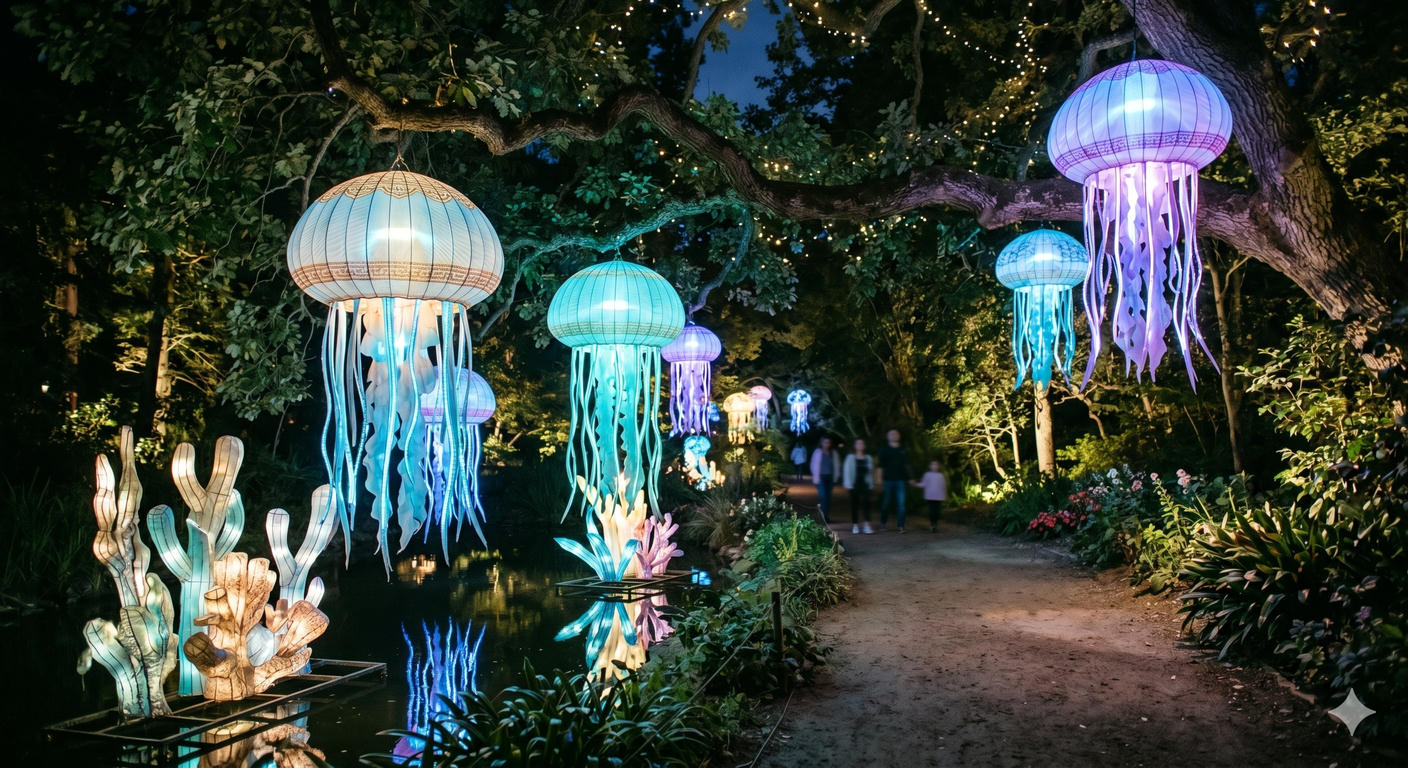
Randomly placing custom Chinese lanterns along a path creates a “decorated walk,” but a theme-driven narrative creates an “experience.” By integrating light, color, and environment, we help you build a destination where families stay longer and couples create memories.
2. Route Planning: The Hidden Engine of ROI
In our festival lighting solutions, route planning carries as much weight as the lighting design itself. A scientific route maximizes the perceived value of the event:
- Preventing Fatigue: A route that is too long without a rhythmic change in intensity causes visitors to lose interest halfway through.
- Driving Secondary Consumption: A well-planned path naturally guides traffic through dining areas and souvenir kiosks.
- The Illusion of Density: Even in vast venues, strategic placement of lights can prevent a feeling of “emptiness,” ensuring a continuous flow of surprises.
3. Entrance and Finale: The Anchors of First and Last Impressions
In the psychology of a paid attraction, two moments define the visitor’s review:
- The Grand Entrance: This sets the expectation. A majestic lantern display at the gateway instantly increases the “premium feel” of the event.
- The Grand Finale: A visitor’s overall rating is often determined by the last scene they encounter. We design “Hero Pieces”—high-impact, large-scale installations—to ensure the experience ends on a high note, securing positive word-of-mouth.
4. “Instagrammability” as Social Currency
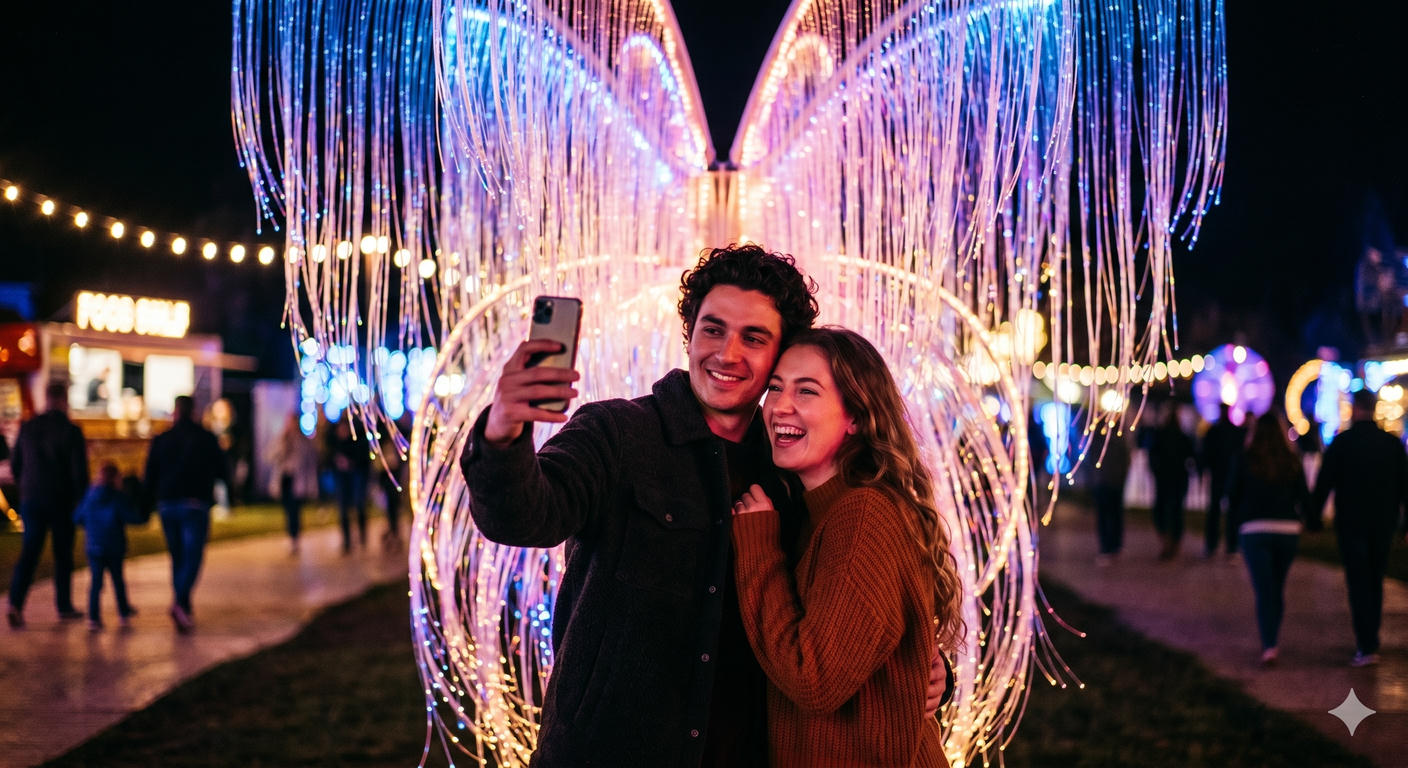
In the age of social media, if your light show isn’t photogenic, your marketing costs will double. When we execute theme park lighting projects, we specifically design “best photo spots.”
These spots account for soft lighting (to make faces look good) and layered backgrounds. When visitors share high-quality photos on Instagram or TikTok, they provide free, organic traffic that converts better than any paid ad.
5. The B2B Bottom Line: Safety and Reliability
For park owners, the core of a large-scale lighting installation is the “certainty” of delivery and operation. Beyond aesthetics, we prioritize industrial-grade standards:
- Wind-load calculations for extreme weather.
- High-grade waterproofing and electrical safety.
- Modular designs for efficient seasonal assembly and disassembly.
Conclusion: More Than a Supplier, a Project Partner
A successful park light show is a delicate balance between art and business logic. Whether you are looking for a direct purchase or a revenue-sharing model, our goal is to help you build a nighttime attraction that people are willing to pay for, photograph, and remember.
Ready to transform your venue? Get a Free Project Estimate from our team today.
Frequently Asked Questions
Q: How long does the preparation take for a medium-sized park light show?
A: From initial concept design to production, shipping, and on-site installation, we generally recommend a lead time of 3 to 5 months.
Q: Do you provide custom designs for specific local holidays?
A: Absolutely. We specialize in blending custom festival lanterns with modern LED technology to create IP-specific installations that resonate with local cultures.
Post time: Apr-29-2026


