

But not every light show becomes profitable. Some projects look beautiful on the first night but fail to generate enough ticket sales, visitor spending, or long-term commercial value.
The problem is often not the lighting itself. In many cases, the real issue is weak planning: unclear revenue goals, poor visitor routes, short stay time, limited photo spots, and a lack of connection between the light show and on-site spending.
This article explains six common operational problems that can reduce park light show revenue, and how venue owners can avoid them before starting a project.
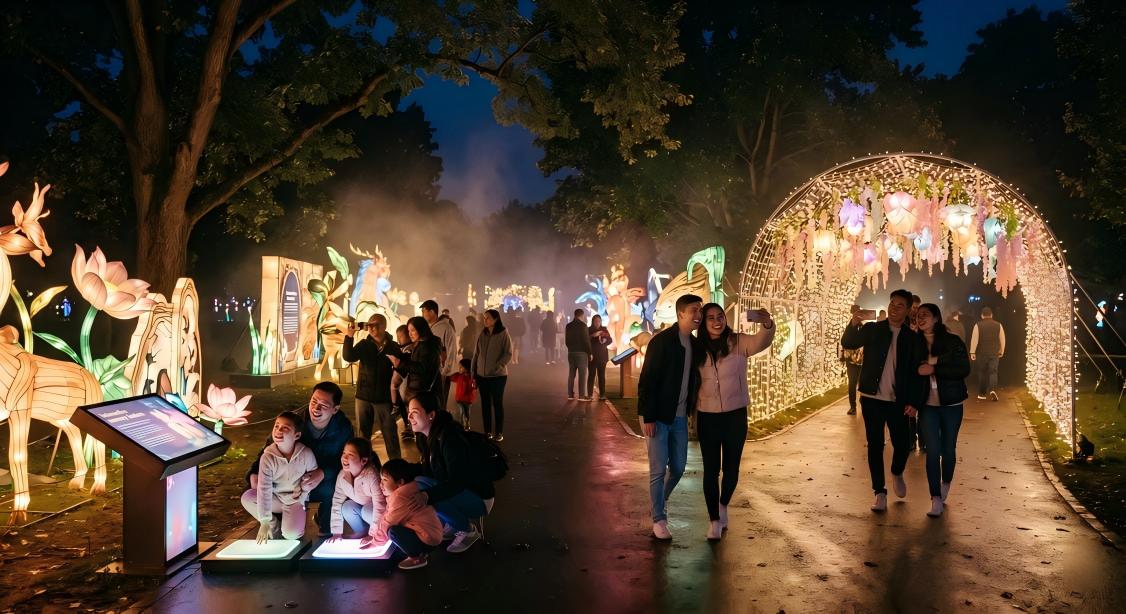
A Beautiful Light Show Does Not Always Mean a Profitable Light Show
Many venue owners first think about the visual effect: large lantern displays, glowing tunnels, animal lights, flower installations, Christmas scenes, interactive decorations, and photo-worthy sculptures.
These elements are important, but they are only part of the project. A successful night tourism light show also needs to answer several business questions.
1
Where Will the Revenue Come From?
Will the venue earn money from tickets, parking, food, retail, hotel stays, sponsorship, or a revenue-sharing partnership?
2
How Long Will Visitors Stay?
A short route may look attractive but can reduce dwell time, photo opportunities, and on-site spending.
3
Can Visitors Move Smoothly?
Entrance, exit, route direction, rest areas, food zones, and crowd flow all affect the visitor experience.
4
Will People Share It Online?
Strong visual landmarks and photo spots help visitors share the event, which can bring more organic promotion.
6 Operational Problems That Reduce Park Light Show Revenue
The following problems are common in park light show projects. They may not be obvious during the design stage, but they can directly affect ticket sales, visitor satisfaction, and overall revenue.
1
No Clear Revenue Model
Some venues start a light show because they want more visitors, but they do not clearly define how the project will make money.
Will the main income come from tickets? Will visitors spend money on food, drinks, retail, parking, or hotel rooms? Will the project use a revenue-sharing structure? These questions should be answered before the design begins.
Without a clear model, the project may look impressive but fail to support the venue’s real business goal.
2
Focusing Only on Lights, Not Visitor Routes
A light show is not just a collection of illuminated displays. Visitors need a route that feels natural, complete, and worth the time.
A poor route can cause confusion, crowding, dead ends, or weak visitor flow. Some people may leave too quickly, while others may miss important scenes.
A better route should include a strong entrance, clear walking direction, several highlight zones, rest areas, photo points, and a memorable ending.
3
Lack of Strong Photo Spots
Today, many visitors choose events because they want to take photos and share experiences online. If a light show lacks memorable photo spots, it may lose an important source of free promotion.
Large hero installations, entrance arches, glowing tunnels, fantasy animals, themed landmarks, and interactive scenes can help visitors remember the event.
A strong photo spot is not only decoration. It can become a marketing tool that helps bring more visitors.
4
Visitor Stay Time Is Too Short
If visitors can finish the whole light show too quickly, the venue loses many commercial opportunities.
Short stay time often means fewer photos, fewer food purchases, less retail spending, and lower perceived value of the ticket.
A profitable park light show should encourage people to walk, stop, take photos, rest, eat, shop, and spend more time inside the venue.
5
No Connection with Food, Retail, or Parking Revenue
Some venues successfully attract visitors but fail to convert visitor traffic into spending.
The light show route should be planned together with food booths, cafés, gift shops, rest areas, parking zones, and other commercial points.
For resorts, scenic areas, and tourism towns, the real value may not come only from tickets. It may come from longer stays, dining, shopping, accommodation, and local tourism packages.
6
Ignoring Operation and Maintenance
Outdoor light shows face rain, wind, temperature changes, visitor traffic, electrical load, and long operating hours.
If maintenance access, waterproof systems, wiring safety, emergency routes, and replacement plans are not considered early, the event may face problems during operation.
A good project should not only look beautiful on opening night. It should remain safe, stable, and attractive throughout the full operating period.
Problem Summary: What Goes Wrong and How to Improve It
The table below summarizes the six common problems, their business impact, and the direction for improvement.
| Problem | Business Impact | Better Planning Direction |
|---|---|---|
| No clear revenue model | The project looks attractive but does not support a clear income source. | Define whether the project will rely on tickets, visitor spending, sponsorship, or partnership revenue. |
| Poor visitor route | Visitors may feel confused, leave too quickly, or miss important scenes. | Plan a clear entrance, walking route, highlight zones, rest areas, and exit flow. |
| Weak photo spots | The event has less social media sharing and weaker organic promotion. | Create large visual landmarks, interactive scenes, and memorable photo points. |
| Short stay time | Visitors spend less time and less money inside the venue. | Design a richer route with food, rest, shopping, and photo opportunities. |
| No commercial connection | Visitor traffic does not convert into food, retail, parking, or accommodation income. | Connect the light show route with commercial zones and visitor service areas. |
| Weak operation and maintenance | Technical problems, safety risks, and poor visitor experience may appear during the event. | Plan waterproof systems, maintenance access, emergency routes, and on-site support in advance. |
How to Plan a More Profitable Park Light Show
A profitable light show should be planned from both a creative and commercial perspective. The goal is not only to make the venue beautiful, but also to make visitors stay longer, share more, and spend more.
1
Start with the Business Goal
Decide whether the project should focus on ticket sales, nighttime foot traffic, on-site spending, brand exposure, or revenue-sharing cooperation.
2
Design Around Visitor Behavior
Think about how visitors enter, where they stop, where they take photos, where they rest, and where they spend money.
3
Create a Route, Not Just Displays
A strong route gives visitors a complete experience. It should have rhythm, highlights, transitions, and a clear ending.
4
Connect Lighting with Commercial Zones
Food, drinks, retail, parking, hotels, and event spaces should be considered during route planning, not added after the project is finished.
5
Plan for Safety and Weather
Outdoor projects need waterproof electrical systems, stable structures, safe walking areas, emergency access, and maintenance planning.
6
Use Data After Opening
Ticket sales, visitor flow, dwell time, food sales, parking usage, and visitor feedback can help improve the event during operation.
Different Venues Need Different Revenue Strategies
Not every venue should use the same model. A closed farm, an open scenic area, and a resort may all need different ways to turn a light show into revenue.
| Venue Type | Common Challenge | Suggested Strategy |
|---|---|---|
| Closed park | Needs enough value to support ticket pricing. | Create a complete visitor route with strong photo scenes and family-friendly experiences. |
| Farm | Often depends on seasonal visitor traffic. | Combine a ticketed light show with food, holiday products, parking, and family activities. |
| Zoo or botanical garden | Needs to attract visitors outside normal daytime hours. | Use animal, flower, forest, or seasonal themes to create a nighttime version of the venue. |
| Open scenic area | Ticketing may be difficult because the area is not fully closed. | Focus on night tourism, visitor traffic, dining, retail, local tourism, and sponsorship value. |
| Resort or hotel | Needs to increase overnight stays and evening activities. | Use light shows to support accommodation packages, dining, events, and guest experiences. |
| Venue with limited budget | May not want to invest in the full project at once. | Consider phased development or a venue partnership for light festivals. |
When Should a Venue Consider a Revenue-Sharing Partnership?
Some venues have good locations and visitor potential but do not want to carry the full investment pressure alone. In this case, a partnership model may be worth considering.
A venue partnership for light festivals may be suitable when the venue can provide the site, local resources, operation support, or marketing channels, while the project team provides planning, design, production, installation, and technical support.
This type of cooperation is not suitable for every project. It requires clear communication about investment responsibility, operation period, ticketing, revenue sharing, maintenance, safety, and marketing. But for the right venue, it can reduce upfront pressure and help launch a nighttime attraction faster.
FAQ About Park Light Show Revenue
Why do some park light shows fail to make money?
Many projects fail because they focus only on lighting effects and ignore revenue planning, visitor routes, stay time, photo spots, commercial spending, and maintenance.
Is a ticketed light show always the best choice?
No. Ticketing works best for venues with controlled entrances and clear routes. Open scenic areas, resorts, and commercial districts may benefit more from increased visitor traffic and on-site spending.
How can a light show increase visitor spending?
A light show can increase visitor spending by extending stay time and connecting the route with food booths, cafés, gift shops, parking areas, hotel packages, night markets, and event spaces.
What makes a park light show more shareable?
Large hero installations, glowing tunnels, interactive displays, themed entrances, animal lights, flower scenes, and strong photo spots can encourage visitors to share the event online.
Can a small venue run a successful light show?
Yes. A small venue can succeed if the route is clear, the theme is focused, the visitor experience is complete, and the business model matches the venue size and local market.
What should a venue prepare before starting a light show project?
A venue should prepare a site map, available area, visitor route idea, expected operation dates, target audience, budget range, revenue goal, and photos or videos of the site.
Final Thoughts
A park light show does not fail only because the lights are not beautiful enough. More often, it fails because the project was not planned as a complete commercial experience.
To create stronger park light show revenue, venue owners should think beyond decoration. They should plan the business model, visitor route, photo spots, stay time, commercial zones, safety, and maintenance from the beginning.
A successful scenic area light show should help visitors enjoy the night, stay longer, share more, and create real value for the venue.
Need Help Planning a More Profitable Park Light Show?
ParkLightShow provides planning, design, production, installation, and project support for parks, scenic areas, farms, resorts, zoos, and outdoor venues.
Our team can help evaluate your site, design a suitable visitor route, and suggest a practical business model based on your venue conditions.
Learn more about our
light show planning
service, explore our
scenic area light show
solutions, or review our
venue partnership for light festivals
model.
Contact us to discuss your park light show project and request a free design proposal.
Post time: May-18-2026


