

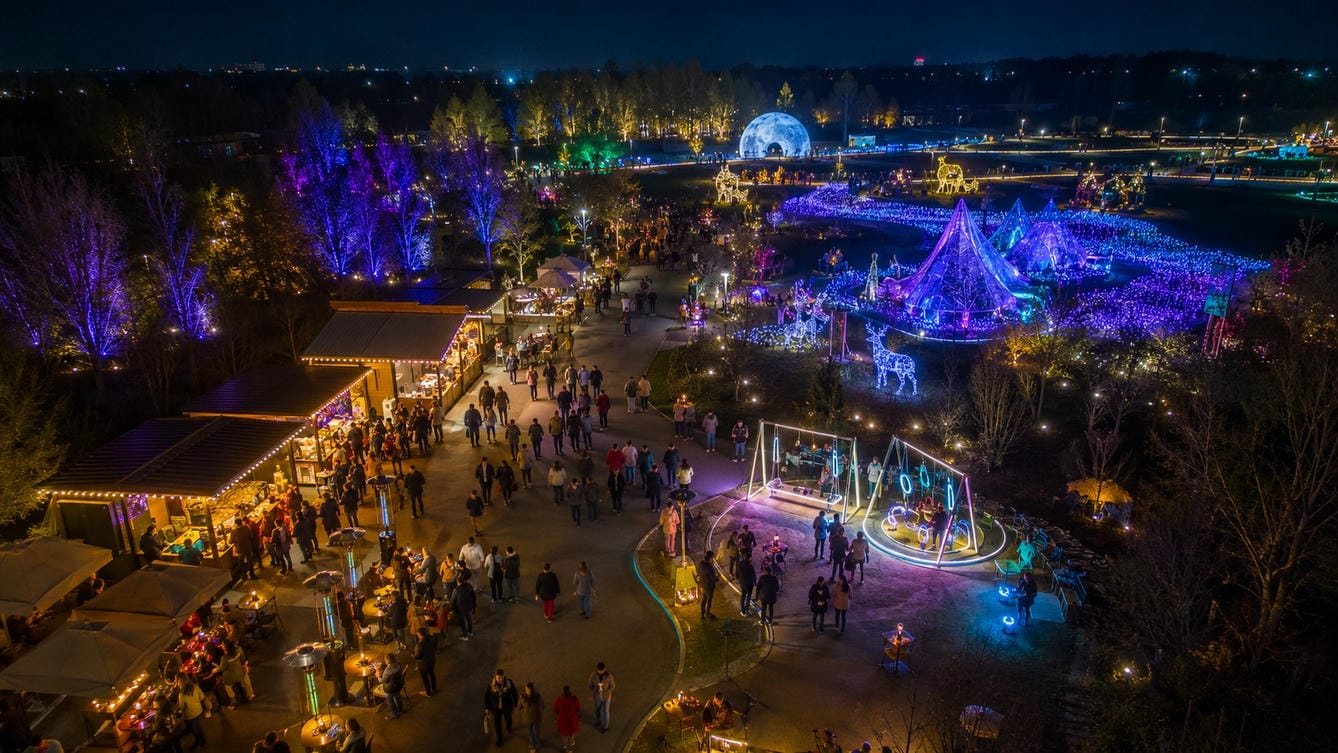
 A night tourism attraction should be more than just lights — it should be a revenue‑generating system. Successful park light shows capture attention, extend visitor time, and create opportunities for multiple revenue streams beyond simple ticket sales.
This article breaks down how parks, scenic areas, resorts, farms, and outdoor venues can design their light shows to maximize commercial value, turning nighttime attractions into sustainable business models.
01 Why Relying Only on Ticket Sales Limits Revenue
For many first‑time night tourism projects, the instinct is to focus on ticket pricing and attendance — how many visitors will buy a ticket and how much revenue that generates. But if visitors simply walk through, take a few photos, and leave, the scope for additional income is limited.
A more engaging night show encourages visitors to stay longer, interact with installations, make purchases, and repeat their visit in future seasons.
02 Multi‑Layered Revenue Structure for Light Shows
To build a profitable night tourism project, consider structuring your revenue across multiple layers instead of depending solely on ticket sales. Below is a simple overview of how revenue sources can be diversified:
Each of these layers contributes to making the light show financially resilient and more profitable over time. They also encourage visitors to stay longer, explore more, and share their experiences.
03 Design Visitor Flow for Commercial Conversion
Often, food stalls or shops are added as an afterthought. The problem with this approach is simple: visitors won’t spend money unless they naturally slow down, rest, or feel emotionally engaged.
To maximize secondary spend, place food & beverage areas and retail near high‑traffic zones where visitors naturally pause — such as after signature photo points, midway routes, or resting spots. Effective route design is a core element of professional light show planning.
04 Signature Photo Spots Are Profit Magnets
At their core, night tourism attractions are experiences worth capturing and sharing. Strong photo zones not only drive social media exposure but also act as commercial triggers.
When visitors stop to take photos, they are more likely to:
- Purchase instant or souvenir photos
- Buy themed merchandise
- Browse nearby retail options
- Try food and beverage offerings
Placing professional photography services or themed photo frames near these spots can convert interest into direct revenue.
05 Family and Interactive Experiences Boost Secondary Spend
Family groups and parents with children tend to spend more if the event includes interactive experiences. These could include:
- Light craft workshops
- Glow toy stations
- Interactive game zones
- Mini light shows for kids
These offerings increase dwell time and can be priced separately or bundled with tickets for an added premium.
06 Brand Partnerships Unlock Sponsorship Revenue
When night attractions gain visibility and foot traffic, they become attractive opportunities for brands. Local and global brands can sponsor:
- Key light zones
- Interactive activations
- Seasonal themed areas
- Exclusive brand lounges
Brand collaborations bring in sponsorship income, co‑marketing reach, and shared promotional opportunities.
07 Seasonal Updates Encourage Repeat Attendance
Repeat visitors are a sign of a sustainable attraction. To encourage this, update themes seasonally — e.g., festivals, holidays, or annual highlights. This strategy makes your night show a “must‑see every year” event, boosts annual passes, and elevates community anticipation.
FAQ: Revenue Beyond Tickets for Night Tourism Light Shows
Q: Can a small park generate similar revenue?
A: Yes — even modest attractions can benefit from well‑designed flow, photo spots, and thoughtful retail placement.
Q: Do all revenue layers need to be implemented at once?
A: Not necessarily — start with ticketing, food & retail, then expand interactivity and brand partnerships.
Q: How does lighting planning relate to revenue?
A: Strategic planning ensures visitors move through zones where revenue opportunities are maximized.
Conclusion
A night tourism light show’s true value extends far beyond ticket sales. When designed as a comprehensive business model — with thoughtful visitor flow, commercial zones, photo spots, family experiences, brand collaborations, and seasonal updates — it becomes both a memorable attraction and a profitable long‑term asset.
With careful planning and the right execution strategy, your next night tourism light show can transform nighttime engagement into sustainable revenue growth.
Post time: May-30-2026


