

Los Angeles | December 2025
Keywords: custom Chinese lantern show, night tourism, park light festival, visitor flow design
Across North America—and increasingly in other regions—parks, zoos, botanical gardens, shopping districts, and public plazas are facing the same pressure after dark: how to bring people in, keep them moving comfortably, and give them a reason to stay (and spend).
What’s gaining traction isn’t “more lighting” in the traditional sense. It’s something closer to a seasonal night program: a custom Chinese lantern show—especially during the holiday window, when audiences are already primed to go out at night.
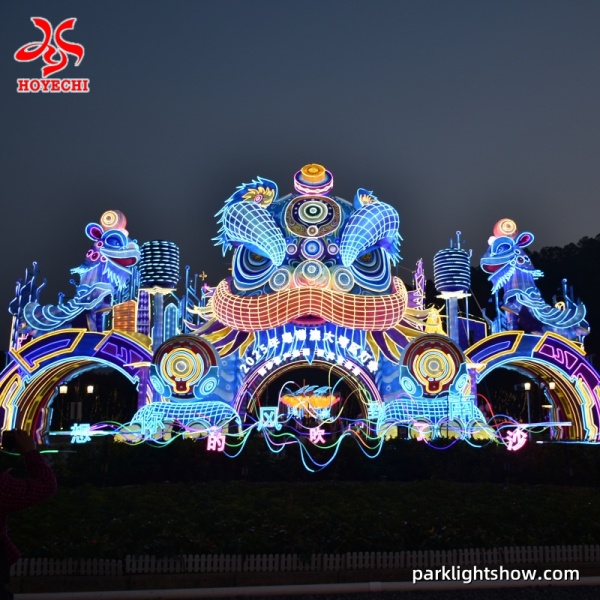
A high-impact entrance landmark that helps the first 30 seconds feel “worth the ticket” and guides visitor flow.
From “Decor” to a Sellable Night Program
Modern lantern festivals don’t behave like standard decoration. A well-built show looks more like a complete, operational package—a visitor-route experience system:
-
large lantern sculptures designed as landmarks
-
walk-through illuminated tunnels and arches
-
themed zones that carry a storyline
-
interactive light elements that encourage stopping, photographing, and sharing
-
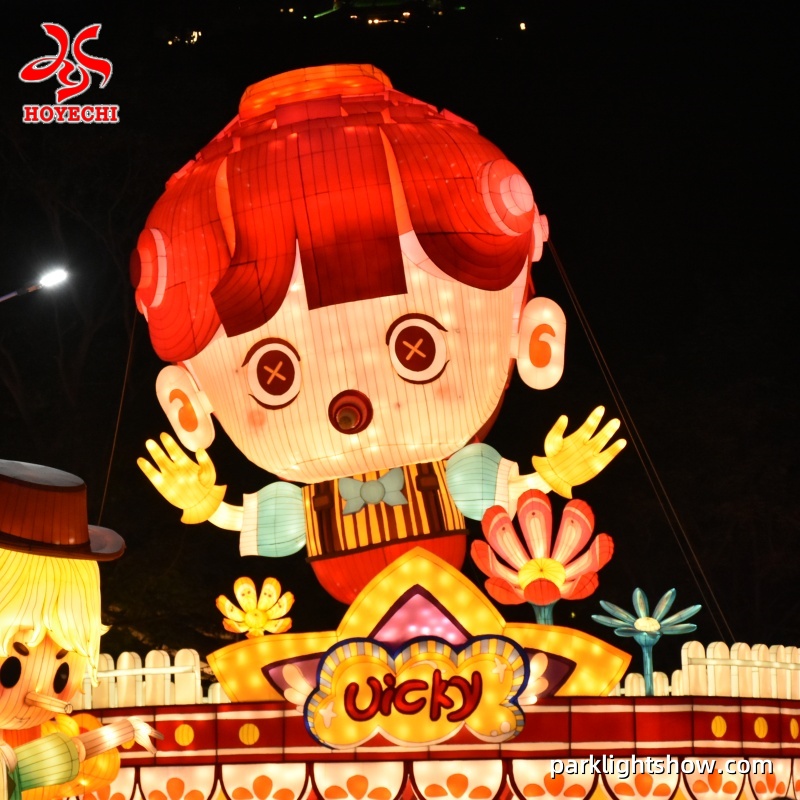
Cartoon character lanterns create instant “photo spots” that attract families and drive shareable night tourism experiences.
The point isn’t only visual impact. It’s operability: a program that can be ticketed, run through a season, and in many cases reused or refreshed rather than rebuilt from scratch—useful for shoulder seasons when attendance typically softens.
Why Today’s Lantern Shows Feel Different
Chinese lantern craft has a long history, but the current wave of projects is less “traditional lanterns” and more engineered, immersive installation work. Mature projects usually revolve around three basics:
1) Story-led route design
Good shows aren’t scattered displays. They’re a journey from entrance to exit.
Common themes include mythology and legends, ocean worlds, winter wonderlands, zodiac animals, and localized content tied to a city or region.
2) Scale and immersion
These aren’t small lanterns anymore. They’re photo-ready landmarks—giant lantern pieces, arches, and walk-through tunnels. By design, they become “check-in spots” and spread through social sharing with minimal extra effort from the venue.
3) Practical operations
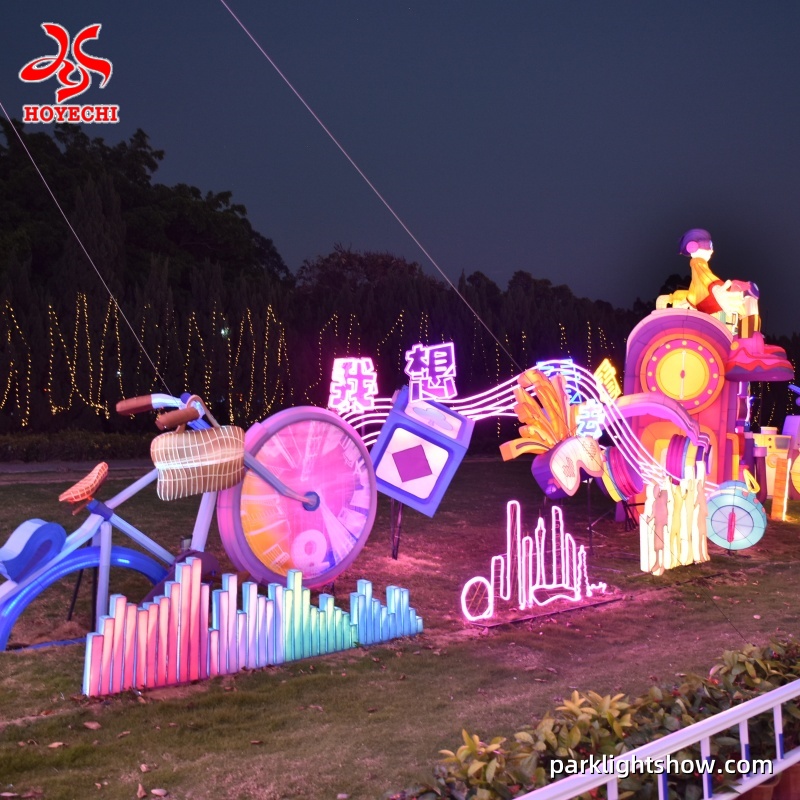
Neon-style installations create modern, shareable “night economy” scenes that boost visitor engagement and social media exposure.
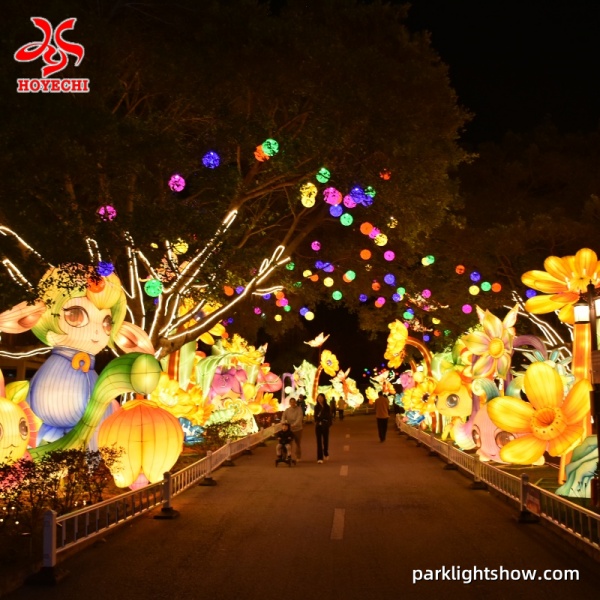
A strong show has to survive real conditions: weather, crowds, and time. That usually means stable structures, electrical safety, waterproof durability, easier cleaning and maintenance, and installation that’s efficient and controllable.
Why More Operators Are Saying Yes
From the operator’s side, the value tends to be straightforward—and measurable:
-
a sellable night product with a clear seasonal marketing hook
-
longer dwell time and higher on-site spending (food, souvenirs, add-ons)
-
activation of existing space: roads, lawns, and plazas become nighttime “flow assets”
-
stronger sponsorship packaging (named zones can be added without wrecking the guest experience)
-
repeat visits: refresh the theme or add new zones each year, and guests have a reason to come back
Lantern shows also tend to reach a wide audience mix—families, couples, group visitors, seasonal travelers—without automatically alienating existing members.
Guest Experience Often Comes Down to Route Design
When a project underperforms, it’s not always because the lanterns weren’t big enough or bright enough. A common issue is simpler: the design ignores visitor stamina and emotional pacing.
Experienced projects often follow practical rules like these:
Make the entrance hit immediately
Some guests decide within the first 30 seconds whether the ticket “feels worth it.” A strong entry arch or tunnel matters more than people expect.
Alternate “big moments” with breathing sections
Between high-impact pieces, insert buffer zones so people can take photos, rest briefly, and keep moving without visual fatigue.
Add interaction points to increase dwell time
Even simple interaction helps—sensor-triggered lighting, photo frames, or a walk-through “Phoenix Crown” style corridor/arch inspired by traditional Chinese opera headpieces. These elements routinely extend stay time.
Control bottlenecks for safety and comfort
Main landmark zones need wider paths. Photo areas should be clearly defined. Weekend peaks shouldn’t turn into choke points.
Safety, Durability, and Maintainability: The Non-Negotiables
A lantern festival is a public-facing event. It needs to be treated as an engineering installation, not temporary decoration.
Reliable projects typically prioritize:
-
Structural stability: metal framework and ground anchoring designed for local wind load
-
Electrical safety: protected cabling, outdoor-rated components, layouts that support inspection and maintenance
-
Weather resistance: industrial-grade waterproofing, UV-resistant surface handling, anti-rust and anti-corrosion measures
-
Operating process: night inspection checklists, spare parts, and emergency access planning
This isn’t “extra.” It protects the venue’s reputation. Guests remember whether the event felt smooth, comfortable, easy to photograph, and—most importantly—safe.
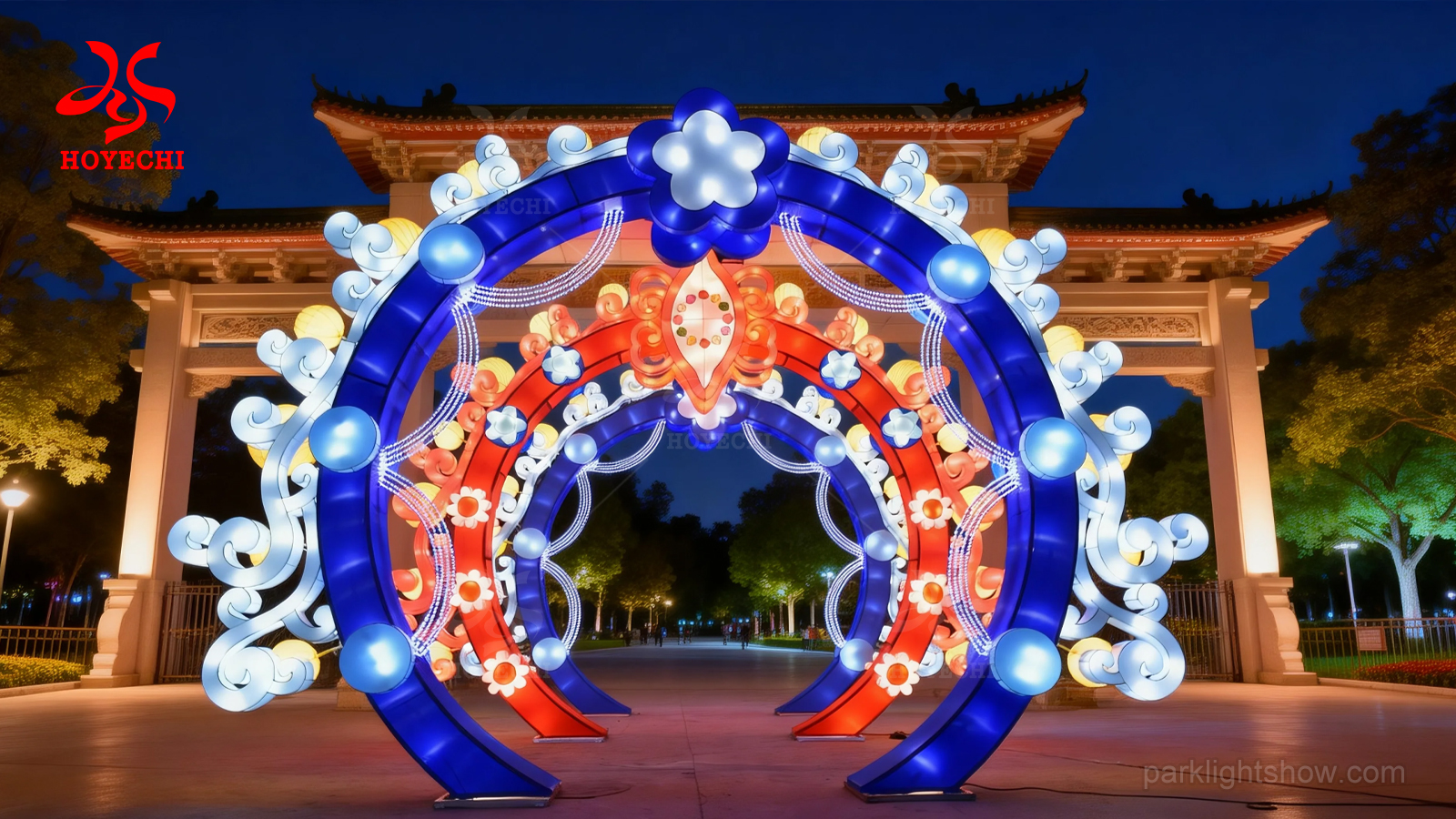
A walk-through tunnel/arch strengthens immersion and creates repeatable “check-in spots” for guests.
(As HOYECHI notes from years of project work, these basics are what keep a show from becoming a headache mid-season.)
Sustainability and Reuse Are Becoming the New Standard
More public venues are increasingly sensitive to environmental impact, and lantern shows are evolving quickly in response. Operators commonly ask for:
-
modular repeatable installation: assets reused across seasons
-
foldable sectional structures: lower shipping and storage volume
-
replaceable light sources: longer lifespan and more predictable maintenance cost
-
theme refresh strategies: “new skins,” color touch-ups, panel swaps—so older sets can look new again
With modular thinking, lantern assets can function like a long-term event prop library: update content each year rather than rebuilding from zero.
A Practical Starting Point for First-Time Venues
For a venue launching its first lantern show, a controlled scope is usually safer:
-
1 signature entrance (arch or walk-through tunnel)
-
3–5 themed zones
-
1 interactive centerpiece
-
one photo point every 30–60 meters
-
reserved maintenance and security access routes
This creates a complete experience without pushing installation and operations into an unmanageable zone. After that, expansion can follow real visitor-flow and revenue data.
Reference Topic
Chinese Lantern Festival Light Show
About ParkLightShow.com
ParkLightShow.com shares planning ideas and project-direction notes for large-scale themed lighting and custom Chinese lantern shows in parks, commercial venues, and public spaces—supporting operators who want night programs that are safer, more participatory, and more shareable.
Post time: Dec-23-2025


