

The Chinese Lantern Festival, celebrated on the fifteenth day of the first lunar month, is one of the most enduring festivals in Chinese culture. Today, it is widely associated with glowing lanterns, family gatherings, riddles, festive food, and lively public celebrations. Yet the deeper historical question remains: why did the Lantern Festival begin in the first place?
The answer is not limited to one single origin. Like many traditional festivals, the Lantern Festival developed gradually over time. It grew from a combination of seasonal timing, early ritual traditions, the rise of lantern culture, and the unique social role that this festival played in premodern Chinese life. To understand why it started, it is necessary to look not only at customs and symbolism, but also at how people actually lived in ancient China.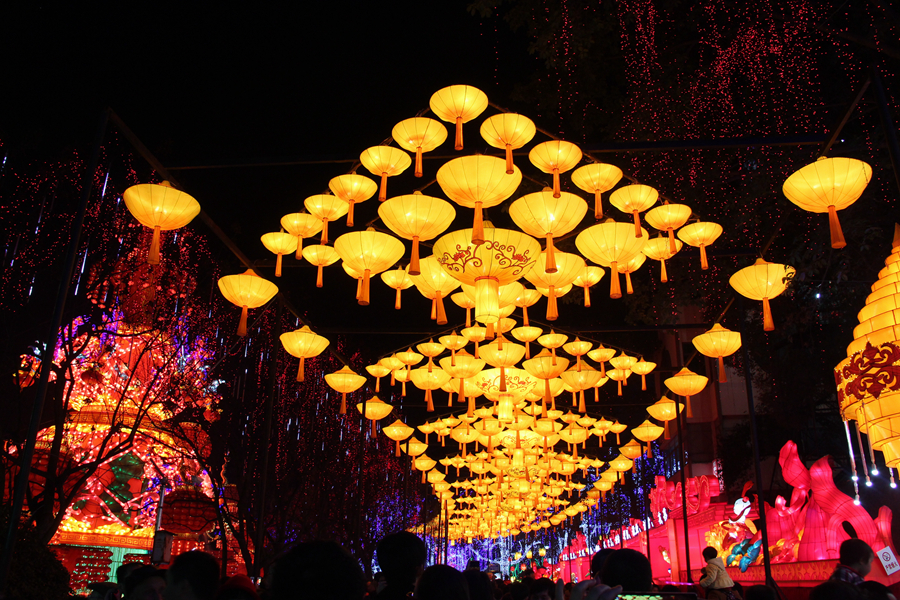
The Importance of the First Full Moon of the Lunar Year
In the traditional Chinese calendar, the first lunar month marked the beginning of a new agricultural and social cycle. The fifteenth night of that month was especially significant because it brought the first full moon of the year. In ancient Chinese thought, the full moon symbolized completeness, reunion, balance, and renewal. This gave the date a natural festive meaning long before the Lantern Festival became what it is today.
Because the first full moon represented a visible moment of wholeness after the New Year began, it became an appropriate time for both ritual observance and communal celebration. In this sense, the Lantern Festival did not emerge from a random calendar date. It formed around a moment that already carried symbolic importance in the traditional understanding of time.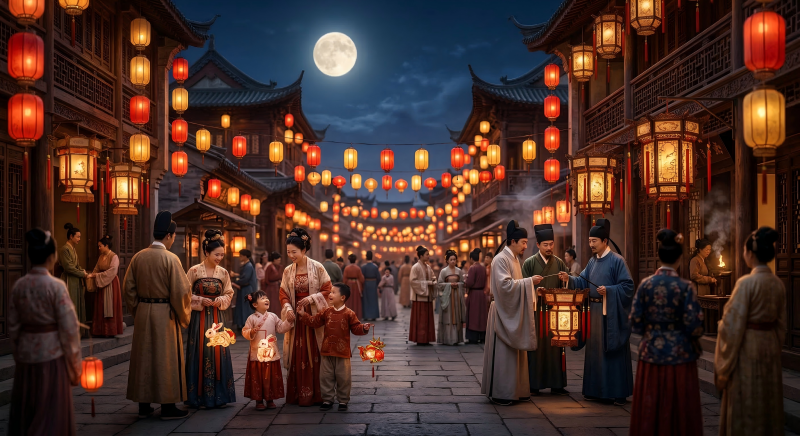
How Lanterns Became Central to the Festival
Lanterns did not become the symbol of the festival overnight. In early Chinese society, light had ritual, seasonal, and practical meanings. Lamps and lanterns were used in ceremonies, in acts of devotion, and in seasonal celebrations. Over time, as craftsmanship developed and urban life became more elaborate, lanterns evolved from simple sources of light into artistic and cultural objects.
As public festivals became more visually expressive, lanterns turned the night itself into part of the celebration. Streets, gates, towers, markets, and courtyards could be transformed by light. This was one reason the festival became so memorable and socially important. Lanterns made the celebration visible, immersive, and communal.
For a broader overview of the festival itself, see What Is the Lantern Festival in China?.
Why the Festival Was So Popular in Ancient China
To modern readers, it may be difficult to understand just how unusual public night activity once was. In ancient China, lighting technology was limited, and many cities enforced nighttime restrictions. Under normal conditions, ordinary people were not expected to move freely through the streets after dark. City gates were often closed, neighborhoods grew quiet, and public order depended on strict control of the night.
In that context, the Lantern Festival stood out as something extraordinary. On this one occasion, the night became open, bright, and socially active. Lanterns illuminated streets and public spaces. Both officials and common people participated in the festive atmosphere. What was normally a time of restriction became a time of movement, visibility, and gathering.
This helps explain why the Lantern Festival became so beloved. It was not only a celebration of light and beauty. It also offered people a rare chance to experience the city at night in a joyful and publicly accepted way. The excitement of the festival came partly from this release from ordinary routine.
The Lantern Festival as an Ancient Social Space
Another important reason for the festival’s lasting popularity lies in its social function. In traditional society, interactions between unmarried men and women were often shaped by strong expectations of propriety. Daily life did not always provide many opportunities for free social contact, especially in public at night.
During the Lantern Festival, however, people could gather under the accepted purpose of viewing lanterns and joining public festivities. Because the entire event was communal and legitimate, young men and women had more chances to see one another, speak, and form impressions. This created a special atmosphere that later generations often remembered in literary works, folk stories, and popular imagination.
For this reason, many people describe the Lantern Festival as an ancient Chinese version of Valentine’s Day. This comparison should not be understood too literally, since the historical and cultural meanings are different. Still, the idea points to something real: the festival offered one of the few socially acceptable occasions when romance, admiration, and future marriage connections could begin in a public setting.
Why This Function Was Accepted by Society
The social role of the Lantern Festival was not accidental. In traditional agricultural society, marriage, family formation, and population growth were all deeply important. In periods marked by war, instability, or population loss, encouraging stable households and future generations was often seen as socially valuable.
Within that broader context, a festival that allowed supervised and socially accepted contact between young people could serve more than one purpose. It provided joy and release, but it also fit into a larger social system that valued marriage and family continuity. This helps explain why the festival was not only tolerated, but often encouraged.
Of course, different dynasties and regions did not all operate in exactly the same way, and later retellings sometimes simplify the historical reality. Even so, the general pattern remains important: the Lantern Festival endured in part because it met emotional, cultural, and social needs at the same time.
More Than Entertainment: A Festival That Connected Private and Public Life
One reason the Lantern Festival survived while some other traditional customs faded is that it combined several layers of meaning. It marked a key moment in the calendar. It created a strong visual culture through lanterns. It encouraged public participation across social groups. It supported family reunion while also inviting people into shared urban or village spaces.
That balance between private and public life gave the festival unusual strength. A family could celebrate together, but the festival was never confined to the home. It belonged to the street, the marketplace, the temple fair, and the broader community. The beauty of lantern light turned social order into something visible and emotionally compelling.
To explore how lantern culture evolved over time, read The History of Flower Lanterns.
Why the Lantern Festival Still Matters Today
The Lantern Festival continues to resonate because it brings together ideas that remain meaningful across centuries: light in darkness, reunion after separation, beauty in public life, and hope at the start of a new cycle. Its origins were shaped by historical realities, but its emotional power has lasted far beyond them.
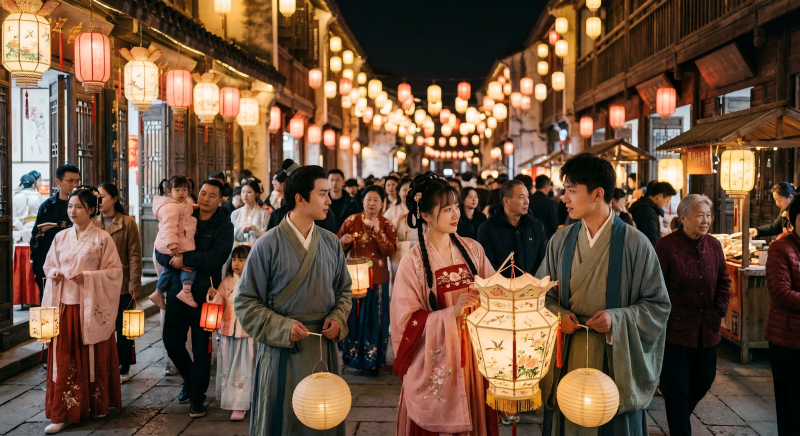
Modern lantern displays may be larger, more artistic, and more technologically sophisticated than those of earlier times, but the cultural logic behind them remains familiar. People are still drawn to illuminated spaces, shared celebration, and the sense that one special night can transform an ordinary environment into something memorable.
For a modern design perspective on how lanterns shape public environments, see Chinese Lantern in Modern Public Spaces: Design Principles and Cultural Meaning.
Conclusion
So why did the Chinese Lantern Festival start? It began not because of a single event, but because several forces came together over time. The first full moon of the year already carried symbolic importance. Lanterns gradually became powerful cultural objects. And in ancient society, the festival created a rare and meaningful public night space where celebration, community, and even courtship could take place.
That is why the Lantern Festival became more than a seasonal custom. It became a living expression of how ancient Chinese society understood time, light, relationships, and public life. Its endurance across centuries reflects not only tradition, but also the fact that it answered real human needs: the need to gather, to see and be seen, to celebrate beauty, and to begin the year with brightness and hope.
FAQ
1. Why is the Lantern Festival celebrated on the fifteenth day of the first lunar month?
It is celebrated on that date because it marks the first full moon of the lunar year. In traditional Chinese culture, the full moon symbolizes reunion, completeness, and a fortunate beginning.
2. Did the Lantern Festival begin as a romantic festival?
Not originally in a formal sense. However, over time it became associated with romance because it gave young men and women a rare chance to meet in a public and socially accepted setting during the evening.
3. Why were lanterns so important to the festival?
Lanterns transformed the night into a public celebration. They were not only practical sources of light, but also artistic, symbolic, and communal objects that made the festival visually unforgettable.
4. Was the Lantern Festival important only for ordinary people?
No. The festival carried meaning at multiple levels of society. It involved public celebration, cultural symbolism, and in many periods also received support or recognition from official institutions.
5. Why has the Lantern Festival lasted for so many centuries?
It has lasted because it combines seasonal symbolism, visual beauty, shared public activity, family meaning, and deep cultural memory. Few traditional festivals unite so many functions so effectively.
Post time: Mar-14-2026


