

They may have beautiful landscapes, historic buildings, lakes, forest trails, public gardens, old streets, event spaces, and mature daytime visitor traffic. But many of them still face the same challenge:
Visitors come during the day, but the venue becomes quiet at night. Holiday traffic may be strong, but repeat visits are limited. Guests take a few photos, walk around, and leave quickly. Food, retail, parking, and event-related spending remain lower than expected.
When this happens, many operators start asking the same questions:
Do we need more attractions? Do we need more photo spots? Do we need better videos? Do we need influencers to promote the destination?
These questions are understandable, but they may not touch the real problem.
In many cases, the destination is still trying too hard to show itself.
Modern visitors are not only coming to admire what a park has. They are looking for a place where they can create their own travel story.
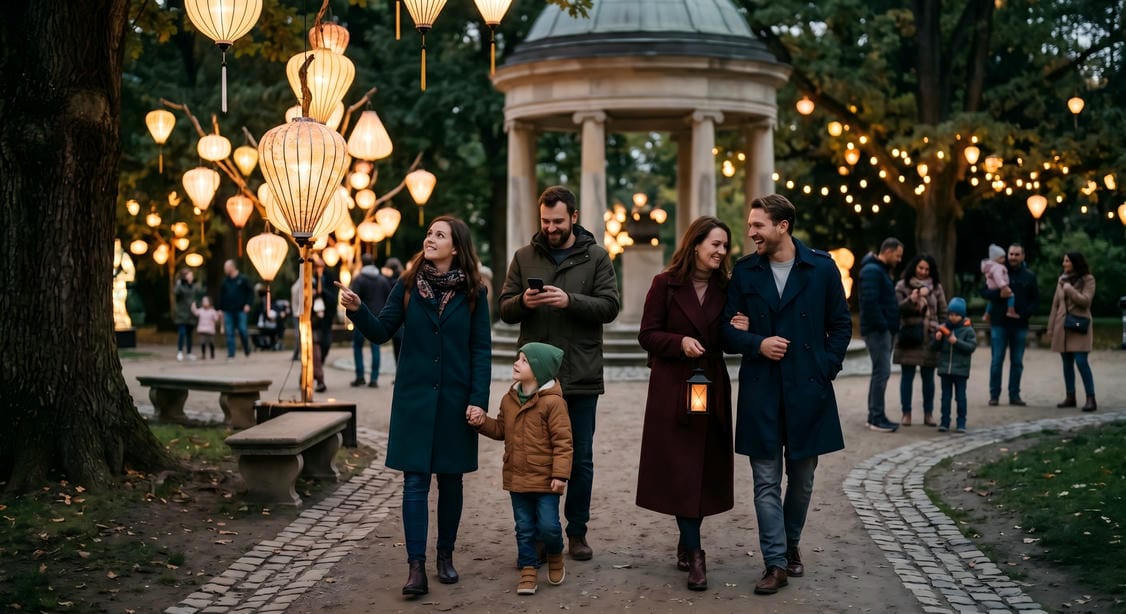
The Common Problem: Parks Are Still Showing Themselves
Traditional destination marketing often focuses on assets.
A park may say:
- We have a historic castle.
- We have a beautiful garden.
- We have a lake route.
- We have a children’s area.
- We have restaurants, shops, and seasonal events.
- We have invested in new attractions.
None of this is wrong. But the message is still centered on the destination itself.
It tells visitors: “Look at what we have.”
However, today’s visitors often care more about a different question:
“What kind of experience can I have here?”
They want to know whether the destination can give them a memorable evening, a meaningful family moment, a romantic photo, a shareable social media scene, or a reason to return with friends.
In other words, the visitor does not want to be treated only as an audience.
The visitor wants to become the main character of the experience.
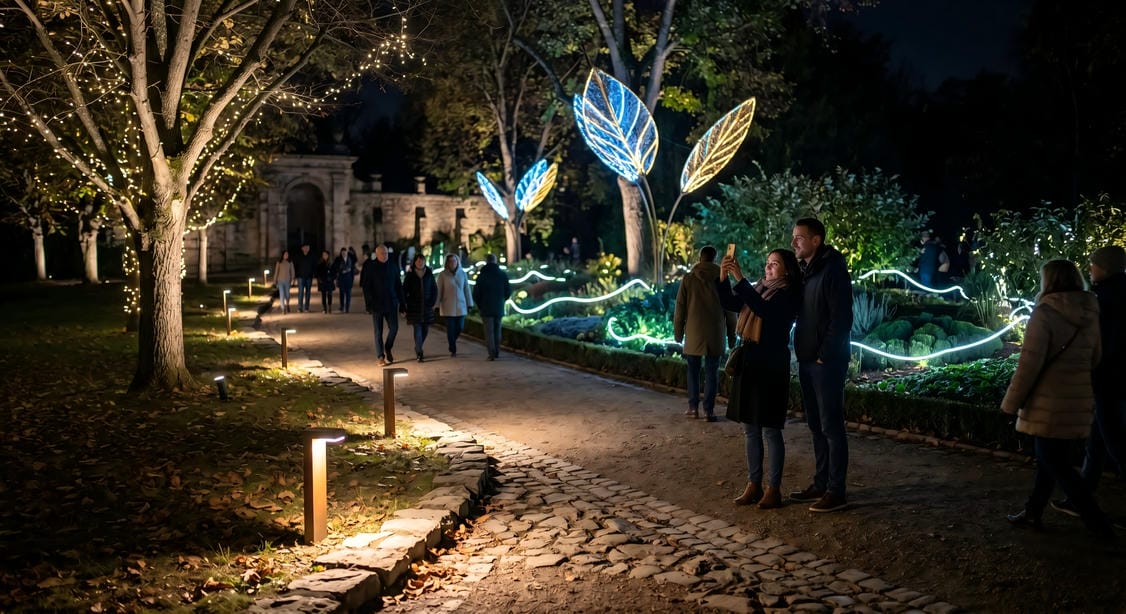
Destination-Centered Thinking vs Visitor-Centered Thinking
For many park operators, the first step is not changing the project itself. It is changing the way the project is understood.
| Destination-Centered Thinking | Visitor-Centered Thinking |
|---|---|
| What attractions do we have? | What experience can visitors create here? |
| How much have we invested? | What memories will visitors take away? |
| How beautiful is our park, lake, garden, or heritage site? | Can visitors feel part of a story? |
| Our video should show every facility. | Our video should help visitors imagine themselves inside the experience. |
| Build photo spots to promote the destination. | Design scenes that visitors naturally want to share. |
| The park is the main character. | The visitor is the main character, and the park becomes the stage. |
European Parks Already Have Strong Story Assets
European destinations often have natural advantages for visitor-centered experiences.
A castle has history. A forest has atmosphere. A lake has romance. A garden has calmness. A zoo or family park has emotional value for children and parents. A resort has the ability to extend the guest journey beyond daytime activities.
But these assets only become powerful when visitors can emotionally enter them.
A historic street should not only be displayed as architecture. It can become a place where visitors feel they have stepped into another time.
A botanical garden should not only show plants. It can become a peaceful evening walk where families slow down together.
A castle garden should not only be lit from the outside. It can become a romantic or mysterious nighttime route.
A zoo or family park should not only operate as a daytime attraction. It can become a seasonal nighttime event that children remember for years.
This is why a well-planned lantern festival for parks should not simply place lights in a venue. It should help visitors enter a walkable story, take photos naturally, enjoy shared moments, and feel that the park has become part of their own travel memory.
How Different European Venues Can Become Nighttime Experiences
Not every venue needs the same type of light show. The best solution depends on the site layout, visitor profile, walking route, local culture, and business goal.
| European Venue Type | Possible Nighttime Experience | Visitor Value |
|---|---|---|
| Castle gardens | Historic garden light trail or seasonal lantern festival | Romance, mystery, cultural atmosphere |
| Botanical gardens | Immersive floral lighting route | Relaxation, healing, family time |
| Zoos and family parks | Illuminated animal lantern festival | Children’s memory, parent-child interaction |
| Natural parks | Forest light trail or lakeside night walk | Emotional escape, nature immersion |
| Resorts and hotels | Seasonal nighttime light event | Extended guest experience, higher evening spending |
| Urban parks | Festival lantern route or public light event | Community participation, holiday atmosphere |
From Showing Assets to Building a Stage
The real shift is simple:
Stop asking only, “What do we want to show?”
Start asking, “What can visitors do, feel, and remember here?”
A lake should not only be described as beautiful. It can become a reflection scene for an evening light route.
A forest path should not only be used as a walking trail. It can become a quiet emotional escape after dark.
A plaza should not only be an empty open space. It can become a photo-friendly gathering point for families, couples, and groups.
A heritage building should not only be illuminated from the outside. It can become the visual anchor of a story-based nighttime journey.
For many European scenic destinations, a scenic area light show can create real value by turning existing routes, gardens, lakesides, bridges, entrances, and public spaces into an immersive nighttime experience.
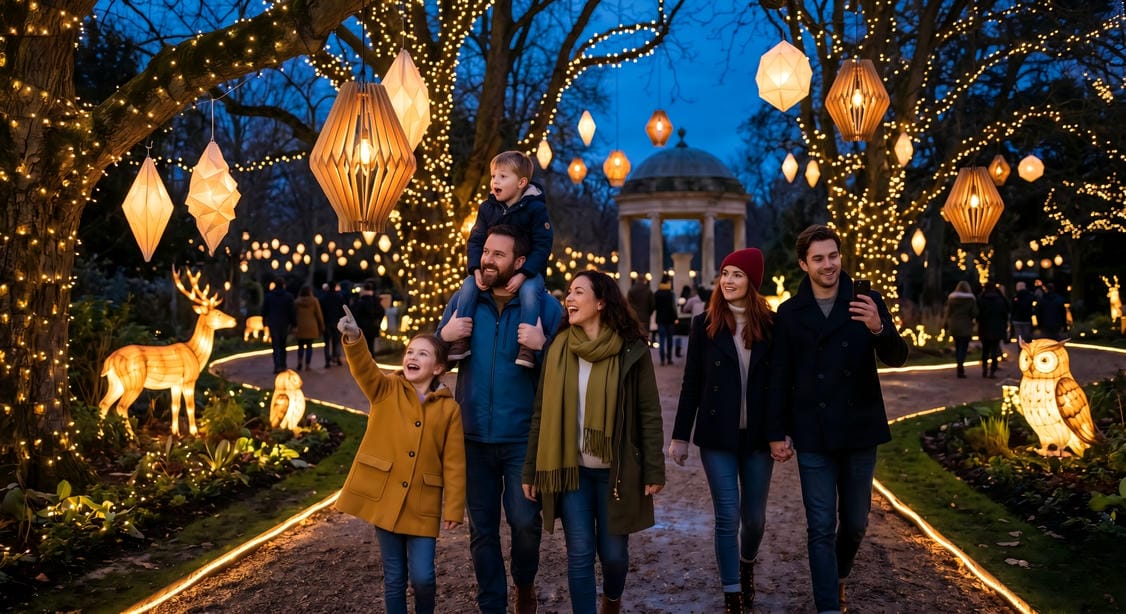
Visitors Should Not Feel Like They Are Watching a Project
One common mistake is to design attractions that look impressive from the operator’s point of view but feel distant from the visitor’s point of view.
A park may invest in a large installation, a new lighting zone, a themed entrance, or a cultural display. But if visitors can only stand outside and look, the experience quickly becomes limited.
Modern visitors want to move through the scene, interact with the atmosphere, take photos from good angles, walk with family or friends, and feel that the environment is designed for their experience.
This is why visitor route planning matters so much.
In a successful nighttime attraction, the route is not only a traffic path. It is the emotional rhythm of the experience.
There should be moments of arrival, surprise, exploration, rest, photo sharing, family interaction, and a memorable ending.
Good light show planning should consider not only where to install lights, but also how visitors move, where they stop, what they photograph, how long they stay, and what they remember after leaving.
Online Marketing Should Also Make the Visitor the Main Character
The same principle applies to short videos, social media posts, and digital promotion.
Many parks still use short videos like online brochures. They show every facility one by one: the entrance, the building, the ride, the restaurant, the path, the decoration, and the event poster.
But this is not how people decide to visit.
Visitors are more likely to respond to content that helps them imagine an experience:
- A family walking through a glowing winter trail.
- A couple taking photos under a romantic light arch.
- Children discovering illuminated animals in a night garden.
- Friends laughing inside an immersive lantern tunnel.
- Visitors entering a historic park that feels transformed after dark.
The difference is important.
“We have a beautiful light installation” is operator-centered.
“Spend an evening walking through a glowing story with your family” is visitor-centered.
The first one displays the park. The second one invites the visitor into a story.
Do Not Confuse Photo Spots With Visitor-Centered Design
Many destinations think that building more photo spots means they are putting visitors first.
Not always.
If the photo spot only exists to show the park’s logo, the park is still the main character.
If a video only shows a model or influencer posing in front of the attraction, the influencer may become the main character, while ordinary visitors still feel distant from the experience.
True visitor-centered design asks a different question:
Does this scene help ordinary visitors create their own memory?
A good photo area should make visitors feel natural, comfortable, and proud to share the moment. A good light route should make families, couples, children, and groups feel that the experience was designed for them, not only for promotion.
The goal is not to make the park look important.
The goal is to make visitors feel important inside the park.
A Simple Checklist for Park Operators
Before launching a park light show, lantern festival, or nighttime attraction, operators can use a simple checklist to review whether the project is truly visitor-centered.
| Question | If the Answer Is No, It May Mean |
|---|---|
| Can visitors naturally participate instead of only watching? | The project may still be too display-oriented. |
| Are there several places where visitors can stop, take photos, and interact? | The route may lack experience points. |
| Can families, couples, young people, and local visitors each find a reason to come? | The experience may be too narrow. |
| Does the route have emotional rhythm instead of only continuous decoration? | The visitor journey may feel flat. |
| Does online content help visitors imagine themselves inside the experience? | The marketing may still feel like a brochure. |
| Will visitors leave with photos, stories, or memories they want to share? | The social sharing value may be weak. |
| Can the nighttime project support ticket sales, food, retail, parking, or event revenue? | The commercial loop may not be complete. |
Why This Matters for European Parks and Scenic Destinations
For many European venues, the opportunity is practical.
Daytime tourism is often already established. The real challenge is how to extend visitor time, create evening activity, increase seasonal revenue, and make better use of existing spaces.
Nighttime attractions can help solve this problem when they are designed around visitor experience rather than simple decoration.
A light festival, lantern trail, or seasonal park light show can help:
- extend operating hours during darker seasons
- create new reasons for local families to revisit
- turn existing gardens, lakes, and walkways into evening attractions
- support ticketed seasonal events
- increase food, retail, parking, and event-related spending
- generate more visitor-created social media content
The Future: Parks as Story Stages, Not Self-Promotion Platforms
The future of park tourism is not only about building more facilities.
It is about designing better visitor stories.
European parks and scenic destinations already have many strong assets. But those assets need to be translated into experiences that visitors can personally enter.
The best parks do not ask visitors to admire the operator’s investment.
They help visitors feel:
- This is my family night out.
- This is my romantic evening.
- This is my child’s magical memory.
- This is my cultural experience.
- This is my story worth sharing.
When a park stops trying to be the only main character, it gives visitors space to become the main character of their own journey.
And when visitors feel that a destination helped them create their own story, they are more likely to stay longer, share more, and return again.
That is why modern parks should not only display what they have.
They should design what visitors can become.
Post time: May-08-2026


