

Lion Dance Arch and Lanterns — Joy and Blessings in the Lights
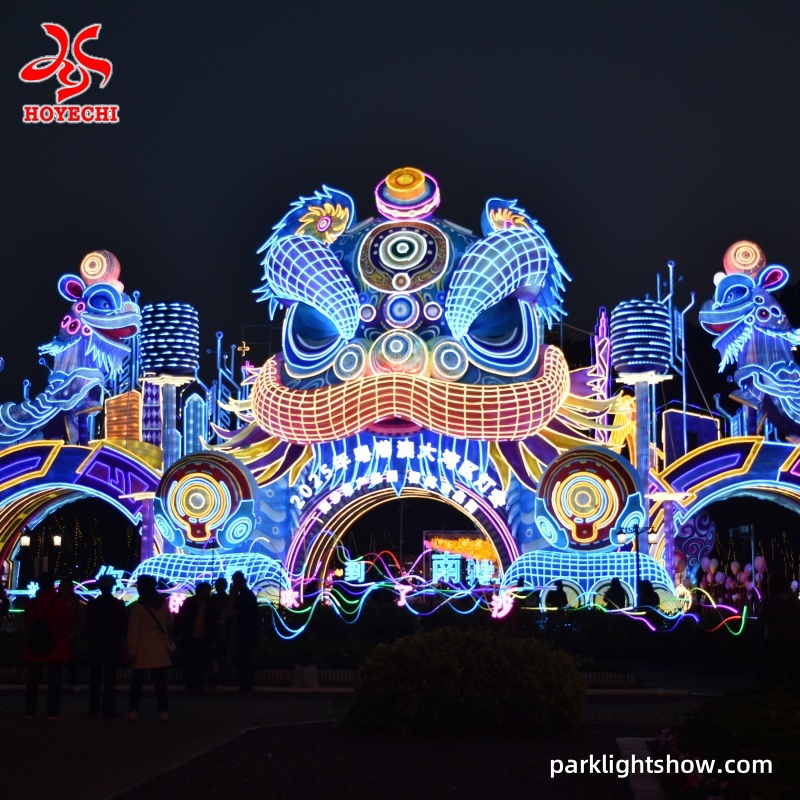
As night falls and the lanterns light up, a magnificent Lion Dance Arch slowly glows in the distance. Neon outlines the lion’s fierce face, its whiskers flashing in rhythm with the lights, as if guarding the entrance to the celebration. People walk through in groups, leaving the noise of everyday life behind. On the other side, what awaits is festivity, joy, and a sense of ritual that seems to transcend time.
Dance of the Lion: The Soul of Festivals and a Symbol of Auspiciousness
The Lion Dance is one of the most spirited traditions in Chinese festivals. When the drumbeats begin, the lion leaps, sways, and comes alive on the shoulders of the dancers—sometimes comical, sometimes majestic. It has long accompanied the Spring Festival, Lantern Festival, and temple fairs, symbolizing the warding off of evil and the welcoming of good fortune.
Although lions are not native to China, they became symbols of strength and blessings through centuries of cultural exchange. For many, the most thrilling moment is the “Cai Qing,” when the lion stretches upward to “pluck the greens” and then spits out a red ribbon of blessing. In that instant, the lion seems alive, scattering luck to the crowd.
Lion Dance Arch: The Entrance and the Guardian of Celebration
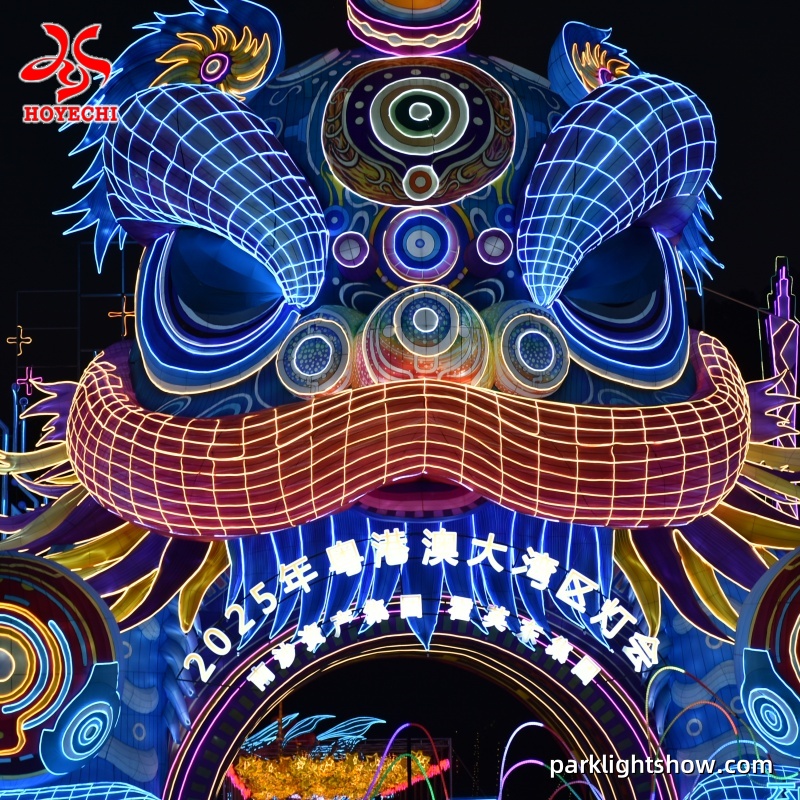
If the Lion Dance is a dynamic performance, then the Lion Dance Arch is a static ritual. At festivals, enormous arches shaped like lion heads are erected, with open jaws forming gateways into the festive space. Passing through them feels like stepping into another world: outside is the ordinary street, inside is a sea of lanterns and laughter.
In modern lantern festivals, the Lion Dance Arch has been reinvented with creativity. LED lights make the lion’s eyes blink, while illuminated whiskers shimmer to the beat of the music. To many, walking through the arch is not only entering a celebration, but also welcoming fortune and joy into their hearts.
Lion Dance Lantern: Light, Movement, and Surprise
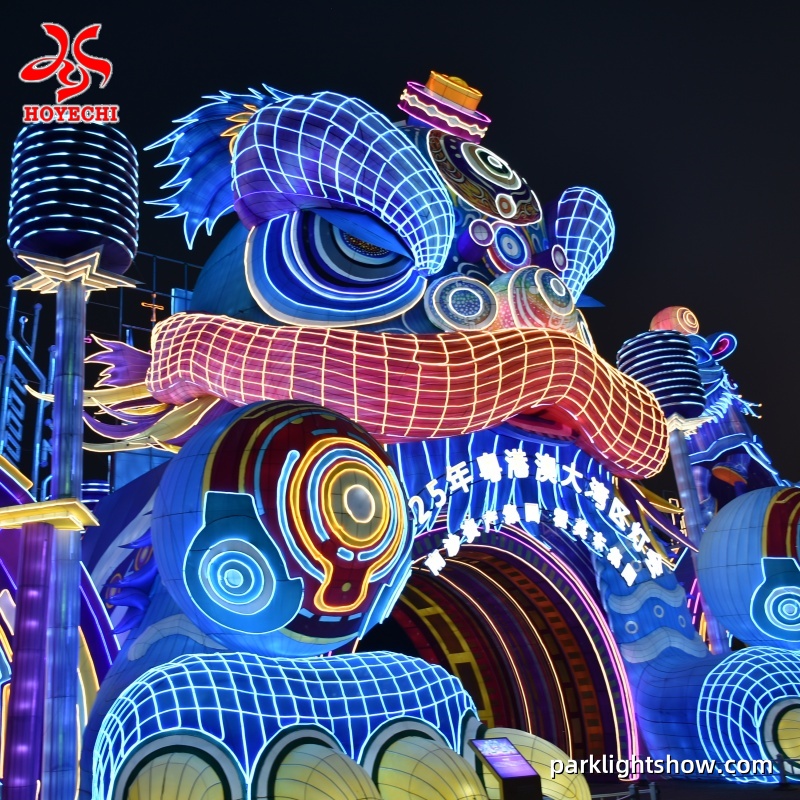
Compared to the solemn arch, the Lion Dance Lantern feels like a surprise hidden in the night. Under the dark sky, giant lion-head lanterns glow brilliantly. Red symbolizes joy, gold conveys wealth, and blue suggests agility and wisdom. Up close, the illuminated lines are delicate, and the lion’s eyes shine as if it might leap forward at any moment.
The Lion Dance Lantern is rarely alone—it stands with other colorful lanterns, arches, and crowds, together painting a moving picture. Children chase each other beneath the lanterns, elders smile as they take photos, while the young capture the glowing lions on their phones. For them, the Lion Dance Lantern is not only an art installation but also the warmth of the festival itself.
Three Faces of the Lion: Performance, Arch, and Lantern
The Dance of the Lion, the Lion Dance Arch, and the Lion Dance Lantern are three forms of the same cultural symbol. One expresses itself through movement, another guards through space, and the last shines through light. Together they create the ritual atmosphere of festivals, letting people feel joy and reunion as they watch, walk through, and admire.
With technology, these traditions gain new vitality. Sound, light, and projection make the lion appear more vivid, bringing ancient customs closer to modern aesthetics. Whether in Chinese lantern festivals or overseas Chinese New Year celebrations, Lion Dance Arches and Lanterns remain highlights of the event.
Memories of the Lion in the Lights
Some say the lion dance is lively, the lanterns are gentle, and the arch is solemn. Together, they form a unique scroll of Chinese festivity.
Amid dazzling lights, people not only celebrate the moment but also witness the continuation of tradition. Passing through the arch, gazing at the lanterns, and watching the lion dance in light and shadow—we feel not only joy, but also the heartbeat of a culture carried across centuries.
Post time: Oct-01-2025


