

When people think of a park light show, they often imagine large budgets, oversized custom structures, and dense installations covering every part of the venue. In reality, what makes a nighttime display memorable is not simply the total investment, but whether the visual elements are arranged with clear hierarchy, spatial rhythm, and enough variation to keep visitors engaged from beginning to end.
For people who are genuinely interested in lantern art, landscape lighting, and immersive nighttime attractions, the most appealing displays are not always the biggest or the most expensive. In many cases, the most successful shows are the ones that feel balanced, layered, and visually organized both from a distance and up close.
A limited budget does not automatically mean a weak result. A more practical question is this: how can lanterns, inflatable decor, and landscape lighting be combined in a way that still creates atmosphere, structure, and visual interest under budget constraints?
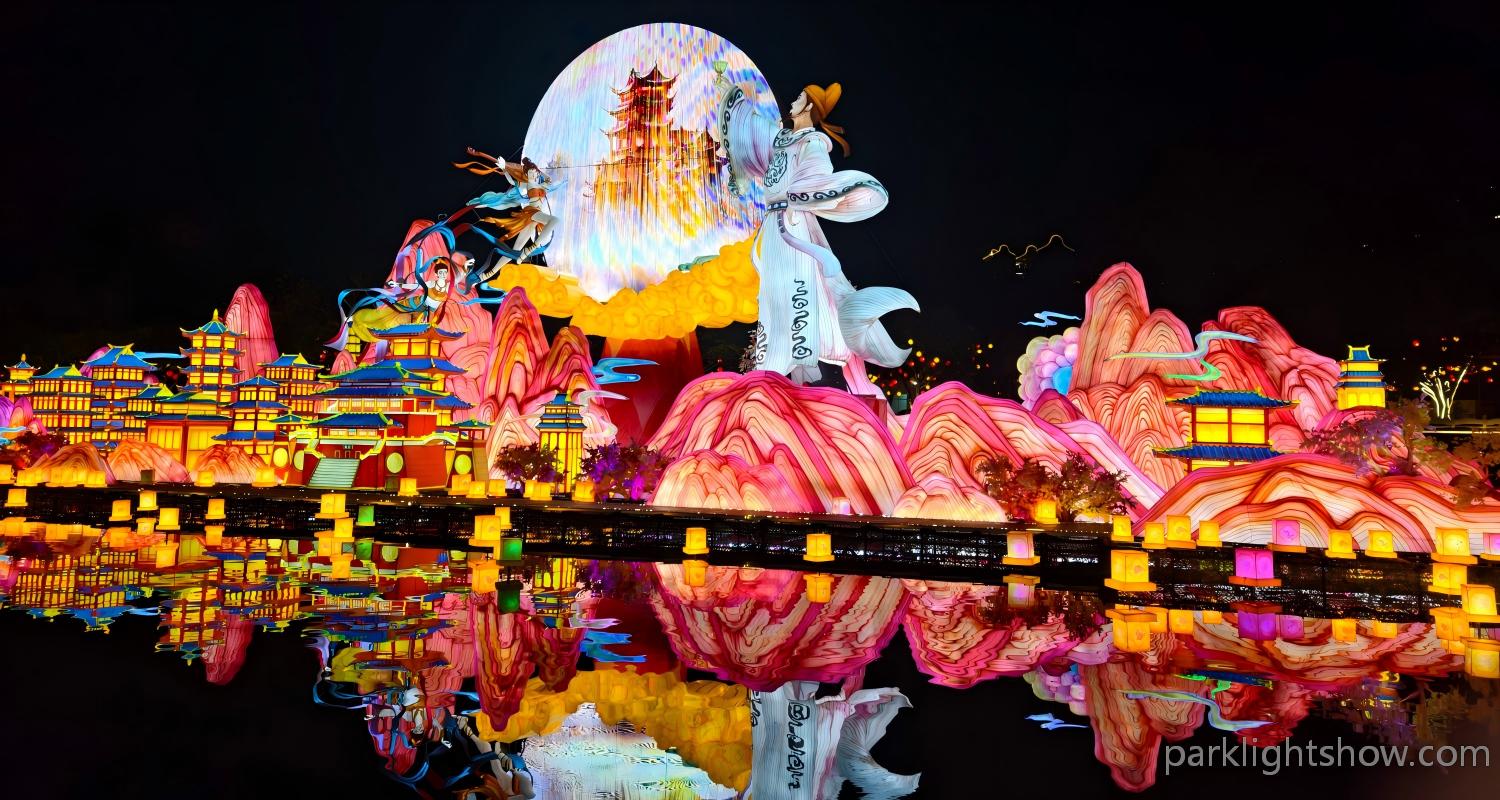
When Budget Is Limited, the Priority Should Be Hierarchy, Not Coverage
One of the most common problems in lower-budget light shows is not that there are too few installations, but that every area tries to include a little bit of everything. The result is often a venue with lights throughout, but no clear focal point. The entrance lacks impact, the main viewing area feels underdeveloped, and the paths between attractions feel disconnected.
A visually mature park light show is rarely created by dividing the budget evenly across the entire site. A stronger approach is to establish the most important visual scenes first, then use supporting elements to complete the atmosphere around them. In other words, when resources are limited, the real challenge is not quantity but structure.
If the main visual scenes are strong enough, even a modest number of feature installations can make the event feel intentional and memorable. If the supporting atmosphere is handled well, the site can still feel immersive without relying on a large number of expensive centerpiece structures. This approach is often far more effective than simply trying to fill space.
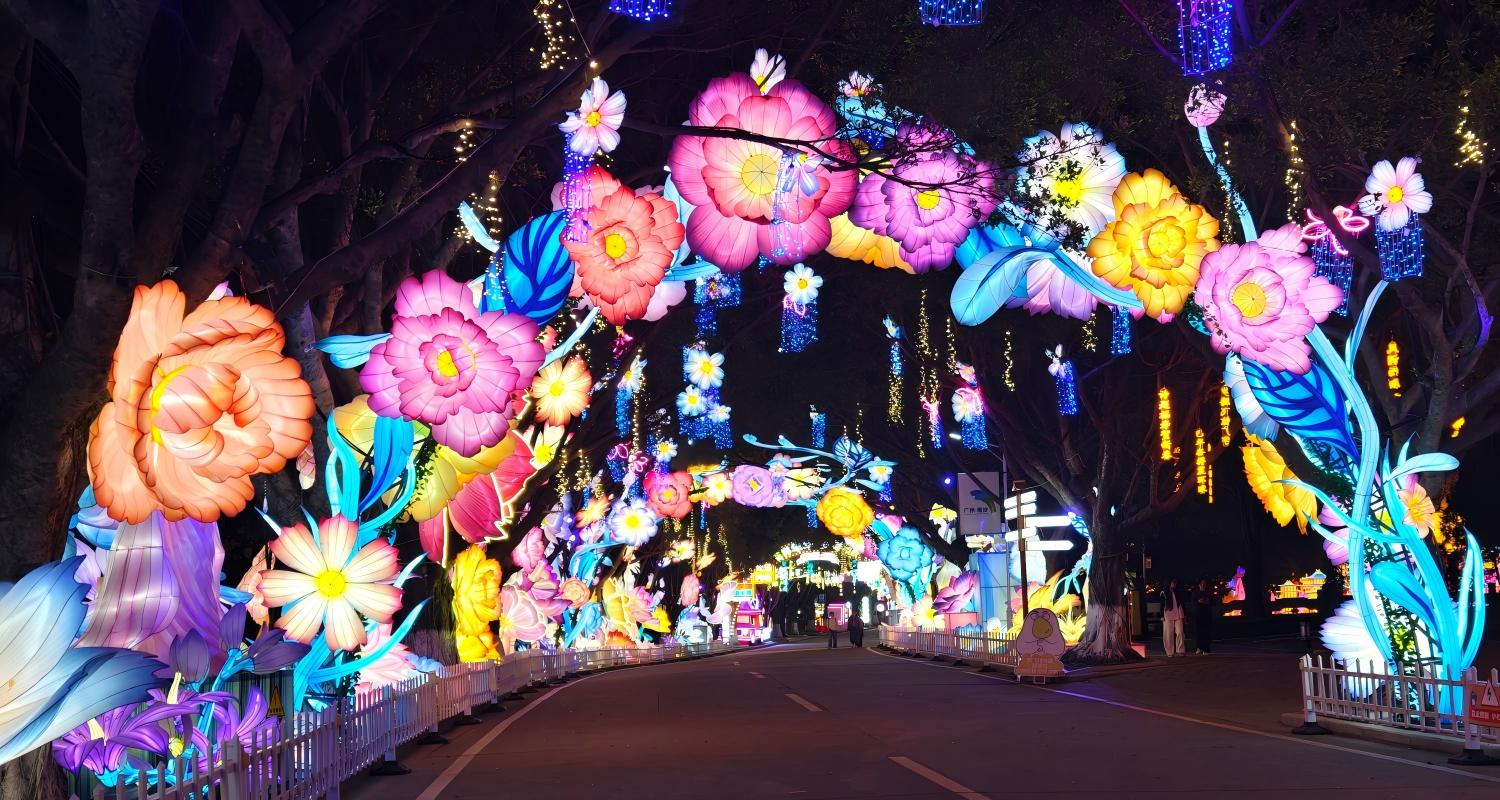
Lanterns, Inflatable Decor, and Landscape Lighting Serve Different Roles
For a budget-conscious park light show, the most practical strategy is usually not to rely on only one type of display element. Instead, each category should take on a different function. Once those roles are clearly defined, the overall site becomes easier to organize and far more coherent in the eyes of visitors.
Lanterns Are Best Suited for Theme Expression and Signature Visuals
Among all types of illuminated attractions, lanterns are often the most recognizable. Their strength lies not only in brightness, but also in their ability to communicate a theme through form, color, craftsmanship, and storytelling. Whether the concept is cultural, seasonal, nature-inspired, festive, or character-based, lanterns are usually the elements most capable of becoming the visual identity of the event.
When the budget is limited, lanterns do not need to appear everywhere. What matters more is having a small number of strong lantern pieces placed in key positions such as the entrance, central square, main photo area, or important turning points along the visitor route. These are the installations most likely to create recognition, photography value, and a clear sense of theme.
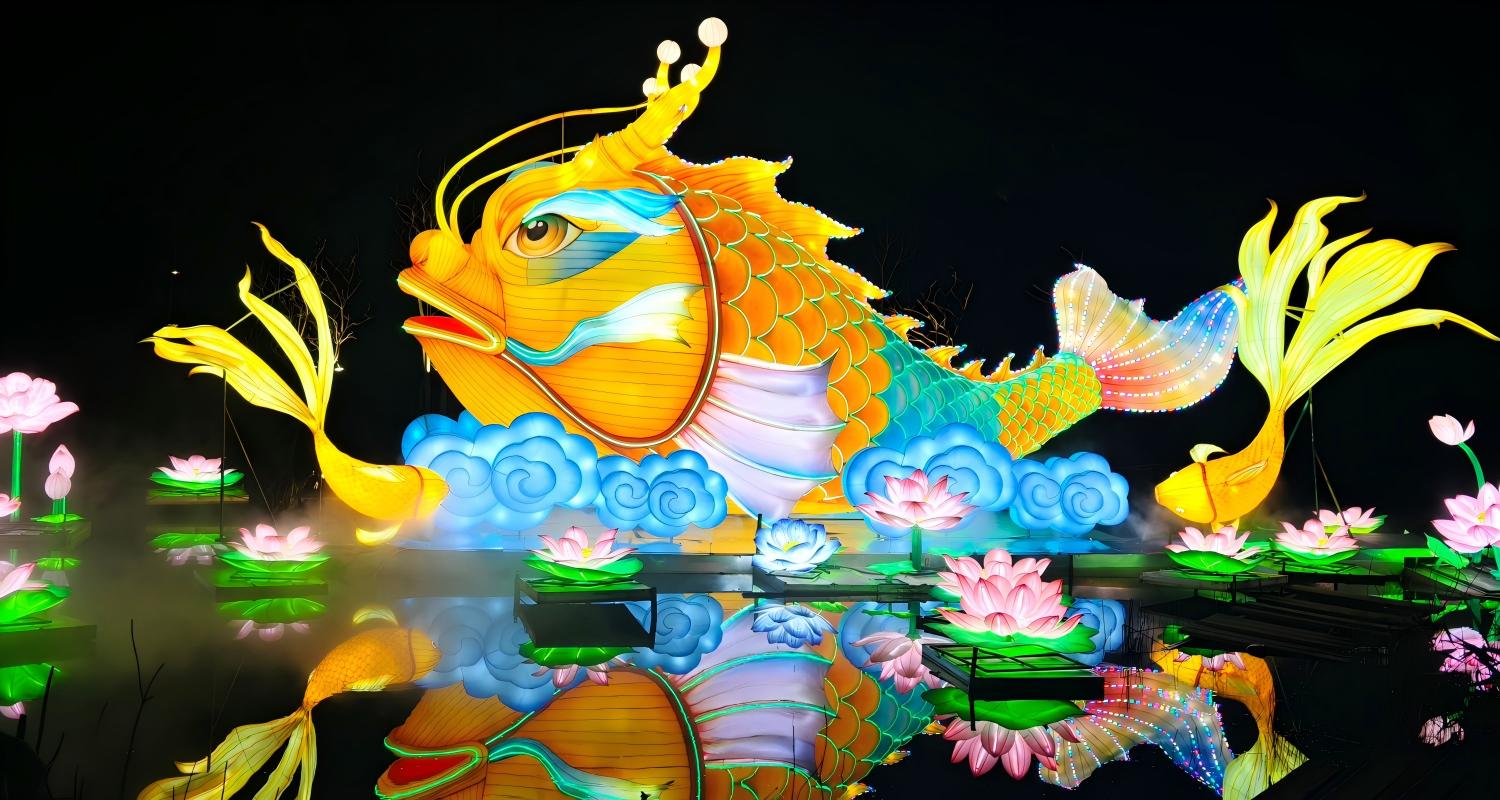
Inflatable Decor Works Well as Volume Support and Atmosphere Amplification
Inflatable decor is often underestimated in nighttime display planning. It is sometimes viewed merely as a low-cost substitute, but in a well-composed light show, its role is better understood as a lightweight supporting layer rather than a replacement for handcrafted lanterns.
Compared with highly customized large lantern structures, inflatable elements often offer advantages in transportation, installation efficiency, and flexible deployment. They are especially useful in areas that need to feel lively or visually full, but do not justify the cost or complexity of major handcrafted pieces. Examples include welcoming areas near the entrance, open lawns, festive character zones, or playful sections designed for families and children.
From a visitor’s perspective, inflatable decor is not meant to become the most refined focal point. Its value lies in helping the space feel active, cheerful, and approachable. It can prevent large areas from feeling empty and can introduce a lighter emotional tone between more detailed or artistic installations. For limited-budget projects, this function is highly practical.
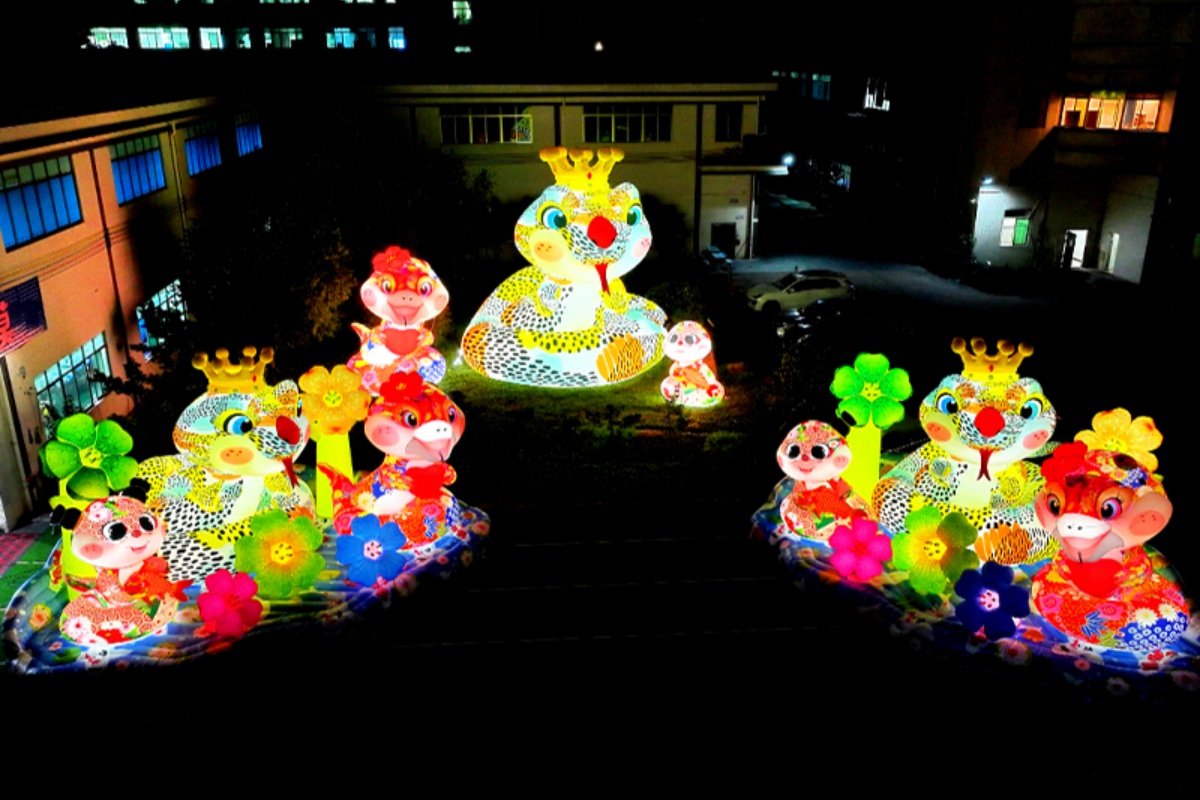
Landscape Lighting and Basic Illumination Help Tie the Entire Space Together
If lanterns define what visitors look at, and inflatable decor helps the site feel more energetic, then landscape lighting is what makes the entire experience feel continuous. Tree wrap lights, contour lights, pathway lighting, grass lighting, small molded decorative lights, bridge outline lighting, and other foundational illumination elements may not seem dramatic on their own, but they are essential to the structure of the overall show.
These elements connect entrances, scenic nodes, pathways, edges, and transitional spaces. Without them, even a site with several strong feature pieces can feel fragmented. A beautiful centerpiece loses impact if the route leading to it is dark or visually empty. A lively entrance can also feel disconnected if the rest of the route fails to sustain the mood.
In this sense, landscape lighting is not only about brightness. It is about spatial continuity. It turns isolated attractions into a complete nighttime environment that visitors can move through comfortably and naturally.
A More Practical Low-Budget Strategy Is to Build in Layers
When lanterns, inflatable decor, and landscape lighting are viewed together, it becomes clear that they should not compete with one another or function as replacements. Instead, they work best when organized into a layered system.
A practical approach is to use a small number of key lantern pieces to establish the theme and major photo points, add moderate inflatable decor to support volume and festive energy, and then rely on landscape lighting and base illumination to connect the paths and complete the atmosphere of the venue.
This layered method avoids putting the entire budget into a few complex centerpiece structures, while also avoiding the flat and generic look that can come from relying only on standard decorative lighting. Visitors can still encounter meaningful focal points, enjoy a full nighttime atmosphere while walking, and experience a sense of visual rhythm across the site.
For a more process-oriented perspective, you can also read our park lantern show planning checklist, which explains how circulation, storytelling, safety, and visitor flow work together in a real project.
From a viewing perspective, this kind of composition works well because it creates impact from afar, detail up close, and continuity while moving from one zone to another. For projects with limited budgets but real expectations for quality, this is often more effective than simply increasing the total number of installations.
Which Areas Deserve Priority Investment
Not every part of a park deserves the same level of attention. In most park light show layouts, several zones have far greater influence on the visitor experience than others.
The first is the entrance. This is where first impressions are formed and where many visitors take their first photos. If the entrance feels flat, the overall expectation for the show drops immediately. A limited-budget entrance does not need to be oversized, but it should include a clear visual statement, supported by enough surrounding atmosphere to feel intentional.
The second is the main gathering or photo zone. This is the most suitable location for the strongest lantern installation or central feature composition. It should feel visually focused rather than overcrowded and should be easy to photograph from multiple angles.
The third is the connecting route between scenic points. These transitional spaces do not always need major installations, but they should not be left visually empty. Tree lighting, small molded lights, gentle outline lighting, and occasional inflatable accents can help maintain the visitor’s mood while guiding them toward the next focal point.
For readers who want a deeper understanding of why two visually similar projects can end up with very different price levels, our article on the real cost drivers of a large-scale park light show offers a useful companion perspective.
In terms of overall flow, the entrance creates anticipation, the central node creates memory, and the route between them maintains rhythm. When these three layers are handled properly, even a relatively modest project can feel complete and well organized.
A Limited Budget Should Not Mean Low Standards
Budget limitations are understandable, but they should not become an excuse for a rough or unbalanced presentation. What shapes the visitor’s impression is not always the cost of a single installation, but whether the entire site feels coordinated, comfortable in brightness, visually readable, and emotionally consistent.
Lanterns and landscape lighting both have strong aesthetic and atmospheric qualities. If a project focuses only on affordability while ignoring theme, scale, color relationships, and spatial rhythm, the final effect can easily appear cluttered or underdeveloped, even if some individual elements are attractive on their own.
This is why lower-budget projects often require more discipline, not less. Not every area needs to feel equally active. Not every material or display type needs to appear in the same zone. A stronger result comes from knowing where to be refined, where to simplify, where lanterns should dominate visually, where inflatable decor should create a relaxed mood, and where landscape lighting should quietly support the experience without drawing too much attention.
And once a project moves beyond concept into fabrication, transport, on-site assembly, and testing, the final result depends heavily on execution details. Our guide to park lantern show delivery control points explores this stage in more depth.
For Visitors, the Most Attractive Shows Often Feel Comfortable Rather Than Expensive
For people who genuinely enjoy lanterns, decorative lighting, and immersive evening displays, the most memorable sites often share one important quality: they feel comfortable to look at, easy to walk through, and rewarding to photograph. Visitors may remember a major lantern centerpiece, a pathway wrapped in soft lighting, or a playful inflatable figure that made a section of the park feel more lively.
That kind of experience does not depend entirely on a large budget. It depends more on whether the different elements have been given the right relationships. Lanterns provide visual storytelling. Inflatable decor adds energy and warmth. Landscape lighting stabilizes and connects the space. When they work together instead of competing, even a moderate-scale park light show can feel rich, layered, and satisfying.
If you are also interested in the practical side of bringing these ideas into a public venue, our installation guide for parks and scenic areas may be a helpful next read.
Conclusion
From the perspective of nighttime display design, a limited budget does not automatically result in a reduced or uninteresting experience. When the configuration is clear, lanterns, inflatable decor, and landscape lighting can each contribute in a meaningful way: lanterns create signature visual moments, inflatable decor expands the sense of celebration and spatial fullness, and landscape lighting provides continuity and atmosphere throughout the route.
In the end, what makes a light show worth seeing is rarely the price of a single installation. More often, it is the clarity of the overall structure, the strength of the focal points, and the way the atmosphere changes naturally as visitors move through the site.
For park light shows with limited budgets, this practical layered approach is often closer to the essence of nighttime viewing than simply pursuing bigger scale, greater density, or more visual noise.
FAQ
1. Can a park light show still look impressive with a limited budget?
Yes. A limited budget does not automatically reduce the viewing experience. What matters more is whether the project has clear focal points, strong visual hierarchy, and enough supporting atmosphere to keep the route feeling complete.
2. What is the best role for lanterns in a lower-budget light show?
Lanterns are best used as signature visual elements. Instead of spreading them evenly across the venue, it is usually more effective to place a small number of strong lantern pieces at the entrance, main photo area, or key route transitions.
3. Are inflatable decorations suitable for a professional park light show?
Yes, when used correctly. Inflatable decor works best as a supporting layer that adds volume, festive energy, and liveliness to spaces that do not require major handcrafted structures. It should complement lanterns rather than replace them.
4. Why is landscape lighting important if there are already lantern installations?
Because landscape lighting connects the entire experience. Lanterns may create memorable scenes, but pathway lights, tree wrap lights, contour lights, and other base illumination help maintain visual continuity between those scenes.
5. Which area should receive priority if the budget is tight?
In most cases, the entrance, the main gathering or photo zone, and the connecting route between scenic points deserve the most attention. These areas have the strongest influence on first impressions, memory, and visitor flow.
6. What is the biggest mistake in low-budget light show design?
One of the biggest mistakes is trying to give every area the same amount of attention. This often creates a flat result with no real focal point. A stronger approach is to build a clear visual hierarchy and use different types of lighting elements according to their strengths.
Post time: Mar-30-2026


