

For many zoos, the real operational pressure does not come only from peak-season competition. It often comes from underused evening hours during the off-season.
Daytime operation is the standard model for most zoos. But once the calendar moves into the off-season, weekdays, non-holiday periods, or less favorable weather conditions, many venues face the same challenge: the site is still there, the infrastructure is still there, and the brand is still there, but the evening hours are not being converted into new traffic, new excitement, or new revenue opportunities.
This is one reason why more zoos are paying attention to nighttime programming. Compared with simply extending opening hours, a lantern festival offers something more compelling. It does not just make daytime visiting last longer. Instead, it repositions the zoo at night as a visually engaging, family-friendly seasonal experience.
In real projects, a zoo lantern festival does not always need to be treated as a completely separate ticketed attraction. In some large zoo projects, the lantern event works better as a traffic-driving, value-added activity, meaning the experience is included in the regular admission ticket rather than sold separately as a stand-alone night ticket.
This model has clear advantages. It does not depend entirely on separate ticket sales to make sense. Instead, it increases the attractiveness of the overall visit, extends guest dwell time, strengthens the festive atmosphere, and gives families a stronger reason to choose the zoo during slower periods.
For zoos that already have brand recognition and a stable visitor base, this “lantern festival as added value” model often feels more natural than immediately trying to launch a completely independent ticketed night event.
That is why the value of a lantern festival for a zoo is not simply about adding decorative lights. It is about turning quieter evening hours into a stronger family-oriented attraction during lower-demand periods.
Why Zoos Often Struggle with Off-Season Evening Traffic
Zoo attendance usually has a very clear time pattern.
Peak season, weekends, holidays, and comfortable daytime weather are usually when visitor flow is strongest. But during the off-season, in the late afternoon, or on weekday evenings, even well-located zoos often face the same issues:
- no clear evening product,
- no strong reason for visitors to return after dark,
- daytime routes that lose their appeal at night,
- operating value concentrated in daytime only,
- and existing site capacity that has not been turned into a nighttime experience.
From an operating perspective, this does not mean the zoo has no appeal. It usually means the existing resources have not yet been reorganized into a product that works for nighttime attention, sharing, and spending.
A lantern festival can fill that gap. It gives zoos more than just lighting at night. It creates a clearer reason for families and local visitors to choose an evening visit.
Why Lantern Festivals Fit the Zoo Environment So Well
1. Zoos Already Have Established Visitor Routes
Many zoos already have mature circulation systems, entry organization, and visitor guidance. That means a lantern festival does not need to start from zero when planning audience movement. Instead, it can build on existing pathways and reorganize them into a nighttime experience.
This is especially helpful for first-phase projects because a clear route usually means easier sequencing of displays, easier placement of entry features and key visual nodes, better crowd control, and a more complete overall evening journey.
2. Zoos Naturally Attract Family Audiences
Families are one of the core audiences for lantern festivals, and zoos already serve family and child-centered visitors as part of their normal business. This means the market does not need to be educated from the beginning. The lantern festival simply adds a new reason to visit an already familiar venue.
For parents, a nighttime lantern event is easier to understand than a vague evening extension. It feels festive, visually engaging, photo-friendly, and suitable for family outings.
3. Animal Themes Combine Naturally with Lantern Content
Compared with a general public park, a zoo has stronger built-in storytelling potential. Animal imagery is easy to recognize, emotionally accessible, and naturally suited to themed experiences.
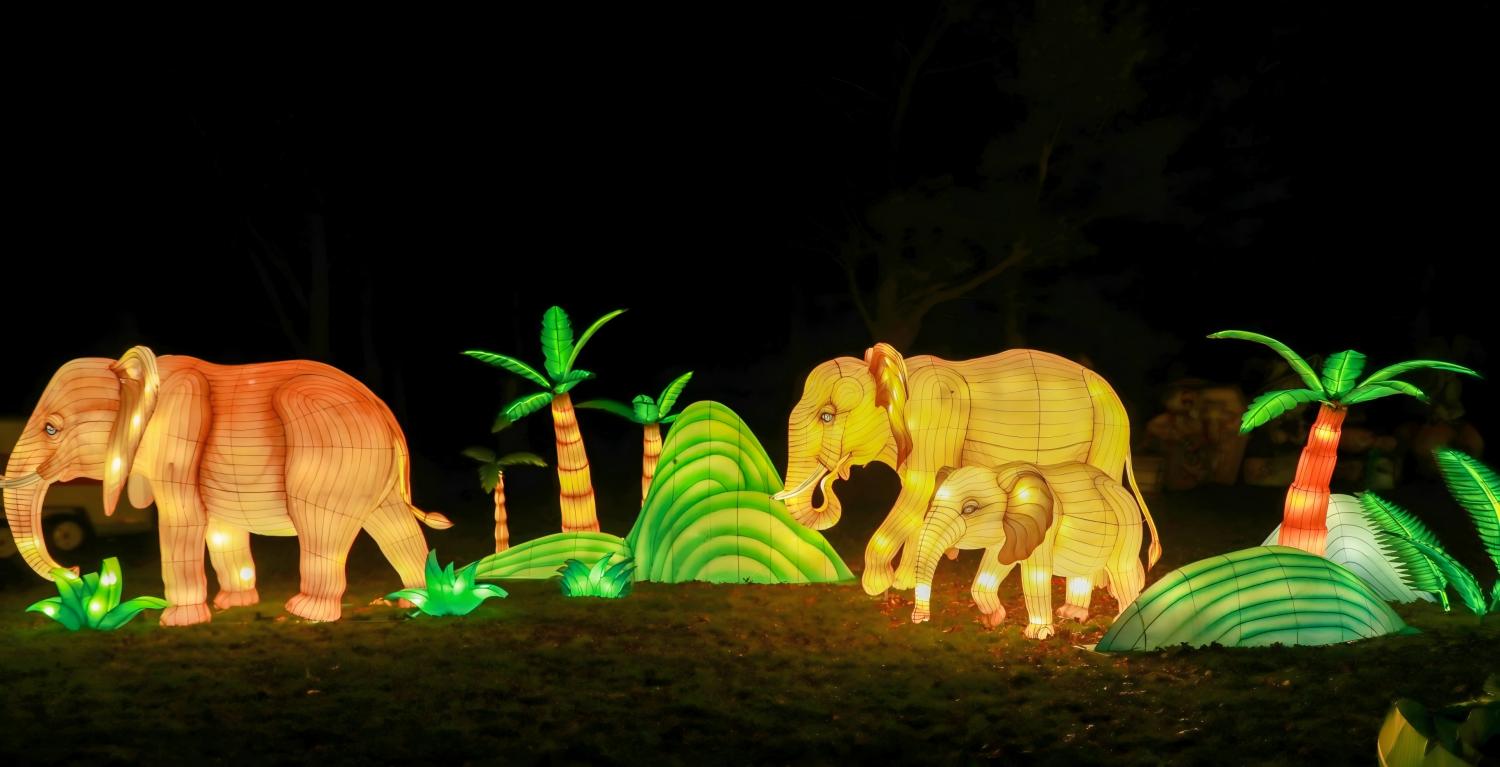
That makes it easier to create animal-themed lantern displays, forest, ocean, or jungle-inspired scenes, family-friendly interactive nodes, and memorable photo opportunities.
In that sense, a zoo lantern festival is not just about placing lanterns inside a venue. It is about creating content that aligns naturally with the site’s identity.
4. Zoos Often Work Best with Dreamlike, Family-Friendly Themes
From a content perspective, zoo lantern festivals are often better suited to dreamlike, family-oriented, and nature-inspired themes than to more abstract or formal artistic concepts.
The reason is simple. The main audience for zoo events is usually families and children. What they respond to most is often visual charm, strong photo appeal, story-like atmosphere, a sense of wonder, and content that is easy for children to enjoy.
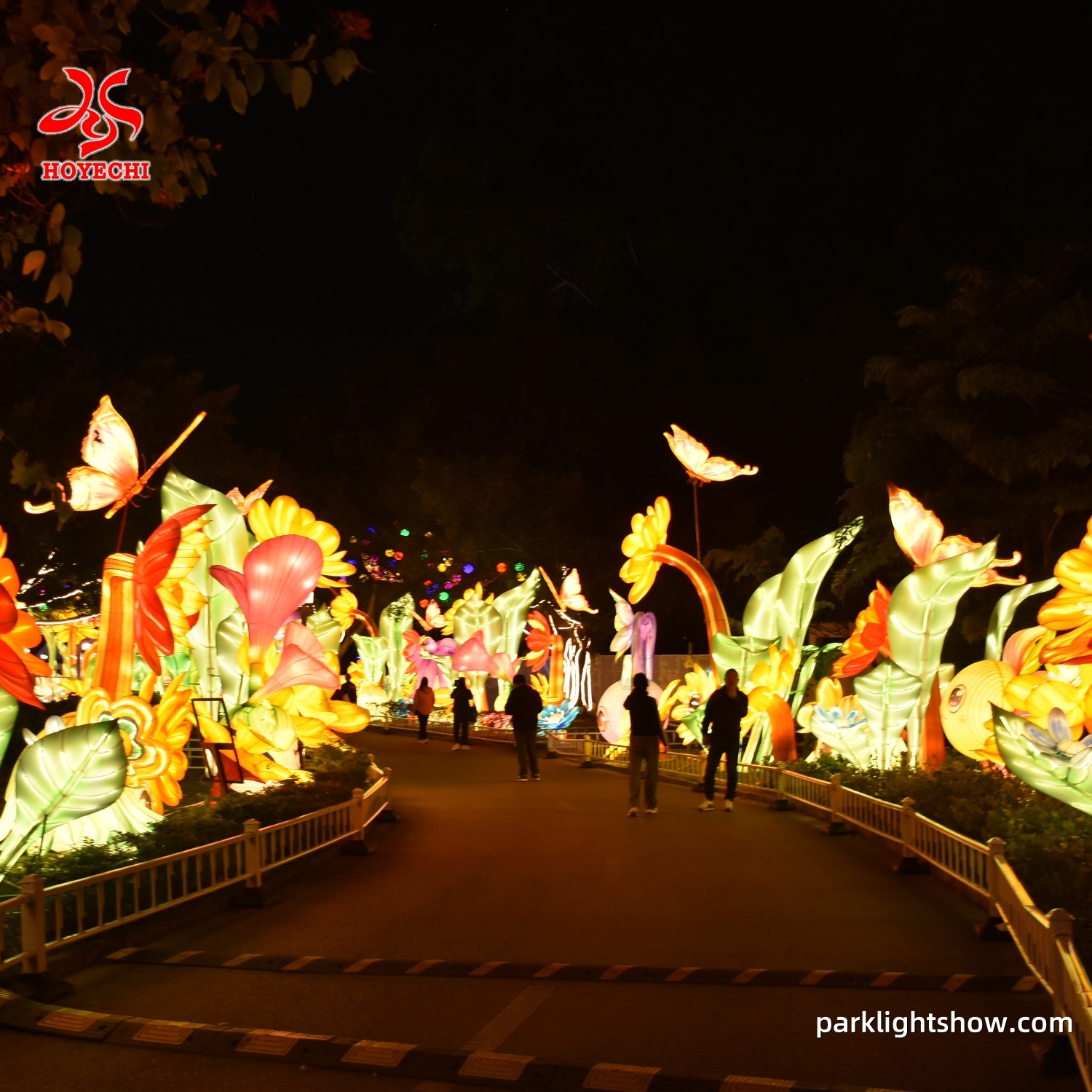
That is why zoo lantern festivals often work especially well with themes such as enchanted forests, animal lantern displays, floral and nature-based decorations, fairy-tale-inspired visitor routes, and immersive, family-friendly atmosphere nodes.
5. Zoos Have Strong Potential for “Day + Night” Use
Many zoos already have stable daytime traffic. One of the biggest advantages of a lantern festival is that it allows the same venue to generate a new time-based product.
This can help a zoo extend operating hours, strengthen evening attraction, increase food and retail opportunities, create new social media content, and activate slower periods with a fresh experience.
For zoos trying to improve overall operating efficiency, this kind of nighttime reuse can be very practical.
A Lantern Festival Is Not Just Decoration. It Is a Nighttime Product.
If a zoo simply adds a few illuminated structures, the result may only feel like seasonal decoration. But if the project is planned around visitor routes, stop-and-stay rhythm, photo opportunities, shareability, event pull, and on-site support, then it becomes something much more valuable: a full nighttime attraction.
As a true evening product, a lantern festival should pay attention to whether the entry experience feels special, whether the main visitor route is complete, whether the rhythm between nodes feels balanced, whether there are enough places for families to stop and take photos, whether the festive atmosphere is strong enough, and whether the event can be supported by security, visitor flow, and service systems.
In other words, the real value for a zoo is not simply more illuminated objects at night. It is a nighttime activity that can be organized, promoted, and experienced as a meaningful attraction in its own right.
How a Zoo Lantern Festival Differs from a General Park Lantern Show
1. Zoos Need Stronger Family Experience and Theme Consistency
A public park lantern festival can be more flexible in using city-themed, cultural, or mixed visual concepts. A zoo lantern festival usually works better when built around animals, nature, ecology, fairy-tale atmosphere, or forest adventure themes.
This is not a limitation. It is an advantage. A more unified theme is easier for visitors to understand and easier to remember.
2. Zoos Must Think More Carefully About Evening Opening Scope
One of the first concerns many zoo operators have is this: Will a lantern festival affect animal rest at night?
In practice, that does not automatically have to be a problem. The key question is not whether the zoo can host a nighttime event. The key question is which areas are appropriate to open at night.
In many zoos, animal rest areas, display areas, and visitor viewing areas are not completely overlapping. If the project route avoids areas that should not be active at night and instead focuses on main circulation paths, public-facing display zones, and suitable open areas, then it is possible to organize a coherent evening lantern route without significantly disturbing animal rest.
That means a zoo does not need to open the entire site for a lantern festival. A more realistic approach is often to concentrate the project in the parts of the zoo that are most appropriate for nighttime use.
3. Zoos Often Work Better with a Core-Zone First Phase
From a risk-control perspective, many zoos do not need to launch a large-scale full-site festival in the first season.
A more realistic first step is often to use the main evening circulation path, select the routes that are most suitable for nighttime access, avoid sensitive animal rest areas, focus on the entry area, the main path, and several strong visual and photo nodes, and create an overall dreamlike nighttime atmosphere with animal motifs, floral elements, and immersive lighting.
This approach does not require the zoo to completely redefine its evening operations. Instead, it uses the existing site plan and adds value to underused hours.
It also means that security and circulation do not always need to be completely redesigned. If the open area is chosen carefully, many of the existing route and crowd-management systems can still be used with limited adjustment.
That makes a main-path and core-zone strategy much easier to implement than trying to cover the entire zoo at once. It is especially suitable for off-season testing, holiday activations, and first-phase validation.
How Lantern Festivals Can Help Zoos Increase Off-Season Evening Attendance
1. Giving Visitors a Reason to Return at Night
Seeing animals during the day and visiting a lantern festival at night are two different motivations. The value of the lantern festival is that it gives local families and repeat visitors a reason to come back during evening hours.
2. Creating Short-Term Attention Through Seasonal Atmosphere
The problem during the off-season is often not “no audience at all.” It is a lack of a strong enough trigger for a visit. Lantern festivals naturally offer festive atmosphere, visual appeal, and photo-sharing potential, which makes them easier to notice and easier to promote in a short period.
3. Increasing Dwell Time and Secondary Spending Opportunities
Once the route is well planned, visitors are less likely to leave quickly. A lantern festival can often lead to longer dwell time, more photo and interaction activity, stronger food and beverage opportunities, and higher souvenir or retail potential.
4. Creating New Promotional Content for the Zoo
A lantern festival is not only valuable on-site. It also creates new content for the zoo’s marketing and social platforms. Night scenes are often more visually dramatic than standard daytime scenes, which makes them especially useful for short video, event promotion, and image-based sharing.
During the off-season, this additional visibility can be a meaningful advantage.
5. Acting as a Value-Added Activity Within the Existing Ticket
For some zoos, the value of a lantern festival does not have to come from selling a separate night ticket. It can also work as a value-added attraction within the existing admission model.
This is especially suitable for zoos that already have baseline attendance, venues that want to strengthen family appeal during holiday periods, parks that need a better off-season visit reason, and operators who want guests to feel that a visit offers more overall value.
Under this model, the lantern festival is not only about direct night ticket income. It also helps increase overall attraction, strengthen family visit motivation, extend dwell time, improve seasonal visibility, and raise the perceived value of the standard ticket itself.
For larger zoos, this can be especially meaningful because it turns the evening event into part of an overall experience upgrade, not just an extra paid option.
How Zoos Can Start with a Lower-Risk First Version
Not every zoo should begin with a large nighttime project.
For many first-time venues, a lower-risk version is the more practical approach. This usually means not trying to cover the entire zoo, choosing the areas that are best suited to nighttime visiting, keeping the route length manageable, focusing on the entry, a signature piece, several photo points, and a few rhythm-setting nodes, controlling the number of oversized feature pieces, and emphasizing experience density over sheer quantity.
The advantages of this approach are clear:
- the initial budget is easier to control,
- operations pressure is lower,
- local market response is easier to test,
- and the first season can provide useful data for a stronger second phase.
For off-season projects in particular, this is often a more stable strategy than starting with a heavy rollout.
If you are still evaluating whether a venue needs to be large for a lantern project, you may also find our article on whether a park needs to be large for a lantern show helpful. It explains why visitor demand, budget fit, and operational conditions often matter more than total area.
What a Zoo Should Prepare Before Planning a Lantern Festival
If a zoo wants to evaluate a lantern festival project, the clearer the early information is, the more efficiently a workable plan can be discussed.
Useful starting materials usually include:
- site location and nearby population profile,
- total zoo area and the part that could realistically be used at night,
- a site plan or route map,
- current site photos, ideally including nighttime conditions,
- entry areas, main circulation routes, and open visitor zones,
- which areas are suitable for night opening and which are not,
- whether there are lakes, bridges, trees, buildings, or other features that can work with lighting,
- the target event season and operating duration,
- the expected audience type,
- whether the goal is traffic activation or an independent ticketed product,
- power supply and construction conditions,
- and an approximate budget range.
If the zoo cannot yet define exactly how many lantern groups should be installed or what final style is most appropriate, that is not a problem. For zoo projects, surrounding population, family audience profile, and off-season demand are often enough to help reverse-plan a more suitable scale and strategy.
For broader budgeting questions, our article on how much a lantern festival costs explains how site conditions, power supply, timing, and service scope affect project budgets. For early planning structure, you can also read how to plan a successful park lantern show.
Conclusion: For Zoos, a Lantern Festival Is Not Just Decoration. It Is a Practical Off-Season Nighttime Tool.
For a zoo, the value of a lantern festival is not simply that the site looks better at night.
Its deeper value is that it can transform quieter evening hours during slower periods into a family-friendly attraction that generates attention, extends dwell time, increases perceived ticket value, and creates new operational opportunities.
That is exactly why lantern festivals fit zoos so well. Zoos already have routes, themes, family audiences, and a natural ability to host seasonal activities. With the right planning, they can extend a daytime venue into a nighttime experience and turn lower-demand hours into something more valuable.
So the real question for a zoo is not: “Is a lantern festival suitable for us?”
The better question is: “What scale, route, and experience rhythm would make a lantern festival work best for our market and our off-season needs?”
FAQ
Can a zoo really benefit from a lantern festival during the off-season?
Yes. A lantern festival can give families and local visitors a new reason to come during quieter periods, especially when daytime traffic is lower and evening hours are underused.
Does a zoo lantern festival have to be a separate ticketed event?
No. In some cases, it works better as a value-added attraction included in the existing ticket, helping raise the overall appeal of the visit rather than functioning as a separate paid night event.
Will a lantern festival disturb animal rest at night?
Not necessarily. The key is to choose appropriate evening-opening zones and avoid sensitive rest areas. In many zoos, animal rest areas, display areas, and visitor zones are already separated enough to allow selective nighttime activation.
Does a zoo need to open the entire site for a lantern festival?
No. Many zoos are better served by starting with the main circulation path and a core activity zone, rather than trying to activate the entire site in the first season.
What kind of lantern festival theme works best for zoos?
Dreamlike, family-friendly, and nature-based themes often work especially well. Animal motifs, floral elements, forest-inspired scenes, and fairy-tale atmospheres usually fit zoo audiences better than abstract concepts.
What should a zoo prepare before requesting a lantern festival proposal?
Helpful materials include a site plan, route map, photos, information on which zones can open at night, nearby population profile, audience type, operating goal, power conditions, and an approximate budget range.
Post time: Apr-03-2026


