

A winter lantern festival can look magical on opening night, but visual appeal alone does not guarantee a strong season. In cold-weather destinations, a lantern festival is also an operations project, a visitor-comfort project, and a revenue-planning project. Good design may attract attention at first, but practical planning is what turns a seasonal event into something people want to visit, share, and remember.
This is why winter lantern festival planning should not follow the exact same logic as a general outdoor light event. Low temperatures, shorter daylight hours, weather uncertainty, visitor comfort, safety, food and beverage demand, and dwell-time behavior all influence the final result. A beautiful site can still underperform if the route feels too long, the rest areas are too weak, or the business model depends too heavily on ticket income alone.
This guide looks at winter lantern festivals from a practical point of view: how to shape the visitor experience, how to make a site work in cold weather, and how to build a project that is visually strong but also realistic to operate.
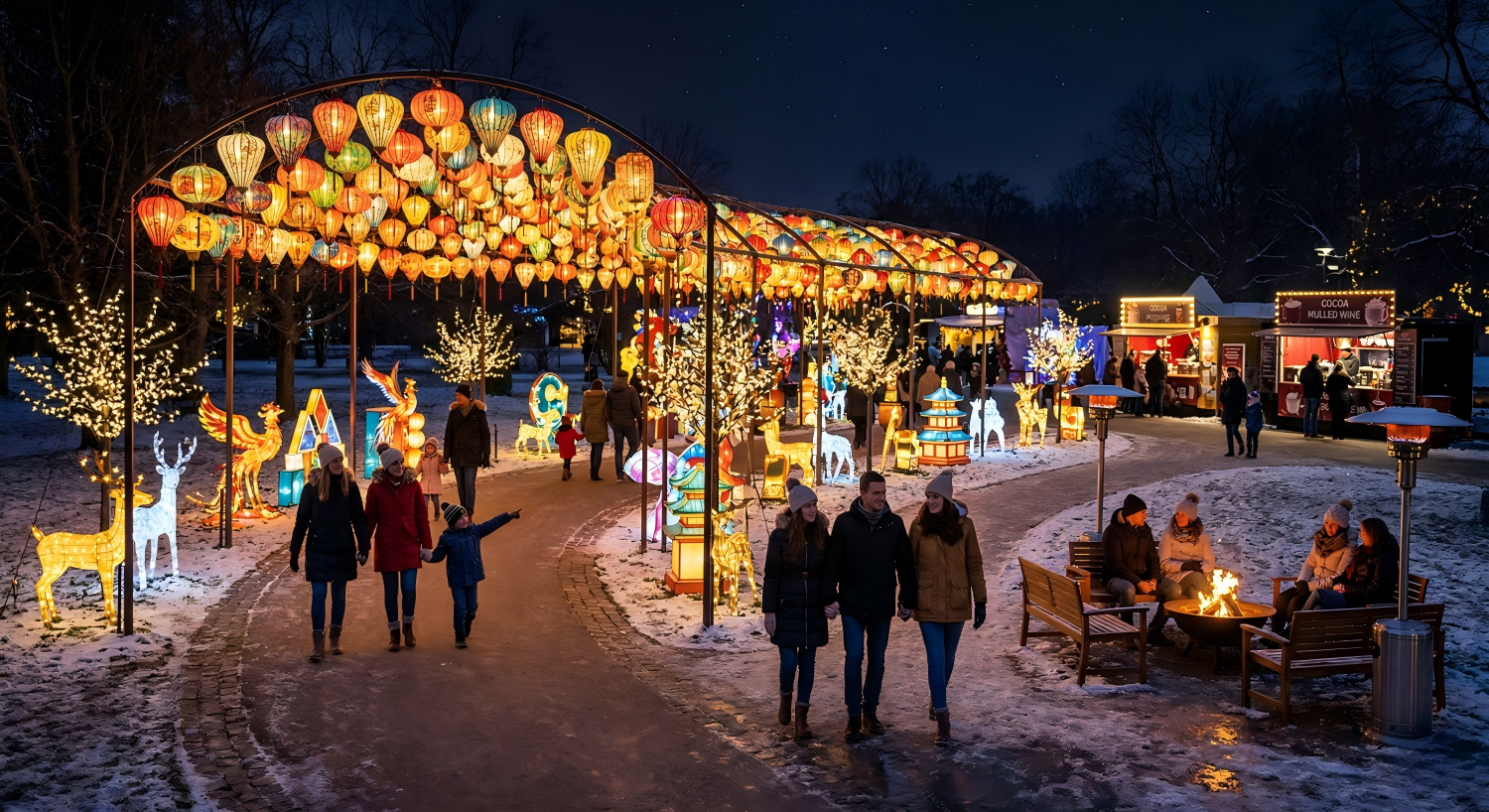
Winter Lantern Festivals Require a Different Planning Mindset
Many organizers treat a winter lantern festival as a standard light show placed into a colder season. In reality, winter changes the way people move, pause, spend, and respond to the environment.
In cold weather, visitors become more selective. They are more sensitive to walking distance, queue time, open wind exposure, and the availability of warm, comfortable places to stop. Families with children, older visitors, and casual tourists usually make decisions more quickly when they feel tired or cold. A route that feels enjoyable in spring or autumn may feel too demanding in winter.
That is why winter planning should begin with a simple question: how can the event remain enjoyable when the weather is less forgiving? The answer affects layout, scene density, rest areas, operations, staffing, and commercial planning from the beginning.
Choose a Site That Works for Winter Visitor Behavior
A successful winter lantern festival does not always need the biggest venue. In many cases, a medium-sized site with concentrated attractions performs better than a very large site with long gaps between highlights.
Winter changes the meaning of distance. If signature installations are too far apart, visitors may lose energy before reaching the best scenes. If too much of the route feels transitional, guests may shorten their stay instead of exploring the full experience. This is one reason compact, well-structured layouts often outperform larger but less focused ones.
A better approach is to think in experience zones rather than isolated objects. A winter festival route often works best when it includes a strong arrival zone, a major photo zone, one or two themed feature areas, a food or warm-drink zone, and a memorable final section. This creates a feeling of progress without asking visitors to commit to a long and uneven walk.
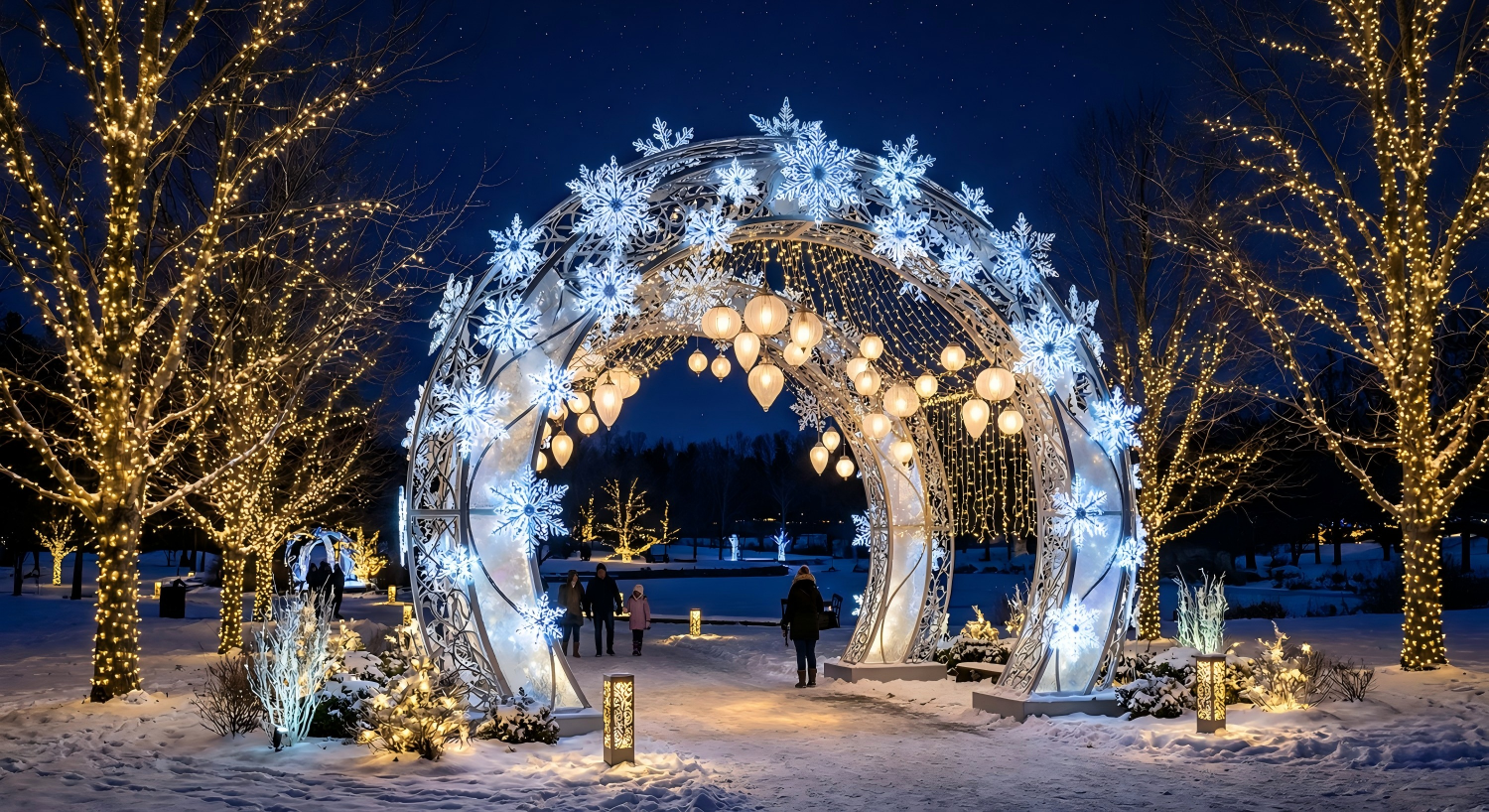
Design for Atmosphere, Rhythm, and Emotional Memory
Large lantern installations create impact, but scale alone does not make an event memorable. Winter festivals benefit from atmosphere just as much as spectacle. Visitors remember how the site felt, not only how large the structures were.
The strongest festivals usually combine three design layers. The first is landmark design, which gives the event a recognizable visual identity. The second is pathway design, which keeps the route active and visually engaging while people move from one zone to another. The third is emotional design, which creates warm, intimate, festive, or surprising moments that give the event character.
When every scene tries to be equally grand, the site can feel visually crowded or repetitive. By contrast, a route with contrast, pacing, and moments of visual breathing room usually feels more immersive. A winter lantern festival does not need constant intensity. It needs rhythm.
Plan Visitor Flow Around Comfort, Not Just Capacity
Visitor flow matters in every event, but in winter it becomes one of the most important planning factors. If the route feels confusing, too exposed, or too physically demanding, visitors will leave earlier, spend less, and enjoy less, even when the lanterns themselves are attractive.
The route should feel intuitive and rewarding. Early sections should build confidence and atmosphere quickly. Strong highlights should be distributed in a way that keeps people moving forward, but long empty transitions should be minimized. Winter visitors are less patient with uncertainty, so dead zones, awkward turns, and weak wayfinding create more damage than they would in mild weather.
Warmth-related planning should also be treated as part of experience design. Sheltered stops, warm drink points, reasonable resting opportunities, and clear directional signage often have a major effect on dwell time. These details may not appear in promotional images, but they often shape the real success of the event.
Think About Operations Before Finalizing the Layout
One of the most common planning mistakes is treating operations as something to solve after the creative design has already been approved. In winter projects, that approach can become expensive very quickly.
Maintenance access, drainage, power routing, emergency exits, queue organization, storage, cleaning, and weather response should all be considered before the layout is locked. A route that looks impressive on paper may become difficult to manage once staff need to maintain it every day in real weather conditions.
The same principle applies to weather resilience. A winter lantern festival should not be designed only for ideal evenings. It should also be realistic under wind, rain, cold snaps, uneven attendance, and changing holiday demand. A plan that works only on high-traffic weekends is not a stable operating plan.
Revenue Should Be Designed into the Experience
A winter lantern festival may attract attention and seasonal traffic, but revenue does not happen automatically. It should be built into the visitor journey in a practical way.
Ticketing is only one part of the financial picture. Depending on the venue and audience, revenue may also come from food and beverage, seasonal merchandise, photo services, premium zones, branded content, market booths, and holiday add-ons. In some projects, non-ticket spending can have a greater long-term effect than the entry price itself.
The strongest revenue model usually reflects real visitor behavior. Family audiences may respond well to warm food, keepsakes, and simple interactive experiences. Tourism destinations may benefit more from landmark scenes, local storytelling, and destination branding. Commercial districts may see stronger returns from retail and traffic spillover than from ticketing alone.
Rather than asking only how many tickets can be sold, organizers should also ask where people are likely to pause, what makes them stay longer, and what creates spending opportunities without disrupting the atmosphere.
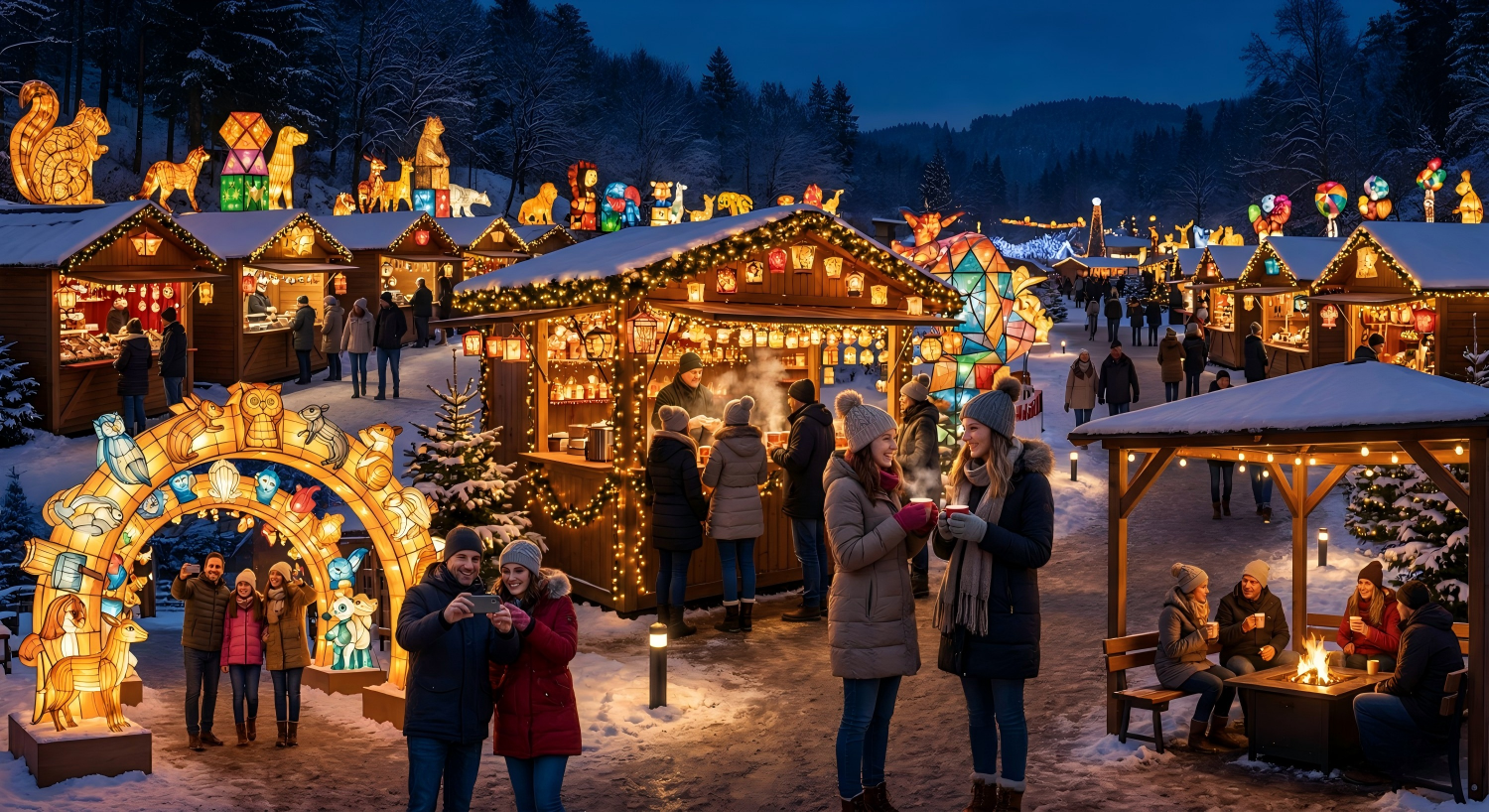
Build for Repeat Visits, Not Only for Opening Buzz
Many winter events open strongly but lose momentum too quickly. The reason is not always weak design. Often, the event is too easy to complete in one visit and gives people little reason to return.
Repeat-visit logic can improve season performance. This does not always require rebuilding the site mid-season. It can mean special themed weekends, selected content updates, holiday-based programming, food market variation, performance nights, or smaller scene changes that keep the festival feeling active.
Local audiences are especially important here. Tourists may come once, but repeat visits from nearby families and regional visitors often help determine whether the event remains strong over time.
The Biggest Risks Are Often Structural, Not Visual
When people discuss winter lantern festivals, they often focus first on design or production cost. Those factors matter, but many difficult problems come from elsewhere: complicated installation, weak routing, staffing pressure, weather-related maintenance, power distribution, temporary infrastructure, and underperforming commercial zones.
A project may seem efficient during concept planning and still become costly in execution if the site is too difficult to build, too difficult to operate, or too difficult to maintain. In many cases, a slightly simpler design with stronger routing and better operational logic performs better than a visually ambitious layout that creates daily strain.
If you are still refining your planning framework, it can help to compare your layout logic with a more structured checklist approach. You can also review this related guide on how to plan a successful park lantern show for a more step-based planning view.
Not Every Project Needs the Same Delivery Model
Some winter lantern festivals work best with direct procurement and in-house operation. Others are better suited to cooperation between venues, production teams, operators, or shared project structures. The right model depends on site conditions, event goals, local demand, operating experience, and how much responsibility the venue wants to keep internally.
This is why the early planning stage should include an honest evaluation of operating capacity, not only creative ambition. The goal is not simply to ask whether a festival can be built, but whether the chosen project model fits the venue’s actual needs.
For teams evaluating execution complexity in more detail, this related article on light festival project execution from 0 to 1 offers a more process-oriented perspective. If your main concern is site delivery, you may also find this lantern festival installation guide for parks and scenic areas useful when thinking about buildability and on-site preparation.
The Best Winter Lantern Festivals Balance Emotion and Practicality
A winter lantern festival works best when it feels magical to the visitor and manageable to the operator. If it looks beautiful but creates daily operational pressure, the season becomes difficult to sustain. If it runs efficiently but feels emotionally flat, it will struggle to attract attention and repeat visits.
The strongest projects usually find a middle point. They are visually distinctive enough to generate interest, practical enough to operate with confidence, and structured enough to support revenue in a realistic way. That balance rarely comes from spectacle alone. It comes from planning how people will move, what they will feel, where they will pause, and what will make the visit feel worthwhile.
Conclusion
A successful winter lantern festival is not simply a collection of illuminated displays. It is a carefully planned seasonal experience shaped by design, weather, route logic, visitor comfort, operations, and revenue structure.
The most effective projects do not begin by asking how many lanterns can fit into a venue. They begin by asking how people will experience the site in winter, what the venue is trying to achieve, and how the event can stay attractive, efficient, and commercially realistic over time.
When that balance is achieved, a winter lantern festival becomes more than a temporary attraction. It becomes a reason for people to gather, stay longer, and experience a familiar place in a new way.
FAQ
What makes a winter lantern festival different from a regular light show?
A winter lantern festival must respond more carefully to cold weather, visitor comfort, route length, shelter, and dwell-time behavior. In winter, layout and operations usually have a bigger effect on performance than they do in milder seasons.
How long should a winter lantern festival route be?
There is no single ideal length, but compact routes with strong scene density often perform better than long routes with weak transitions. In cold weather, visitors usually prefer a more concentrated experience.
Is ticket income enough to make a winter lantern festival profitable?
Not always. Many successful events rely on a broader revenue structure that may include food and beverage, photo services, merchandise, premium experiences, or branded seasonal activities.
Why is visitor comfort so important in winter festival planning?
Comfort affects dwell time, satisfaction, and spending. If visitors feel cold, tired, or uncertain about where to go, they are more likely to shorten their visit and spend less time on site.
Should operations be planned after the design is finished?
No. In winter events, operations should be considered early. Maintenance access, weather response, safety, power routing, and staffing flow all affect whether the design can work in real conditions.
Do all winter lantern festivals need the same project model?
No. Some venues are well suited to direct procurement and in-house operation, while others may need a more cooperative structure depending on site conditions, experience, and project goals.
Post time: Mar-24-2026


