

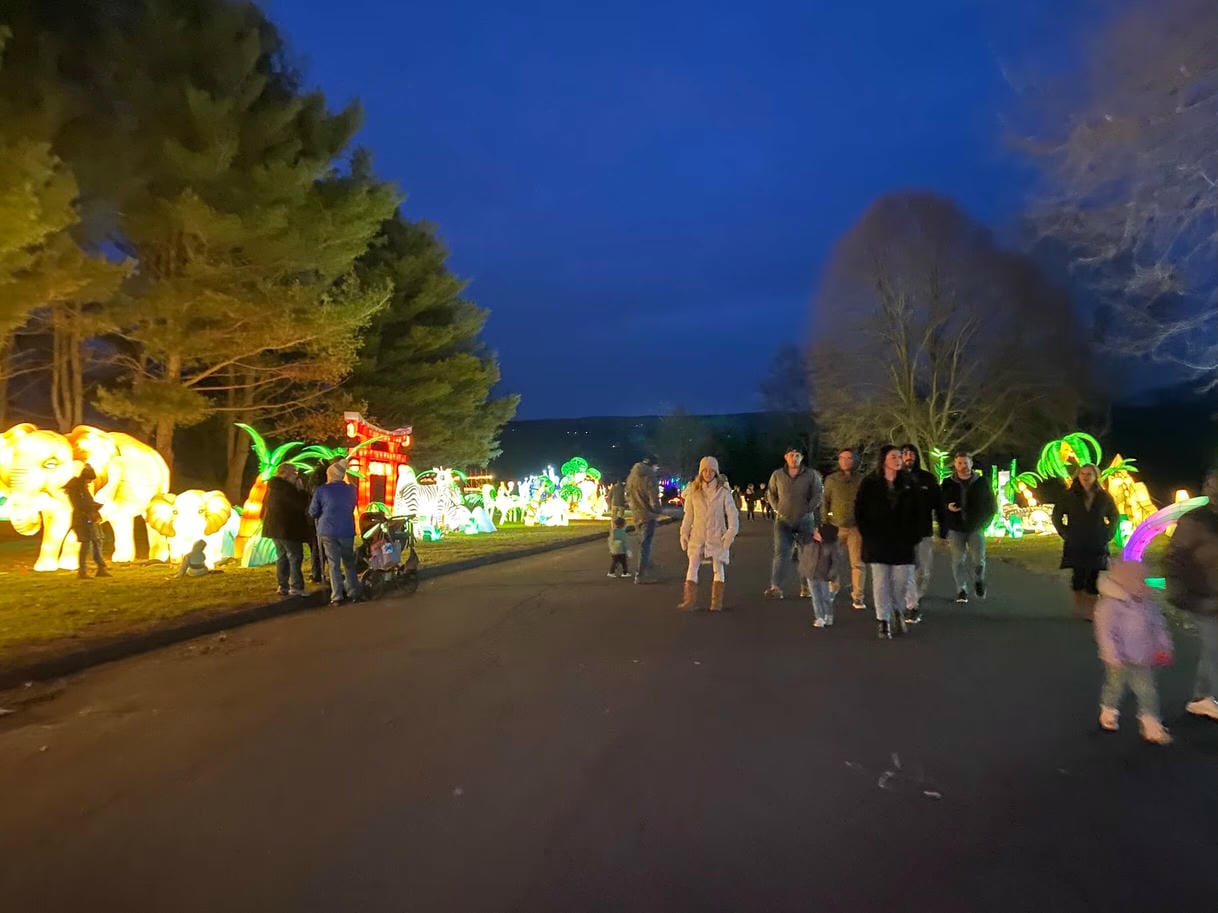
But before investing in illuminated sculptures, lantern displays, light tunnels, themed scenes, or interactive installations, one question should be answered clearly:
how will the light show make money?
Some venues earn revenue directly through tickets. Some use a light show to increase visitor traffic and boost spending on food, retail, parking, and accommodation. Others prefer a revenue-sharing partnership to reduce upfront investment pressure.
What Is a Park Light Show Busi
ness Model?
A park light show business model is the way a venue turns a nighttime lighting project into real commercial value.
It is not simply about buying decorative lights or placing illuminated sculptures around a park. A successful model considers the venue layout, visitor flow, ticketing system, operating period, local tourism demand, and how visitors spend money during the event.
For example, a closed farm with one clear entrance may be suitable for a ticketed light attraction. A resort or lakeside scenic area may prefer a traffic-driven model because the real value comes from longer stays, dining, shopping, and hotel bookings. A venue with limited budget may look for a light festival partnership instead of purchasing the whole project at once.
Why the Business Model Matters Before Building a Light Show
Many venues first focus on what the light show should look like. They ask about themes, colors, tunnels, lanterns, Christmas trees, animal lights, interactive displays, or photo spots. These details are important, but they are not the first step.
The first step is understanding the purpose of the project.
1
Revenue Source
Will the venue mainly earn money from tickets, food and retail spending, parking, accommodation, sponsorship, or a mixed revenue model?
2
Venue Condition
Is the venue closed or open? Can visitors enter from only one gate, or are there many public entrances that make ticketing difficult?
3
Visitor Flow
Can the venue create a clear walking route with entrance scenes, photo spots, rest areas, and a final highlight?
4
Investment Method
Does the venue want to purchase the project directly, start with a smaller phase, or explore a revenue-sharing partnership?
When these questions are clear, the design becomes more accurate. The entrance, route, hero installations, high-impact photo scenes, power supply, and visitor movement can all be planned around the business goal.
Popular Business Models for Park Light Shows
1
Ticket Revenue Model
The ticket revenue model is the most direct way for a park light show to make money. Visitors pay an entrance fee to experience the event, and the venue earns revenue from ticket sales.
This model is suitable for closed parks, farms, zoos, botanical gardens, theme parks, festival venues, and outdoor event grounds.
Additional income may also come from parking, food booths, souvenir sales, VIP tickets, family packages, group tickets, or seasonal passes.
This model works best when the venue can control the entrance and exit. A clear visitor route is also important because guests need to feel that the experience is complete and worth the ticket price.
2
Traffic-Driven Revenue Model
Not every light show needs to sell tickets. In many scenic areas, resorts, commercial districts, hotels, and open public spaces, the main goal is to bring more visitors at night.
This model earns money through surrounding services instead of direct admission. Revenue may come from restaurants, cafés, retail stores, hotel bookings, parking, night markets, sponsorships, or local tourism packages.
A traffic-driven light show is useful for venues that already have commercial facilities but lack a strong nighttime attraction.
The project can connect lakesides, gardens, bridges, plazas, walking paths, shops, restaurants, and hotel entrances, making the whole area more active after dark.
3
Revenue-Sharing Partnership Model
The revenue-sharing partnership model is suitable for venues that have good space and visitor potential but do not want to carry the full project cost alone at the beginning.
In this type of cooperation, the venue may provide the site, local resources, basic operation support, or marketing channels. The project team may provide planning, design, production, installation, and technical support.
The revenue can be shared according to ticket sales, event income, sponsorship income, or a mixed commercial structure.
This model can reduce the pressure of one-time purchasing and allows both sides to focus on attracting visitors and making the project commercially successful.
4
Hybrid Light Show Model
Many successful projects do not rely on only one model. A hybrid model combines ticket sales, on-site spending, sponsorship, commercial events, and seasonal marketing.
For example, a farm may sell tickets while also earning income from food, drinks, parking, and holiday products. A resort may offer free public light displays in some areas while selling tickets for a premium interactive zone.
A scenic area may combine government tourism support, brand sponsorship, and local commercial spending.
The best model is not always the most expensive one. It is the model that matches the real conditions of the venue.
Which Business Model Is Right for Your Venue?
The right model depends on your venue type, entrance control, visitor behavior, local tourism market, operating season, and investment plan. The table below gives a simple comparison.
| Venue Type | Recommended Model | Why It Works |
|---|---|---|
| Closed park | Ticket Revenue Model | Entrance and visitor flow are easier to control. |
| Farm | Ticket Revenue Model | Seasonal events can create direct admission income. |
| Zoo or botanical garden | Ticket or Hybrid Model | Existing visitors can support special nighttime events. |
| Resort or hotel area | Traffic-Driven Model | The light show can increase dining, accommodation, and visitor stay time. |
| Open scenic area | Traffic-Driven Model | It may be difficult to charge tickets, but visitor traffic can increase commercial value. |
| Tourism town or commercial street | Traffic-Driven Model | Lighting can connect shops, restaurants, plazas, and walking routes. |
| Venue with limited budget | Revenue-Sharing Partnership | The venue may reduce upfront pressure through cooperation. |
| Large outdoor venue testing a new project | Revenue-Sharing or Hybrid Model | A flexible model can help test market response before larger investment. |
Key Elements That Affect Light Show Revenue
1
Entrance and Route Design
A ticketed attraction needs a controlled entrance and a complete visitor route. A traffic-driven project needs smooth movement between scenic points, restaurants, shops, and rest areas.
2
Photo-Worthy Scenes
Large hero pieces, glowing tunnels, animal lanterns, themed arches, and interactive installations help visitors take photos and share the experience online.
3
Operation Period
A short holiday event and a long-term night tourism project require different materials, installation methods, maintenance plans, and budgets.
4
On-Site Spending
Food booths, cafés, gift shops, parking, night markets, and hotel packages can turn visitor traffic into stronger commercial income.
5
Safety and Maintenance
Outdoor light shows need waterproof electrical systems, stable structures, safe walking routes, emergency access, and regular maintenance during operation.
6
Marketing and Local Demand
A light show should match local holidays, school breaks, tourism seasons, family activities, and social media promotion plans.
What Should Parks Prepare Before Starting a Light Show Project?
Before choosing a business model, parks and venue owners should prepare basic project information. This helps the planning and design team provide a more realistic proposal.
1
Site Map
A site map helps define the entrance, exit, walking route, installation areas, emergency access, food zones, and photo spots. Even a rough map is useful at the early planning stage.
2
Available Area
The size and shape of the available space decide how large the project can be and whether it should be designed as a loop route, a linear route, or several separate zones.
3
Expected Dates
The operation period affects material selection, production schedule, shipping plan, installation time, and maintenance arrangement.
4
Target Visitors
A family holiday event, a romantic night tourism route, and a city festival need different themes, lighting effects, and visitor experiences.
5
Revenue Goal
The venue should decide whether the main goal is ticket sales, visitor traffic, brand exposure, commercial spending, or a revenue-sharing cooperation model.
6
Budget Range
A realistic budget range helps the design team choose the right project scale, materials, lighting system, installation method, and phased development plan.
For more structured project preparation, you can also visit our
light show planning page.
Common Mistakes When Planning a Park Light Show Business Model
1
Designing Before Defining Revenue
If the revenue model is unclear, the design may look impressive but fail to support the venue’s commercial goal. A ticketed attraction needs a different layout from a traffic-driven scenic route.
2
Ignoring Visitor Flow
A strong light show is not only about individual installations. It is about the complete visitor journey. Poor route planning can reduce dwell time and create congestion.
3
Using Too Many Random Themes
A project with too many unrelated scenes may feel scattered. A better approach is to create a clear theme with several memorable highlights.
4
Underestimating Maintenance
Outdoor light shows need weather-resistant structures, stable wiring, waterproof connectors, maintenance access, and installation support.
FAQ About Park Light Show Business Models
Can a small park make money from a light show?
Yes. A small closed park may use a ticketed seasonal event, while an open public park may focus on attracting visitors and increasing nearby spending.
Is ticket revenue always the best model?
No. Ticket revenue works well for venues with controlled entrances. For open scenic areas, resorts, and commercial districts, a traffic-driven model may be more practical.
What is the best season for a park light show?
Many venues choose Christmas, winter holidays, New Year, school holidays, or local festival periods. Some scenic areas also create long-term night tourism projects beyond one holiday season.
Does a park light show need a large budget?
Not always. The budget depends on venue size, design complexity, material requirements, lighting system, installation method, and operation period. Some projects can start with a smaller route and expand later.
Can a light show help restaurants and shops inside a venue?
Yes. A well-planned light show can increase nighttime visitor flow and encourage people to stay longer, supporting food, drinks, retail, parking, hotel stays, and other on-site spending.
What should I prepare before asking for a proposal?
It is helpful to prepare a site map, available area, expected operation dates, target visitors, budget range, preferred business model, and photos or videos of the venue.
Final Thoughts
A successful park light show is not only about lighting effects. It is about choosing the right business model for the venue.
Some parks are suitable for ticketed attractions. Some scenic areas need a night tourism light show to bring more visitors and increase on-site spending. Some venues may prefer a revenue-sharing partnership to reduce upfront pressure and launch the project with a more flexible cooperation structure.
Before building a light show, the most important question is not only what the project will look like. The real question is how the project will create value for the venue.
Need a Light Show Business Model for Your Venue?
ParkLightShow provides planning, design, production, and installation support for parks, scenic areas, farms, resorts, zoos, and outdoor venues. Our team can help evaluate your site and suggest a suitable project model.
Learn more about our
scenic area light show
solutions, or explore our
venue partnership for light festivals
model.
Contact us to discuss your park light show project and request a free design proposal.
Post time: May-17-2026


