

When venue owners first explore a lantern festival project, the first question is usually simple: How much will it cost?
This is a reasonable question, but in practice, it is rarely one that can be answered accurately in a single line. A lantern festival is not a standard off-the-shelf product. It is a project shaped by site conditions, display scale, installation requirements, operating goals, technical needs, and timeline.
That is why early quotations for lantern festivals often vary so much. The issue is not only price. The real issue is that many of the conditions behind the project are still unclear.
For venue owners, a better starting point is not just asking for a number. It is understanding what actually drives lantern festival cost and what information should be prepared first if you want a proposal that is realistic, useful, and easier to compare.

Why Lantern Festival Costs Can Vary So Much
Two lantern festival proposals can look similar on the surface and still end up with very different budgets. That is because a lantern festival is not a fixed product. It is a project-based solution affected by site conditions, route planning, custom design, technical requirements, and operating expectations.
In real projects, lantern festival cost usually changes with factors such as site size and usable display area, route length and visitor flow planning, number of lantern groups, size of individual displays, complexity of custom shapes, whether the project includes interactive lighting or synchronized effects, transportation, installation, maintenance, dismantling, power supply conditions, and whether design drawings, renderings, or animation videos are required.
If you would like to understand why similar-looking projects can produce very different price ranges, you can also read our related article on why two park light show quotes can differ by 3x.
The Most Important Cost Drivers Start with the Site
For a lantern festival, site information is usually the first thing that determines whether a cost estimate will be meaningful.
The most useful materials often include the site type, total site area, actual usable display area, a site plan or rough layout, current site photos, aerial images if available, entry and exit points, main visitor circulation paths, existing features such as water, bridges, trees, roads, buildings, or walls, and any restrictions on welding, drilling, scaffolding, lifting, or temporary installation work.
Without site dimensions and a usable plan, it is difficult to estimate route structure, display density, installation method, and staffing needs. In other words, accurate site size and layout are among the most important factors behind an accurate lantern festival cost estimate.
Even if a venue does not yet have a formal CAD drawing, a rough map, a hand sketch, a Google map capture, and several clear photos are far better than asking for a price with no visual context at all.
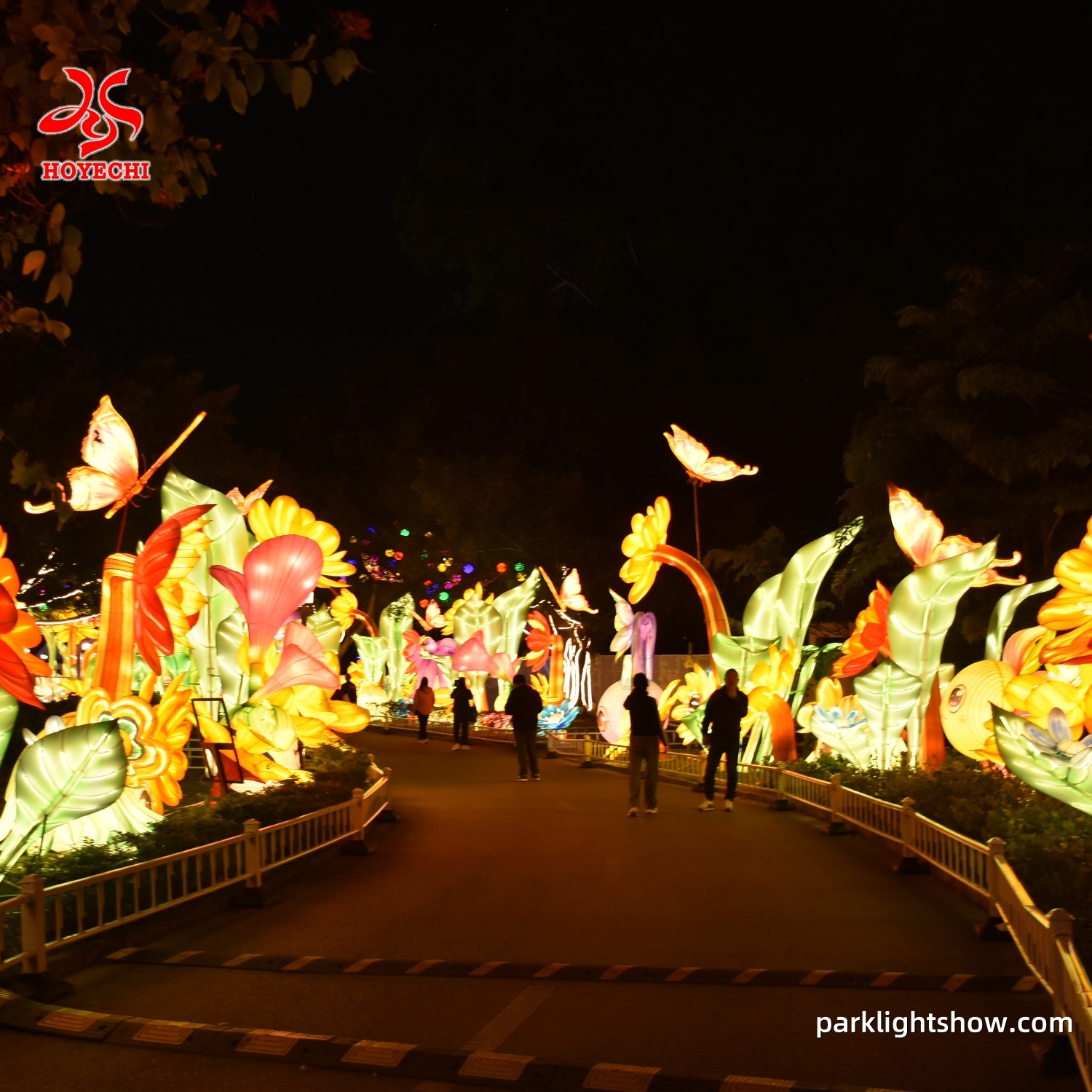
Project Scale Affects Cost, but Many Clients Cannot Define It at First
In an ideal situation, a venue owner could already tell a supplier approximately how many lantern groups are needed, the typical size range of each piece, whether dynamic lighting or interactive elements are required, whether there will be projection or show-control content, and whether the event needs specific themes, local culture, holiday characters, or story-based scenes.
However, in real business conversations, many clients cannot clearly define these details at the beginning. That is normal.
When that happens, a useful alternative is to start from the market side rather than the design side. If the client can provide nearby population conditions, visitor forecasts, and expected audience profile, the project team can often use that information to reverse-plan a more reasonable festival scale.
This matters because a site with strong surrounding population, active family demand, and healthy seasonal traffic may justify a broader layout and stronger content density. A site with a smaller market may still be suitable, but often through a lighter first-phase version with a tighter route and more focused display strategy.
If site selection is still being discussed, our article on whether a park needs to be large for a lantern show may also help frame the decision from the perspective of market demand, budget fit, and operational conditions.
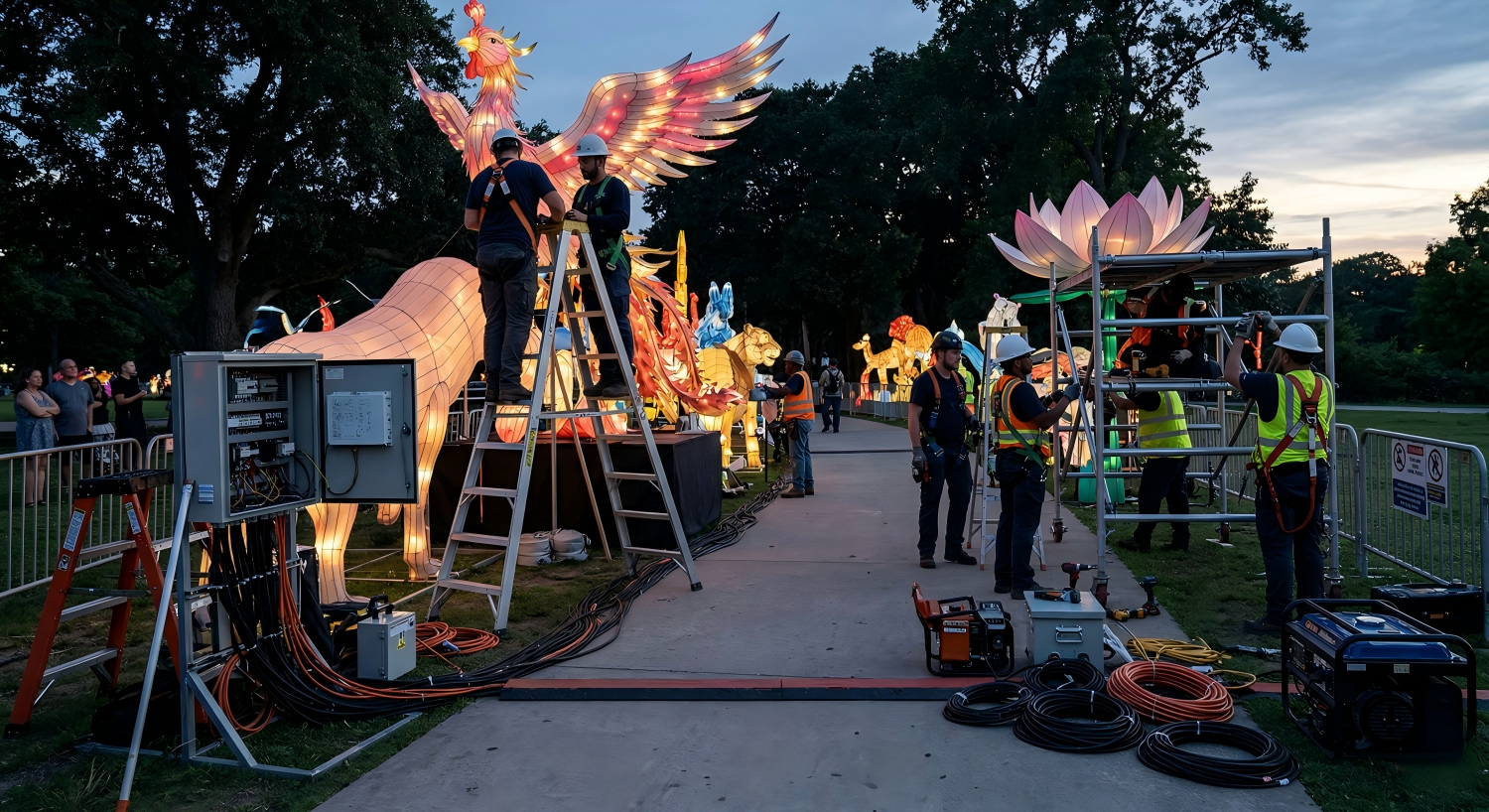
Time, Duration, and Installation Window Also Change the Budget
Lantern festival cost is not only about what is built. It is also about when the project must open, how long it will stay in operation, and how much time is available for setup and removal.
A useful inquiry should usually include the event opening date, closing date, installation period, dismantling period, daily operating hours, and whether there are expected holiday peaks or extended sessions.
These details matter because a project with a comfortable timeline is very different from one with a compressed schedule. The shorter the preparation window, the more pressure there may be on production coordination, transport planning, installation sequencing, and labor allocation.
Power Supply and Construction Conditions Are Often Overlooked
One of the easiest ways for an early estimate to become inaccurate is to ignore power and construction conditions.
Useful technical information includes available electrical capacity, where power can be accessed on site, whether generators may be needed, whether the venue is closed or open during setup, whether local approval is required for construction, whether night work is allowed, and whether the site permits welding, elevated work, or ground penetration.
These conditions can materially affect cost. A site with stable existing power and flexible access is very different from one that requires temporary power generation, limited working windows, or complex approvals.

Support Requirements Can Add More Than Many Clients Expect
Another common reason estimates change is that the venue focuses only on lantern displays, while the broader project may include many related elements.
These can include lighting for trees, buildings, pergolas, or perimeter walls, stage or audio systems, performance support, photo spots, branded entry features, concept design packages, renderings, and animated presentation videos.
If these requirements are not clarified early, the estimate may reflect only part of the project scope. Later, once the full support package is added, the budget may appear to rise unexpectedly.
In reality, the issue is not that the price changed without reason. The issue is that the original scope was incomplete.
The Business Goal Changes the Cost Logic
Lantern festival cost should never be separated from the project goal.
A venue that wants a ticketed seasonal attraction may need a very different solution from one that wants a free public festival, a government holiday program, a tourism activation campaign, or a commercial traffic-driving event.
Before requesting a serious proposal, it helps to clarify whether the goal is ticket revenue, commercial footfall, seasonal attraction building, holiday activation, public cultural programming, or brand visibility.
The operating model matters as well. A free-entry project, a ticketed event, a joint-operation model, and a government-supported activity can lead to different planning decisions, and those decisions will influence cost structure.
A lantern festival budget is not just a production budget. It is a project strategy budget.
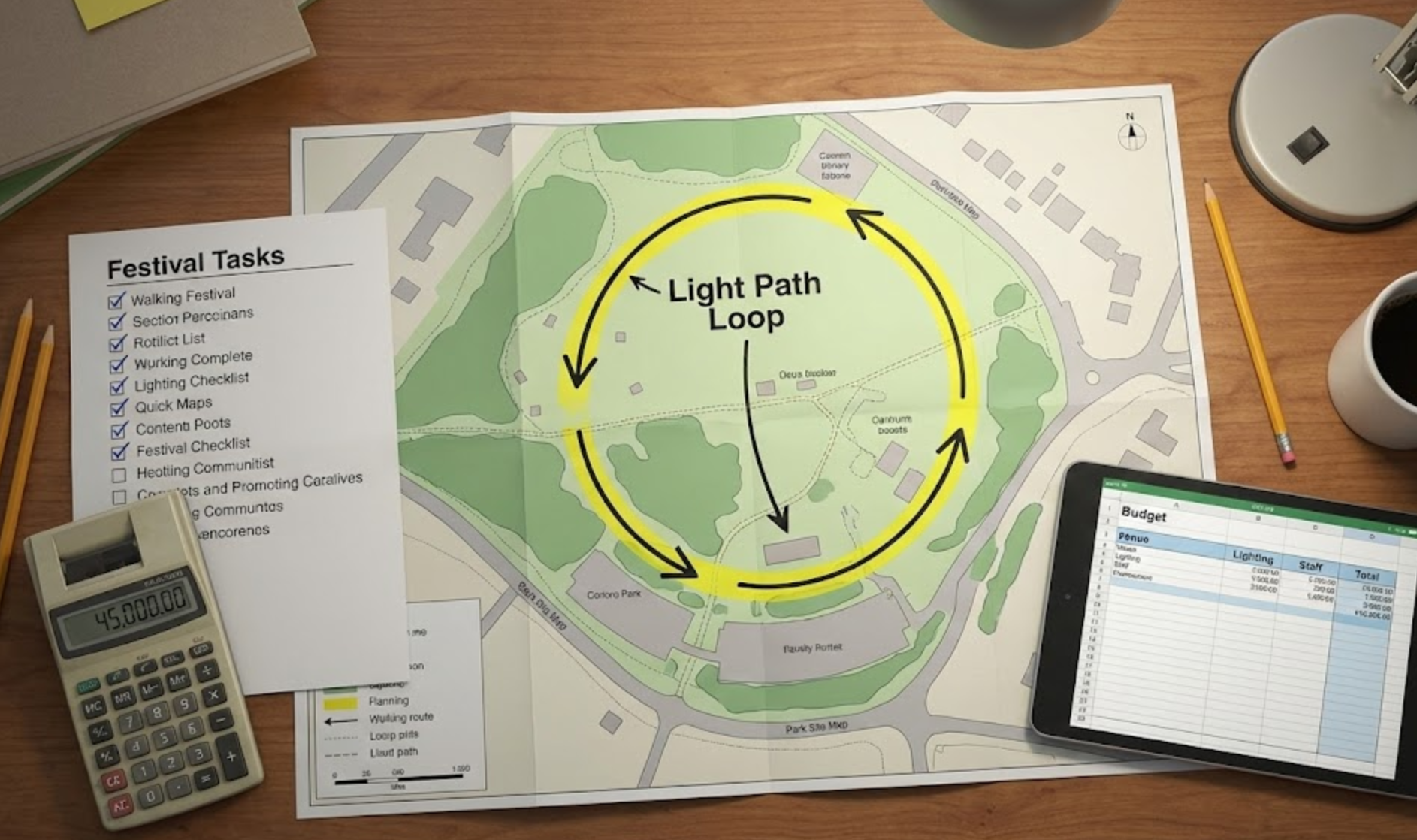
What Information Helps Make a Lantern Festival Cost Estimate More Accurate
If a venue wants a cost estimate that is more useful than a rough range, the most helpful starting materials are usually:
- Project name or working theme
- Event dates, installation dates, and dismantling dates
- Site location and venue type
- Total site size and usable display area
- A site plan, sketch, or map capture
- Photos and, ideally, aerial views
- Entrances, exits, and main circulation paths
- Nearby population and visitor conditions
- Expected audience type
- Target operating model
- Power supply conditions
- Construction restrictions
- Whether design, rendering, transport, installation, maintenance, and dismantling are included
Among these, some items are especially sensitive. In practice, the accuracy of a lantern festival proposal is most affected when the following remain unclear: exact site dimensions and layout, display quantity and display size, complexity of shapes and themes, whether dynamic or interactive systems are included, power conditions and generator needs, total installation, exhibition, and removal period, and the exact scope of services included.
What If the Venue Does Not Have Everything Ready Yet?
That is common, especially for first-time projects.
A venue does not need to prepare a perfect information package before the first conversation can begin. Even if the project is still in an early stage, there is usually enough to start with if the venue can provide the basic location, the type of site, a rough area estimate, several photos, a simple site map or sketch, the expected event period, the general business goal, and a rough budget range or market expectation.
If the venue cannot yet define the exact number of lantern groups or the final artistic style, nearby population data and visitor estimates can still be extremely helpful. In many cases, those inputs are enough to begin reverse-planning a realistic first-phase scale.
For broader project setup questions, you may also find our planning article useful: how to plan a successful park lantern show. It covers route logic, audience flow, and foundational planning issues that often shape both scope and budget.
Conclusion: A Better Cost Estimate Starts with Better Project Information
So, how much does a lantern festival cost?
The honest answer is that the cost depends on the project conditions behind it. That is why the better question is not only “How much?” but also “What information should be clear before comparing options?”
For lantern festival projects, the most reliable estimates are built on site clarity, realistic scale assumptions, time and installation planning, power and construction conditions, and a business goal that matches the market.
That is why a better lantern festival proposal does not begin with a number alone. It begins with clear project information.
If the information is clearer, the estimate becomes more useful. If the estimate is more useful, the project becomes easier to plan, compare, and execute.
FAQ
How much does a lantern festival cost?
There is no single fixed number. Cost depends on site conditions, display scale, power supply, installation scope, service package, and operating goal.
Why do lantern festival quotes vary so much?
Because lantern festivals are project-based, not standard products. Site layout, route length, display density, electrical setup, installation planning, and service scope can all change the total budget significantly.
What is the most important information to prepare before requesting a proposal?
The most important items are usually the site plan, usable area, current photos, event dates, nearby market conditions, and the intended operating model.
Can I ask for a proposal without a full site drawing?
Yes. A formal drawing helps, but a rough map, hand sketch, aerial image, and clear photos are often enough to begin the first evaluation.
What if I do not know how many lantern displays I need yet?
That is common. In that case, nearby population, expected visitor demand, and business objective can help the project team recommend a more suitable scale.
Do I need to give a budget range first?
It is not always mandatory, but it usually helps. A budget range makes it easier to match the project to a realistic level, whether that is a lighter pilot version, a standard version, or a larger rollout.
Do power conditions really affect lantern festival cost?
Yes. Existing power access, electrical capacity, generator needs, and construction restrictions can all materially affect installation method and final cost.
Should transport, installation, maintenance, and dismantling be discussed at the inquiry stage?
Yes. If these are not clarified early, the first estimate may only reflect part of the project scope.
Post time: Apr-01-2026


