

Night-lit Boats: Weaving a Gentle Night Path through the Garden
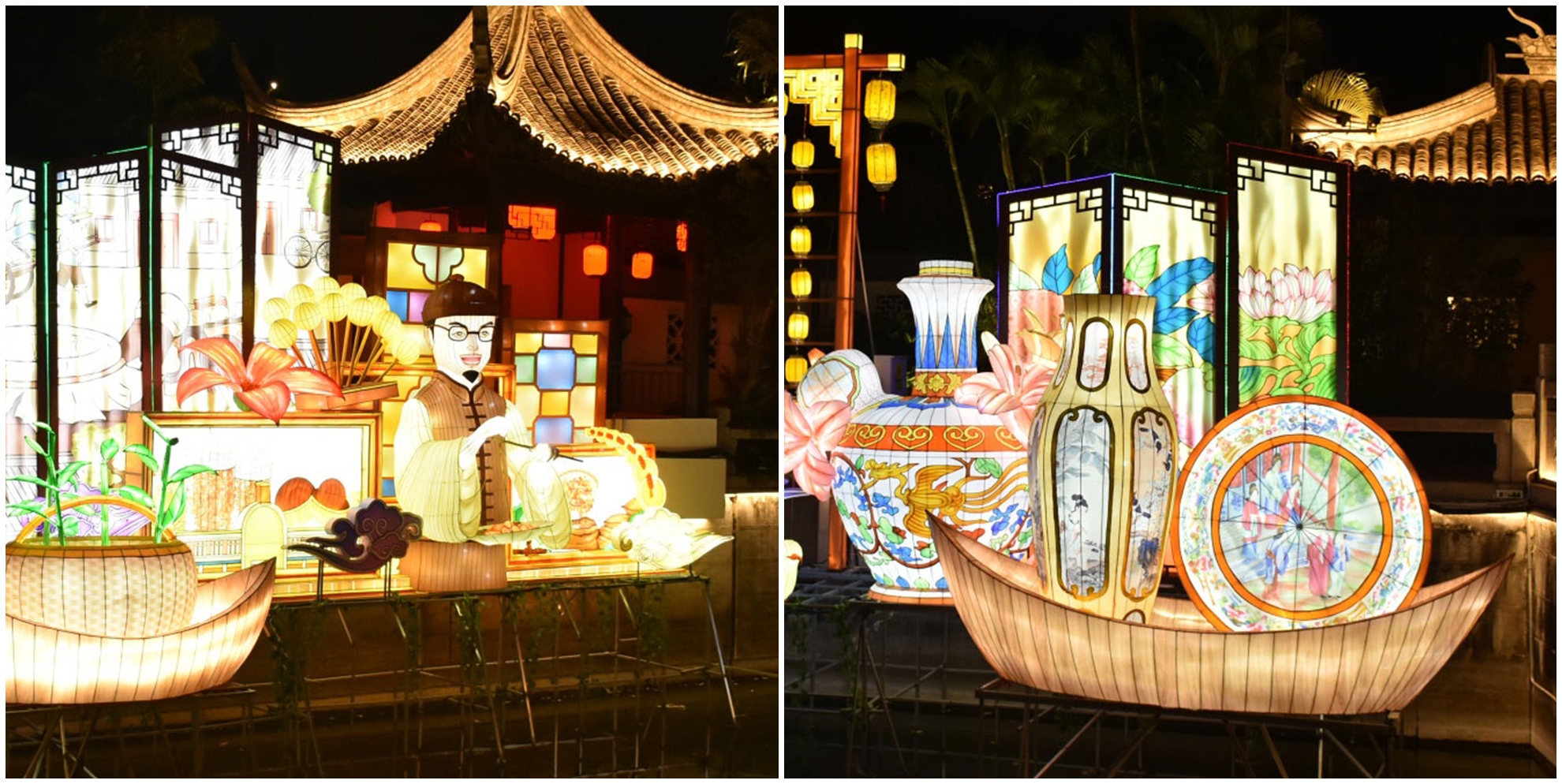
Rows of glowing boats string the garden’s alleys and ponds into a gentle night path. Up close, these lantern installations are more than decoration — they are amplified memories: the outline of a lotus, the texture of porcelain, the painted panel on a folding screen, the silhouette of a costume — all re-told by light.
Objects as Narrative: From Still Life to Stage Scenery
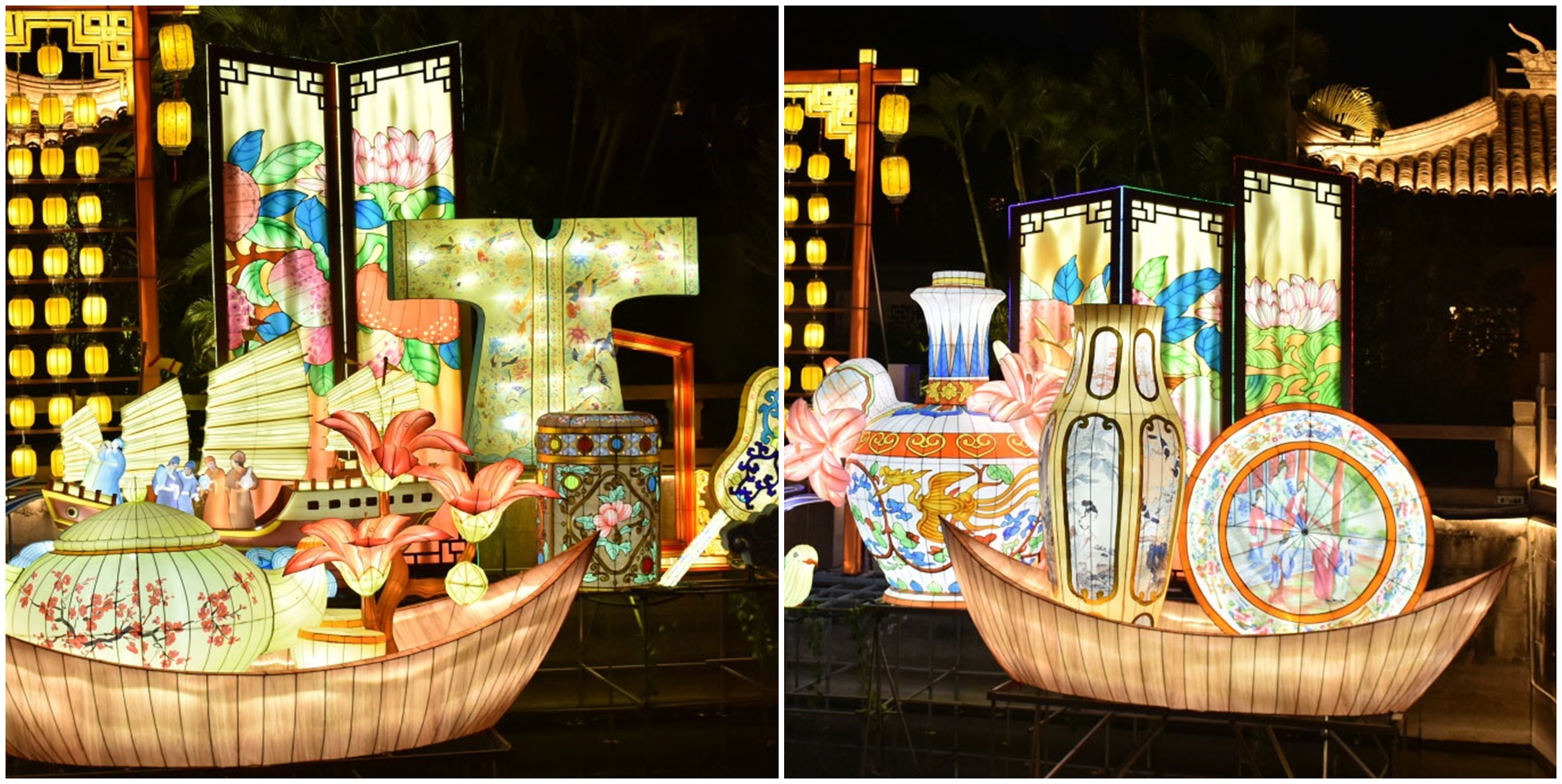
In this set of lantern scenes, designers treat objects as narrative carriers. In the foreground, a boat-shaped lantern casts warm, even light that shimmers on the water; it may hold a lotus or a teaware vignette, bringing everyday still life into a nocturnal ritual. Midground pieces draw on porcelain vases and decorative plates: blue-and-white motifs and dragon patterns are softened behind translucent lamp boxes, preserving traditional detail while revealing new depth through illumination. In the distance, folding screens and costume-shaped lanterns compose a theatrical backdrop — viewers naturally become part of the picture, completing an interaction between people and objects, modernity and tradition.
Light as Material: Re-presenting Craft in a Contemporary Way
These lanterns are not lit merely to be bright — they are enlarged handiwork, contemporary presentations of traditional motifs and folk craft. Light itself is treated as a material: warm tones emphasize the weave of silk, the gloss of glazes, and the flat painting of screens, giving each surface renewed texture. Audiences outdoors encounter not just an object to admire but cultural symbols charged with feeling and memory — the lotus as purity, porcelain as a carrier of history, folding screens and costumes as conduits of opera and folk tales brought into the present.
Cultural Impact: Bringing Tradition Closer to Everyday Life
The visual and narrative union here produces effects that go far beyond a temporary night display. Culturally, these installations bring traditional elements into public view for a broader audience. For younger visitors, patterns once seen only in museums or textbooks are “brought closer” by light, becoming shareable cultural experiences for social media and conversation. For local residents and craftspeople, the lanterns represent both the continuation of craft and a reaffirmation of cultural identity — viewers can appreciate the beauty while learning the stories behind each motif. Traditional craft thus stops being static display and becomes a living memory moving through the city at night.
Economic Impact: Longer Stays, Increased Spending, and Lasting Asset Value
The economic effects are equally tangible. Nighttime art installations extend visitors’ dwell time and drive spending in nearby food, retail and cultural merchandise. Themed lantern sets and scenographic layouts give parks, malls, and festival organizers differentiated attractions that stand out in a competitive cultural tourism market. For buyers and client organizations, lantern sets are not merely one-off expenses; they can be reused for seasonal events, New Year celebrations, or branded campaigns, increasing long-term returns on investment. Manufacturers with export and customization capabilities can also open overseas festival and event markets, bringing export orders and employment opportunities to the local manufacturing sector.
Industry Collaboration: The Full Chain from Design to On-site Realization
Projects like these encourage tight collaboration across the industry: designers, artisans, structural engineers, electrical engineers and installation crews must coordinate closely to turn a flat concept into a maintainable, reusable physical object. Strong project management and modular design reduce maintenance costs and make reuse and theme swaps feasible — further enhancing the project’s commercial value.
Shared by Hoyecai — A Lantern Manufacturer’s Perspective
“We make lanterns with the idea that they should still be standing in year two and year three,” says the person in charge at Hoyecai.
“Good light gets attention, but installations that can be maintained and reused are the ones that deliver real value. We start by turning traditional aesthetics into reliably manufactured products so that beauty, durability and sustainability coexist. At the same time, we hope each lantern installation can help more people rediscover the patterns and stories accumulated by history, and turn the night into a place for conversation.”
Post time: Sep-21-2025


