

When park owners, scenic area operators, and night tourism planners first consider a lantern show project, one of the first questions they usually ask is: “Is our park big enough?” If the site is not very large, does that mean it is not suitable for a lantern festival? Do only large scenic destinations have the conditions to host a successful lantern show?
These are common questions, but in real project planning, they are not always the most important ones. For a lantern show, site size can influence the structure of the plan and the level of investment, but it usually does not determine whether the project can happen at all. What matters more at the early evaluation stage is whether there is enough surrounding population and potential visitor demand, whether the budget matches the local market, whether the site has the basic conditions for circulation and operations, and whether the project should begin as a full-scale version or as a lighter, lower-risk first phase.
In other words, when evaluating whether a place is suitable for a lantern show, the first question is not whether it is a large park, or even whether it is officially a scenic attraction. The more useful question is whether the location has the potential to generate traffic, visibility, and short-term excitement.
In theory, almost any park can host a lantern show. More broadly, it is not limited to parks. As long as there is a space that can support viewing, movement, and basic visitor organization, even an open lot, event ground, or certain parking areas may be adapted for a lantern event.
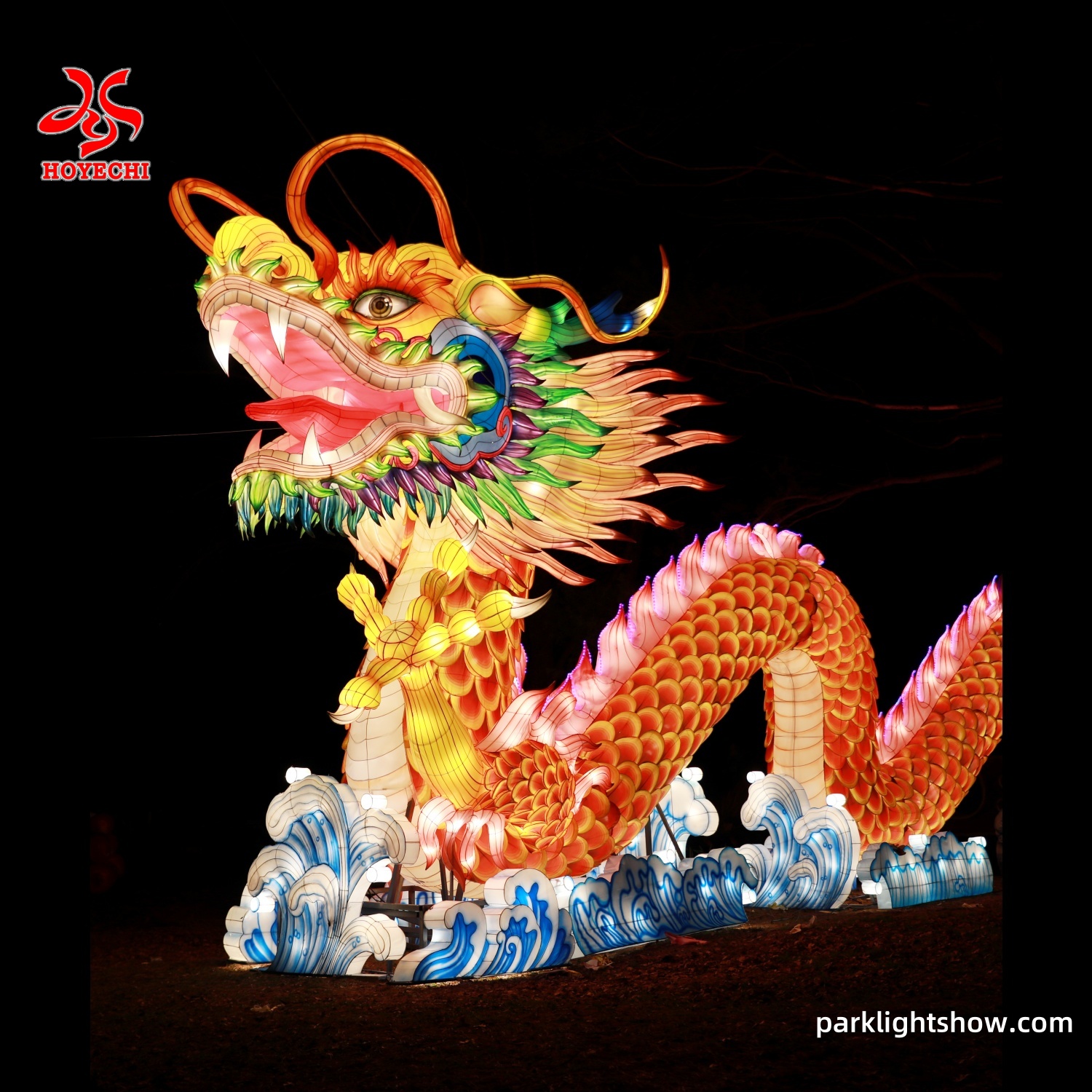
Size Is Not the First Decision Factor. Market Potential Is.
Many people assume that the larger the site, the easier it is to create a successful lantern show. By the same logic, they assume that smaller sites are naturally disadvantaged. That is not entirely true.
A lantern show is essentially a nighttime visual experience project. It relies on festive atmosphere, illuminated displays, circulation design, and visitor engagement to attract crowds, extend dwell time, and create opportunities for spending and social sharing within a relatively short season. Because of that, the most important question is not simply how much land is available, but rather how many people are available around it.
If a site is located in an area with a strong population base, active family-oriented demand, and a healthy culture of seasonal or nighttime outings, then even a medium-sized or compact site can still support an attractive lantern show through the right layout and budget strategy.
On the other hand, a very large park does not automatically guarantee a good project. If the surrounding population is limited, if tourist traffic is weak, or if local demand for seasonal events is low, then a large-scale investment may not perform as expected. In such cases, the better approach is not necessarily to give up the project. It is often to adjust the scale, control the cost, and build a version that fits the actual market.
For lantern shows, site size usually affects how large the project should be, how the route is organized, how attractions are distributed, and how the budget should be structured. It does not always determine whether the project is possible.
In Theory, Almost Any Park Can Host a Lantern Show
From the perspective of site type alone, the answer is quite straightforward: almost any park can host a lantern show.
That is because a lantern event does not require a site to have a specific scenic classification, a certain landscape style, or the status of a mature tourist attraction. What it really needs is a space that can be organized, experienced, and operated.
As long as a park has usable open space, the ability to organize visitor entry and exit, the possibility of forming a basic viewing route, enough site control for event operations, and access to surrounding visitor demand, it may be suitable for a lantern project.
This means that even if a park is not especially large, it can still support a successful lantern show if the space is clear, the layout is manageable, and the local market is strong enough. In practice, the real question is not simply “Can it be done?” but rather what scale is appropriate, what budget level makes sense, and whether the project should begin as a pilot phase or a full version.
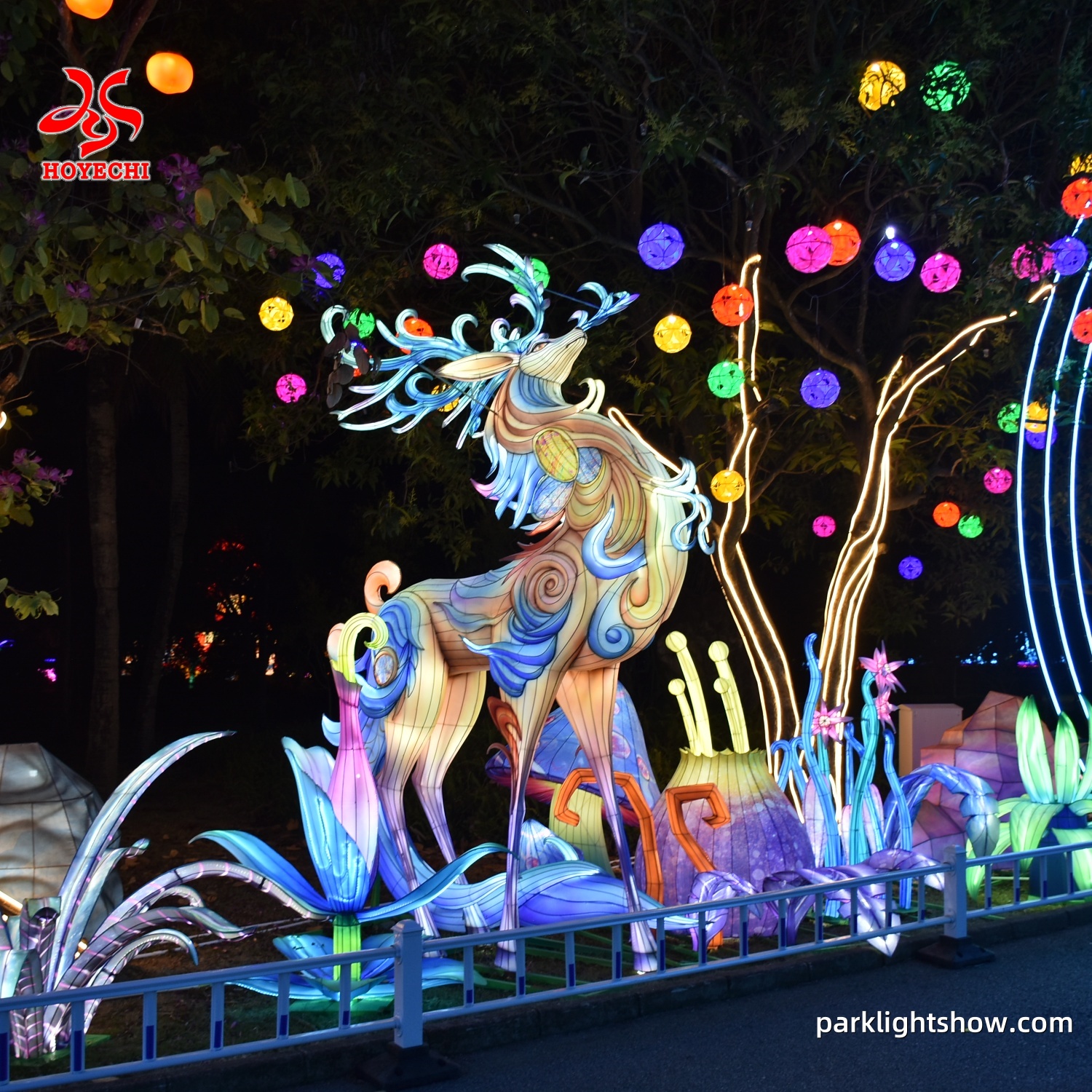
It Does Not Have to Be a Park, and It Does Not Have to Be a Scenic Area
Lantern shows are commonly associated with parks, scenic areas, botanical gardens, zoos, and themed public spaces. These are natural fits because they often already have circulation routes, landscape settings, and visitor dwell areas. However, a lantern show is not strictly tied to the identity of being a park or a scenic attraction. At its core, it is an operable nighttime event format.
As long as a location has a controllable open space, a way to organize visitor movement, enough room for stopping and viewing, access to surrounding traffic or visitor demand, and a project budget that makes sense for the market, it may still be able to support a lantern project.
That is why lantern shows are not limited to traditional scenic environments. In practice, some projects can also be adapted to open grounds, event spaces, commercial support areas, or certain parking lots if the local demand is strong enough and the site can be organized properly.
Population and Visitor Demand Often Matter More Than Site Size
If only one factor had to be prioritized at the early stage, in many cases it should not be area. It should be the size and quality of the surrounding population and visitor base.
No matter how attractive the site looks, the project will eventually come back to two very practical questions: Will people come? And Will enough people come to support the investment?
Lantern shows are highly dependent on audience reach, family demand, travel convenience, holiday habits, and local event culture. These factors often matter more than the total square footage of the venue.
A medium-sized park in a dense residential area, with strong family demand and active evening consumption, may be a better choice for a first-phase lantern show than a much larger site in a remote location. For an initial project, accessibility and audience base are often more important than physical size.
If the surrounding market is smaller, that does not mean the project is impossible. It usually means the project should be planned more carefully, with a lighter budget and a more focused scope.
A Smaller Market Does Not Mean “No.” It Means the Budget Should Be Lighter.
One of the biggest misunderstandings in project evaluation is the idea that only high-population areas can support a lantern show. A more practical way to think about it is this: a smaller market does not mean the project cannot happen. It means the budget, scope, and risk level should be adjusted to fit that market.
Different market sizes call for different project models. If the surrounding population is strong and the market capacity is large, then the project may support a longer visitor route, more themed areas, more landmark displays, denser atmosphere-building elements, and a more complete operational setup.
If the local audience base is smaller or demand is still uncertain, then a better strategy may be shortening the main route, concentrating attractions in a core zone, reducing the number of oversized feature pieces, emphasizing photo-friendly mid-sized displays, launching a pilot edition instead of covering the entire site, and using the first season to test market response before expansion.
This is not a compromise. It is a better fit between investment and reality. For lantern projects, the real danger is often not that a project starts small. The real danger is when the scale of investment does not match the size of the market.
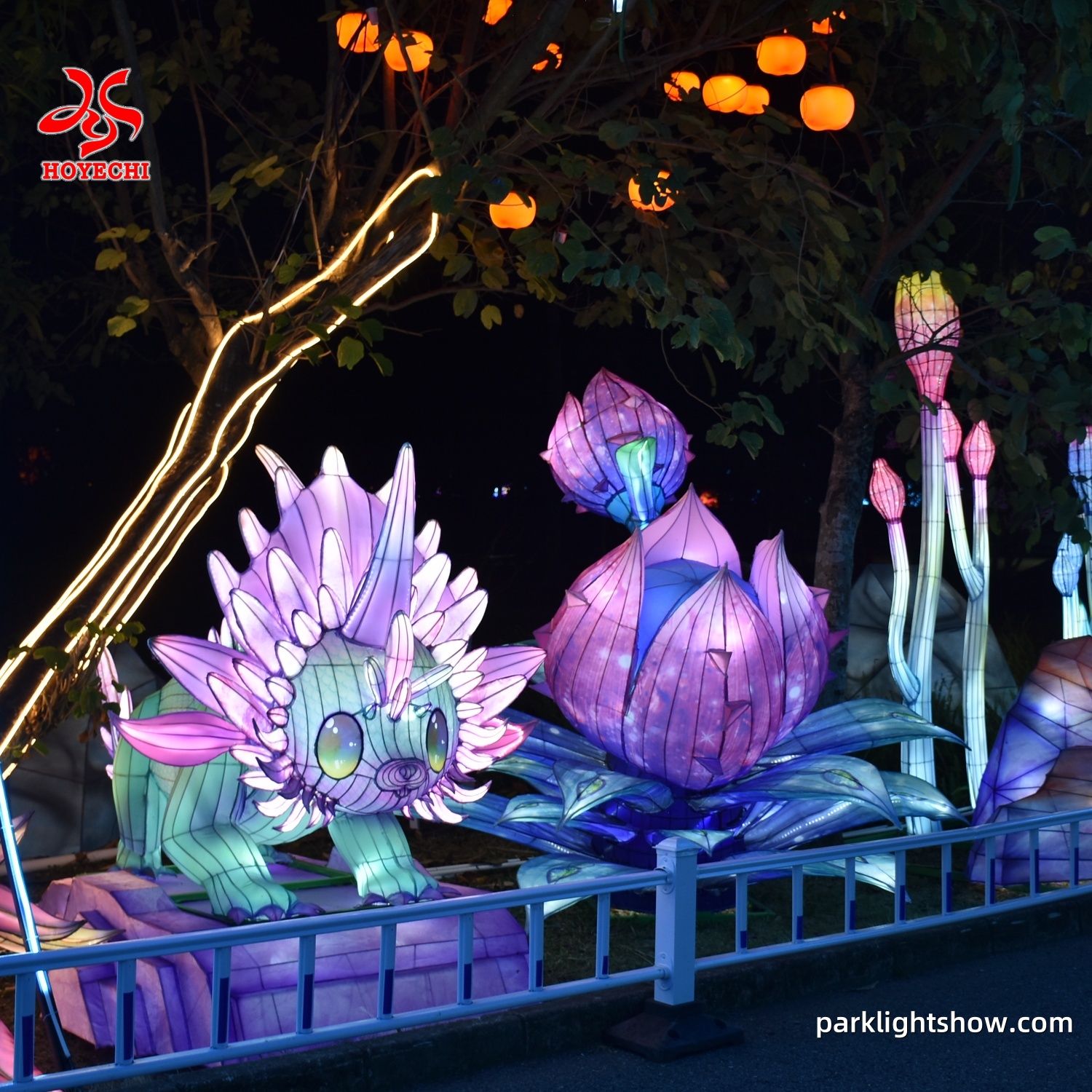
Why Lantern Shows Can Create Strong Short-Term Momentum
Lantern shows have become increasingly attractive to venue owners for one important reason: they are one of the more effective formats for creating short-term visual impact and public attention.
Compared with some long-cycle nighttime attractions, lantern shows have several natural advantages. They have strong visual impact at night, clear seasonal relevance, high shareability for photos and social media, broad audience appeal, and relatively flexible launch potential compared with some permanent or heavy-investment nighttime tourism projects.
That is why lantern shows are often seen as a practical way to create concentrated audience attention within a limited time period. However, easy to attract attention does not mean guaranteed success. The result still depends on whether the market is large enough, whether the budget fits the opportunity, whether the content density feels right, whether the site circulation works well, and whether the experience rhythm is comfortable.
So What Does Site Size Actually Affect?
Saying that size is not the first decision factor does not mean size is irrelevant. It still matters. It simply affects how the project should be designed, rather than whether it should exist at all.
In most cases, site size influences route length, display quantity and density, themed zoning, dwell and photo space, service and support space, and budget structure. In that sense, size is better understood as a planning parameter. It helps determine whether the project should be compact, standard, or expanded. It does not always serve as the final gatekeeper.
Different Site Types Require Different Strategies
Even though almost any park can host a lantern show, not every site should be approached in the same way. A more professional evaluation is not just saying yes. It is identifying what kind of lantern show strategy best fits the site.
Small Sites: Best for Compact, High-Impact Routes
If a site is relatively small but the surrounding demand is strong, it may be best to focus the content into one concentrated experience zone, with a clear route, memorable photo points, and efficient use of space.
Medium Sites: Often Best for Balanced First-Phase Projects
Medium-sized sites often provide the best balance between budget, route design, display density, and operations. They are frequently a strong choice for first-time lantern projects.
Large Sites: Better for Expanded, Immersive Versions
Large parks can support longer routes, more themes, and more complete experiences, but they also require more content, stronger operations, and better wayfinding. A large site with insufficient density can feel empty.
Non-Scenic or Temporary Event Grounds: Best for Targeted Attraction Projects
These sites may not have natural landscape value, but if they are accessible, easy to organize, and surrounded by enough potential visitors, they can still become strong short-term lantern venues.
The Five Things That Really Matter When Evaluating a Lantern Show Site
If the core conclusion of this article is reduced into a practical framework, these are the five things that should usually be checked first:
- Is there enough surrounding population and visitor demand?
- Does the site have basic operational conditions?
- Does the budget match the local market?
- Can the project create short-term attraction and shareable value?
- What version of the project fits this site best?
Instead of asking only whether a lantern show can happen, a stronger evaluation asks whether the site is best suited for a light version, a standard version, an expanded version, or a phased rollout.
What Information Should a Venue Prepare Before Requesting a Proposal?
If a venue is seriously considering a lantern show, a clearer preparation stage will lead to a better and faster evaluation.
- The basic location of the site and nearby population conditions
- Total area and estimated usable area
- A site map, sketch, or aerial image
- Main entry and exit locations
- Major roads, walking routes, and open zones
- The presence of water, slopes, trees, or other special conditions
- Traffic access and parking conditions
- The target event season or schedule
- The expected audience profile
- Whether the goal is seasonal attraction, holiday activation, or a ticketed nighttime event
- An approximate budget range
The more clearly these points are prepared, the easier it becomes to judge whether the site is suitable, what scale makes sense, and which project model is most realistic. If you are still at the early planning stage, you may also find it helpful to read our guide on how to plan a successful park lantern show, especially for thinking through route design, audience flow, and basic site organization.
Budget alignment is another part of the decision that should not be overlooked. If you want to understand why similar-looking projects can produce very different numbers, our article on why two park light show quotes can differ by 3x offers a useful framework for comparing project scope, content density, and hidden cost drivers.
For venues considering a winter or holiday program, it is also worth reviewing our article on how to plan a successful winter lantern festival, which looks at route rhythm, concentrated attractions, and the balance between atmosphere and operating efficiency.
Conclusion: What Determines Feasibility Is Not Whether the Park Is Large Enough
So, does a lantern show require a large park? Not necessarily.
In theory, almost any park can host a lantern show. Going a step further, it is not limited to parks. As long as a site has basic operational conditions, a suitable market, and an investment level that matches that market, a lantern project may be possible.
What usually determines feasibility is not size alone, but whether there is enough surrounding population and potential audience, whether the budget fits the size of the opportunity, whether the site can support basic visitor experience and operations, whether the project should begin as a test version or a full version, and whether the content can generate short-term attraction and attention.
So instead of asking, “Is this park large enough?” a more useful question is: “Does this location have enough audience potential to support a lantern show that matches the market and budget?”
Size affects the design. It does not always decide the possibility. As long as there is usable space, enough visitor demand, and a reasonable budget approach, a lantern show can be created not only in large parks, but also in smaller parks, open grounds, and other adaptable event spaces.
FAQ
Can a small park host a successful lantern show?
Yes. If the surrounding population base is strong and the site can support a clear visitor route, a small park can still host a focused, high-impact lantern show. In many cases, compact sites are better suited to efficient layouts and stronger content density.
Is population more important than park size for a lantern show project?
In many cases, yes. A larger site does not guarantee better results if the nearby market is weak. Population base, family demand, local event culture, and accessibility often matter more when evaluating early project feasibility.
Does a lantern show have to be held in a park or scenic area?
No. Parks and scenic areas are common venues, but lantern shows can also be adapted to open lots, event grounds, commercial support areas, and certain temporary spaces if the site can be organized properly and the market demand is strong enough.
What should a venue do if the surrounding market is small?
A smaller market does not automatically mean the project should be cancelled. It usually means the project should start with a lighter budget, a shorter route, a more concentrated layout, and a lower-risk first phase that can test local response before expansion.
What information should be prepared before requesting a lantern show proposal?
Useful materials include the site location, surrounding population conditions, estimated usable area, a site map or aerial view, entry and exit positions, road and walking routes, parking conditions, event timing, target audience, and an approximate budget range.
Post time: Mar-31-2026


