

When planning a lantern festival, night tourism upgrade, or seasonal lighting project, nearly every client faces the same fundamental questions:
Is this project really worth doing?
How long will it take to break even?
And what are the actual risks involved?
Through years of working with governments, scenic destinations, and commercial complexes around the world, the team at ParkLightShow has learned one essential truth:
What determines the success of a lantern exhibition is not how beautiful the lights are, but whether the cost structure is clear, the investment logic is sound, and the return path is sustainable.
In this article, we address the six most common questions clients ask about cost and ROI—helping you evaluate a lantern project with clarity and confidence.
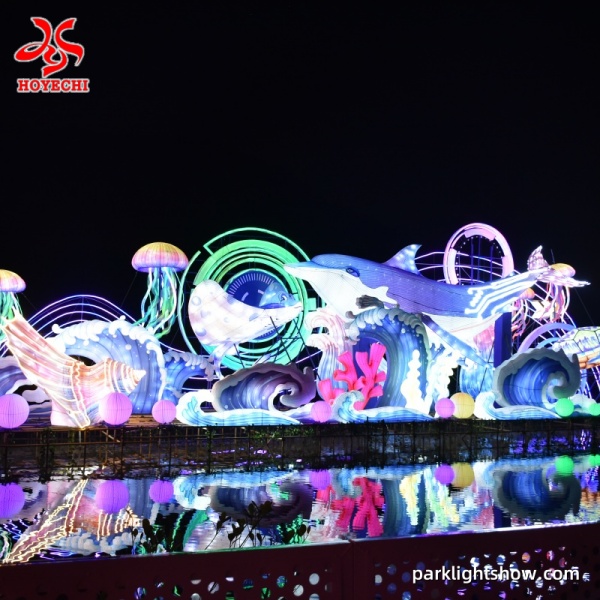
Mid-sized lantern festival installation with custom Chinese lanterns for night tourism and cultural events
1. What Is the Typical Budget for a Mid-Sized Lantern Festival?
This is the most frequently asked question—and understandably so. However, there is no single fixed number.
For a mid-sized lantern festival (such as one held in a park, scenic area, or commercial street), a typical budget usually falls within the range of:
USD 10,000 – 40,000
The final cost depends on several key factors, including:
- The number and size of lantern installations
- Whether custom themes, branding, or IP elements are involved
- Exhibition duration (1–3 months, half a year, or long-term use)
- The inclusion of interactive lighting or large landmark installations
It’s important to understand that a lantern festival is not a one-time decorative expense.
It is an asset-based investment that can be reused, reconfigured, and operated multiple times.
The real question is not how much you spend, but how long that investment continues to generate value.
2. Does Your Product Pricing Include International Shipping?
This is a detail that overseas clients care deeply about—but one that is often overlooked.
At ParkLightShow:
- Product pricing does not automatically include international sea freight
- This is because shipping costs vary significantly by country, port, and delivery timeline
That said, we actively support clients by providing:
- Practical and transparent shipping and container recommendations
- Modular designs that reduce shipping volume and overall logistics costs
- Assistance connecting with reliable long-term logistics partners when needed
This approach keeps costs clear and prevents unpleasant surprises later in the project.
3. Is It More Cost-Effective to Buy or Rent Lanterns?
There is no universal answer—but there is a clear decision logic.
Renting makes sense if you:
- Are running a one-time or very short-term event
- Prefer not to handle storage or maintenance
- Have a limited budget or tight timeline
Buying makes more sense if you:
- Operate a long-term scenic or urban night tourism project
- Plan to host recurring festivals year after year
- Want to build a recognizable, fixed IP or signature attraction
From a long-term ROI perspective:
Once the same lantern installations are used two or three times, purchasing almost always becomes more economical than renting.
4. Are There Discounts for Bulk Orders?
Yes—and the difference can be significant.
In lantern festival projects:
- Purchasing individual pieces rarely leads to optimal costs
- Integrated, full-solution procurement delivers the best balance of price and performance
Bulk ordering offers clear advantages:
- Lower unit production costs
- Standardized structures and electrical systems, reducing maintenance complexity
- More efficient transportation and installation
- Easier expansion or replenishment in future seasons
From an operational standpoint, planning the full project upfront is often far more cost-effective than adding lanterns gradually over time.
5. How Long Does It Typically Take to Achieve ROI?
This is the question every investor wants answered.
Based on real project experience:
- Well-operated lantern festivals
- Often recover initial investment within one to two exhibition cycles
Key factors influencing ROI include:
- Ticket pricing strategy
- Existing visitor traffic and marketing reach
- Integration of food, merchandise, and sponsorships
- Whether installations are highly “photo-friendly” and shareable
Many successful projects do not rely on high ticket prices.
Instead, they win through high social sharing, longer visitor dwell time, and strong surrounding commercial synergy.
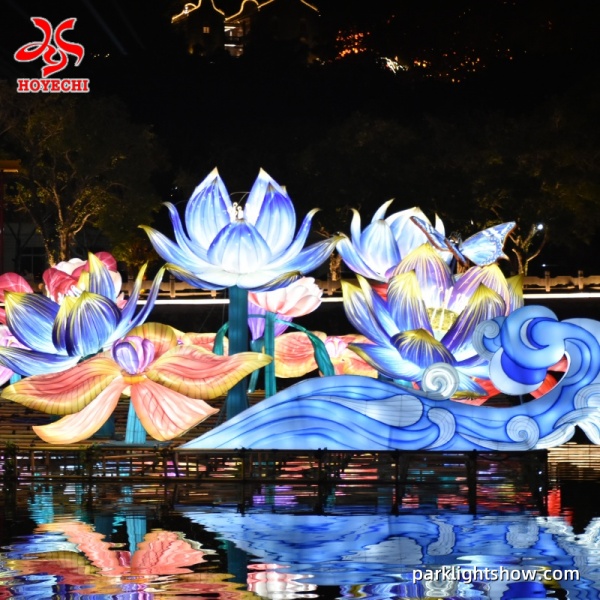
Lantern festival night scene with visitor flow, supporting ticket pricing and commercial operation planning
6. Can You Help with Ticket Pricing and Commercial Operations Planning?
Yes—and this has become an increasingly important part of our work.
At ParkLightShow, we don’t only focus on how lanterns are built.
We also care deeply about:
- How they are seen
- How they are photographed and shared
- How they continue to generate revenue
During the design phase, we often help clients think through:
- Interactive zones and high-retention areas within the exhibition
- Core lantern installations that justify ticket value
- Smart separation between free-access and paid zones
- Synergies with restaurants, shops, and brand sponsors
Because a truly successful lantern festival is never just an art project—it is a well-designed night-time economic product.
Conclusion: High ROI Starts with Clear Cost Logic
At ParkLightShow, we follow one guiding principle:
We don’t help clients build projects that look expensive but fail to generate returns.
Whether it’s budget planning, procurement strategy, or long-term operations, we focus on:
- Cost transparency
- Risk control
- Sustainable returns
If you are planning:
- A lantern festival or night tourism project
- Seasonal or city-wide lighting programs
- Night-time upgrades for scenic areas or commercial districts
Visit www.parklightshow.com
Let’s turn lighting from a cost into a long-term, revenue-generating asset.
Post time: Dec-29-2025


