

Chinese Dragon Lanterns Logistics & Installation: A Practical Guide for Shipping, Setup, Storage, and Reuse
The most impressive chinese dragon lanterns projects don’t succeed by design alone—they succeed when the logistics are predictable, the installation is manageable, and the show can be reused without drama. If you’re planning a public festival, night tourism program, or commercial light event, this guide breaks down what operators actually need: container planning, on-site setup, local labor needs, storage, timelines, and post-show support.
If you’re starting from strategy and vendor selection, begin with the pillar overview:
Chinese dragon lantern project.
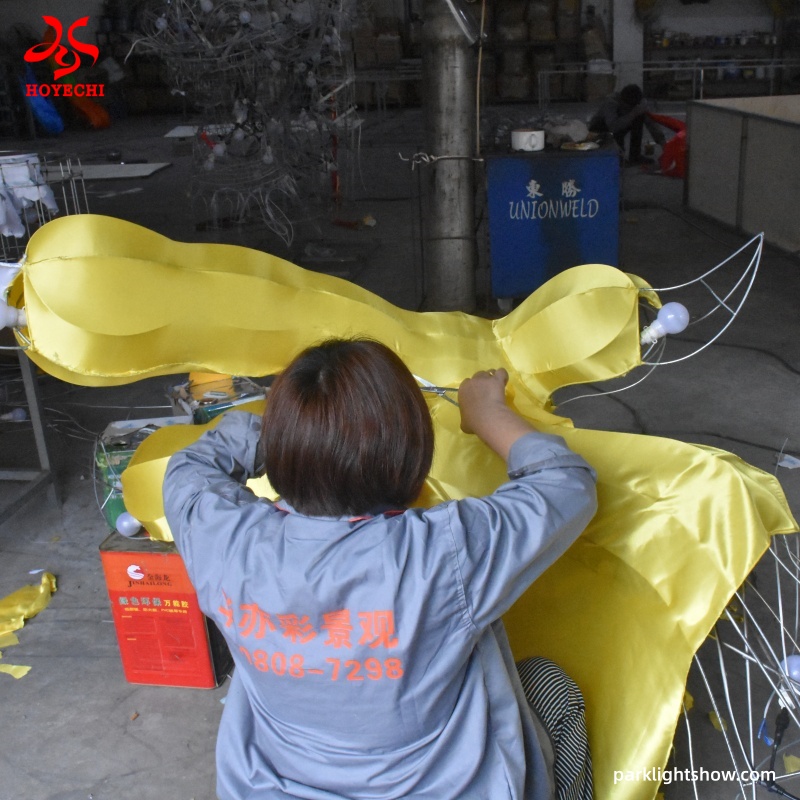
Local technicians installing chinese dragon lantern frames with labeled wiring and modular structure for safe assembly, fast commissioning, and public event operation.
Why Logistics Can Make or Break a Dragon Lantern Project
Operators often underestimate how many small “practical” decisions influence results: how modules are split, how wiring is labeled, whether crates are standardized, and whether local crews can assemble safely without specialized tools. When logistics is designed into the product from day one, chinese dragon lanterns stop being a one-time spectacle and become a repeatable, scalable asset.
1) Do You Send Chinese Technicians for On-Site Installation?
For international projects, there are typically two workable installation models—choose based on your timeline, risk tolerance, and local labor capabilities:
- Remote guidance + local installation team: Best for venues with experienced event contractors. We provide step-by-step installation manuals, wiring diagrams, labeling systems, and live video support during key stages.
- On-site technical support: For large-scale public events, complex centerpiece builds, or tight opening schedules, a technical lead can be dispatched to coordinate assembly, safety checks, and final commissioning (subject to visa, local regulations, and project scope).
The goal is simple: you should feel confident that the installation plan is controllable—not dependent on heroic last-minute problem solving.
2) How Are Large Dragon Lanterns Disassembled for Shipping?
Large chinese dragon lanterns are typically built using a modular structure so they can ship efficiently and assemble quickly on site. Modules are planned around:
- Structural breakpoints (neck, body segments, tail sections, base frames)
- Electrical zones (separate lighting circuits to simplify testing and maintenance)
- Handling limits (safe lifting and movement without specialized cranes for every step)
- Container geometry (maximizing cubic utilization while protecting delicate surfaces)
Each module is labeled with a consistent code system (frame ID, circuit ID, connection direction), so a local crew can follow a clear sequence: base → main frame → surface panels → lighting connections → testing.
3) How Much Fits in One Container?
Capacity depends on three variables: (1) total lantern volume, (2) how aggressively the project is modularized, and (3) how much protective packaging is required for long-haul shipping.
Instead of promising a fixed number, experienced operators plan with a packaging-first mindset:
- Centerpieces (giant dragons) typically require dedicated space with reinforced crating.
- Supporting lantern groups (arches, lantern corridors, themed zones) are usually space-efficient and stackable.
- Spare parts (controllers, cables, LED modules) should ship with the main load—not “later.”
A practical approach is to request a container loading plan and packing list early—before you lock the final design. That single document often prevents budget surprises and timeline slips.
4) How Many Local Workers Are Needed for Installation?
Most installations can be completed with a local crew using common tools, as long as the project is properly modularized and documented. Typical staffing depends on scale:
- Small activation / single photo spot: 2–4 workers
- Medium festival zone: 6–10 workers + 1 site supervisor
- Large public festival: 10–20 workers + dedicated safety lead + electrical lead
In real operations, the difference between “easy” and “painful” is whether the vendor provides:
clear assembly sequences, pre-labeled connectors, circuit maps, and commissioning checklists. If those are missing, labor hours balloon quickly.
5) What Does a Safe Installation Workflow Look Like?
A reliable workflow reduces rework and protects public safety:
- Site readiness: ground leveling, anchoring points, power access, and pedestrian routing plan.
- Base and structural assembly: install main frames and secure anchors before adding surfaces.
- Electrical routing: connect circuits by zone, keep cable paths tidy, and protect walkways.
- Testing and commissioning: light-by-light checks, controller programming, and night-view verification.
- Final public-safety review: trip hazards, access control, emergency routes, and signage.
If you’re coordinating a government or high-footfall site, you’ll also want a documented checklist for inspections and operational handover.
6) Can Dragon Lanterns Be Easily Stored and Reused Next Year?
Yes—when the project is built as a long-term asset. Reuse depends on two things:
how the lanterns are constructed and how they are packed after the show.
To maximize reuse value:
- Keep original crates and label them with module IDs and opening order.
- Store dry and ventilated to protect fabric surfaces and electronics.
- Use a post-show inspection routine to catch small issues before storage.
- Maintain a spare-parts kit so next season’s setup isn’t delayed by minor failures.
A well-run operator treats teardown as the first step of next year’s success—not the last task of this year’s show.
7) Can You Refresh the Show Without Rebuilding Everything?
The best ROI comes from modular upgrades—refreshing only what changes visitor perception:
- Swap or redesign a few hero photo points each season
- Update lighting programs (new motion, color sequences, interactive triggers)
- Add new supporting elements (arches, sign monuments, themed corridors)
- Re-route the visitor path for a “new experience” with the same core assets
This is how chinese dragon lanterns projects evolve from a seasonal expense into a repeatable night-economy engine.
8) Timeline: From Order to Arrival
Lead time depends on complexity, customization, and seasonality. A realistic planning sequence usually includes:
- Design confirmation: concept, dimensions, placement plan
- Engineering: structural planning, electrical mapping
- Production: frame building, surface finishing, lighting integration
- Testing & packing: quality checks, module labeling, crating
- Ocean freight + local delivery: port-to-port + last-mile
If you’re targeting peak seasons, plan earlier than you think—your opening night is a deadline you can’t negotiate with weather, shipping queues, or venue schedules.
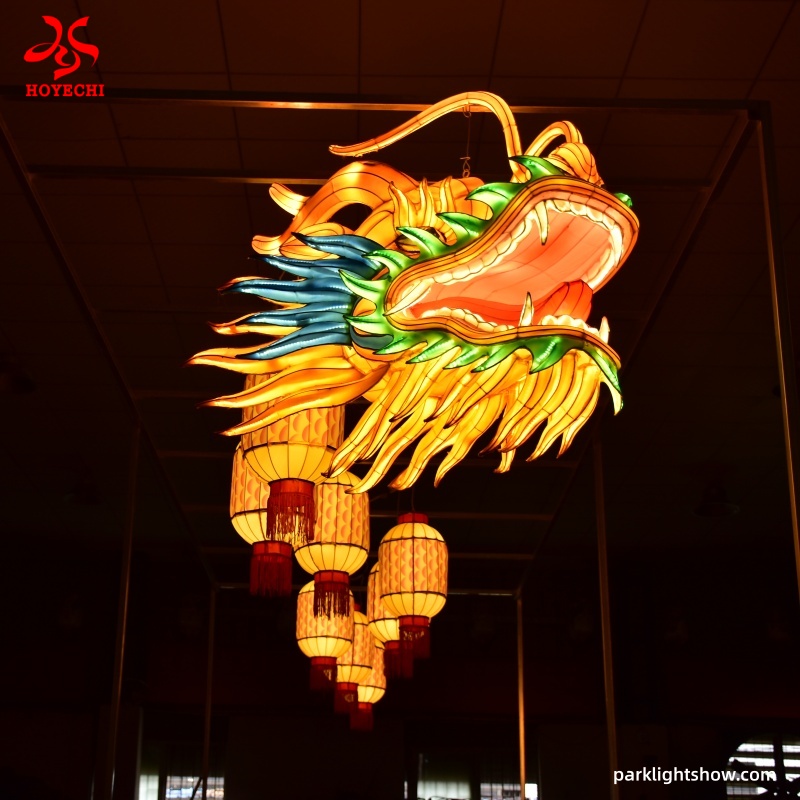
Large-scale lantern display installed on-site for a festival or night tourism event, showing safe structure setup and professional installation workflow.
9) Customs Clearance Support: What Can Be Provided?
Many international buyers prefer to work with their own freight forwarders and customs brokers, but a vendor should still support you with the documentation that makes clearance smoother, such as:
- Packing list and commercial invoice
- Crate-level labeling and module inventory
- Product descriptions consistent with customs classifications
- Electrical specs documentation (as required by local rules)
If you need an end-to-end delivery plan, it’s best to request it early so shipping and packaging can be optimized for your destination and timeline.
10) After-Sales Support That Actually Helps During the Show
In live events, support must be practical. The most valuable support package includes:
- Remote troubleshooting with clear circuit maps and video guidance
- Spare parts strategy (controllers, LED modules, connectors, cables)
- Modular repairability so a small issue doesn’t take down an entire zone
- Operational checklists for daily opening/closing routines
The objective is not “no problems ever.” It’s fast recovery, minimal downtime, and a smooth visitor experience.
Planning Checklist Before You Commit
If you want a predictable build, ask these questions before signing off:
- Do we have a module list with weights and dimensions?
- Do we have a container loading plan and packing list?
- Is the installation sequence documented and labeled?
- Is local labor sufficient, or do we need a technical lead on site?
- Is there a spare parts kit included for live operations?
- Do we have a teardown + storage plan to protect reuse value?
Conclusion: Make the Show Easy to Operate, Not Just Beautiful
The fastest way to protect your budget and reputation is to treat logistics and installation as part of the design—not an afterthought.
When chinese dragon lanterns are engineered for modular shipping, straightforward setup, and reliable reuse, your project gains the one advantage that matters most in real operations: control.
If you’re building a repeatable festival or night tourism program, explore the complete pillar guide here:
Chinese dragon lantern project.
FAQ
Can chinese dragon lanterns be installed by a local team?
Yes. With modular design, labeled connectors, and clear installation manuals, most projects can be installed by local contractors with remote technical support.
How do you reduce shipping and container costs?
By engineering modular breakpoints early, standardizing crates, and planning a container loading layout before finalizing the design.
How do we store lanterns for next season?
Keep original crates, store in a dry ventilated space, inspect modules before packing, and maintain a spare parts kit for fast re-commissioning next year.
Do you provide documentation for customs and site approvals?
A complete package typically includes packing lists, invoices, crate inventories, and technical specifications—tailored to your destination requirements.
Can we refresh the show annually without rebuilding everything?
Yes. Most operators refresh a few hero photo points and update lighting programs while reusing the core dragon lantern assets for better long-term ROI.
Post time: Jan-15-2026


